
Text updated:
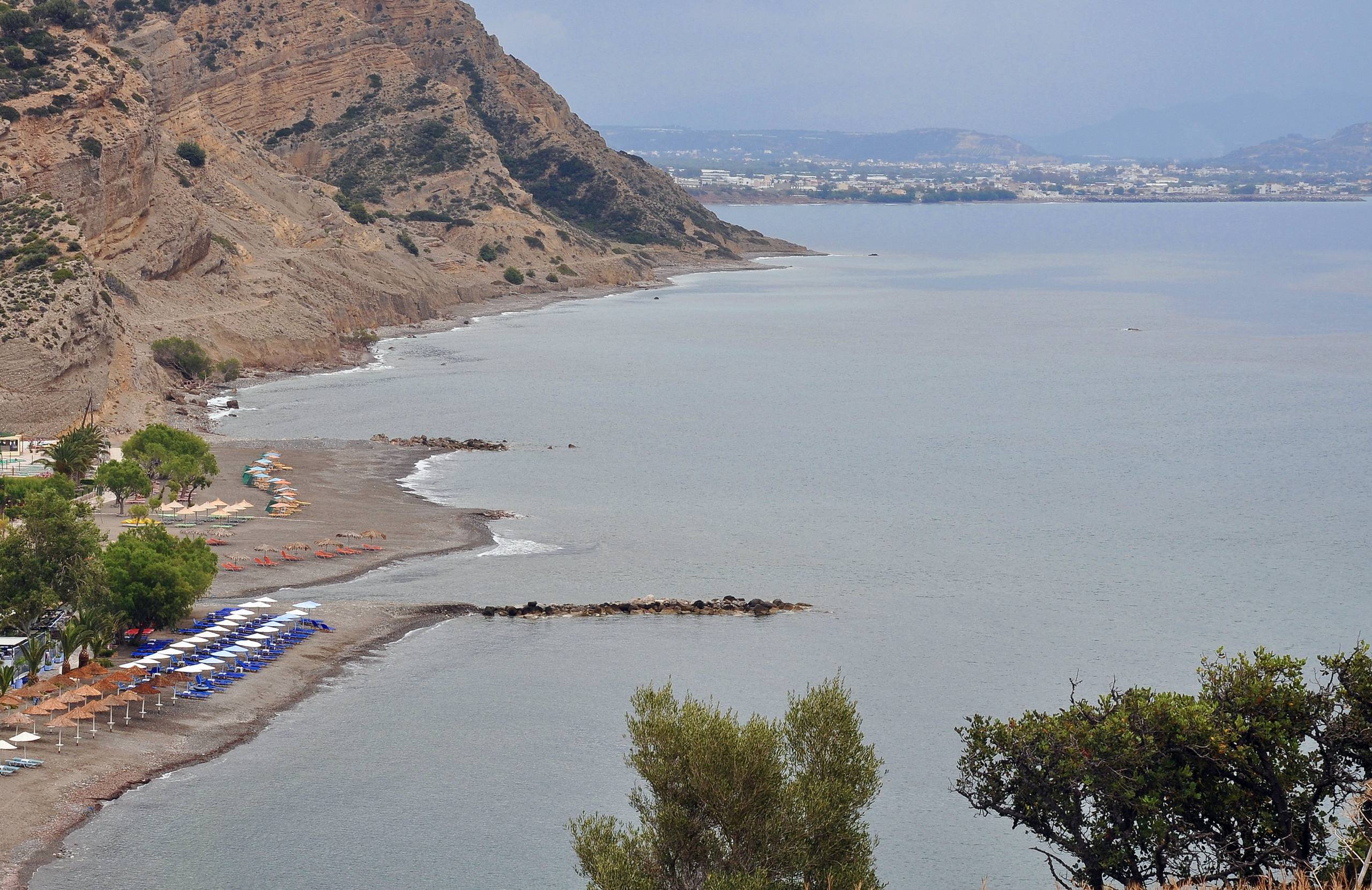
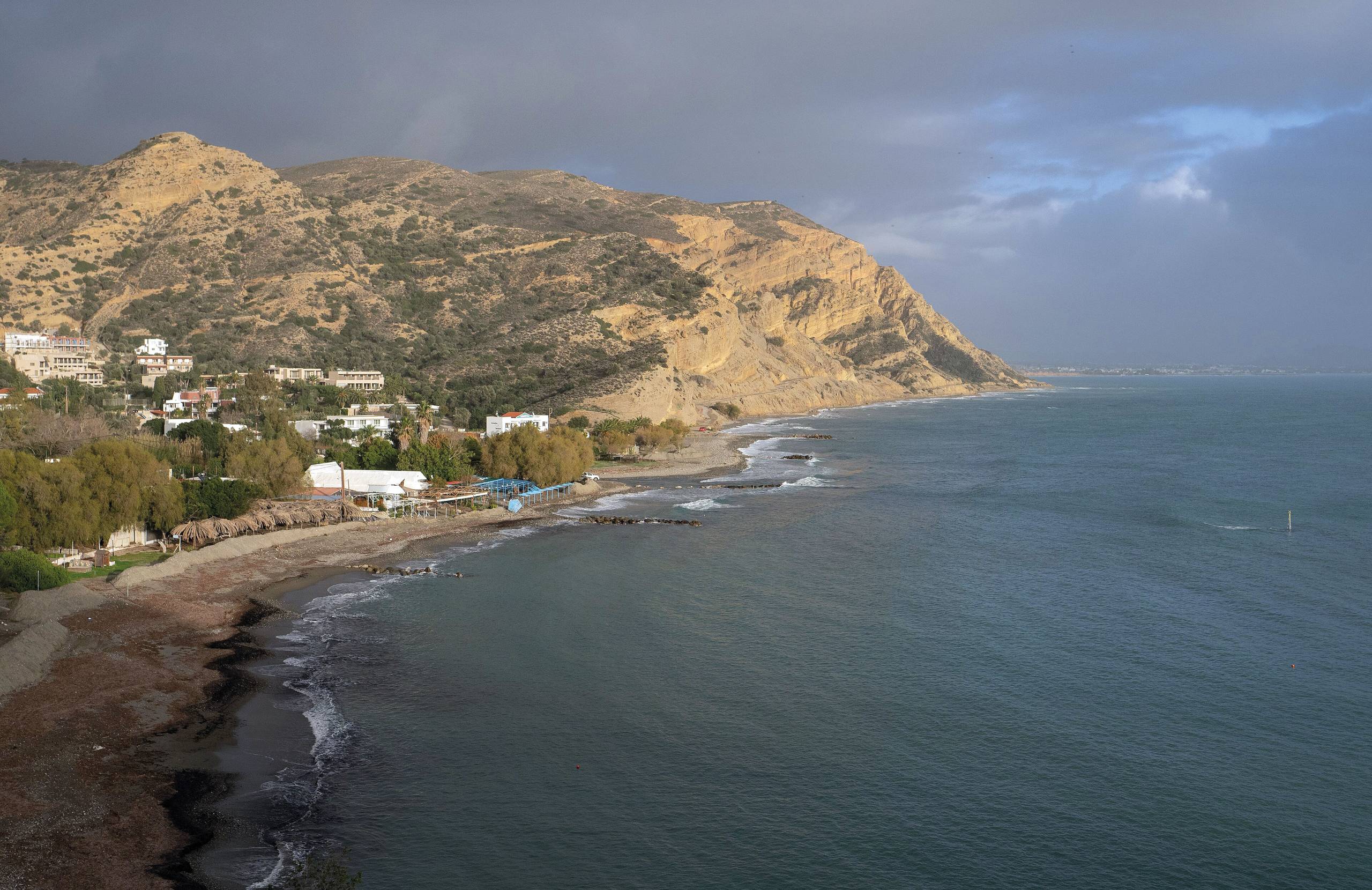
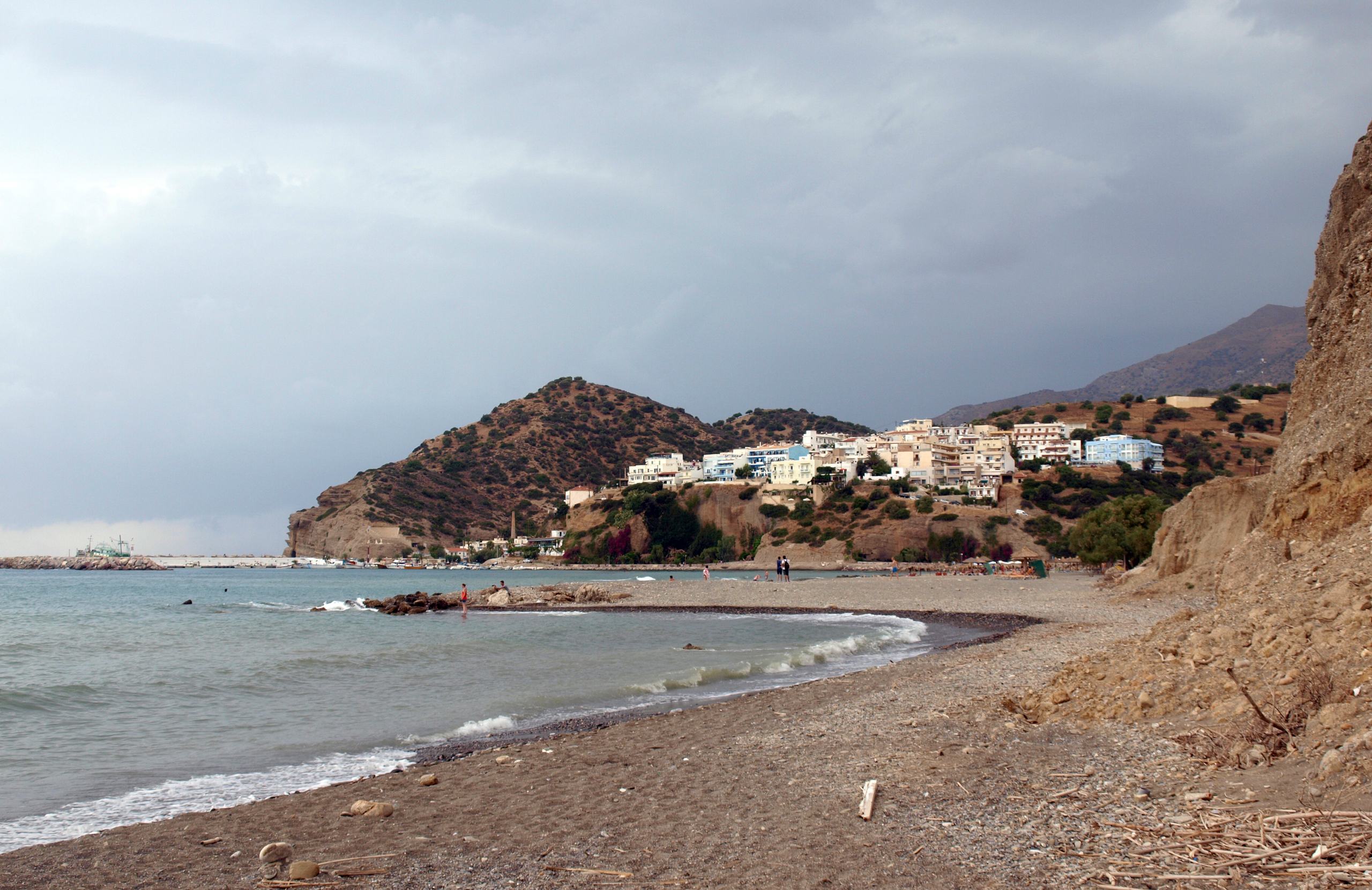
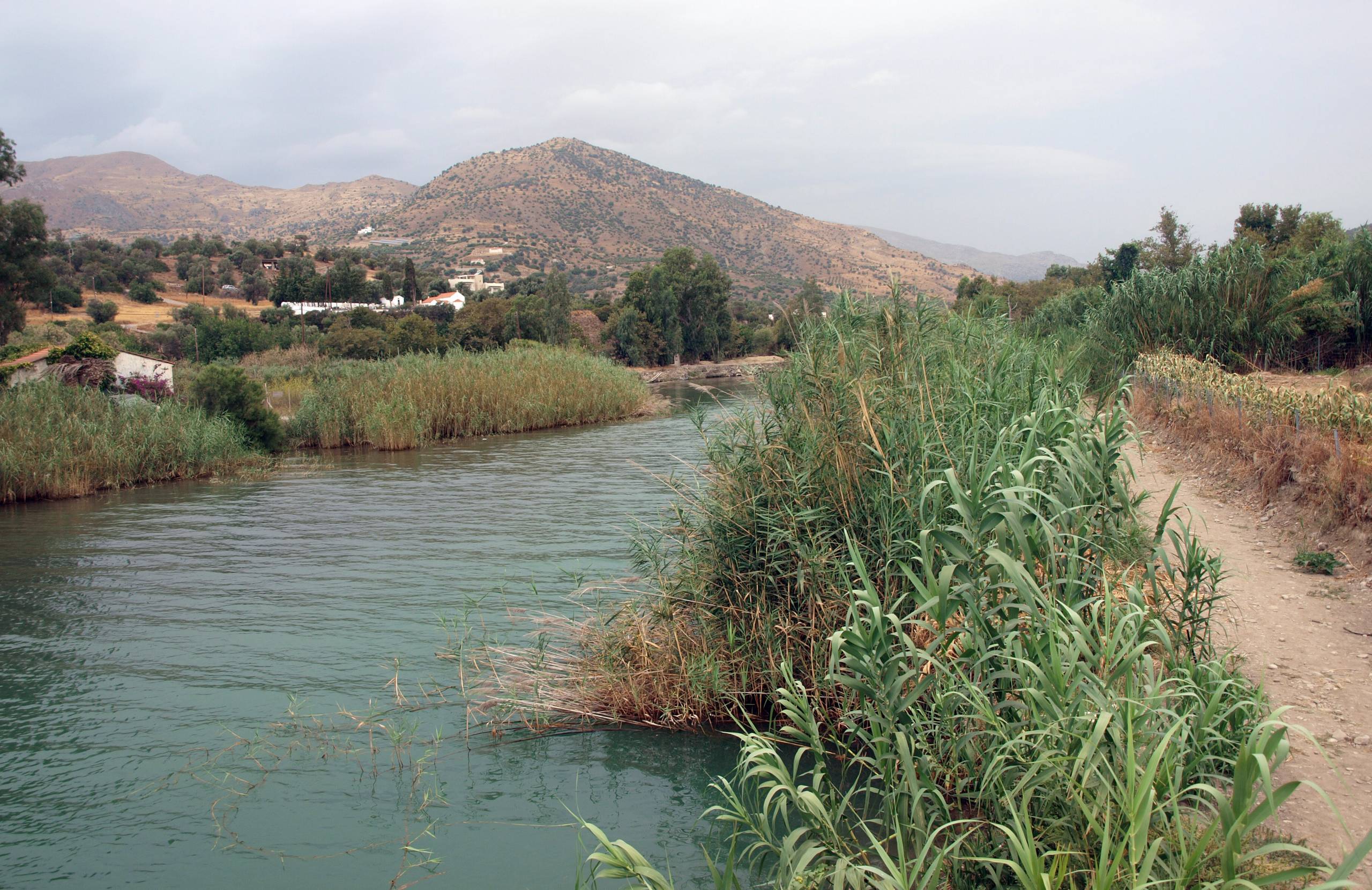
Agia Galini Beach lies just east of the harbour of Agia Galini, a seaside village on the south coast of Crete, in the Rethymno Regional Unit. The beach starts below the rocky hill at the edge of the village and runs east to the mouth of the Platys river, also called the Amarianos. It is sand and fine pebbles, and the sea is usually calm. Near the river mouth the water is cooler. This main part of the beach has sunbeds, umbrellas and tavernas, with hotels behind it.
A small footbridge crosses the river to a second, quieter beach of sand and small pebbles. Further east, the shore becomes narrow and stony and continues for several kilometres towards the village of Kokkinos Pyrgos, in the Heraklion Regional Unit. At the western end of the beach, a German artillery bunker from the Second World War is cut into the rock, and a stone staircase inside it climbs to the top. A local legend says that Daedalus and Icarus took off from the rock above the harbour on their wings of wax, and a statue of the two stands there today.
Agia Galini is about 70 kilometres south-west of Heraklion. From the town of Rethymno, the road south through the village of Spili takes about an hour. A paved road with parking reaches the beach near the river mouth, and a path behind the sand leads west to the harbour. Buses usually run to Agia Galini from Rethymno and Heraklion, so check the current timetable. For the eastern beach, cross the river by the footbridge.
The beach near the village is organised and can get busy in summer, while the beach across the river is quieter. On the narrow shore further east, towards Kokkinos Pyrgos, nudism is common. In summer, boats from the harbour usually go to the two Paximadia islets off the coast and to beaches along the south coast, such as Preveli Beach, so ask at the harbour. For the bunker at the western end of the beach, check whether it is open.