GiolaAstris, Thassos
Text updated:
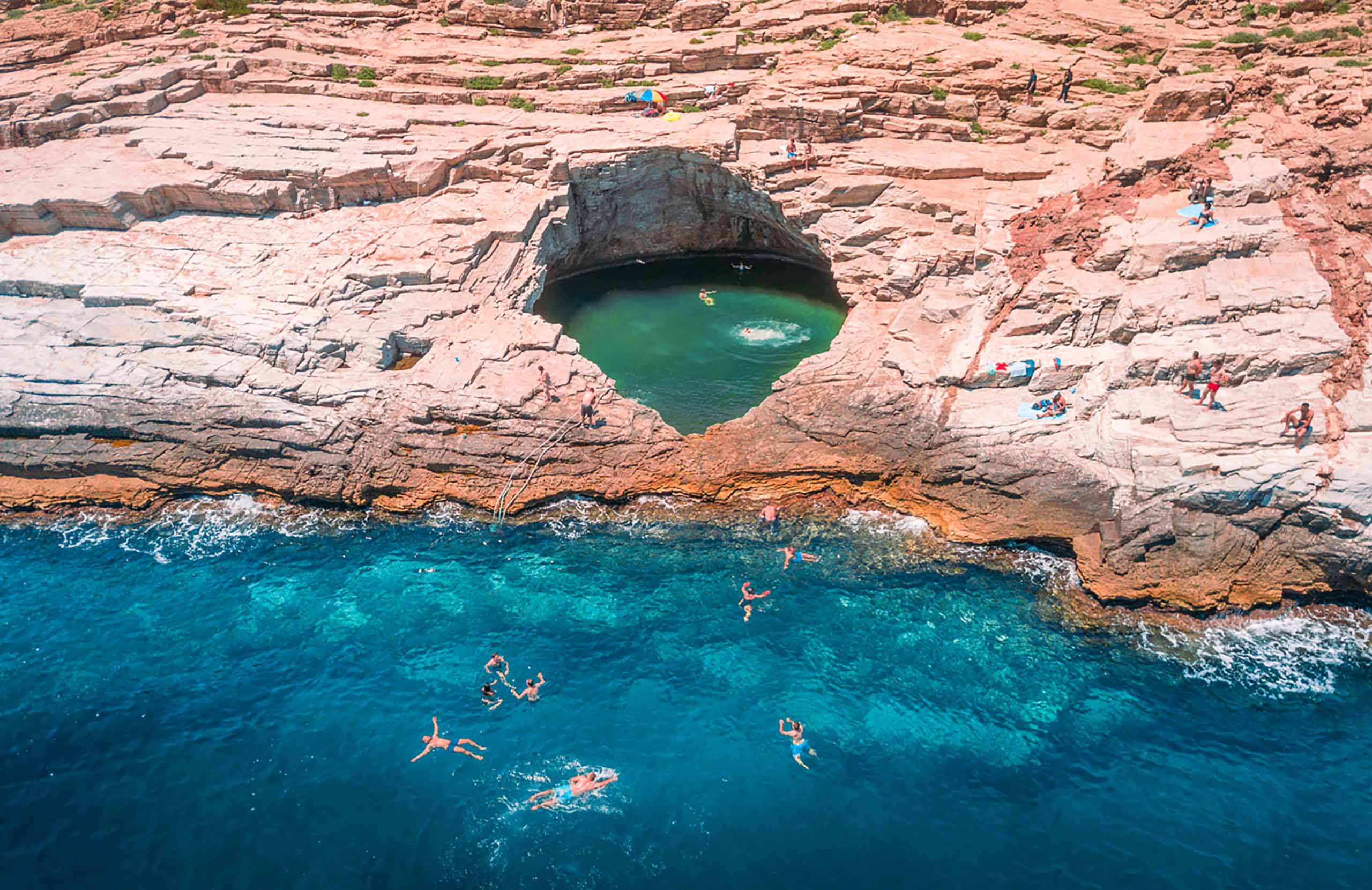
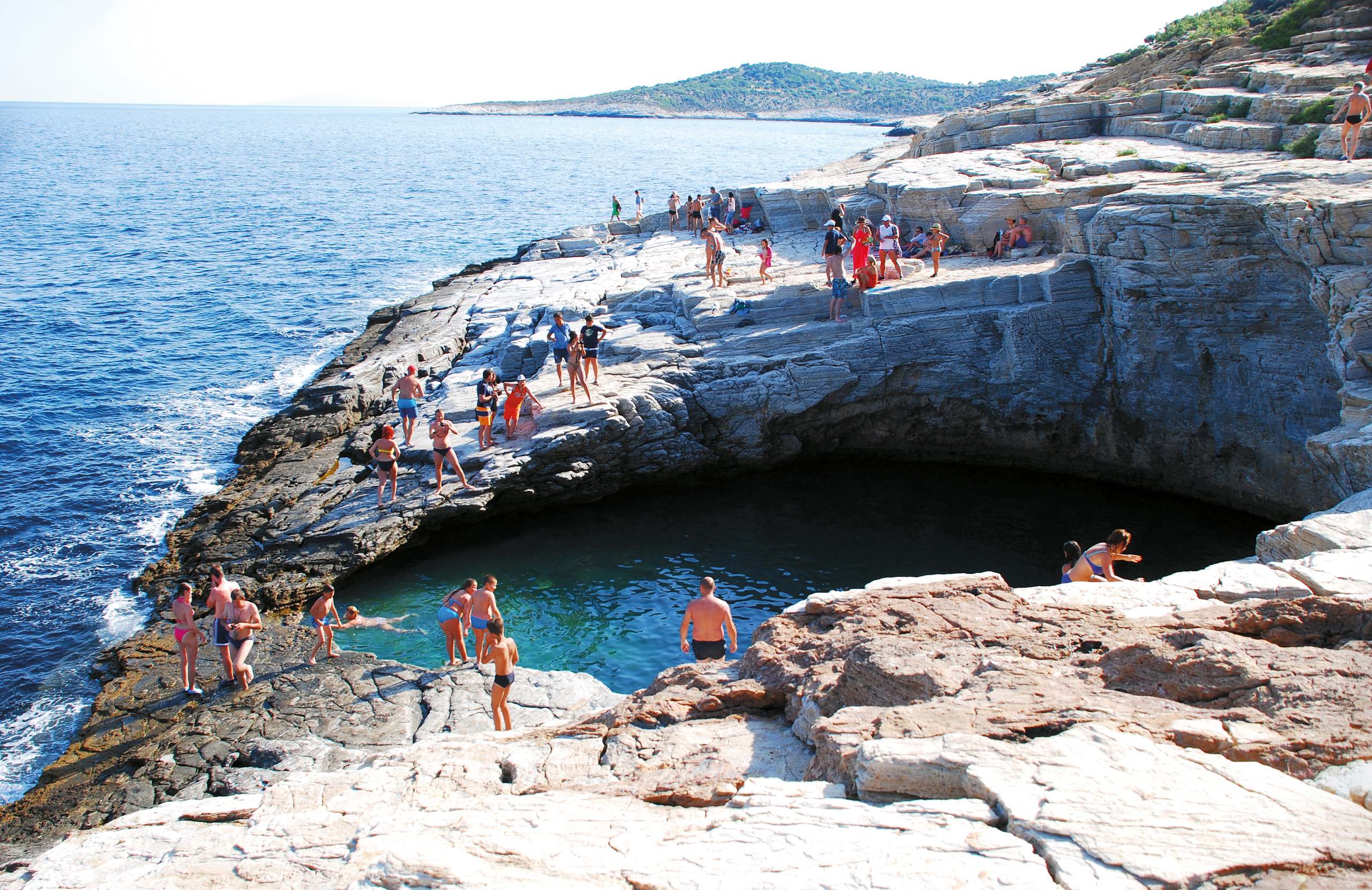
Giola is a natural rock pool on the south coast of Thassos, an island in the North / East Aegean, near the village of Astris. It is not a beach with sand or pebbles: it is a pool of sea water inside the white rocks, right beside the open sea. The pool is about 20 metres long, 15 metres wide and 3 metres deep. Its water is clear and light green, and it is usually warmer than the sea. Waves wash over the low rock between the pool and the sea and fill it again. It is also known as Aphrodite’s Tear, and local legends link it with Aphrodite and Zeus.
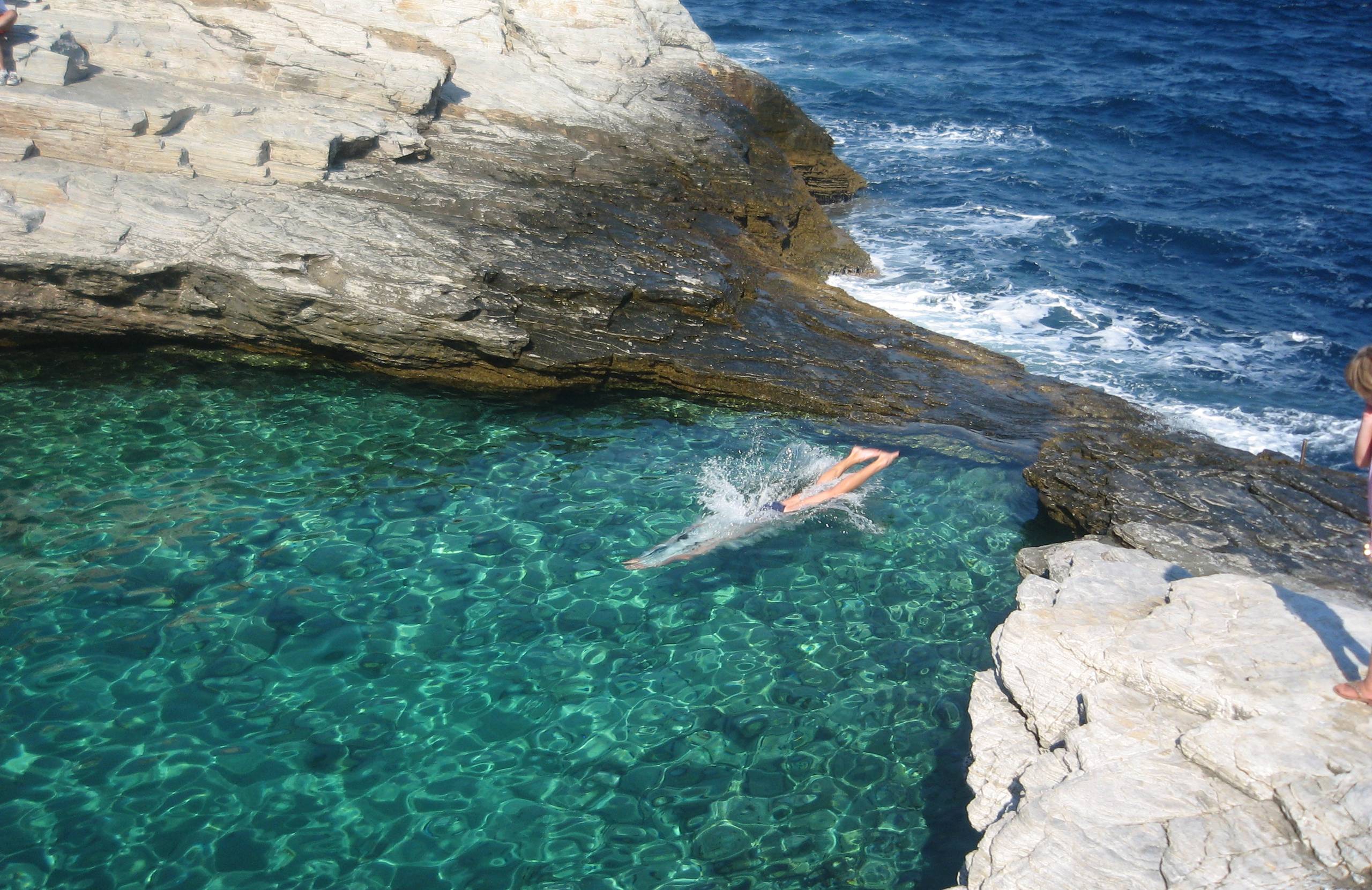
There is no shade around the pool, and visitors lie on the flat rocks. Many people jump into the water from the rocks above it, some of them several metres high, but the pool is not deep and there are rocks on its bottom. There are no steps, so climbing out over the rocks can be hard, especially for children. In July and August the pool and the rocks around it get very crowded. Psili Ammos Beach, a beach of fine sand, is about ten minutes’ drive to the west.
Practical information
Getting there
Giola is about 40 kilometres from Limenas, the main town and port of Thassos, on the coast road that goes round the island through Aliki, and about 10 kilometres from the village of Potos. Near the village of Astris, a side road leads down towards the sea to a parking area above the rocks. From there you walk down a steep path over rock and loose stones, which is harder on the way back. Buses have run to Giola in summer; check at the bus station in Limenas.
Good to know
Wear shoes with a good grip, because the rocks are uneven and slippery when wet. Take water and sun protection, as there is no shade. If you jump, look first for rocks under the water, and do not dive head first. On days with big waves, the sea breaks over the rocks into the pool, so swimming is not safe then. In July and August, come early in the morning or late in the afternoon to avoid the crowds and the heat.
