Matala BeachMatala, Heraklion
Text updated:
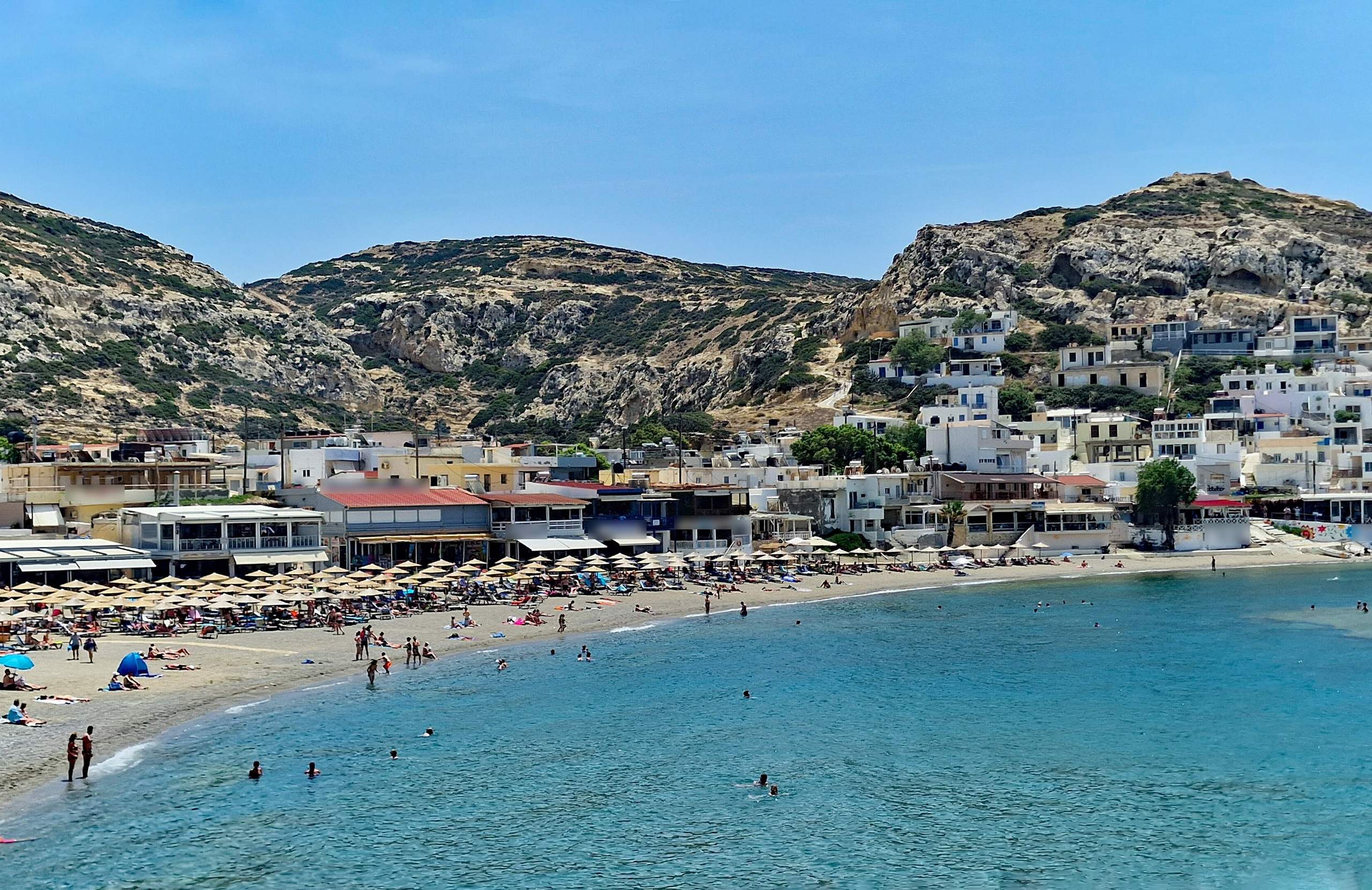
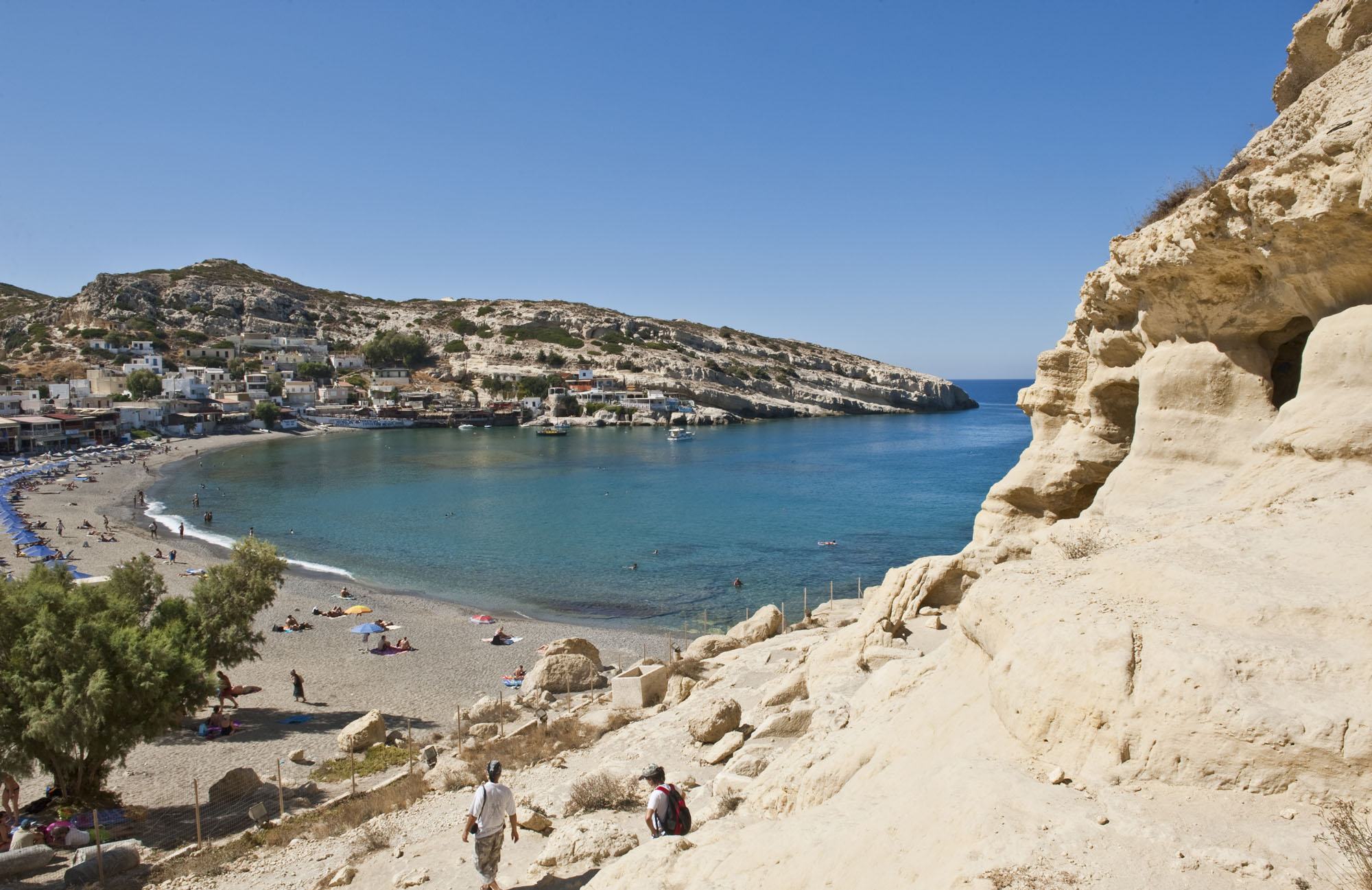
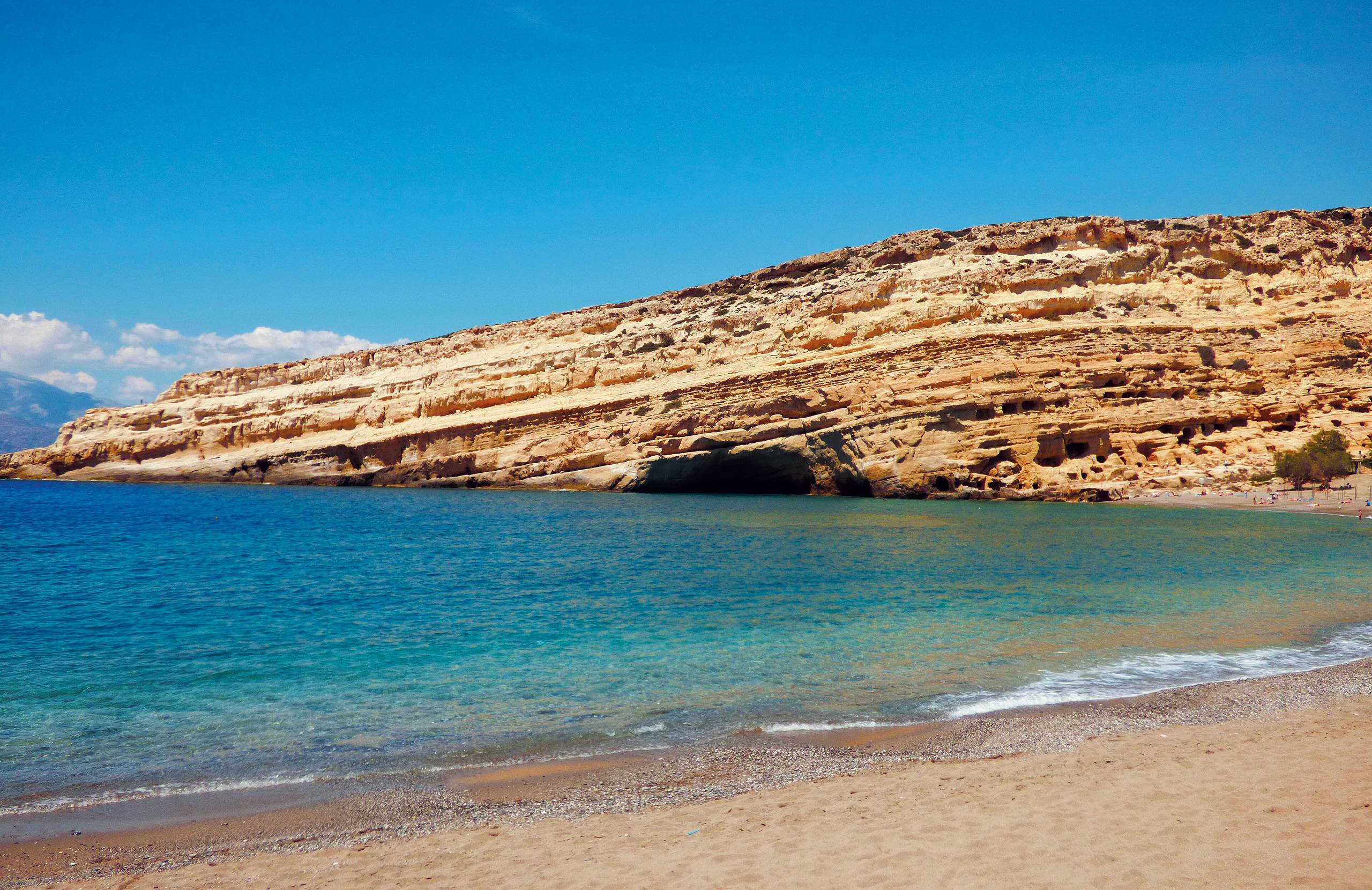
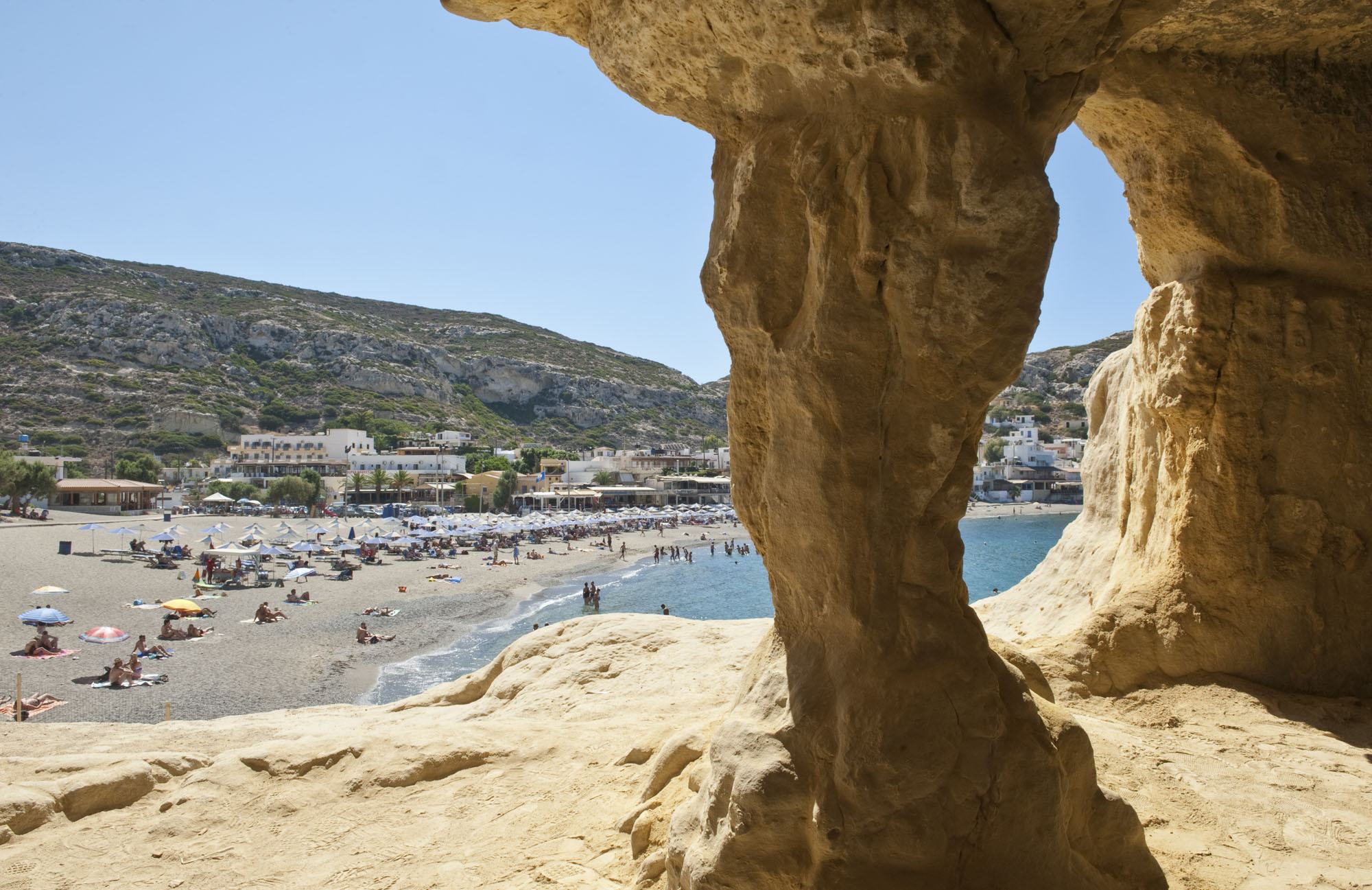
Matala Beach is a curved bay of sand and fine pebbles, about 300 metres long, on the south coast of Crete, about 65 kilometres from Heraklion. A cliff of soft, pale rock rises on its northern side, full of caves cut by hand. They were made as tombs in Roman and early Christian times. In the 1960s and 1970s hippies from many countries lived in them, and this made Matala known around the world. The village of Matala, with tavernas, cafés and rooms, stands at the southern end of the beach.
In ancient times the bay was a harbour, first for the Minoan palace of Phaistos, about 12 kilometres away by road, and later, in the Roman period, for the city of Gortyna. A legend says that Zeus, in the form of a bull, swam ashore here with Europa on his back. In summer the beach is usually organised, with sunbeds and umbrellas, and tamarisk trees give shade behind the sand. A music festival is usually held on the beach in early summer. The bay opens to the west, so there are often waves when the west wind blows. Beyond the headland to the north is Kommos Beach, and a path over the hill to the south leads to Red Beach.
Practical information
Getting there
Matala is at the south-western edge of the Messara plain. From Heraklion, the drive is about 65 kilometres and takes a little over an hour, across the middle of the island and then past the village of Pitsidia. There are car parks at the entrance to the village and near the beach. Buses run from Heraklion; check the timetable before you travel. Kommos Beach is about 2 kilometres to the north.
Good to know
The caves are a fenced archaeological site, and no one may stay in them overnight. Check whether they are open, and whether there is a ticket, before you go. The beach gets very busy in summer, and in the evening the bars along the sand fill up. The water gets deep quite quickly, and the seabed is rocky in places, so take care when there are waves.
Matala Beach— been there?Tell others what you saw.
A photo and two lines are enough.
