Plakias BeachPlakias, Rethymno
Text updated:
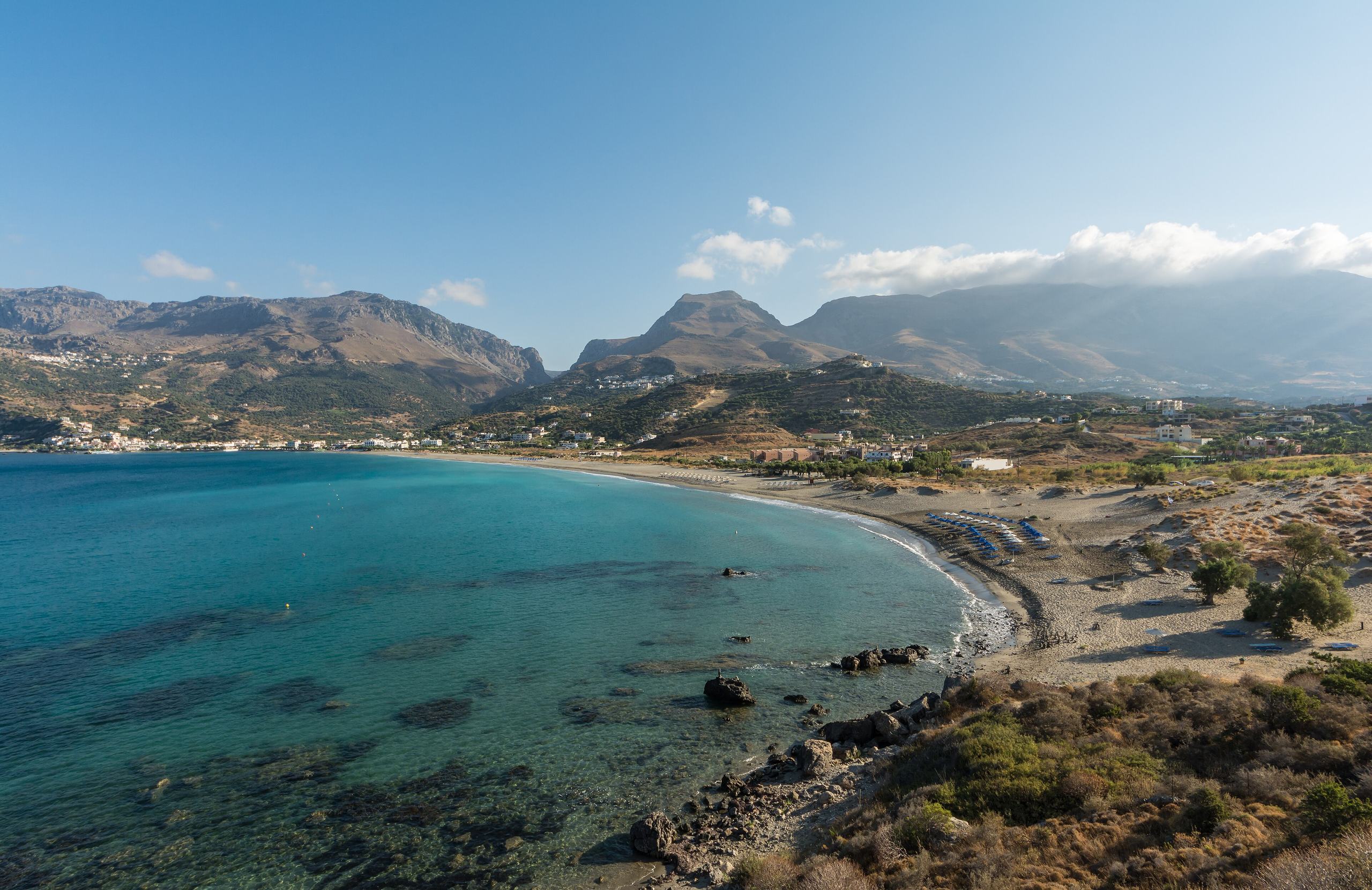
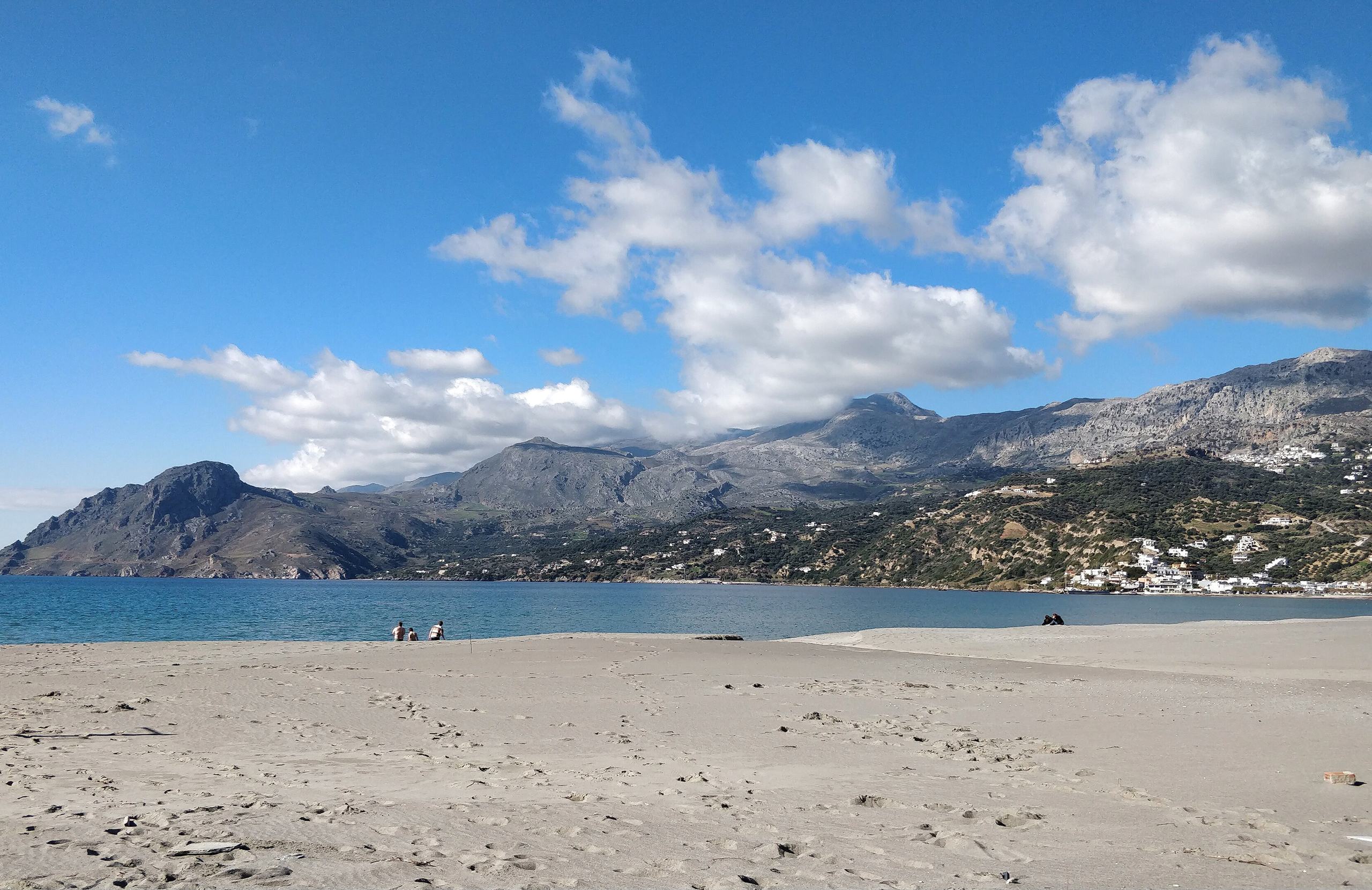
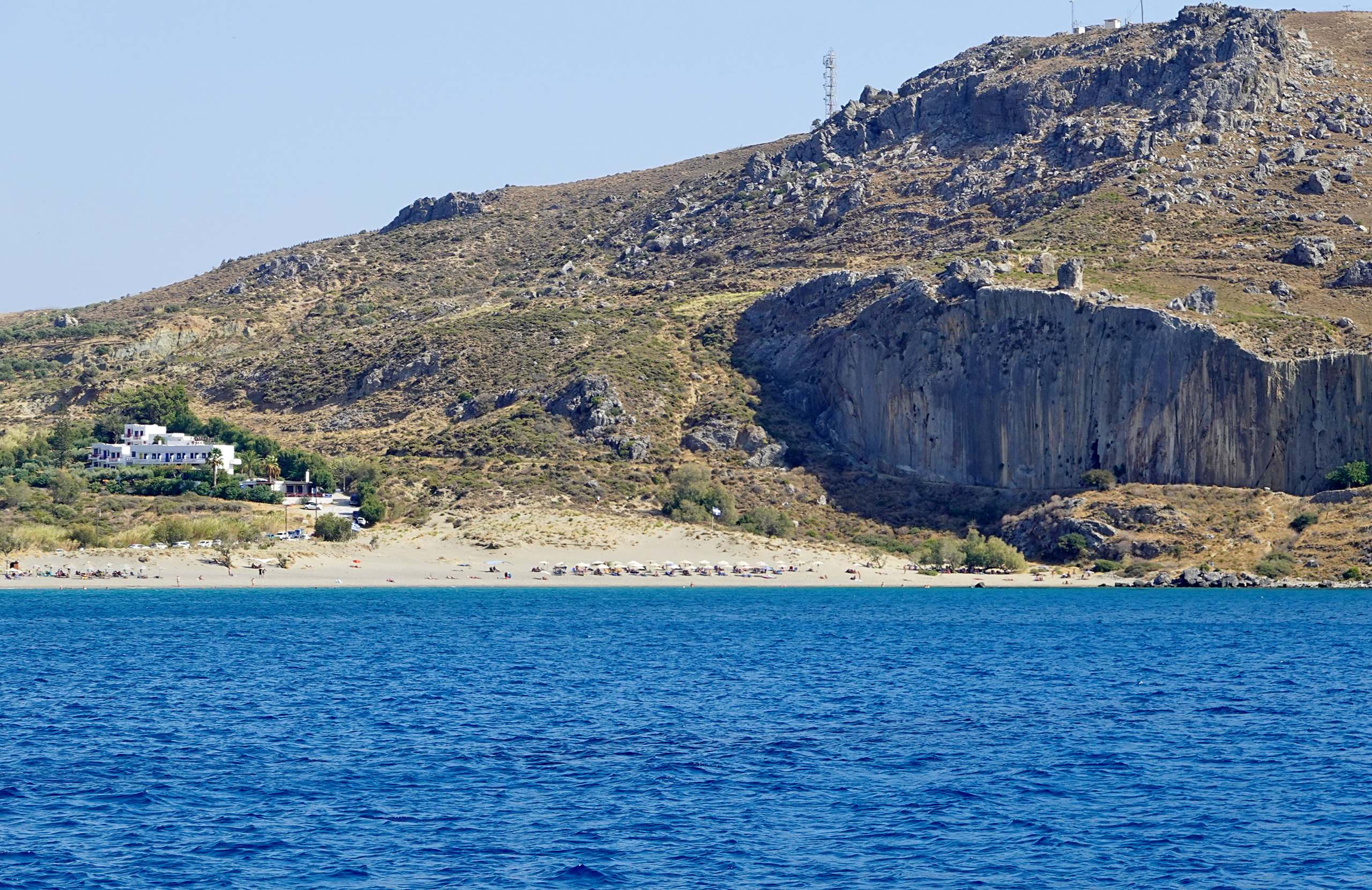
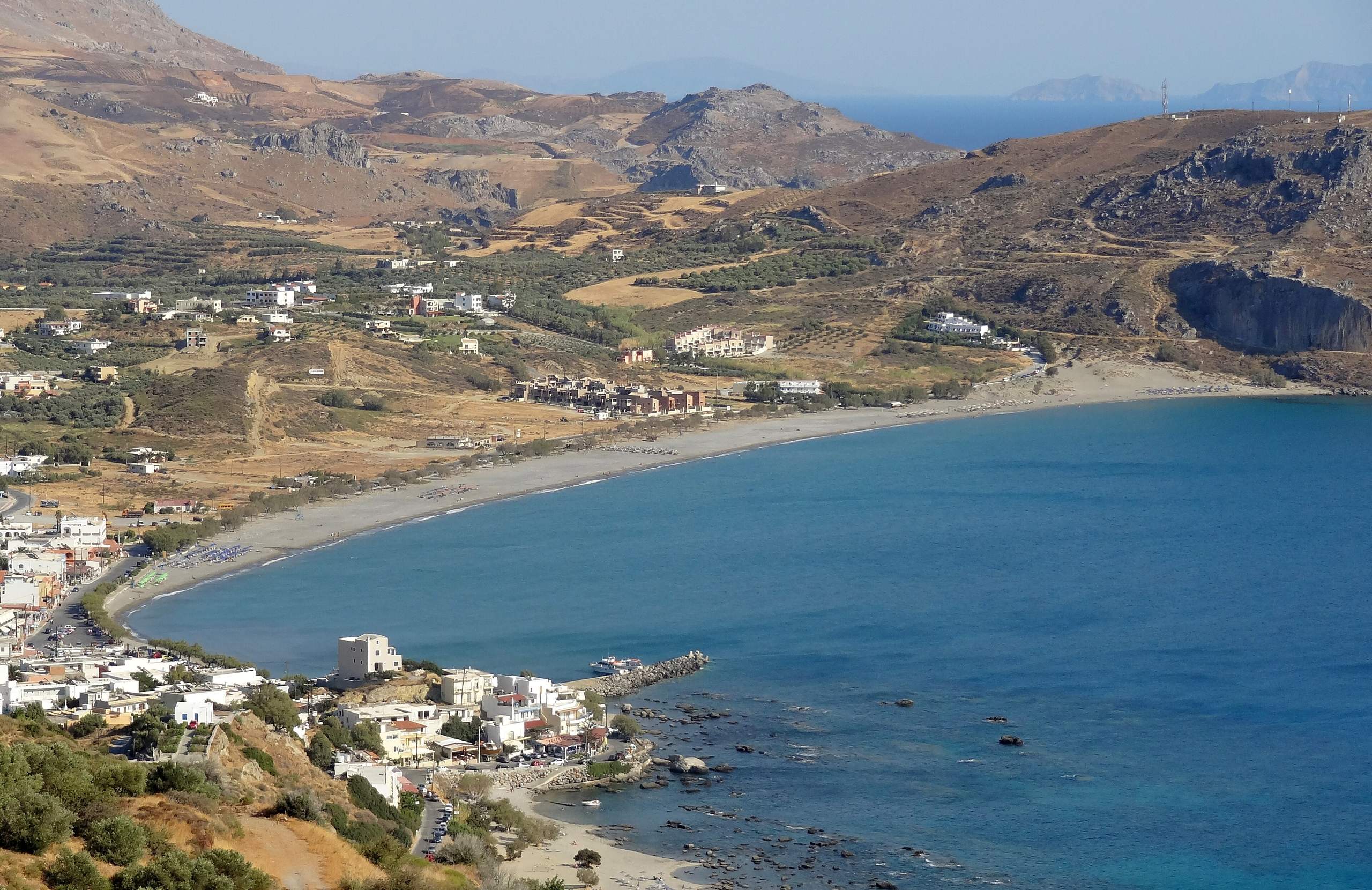
Plakias Beach is the long beach in front of Plakias, a seaside village on the south coast of Crete, about 35 kilometres south of the city of Rethymno. Mountains rise behind the village, and the roads from the north reach it through two gorges, Kotsifou and Kourtaliotiko. The beach starts at the small harbour, where the Kotsifos stream reaches the sea and the water is a little cooler. From there it curves east for more than a kilometre. Its eastern end, called Paligremnos, lies below a tall wall of rock that drops straight to the sand, and climbers come to it.
The sand is coarse, with many small pieces of shell, and the water is clear. A road runs behind the beach, good for a walk or a bike ride, and tamarisk trees give some shade. Much of the beach is organised in summer, with sunbeds, umbrellas and beach bars, and water sports are usually on offer. The eastern end has more bars and music, and the western end near the village is quieter. Hotels, rooms and tavernas fill the village behind. In the next bay to the east lies Damnoni Beach.
Practical information
Getting there
Plakias is about 35 kilometres south of Rethymno, and the drive crosses the mountains through the Kotsifou or the Kourtaliotiko gorge. The road runs right along the back of the beach. Regional buses go from Rethymno to Plakias a few times a day, so check the timetable. The beach starts at the edge of the village, next to the harbour.
Good to know
Plakias is often windy in summer. The north wind comes down from the mountains and can be strong here, so check the forecast before you go. Naturists use the far eastern end, below the Paligremnos cliff. In summer, boats usually leave the harbour for trips to beaches further east, such as Preveli, so ask at the harbour. Some shade comes from the tamarisks, but bring your own if you go to the quieter stretches.
Plakias Beach— been there?Tell others what you saw.
A photo and two lines are enough.
