
Text updated:
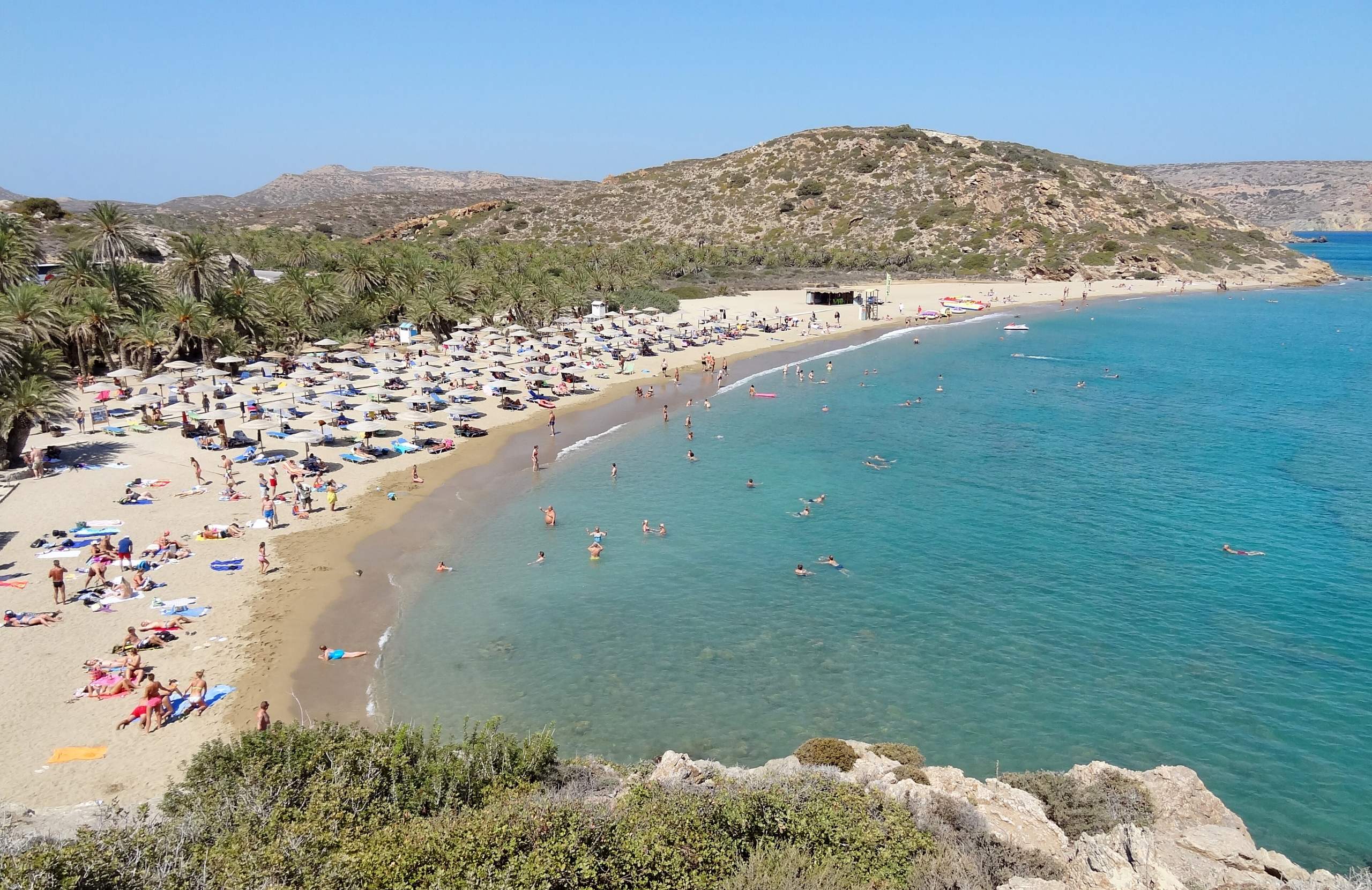
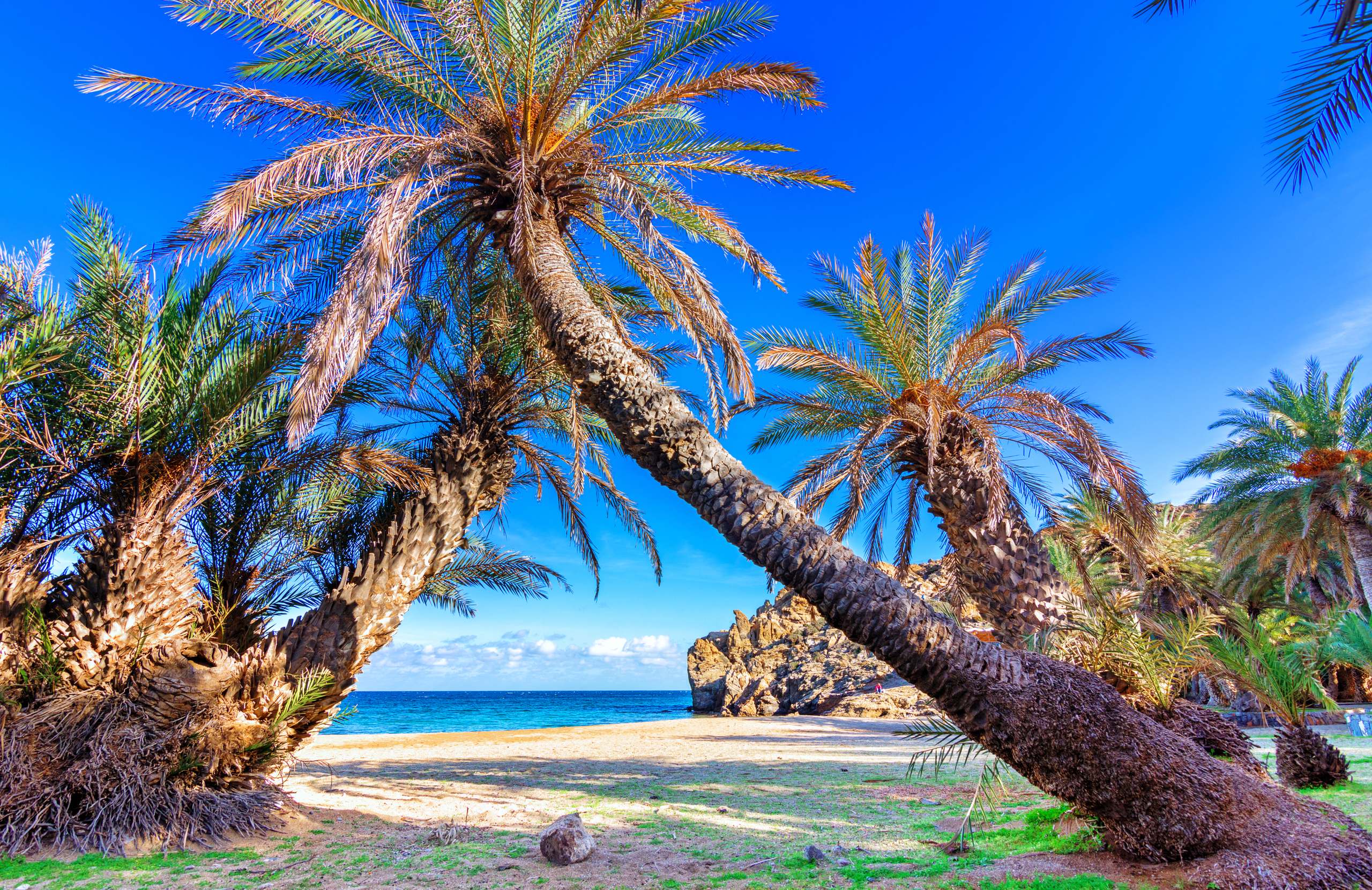
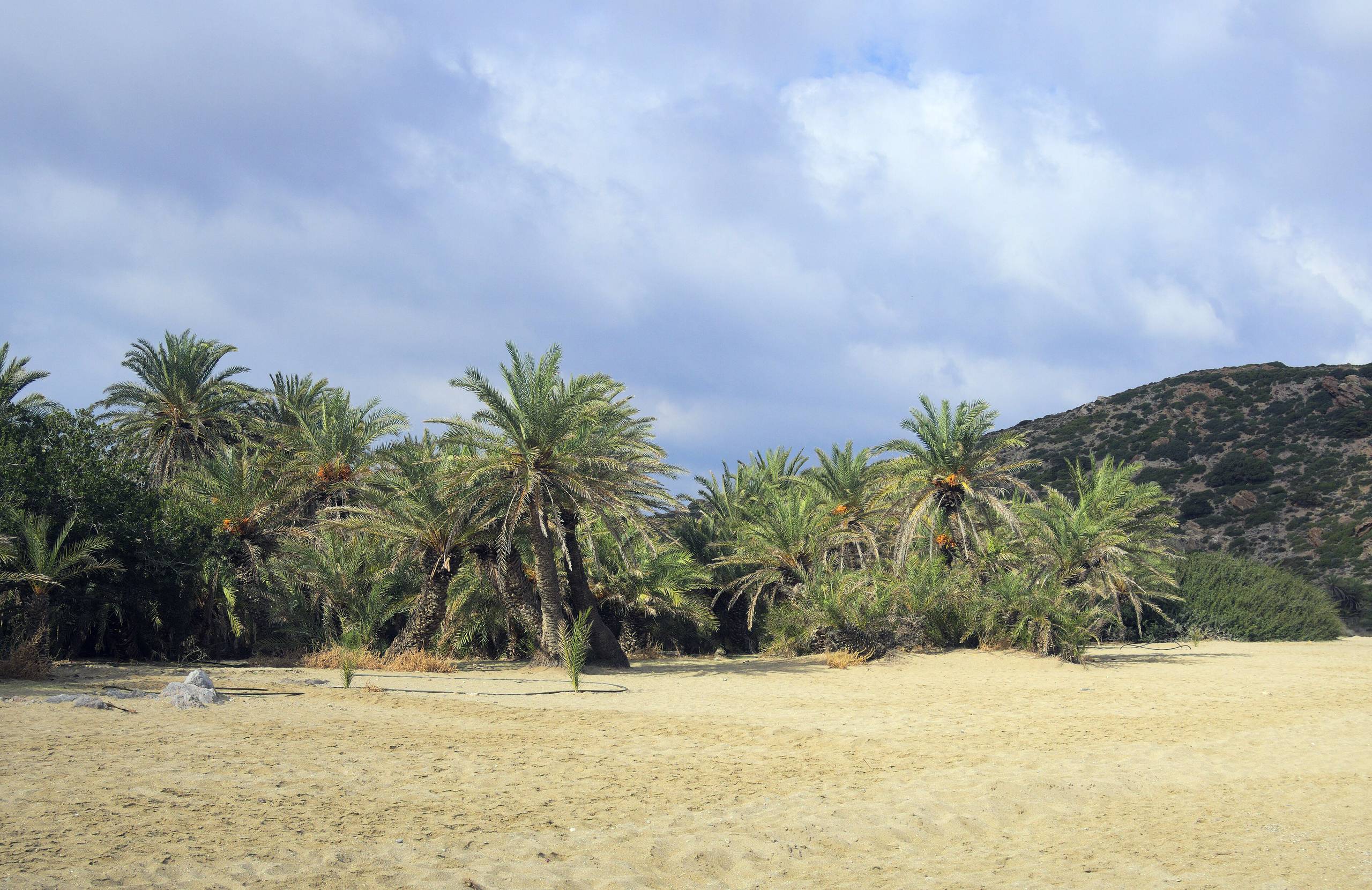
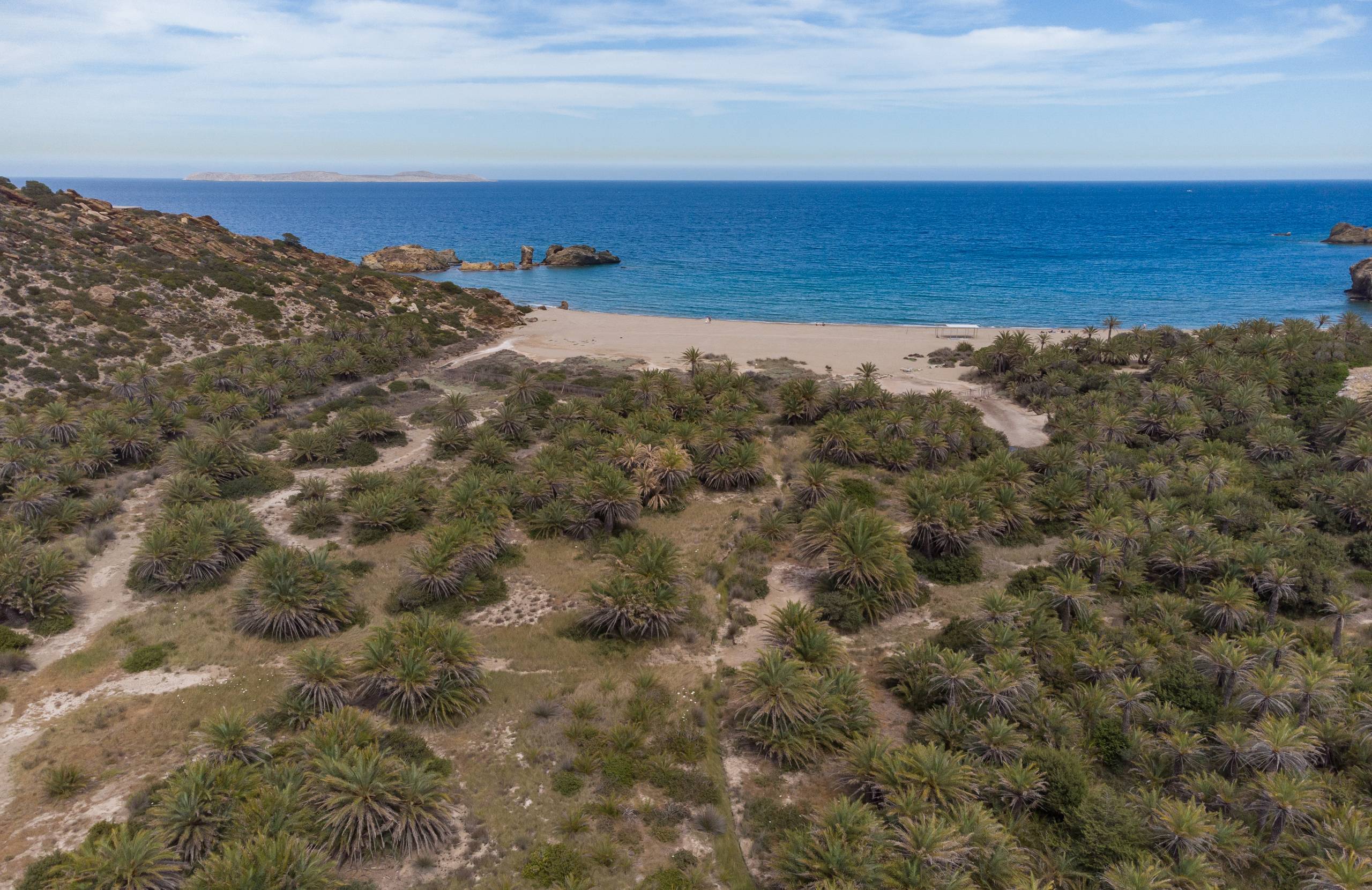
Vai Beach is a wide, curved bay of sand on the north-east coast of Crete, with a forest of palm trees growing right behind it. The trees are Cretan date palms, a palm that grows wild in only a few places, mostly in Crete. About 5,000 of them fill a small valley that opens onto the beach. The sand is mostly fine, with small pebbles in places, and the water is clear and shallow near the shore. Sunbeds and umbrellas usually cover the southern part of the beach.
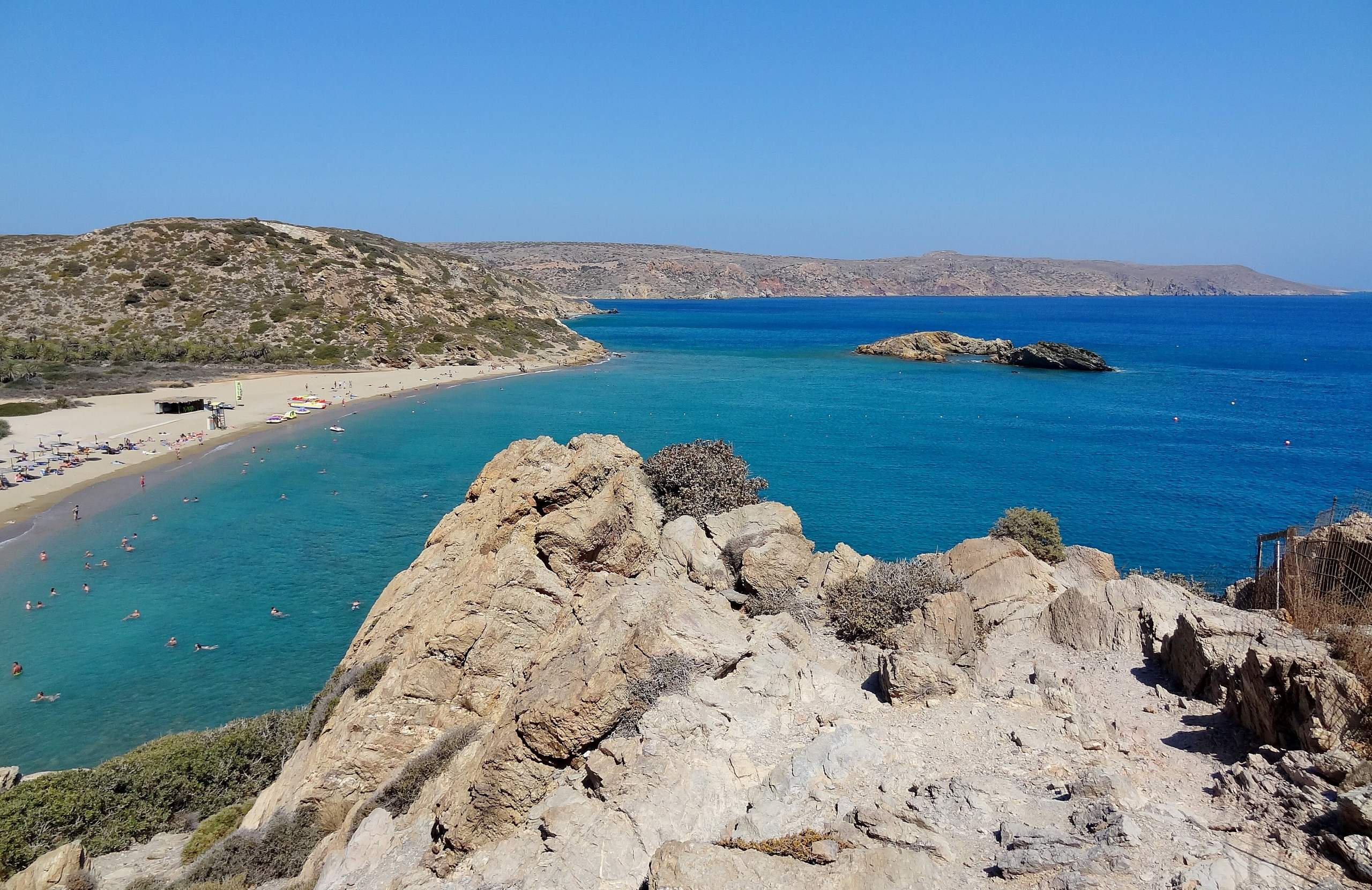
The palm forest is fenced and protected as part of the Natura 2000 network. Visitors see it from the beach and from marked paths around it. A local legend says the palms grew from date stones thrown away by sailors, but the Cretan date palm is a native tree. In the 1970s many travellers camped here; today camping is banned. A path at the south end climbs to a viewpoint over the bay, and two rocky islets lie off the northern headland. Over the southern headland, a short path leads to the quieter Psili Ammos Beach, and Itanos Beach is about 3 kilometres to the north.
Vai is about 24 kilometres by road from Sitia, the main town of the area, and about 86 kilometres from Agios Nikolaos. The village of Palaikastro is about 9 kilometres to the south. A large car park lies just behind the sand, and parking is usually charged. In summer there are usually buses from Sitia, so check the current timetable before you go.
The beach is open only during the day, and camping or staying overnight is not allowed. Keep to the paths around the palm forest and do not damage the young plants. In summer there are usually sunbeds, showers and a café by the car park. The beach gets very busy in July and August, so arrive early for a quieter swim.