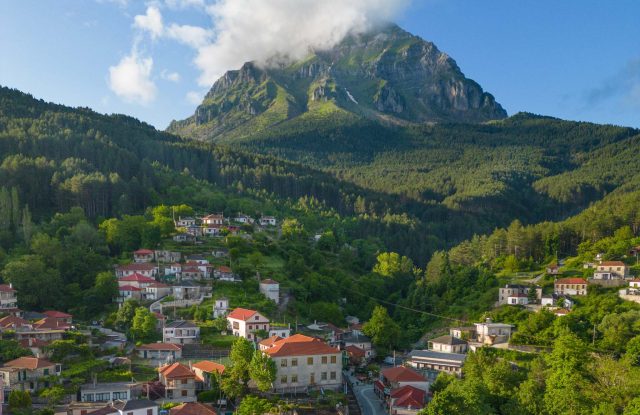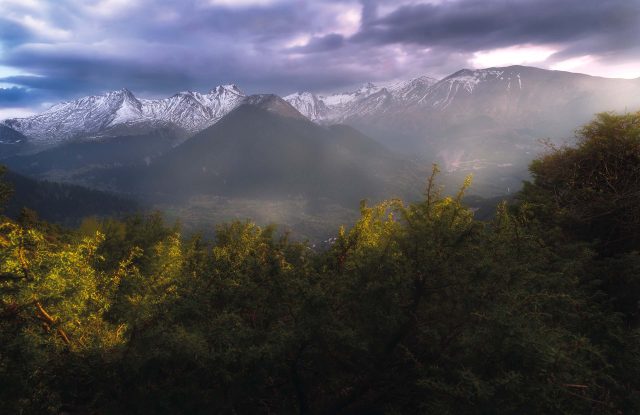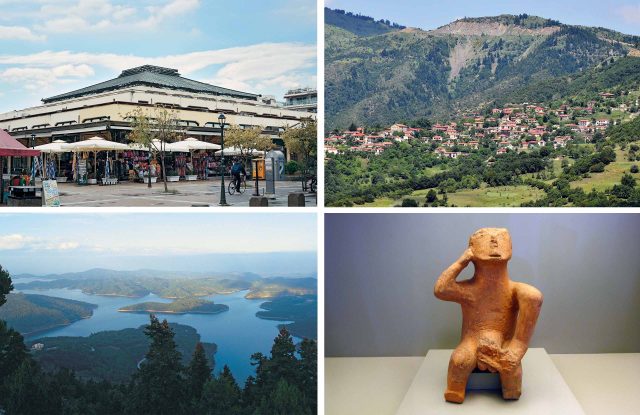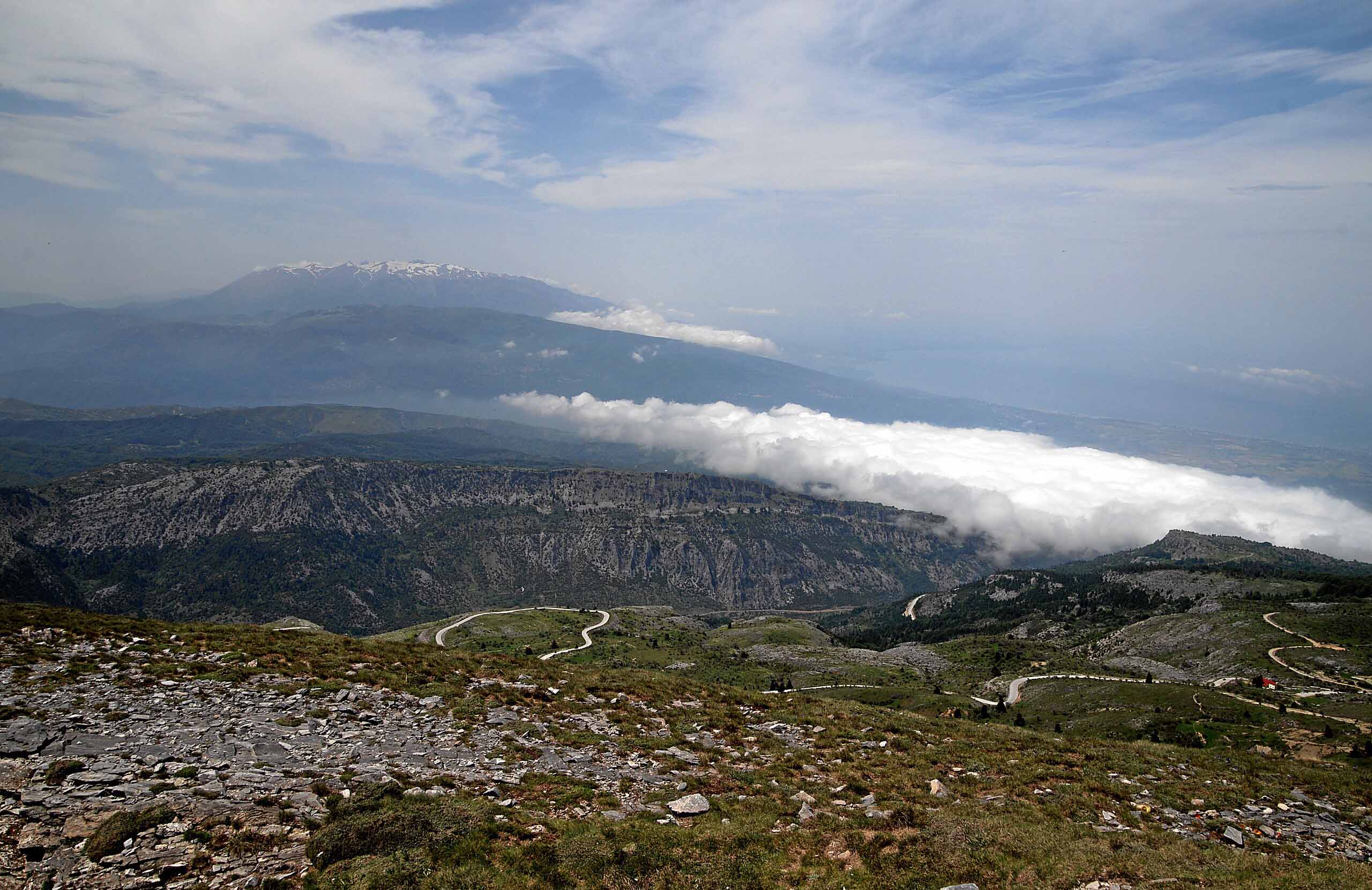


Mount Olympus is Greece’s highest mountain, its ridge reaching 2,917 metres at Mytikas peak, and in ancient tradition it was the home of the Twelve Olympian Gods. It sits on the border between Macedonia and Thessaly, above the town of Litochoro, and was declared Greece’s first National Park in 1938. In July 2026, the wider mountain was inscribed as a UNESCO World Heritage Site together with the archaeological site of Dion at its base. It is less a single peak than an entire massif — dense forest on the lower slopes gives way to bare alpine ridges above, and it draws large numbers of hikers and climbers every summer.
Mytikas, at 2,917 metres, is the highest point on a massif with dozens of named peaks and pinnacles. Close behind are Skolio, at 2,911 metres, and Stefani, at 2,902 metres — known as the Throne of Zeus for its sheer, squared-off summit block — with Agios Antonios, at 2,817 metres, marking a fourth major top.
The massif covers roughly 500 square kilometres, with a base circumference of around 80 kilometres, straddling the regional units of Pieria and Larissa. Climbing it means passing through several distinct vegetation zones in a single day — Mediterranean scrub and forest lower down, giving way to conifers, then bare rock and alpine meadow above the treeline.
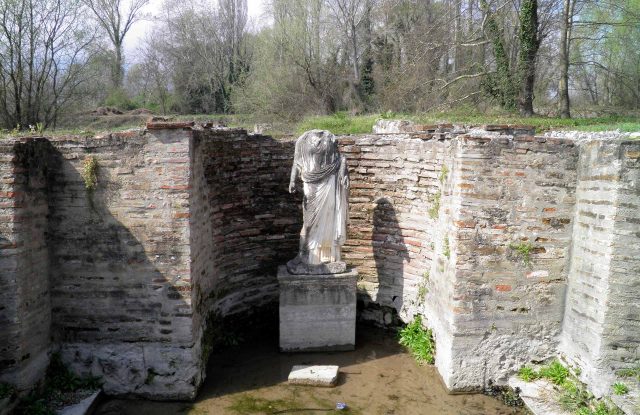
For over two thousand years, Greeks believed this was where the Twelve Olympian Gods lived, presiding over the world. Ancient pilgrims climbed high enough to leave pottery and burnt offerings on the summits, some dated to around 400 BC. At the mountain's base stands ancient Dion, the sanctuary city ancient Macedonians built because of Olympus's sacred status, with temples, Roman baths, a theatre and a museum still open to visit.
Mytikas itself went unclimbed until 1913, when the guide Christos Kakkalos reached the summit with the Swiss mountaineers Frédéric Boissonnas and Daniel Baud-Bovy, setting out from Litochoro. In April 1941, New Zealand and Australian troops fought a three-day rearguard action on the mountain's passes against the advancing German army, buying time for the wider Allied retreat before being overrun.
In July 2026, UNESCO recognised all of this together, inscribing the wider mountain as a World Heritage Site for the inseparable combination of its mythology, its archaeology at Dion, and its biodiversity — one of only three such mixed sites in Greece, alongside Meteora and Mount Athos.
The mountain was declared Greece's first National Park in 1938, and UNESCO named it a Biosphere Reserve in 1981. Around a quarter of all plant species found in Greece grow somewhere on its slopes, and at least twenty are endemic — found on Olympus and nowhere else, including the Ice Age relict Ramonda heldreichii, which survives in shaded rock crevices.
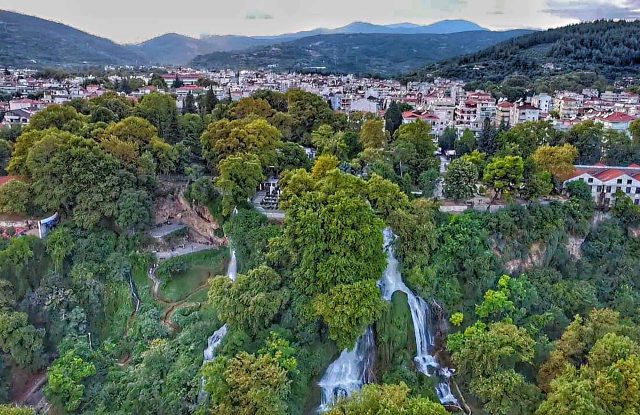
Wildlife includes Balkan chamois on the higher slopes, and the National Park is one of the more reliable places in Greece to see golden eagles and cinereous vultures overhead. Lower down, near Litochoro, the Enipeas Gorge carries a clear mountain stream past a waterfall and a scatter of pools, reachable on a shaded path that needs no mountaineering experience at all.
The E4 European long-distance path crosses the massif, and marked trails link the trailhead above Litochoro to a chain of mountain refuges. Reaching Mytikas itself involves a stretch of exposed scrambling near the top, and is treated as a mountaineering objective — guides or previous scrambling experience are strongly recommended, not a given for every hiker who reaches the refuges below it.
For those who want the views without the scramble, the Plateau of the Muses, reached via the Christos Kakalos and Giosos Apostolidis refuges, gives a panorama of the summit ridge without needing to touch it. Refuges here fill up fast in July and August, and booking ahead is close to essential in peak season.
Litochoro is the practical base, under two hours from Thessaloniki and around four hours from Athens by car or bus on the national highway, with its own train station on the Athens–Thessaloniki line. From Litochoro, a narrow road climbs to the Prionia trailhead, where most routes up the mountain begin; there's no public transport beyond the town itself, so a car or taxi covers that last stretch.
Trailheads are reached by road, not cable car — Prionia, above Litochoro, is the main starting point for the E4 and the route to the Spilios Agapitos refuge. Beyond the trailheads, everything is on foot: refuge to refuge along marked paths, with no shortcuts by vehicle anywhere higher up the mountain. Distances on the map look short, but steep, rocky terrain and altitude make progress much slower than the same distance would take on level ground.
May to October is the main hiking season, with July and August the busiest and warmest months — good for combining the mountain with a few days on the coast nearby. Snow can linger at altitude into early summer, and the upper slopes see snow again from autumn, so late-season and winter ascents need proper mountaineering equipment and experience.
Access to the trails and the National Park is free, with no entrance fee or ticket required. Refuges take bookings and fill up well in advance for July and August; showing up without one in peak season risks finding no bed. Weather changes fast at altitude even in summer, so sturdy boots, layered clothing and enough water matter more here than the modest distances might suggest.