Antikythira Island
- Wildlife Spotting
- Geo Area: Ionian Islands

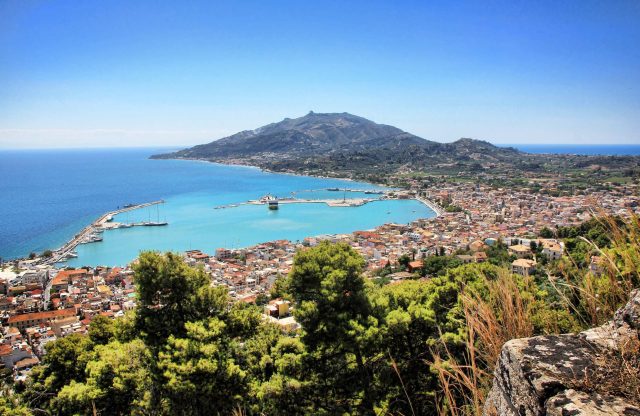
Antikythera is a rocky island of twenty square kilometres, in the channel between Crete and the Peloponnese. It is usually counted as one of the Ionian Islands, although it lies far from the rest of that group. Fewer than fifty people live here all year.
A ferry comes from Piraeus once or twice a week, and the journey takes most of a day.
The island gave its name to the most famous object in Greek archaeology: a bronze machine with gears, brought up from a shipwreck off this coast in 1900. That object is now in Athens. What is here is a walled ancient town, an excavation that continues on the seabed each summer, and a bird observatory.
History & Culture
In 1900, sponge divers from Symi were sheltering from a storm when they found a shipwreck off this coast, lying between forty-five and seventy metres deep. The ship had sunk in the first century BC.
Over the following months they brought up bronze and marble statues, and a corroded lump of metal gears. It took most of a century to understand what that lump was: an astronomical calculator, now called the Antikythera Mechanism. It is in the National Archaeological Museum in Athens, together with the bronze youth and the head known as the Philosopher. None of them are on the island.
Work on the wreck continues. A five-year international project, running until 2025, recovered part of the ship's hull with its original fastenings. The timber was dated to about 235 BC. The team also confirmed that a second wooden ship lies about two hundred metres away.
What the island itself has
Above the bay of Xeropotamos stands the walled ancient city of Aigila, the one substantial ruin on Antikythera. Its walls are still six metres high in places, and the city held perhaps a thousand people.
At the harbour below, a neosoikos is cut into the rock. This is a slipway for pulling a warship out of the water, and very few survive complete in Greece.
Catapult stones and spearheads were found in the walls, which suggests a violent end. The city was probably allied to Phalasarna, a pirate base in Crete, and both fell to Rome in 69 BC. A temple to Apollo and Artemis stood by the harbour from the late fourth century BC.
The site is open, and the excavation team gives guided tours in August.


Nature & Outdoors
Antikythera is long, narrow, and almost empty of people. This makes it one of the best places in the Mediterranean to watch birds crossing between Africa and Europe.
A permanent bird observatory has worked here since 2000, and it holds the longest continuous record of bird migration in Greece.
About 250 species have been recorded. Twenty-eight kinds of bird of prey pass through, and marsh harriers and honey buzzards sometimes arrive in their thousands. The island also has one of the largest colonies of Eleonora's falcon anywhere in the world — the falcons are here because the small migrating birds are.
The observatory works in two seasons: from late March to late May, and from late August to late September. It runs on volunteers, who stay in a purpose-built guesthouse.
Away from the observatory, footpaths lead to the walls of the ancient city, and south along the spine of the island to the lighthouse at Apolytares.


Beaches
There are four places to swim, and none of them has any facilities.
Potamos has a small beach next to the harbour.
Xeropotamos lies east of the village, below the ancient city. The water is clear and it is very quiet, and you can easily combine it with a visit to the ruins.
Chalara is the other beach within walking distance.
The one worth extra effort is Kamarela, a small cove at the southern end, where the sea has cut arches and hollows into the rock. You reach it on foot, or by boat when the sea is calm enough — which it often is not.
Where to Stay
Prices shown per night for a sample 3-night stay. Rates and availability vary by season — select your dates for live pricing.
Practical information
Getting there
There is no airport and no daily boat. Ferries from Piraeus run once or twice a week and take about 8½ hours. In some months, particularly March and April, there may be no service at all. The shorter crossings are from Kythira (Diakofti), about 2 to 2½ hours, up to five times a week, and from Kissamos in Crete, about 2 hours, twice a week. There are also boats from Neapoli and Gythio in the Peloponnese. You cannot come and go on the same day — plan to stay.
Getting around
The island is 20 km² and has one village, Potamos, where the harbour is. There is no bus, no taxi and nothing to rent. You walk everywhere, on dirt roads and paths. The ancient city, the beaches and the lighthouse are all within a day's walk of the village. Take a hat and more water than you think you need.
When to go
The two bird migration seasons — late March to late May, and late August to late September — are the most interesting times to visit, and also when the island has most life in it. August brings the summer residents, the excavation team and the guided tours of the ancient city. Ferries are most reliable from June to September. In winter there are few sailings and they depend on the weather.
Good to know
Bring cash — there is no cash machine. There is also no petrol station, no pharmacy and no proper shop. Rooms are few and open only in summer, so book before you sail, not after you arrive. There is one restaurant, so check that it is open for your dates. You cannot dive on the shipwreck. It is a protected archaeological site with an active excavation, and it lies far deeper than recreational diving allows.