Exploring Evia Island
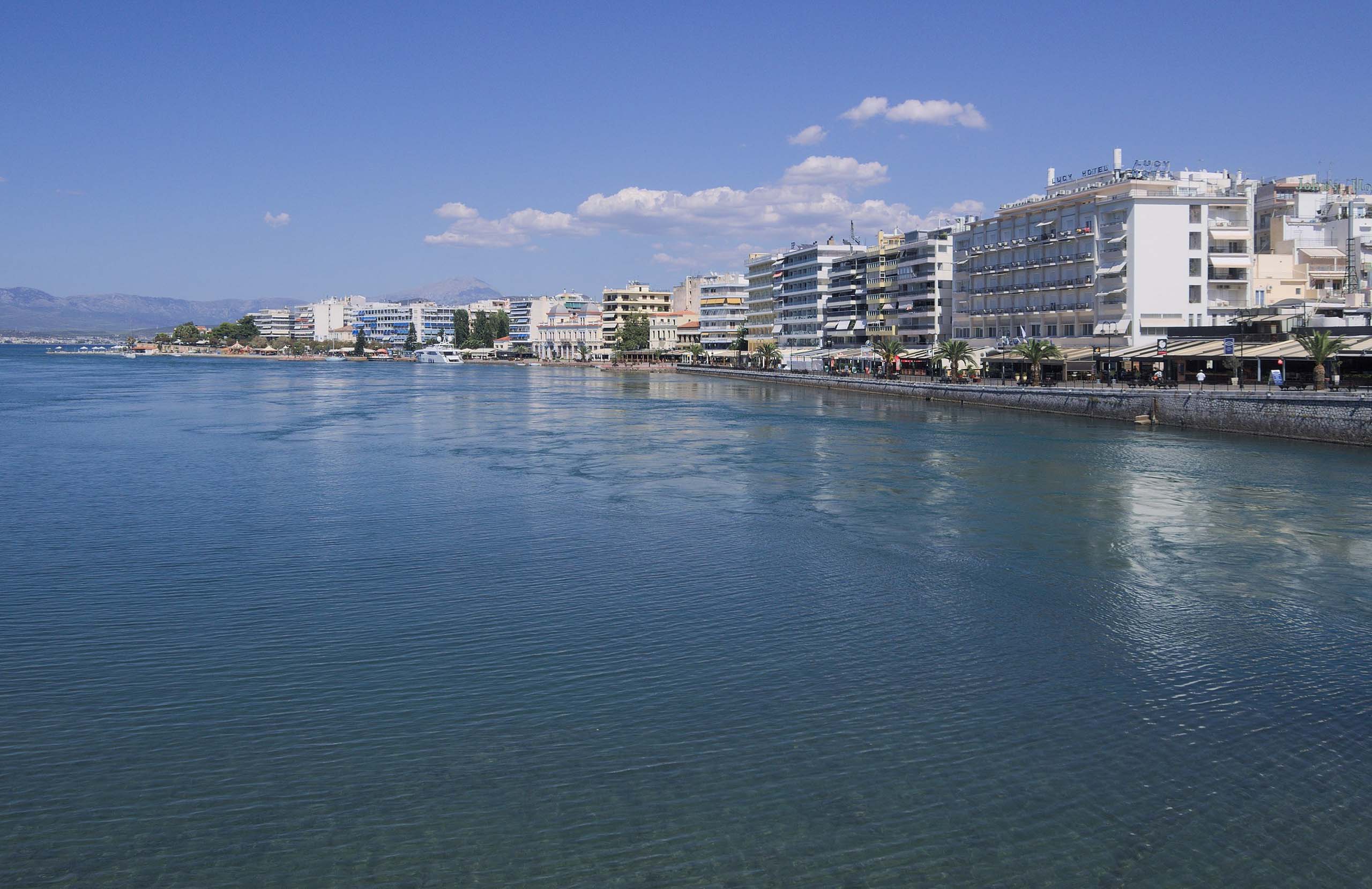


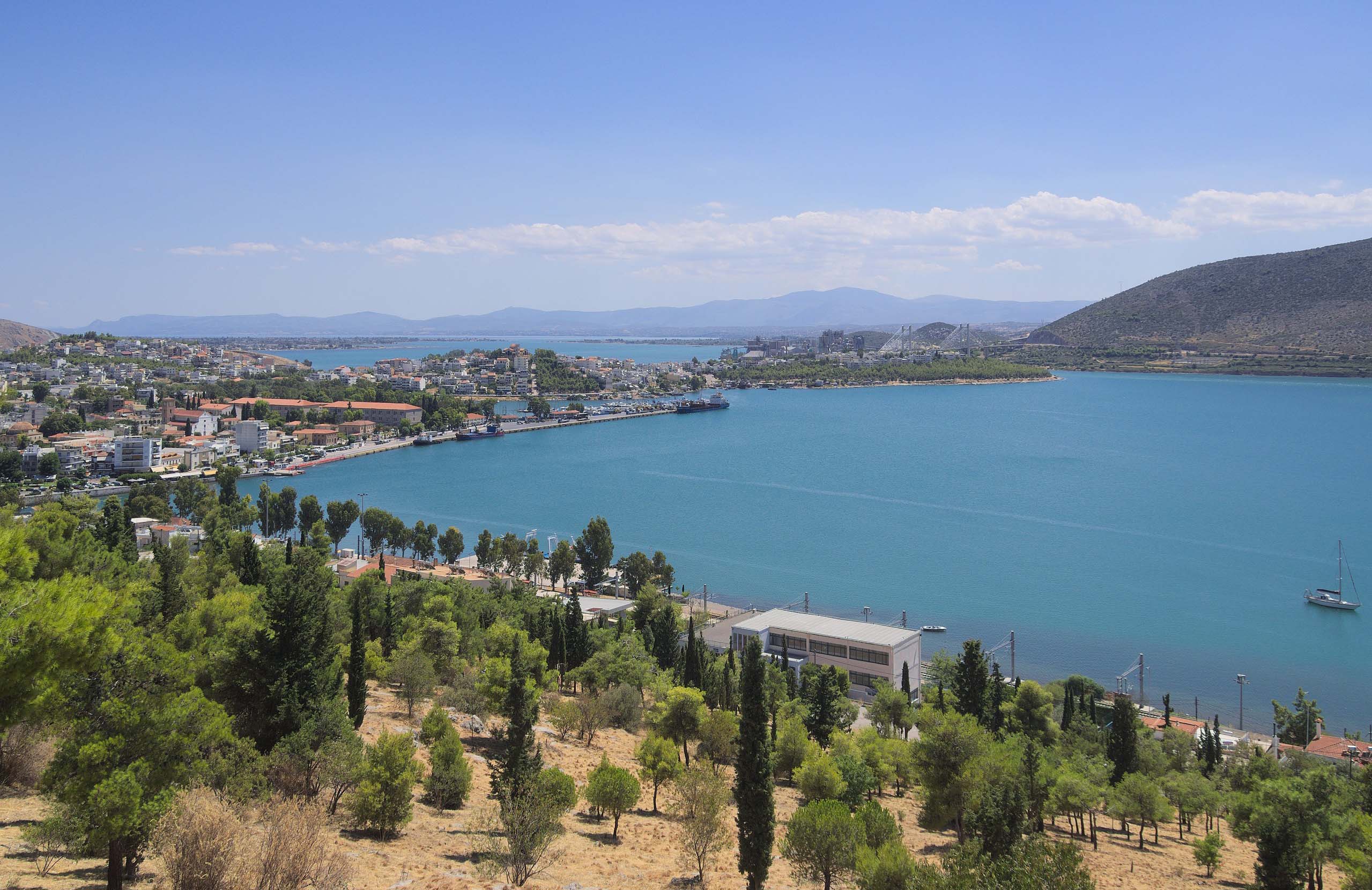
Evia is the second largest Greek island, and it does not feel like an island at all. Two bridges at Chalkida join it to Central Greece, and the strait beneath them is forty metres wide.
The island runs for about 180 kilometres from northwest to southeast, and it changes completely along the way. The north is the greenest part, with pine forest and running water. The centre rises to the alpine slopes of Dirfys. The south is bare, windswept and scattered with megalithic buildings nobody can fully explain.
At Chalkida the water in the strait changes direction roughly every six hours, and has puzzled people since Aristotle.
History & Culture
The strait that changes its mind
The Euripus Strait is forty metres wide and eight and a half metres deep, and the current running through it reverses about every six hours — four times in a normal day, and on some days as many as fourteen. It can reach considerable speed.
The explanation accepted today is that the tidal wave coming in from the Aegean enters the north and south Euboean Gulfs by routes of different lengths. The southern wave arrives about an hour and a quarter earlier, raising the water by thirty or forty centimetres and pushing a current northward. Six hours later the situation reverses.
The current is regular around the new and full moon and irregular in between. Aristotle and Eratosthenes both wrote about it, and the whole cycle takes 24 hours and 52 minutes — one lunar day.
The old bridge at Chalkida is the place to watch it, and people do, for hours.
Eretria
Twenty kilometres southeast, Eretria was one of the leading city-states of the Greek world in the eighth to fifth centuries BC. It fought the Lelantine War against neighbouring Chalkida over the plain between them, sent colonists west, and was destroyed by the Persians in 490 BC.
Swiss archaeologists have excavated here systematically since 1964, and the results are unusually complete. An archaeological park at the north edge of the modern town takes in the city walls and west gate, the theatre, the gymnasium and fourth-century houses.
The building people remember is the House of the Mosaics, built about 370 BC and dug in 1975. Three of its rooms have pebble mosaic floors: a Nereid riding a sea-horse, griffins fighting Arimaspians, sphinxes.
The Archaeological Museum stands beside the site and holds the sculptures from the west pediment of the Temple of Apollo Daphnephoros — Theseus carrying off the Amazon queen Antiope.
Modern Eretria is younger than it looks. It was founded in 1824 by refugees from Psara and was first called Nea Psara.
The Dragon Houses
In the south, near Styra, near Karystos, and on the summit of Mount Ochi, stand buildings made of enormous unmortared stone slabs, with corbelled roofs. They are called Drakospita — dragon houses.
Nobody knows for certain who built them or why. The usual explanation is that they were cult buildings, and the one on Ochi is the best preserved.
Saint John the Russian
At Prokopi, in the north, the church of Agios Ioannis Rossos draws one of the larger pilgrimages in Greece. The relic was brought here in 1924 by refugees from Cappadocia, who gave the village the name of the town they had left.

Villages & Inland
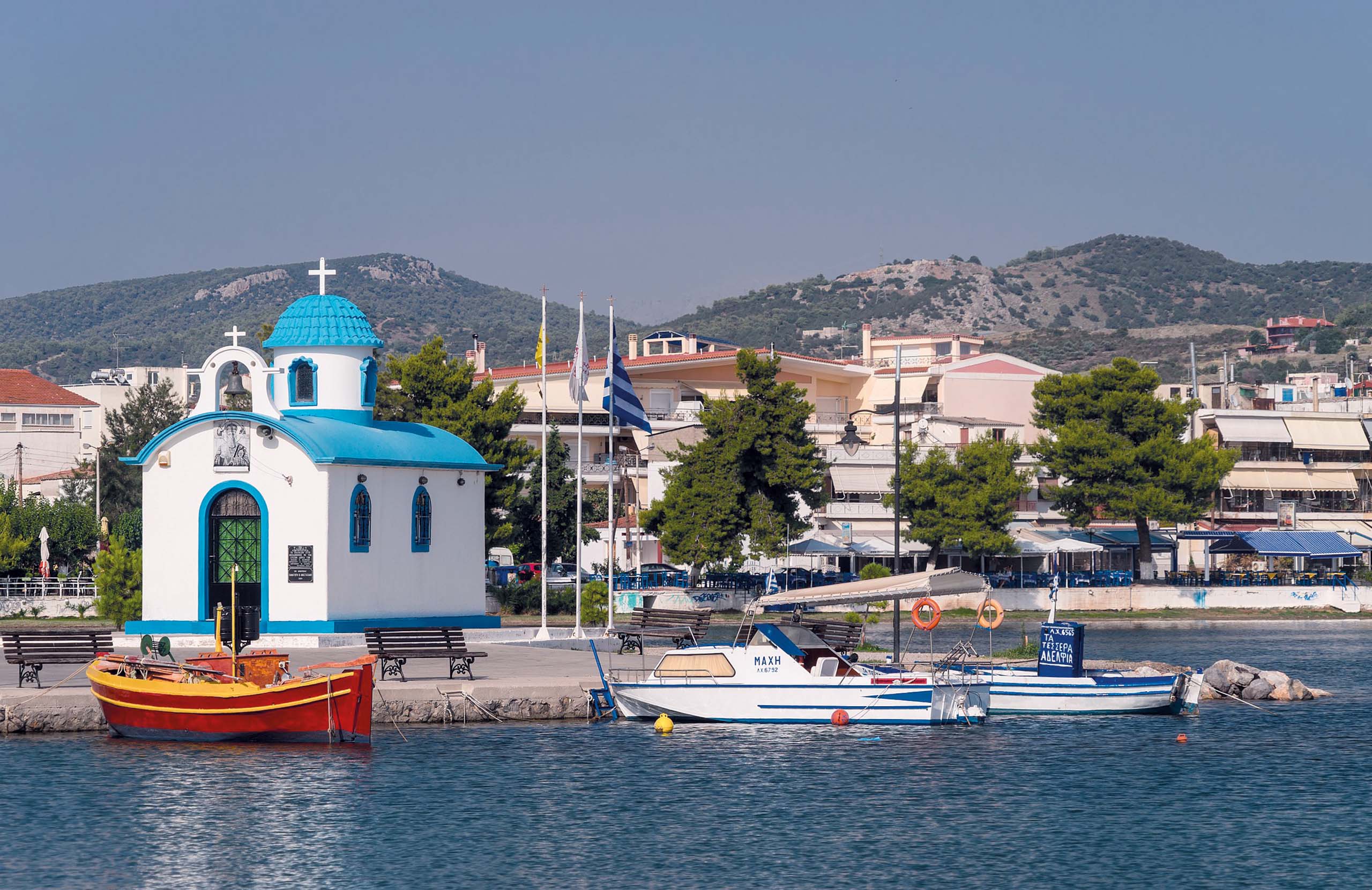
Chalkida is the island's capital and a real working city — university students, a long waterfront, and busy evenings.
The north has the softest landscape. Limni is a small port town of neoclassical houses and narrow lanes on the northwest coast, and Loutra Aidipsou beside it has been a spa town for two thousand years. Inland stand the monasteries of Osios David and Galataki.
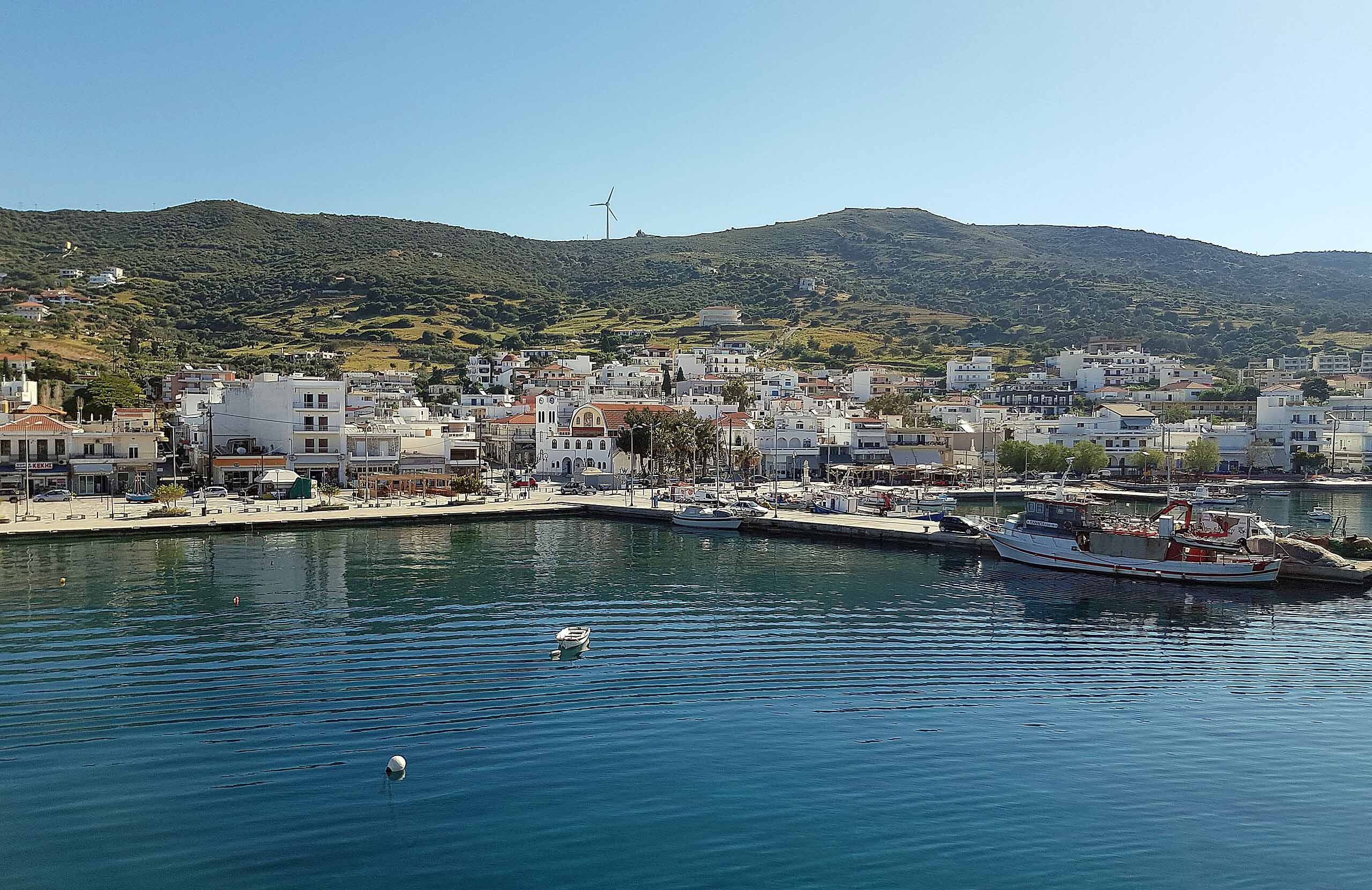
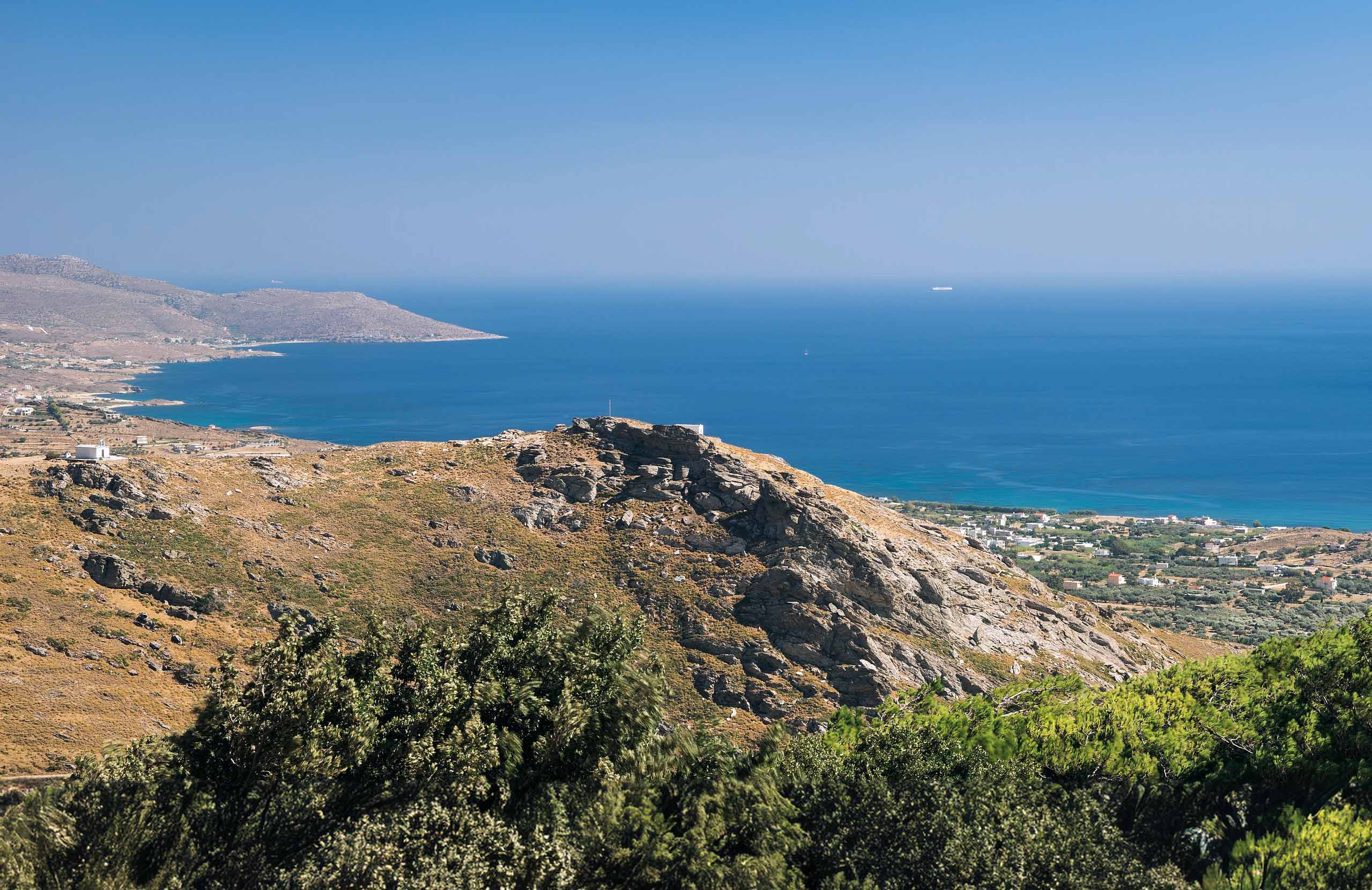
The centre is mountain country. Steni, in the folds of Dirfys, is the base for walking, and Kymi, on the east coast, sits high above its own harbour with a folklore museum and a view straight out to the open Aegean.
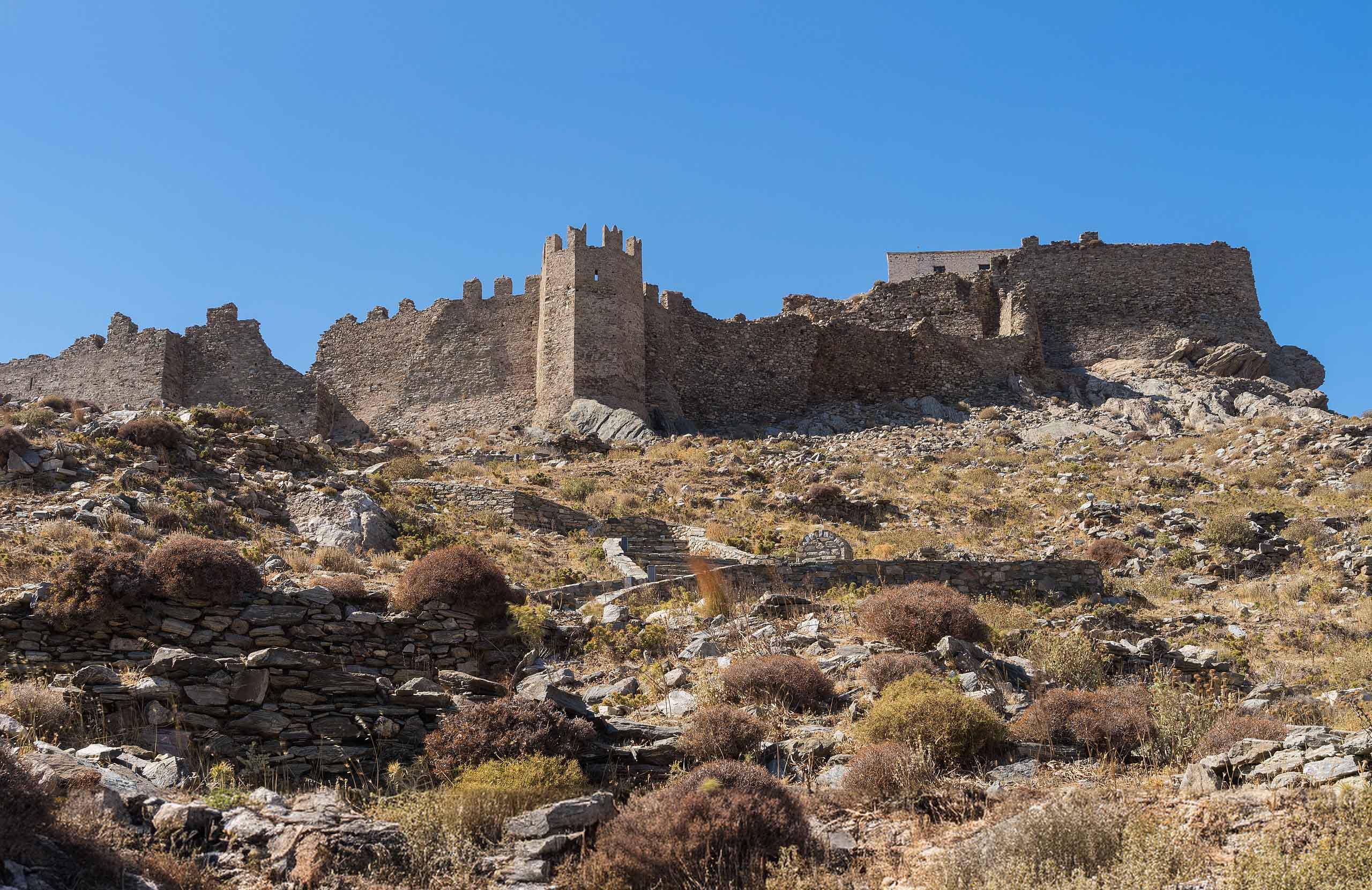
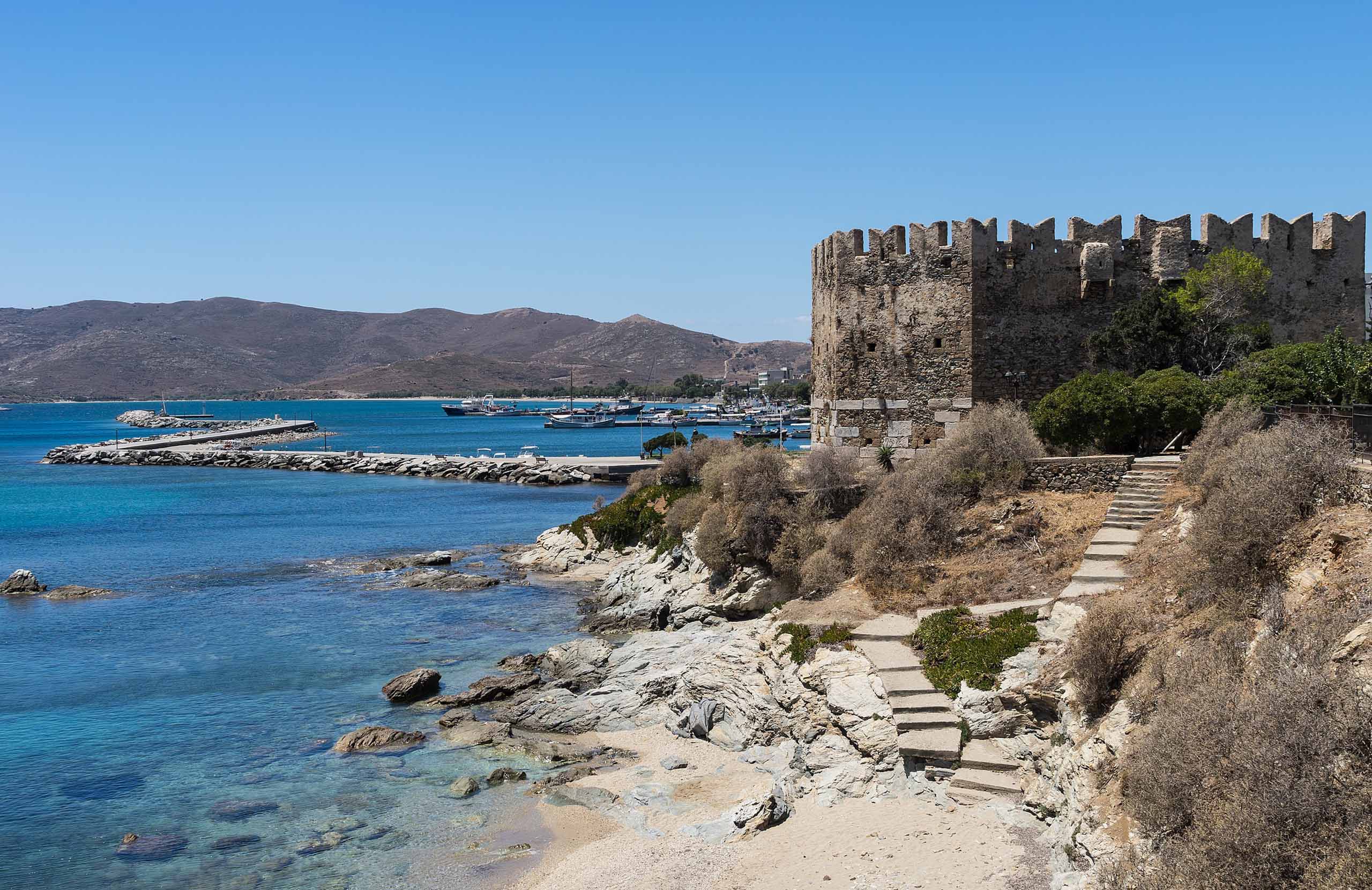
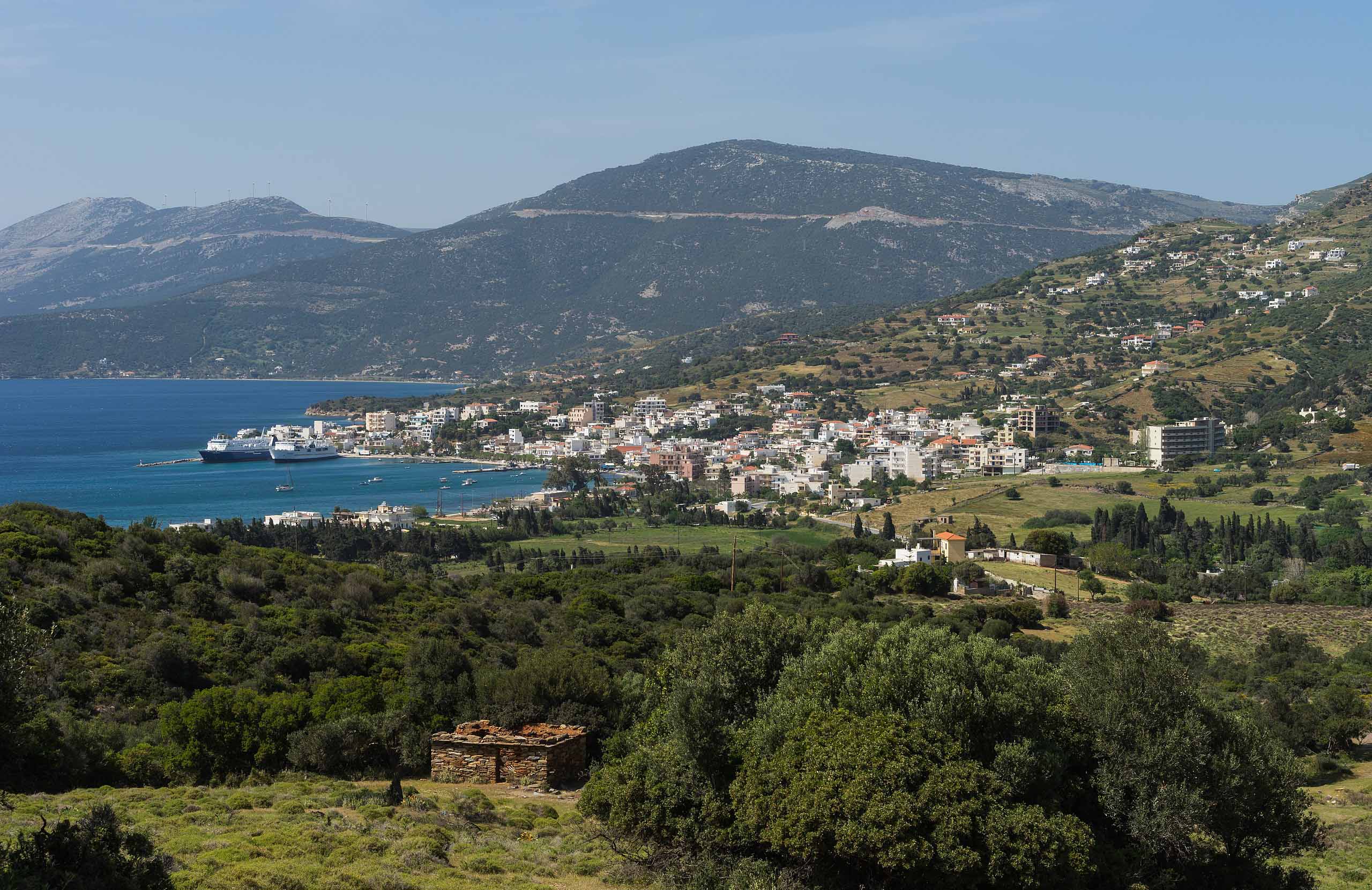
The south is drier and emptier. Karystos lies below Castello Rosso, a Frankish castle on the slope above it, with the small Venetian fort of Bourtzi on the seafront. Marmari and Nea Styra are ferry ports for Attica, and the villages behind them live from livestock on the slopes of Ochi.

Nature & Outdoors
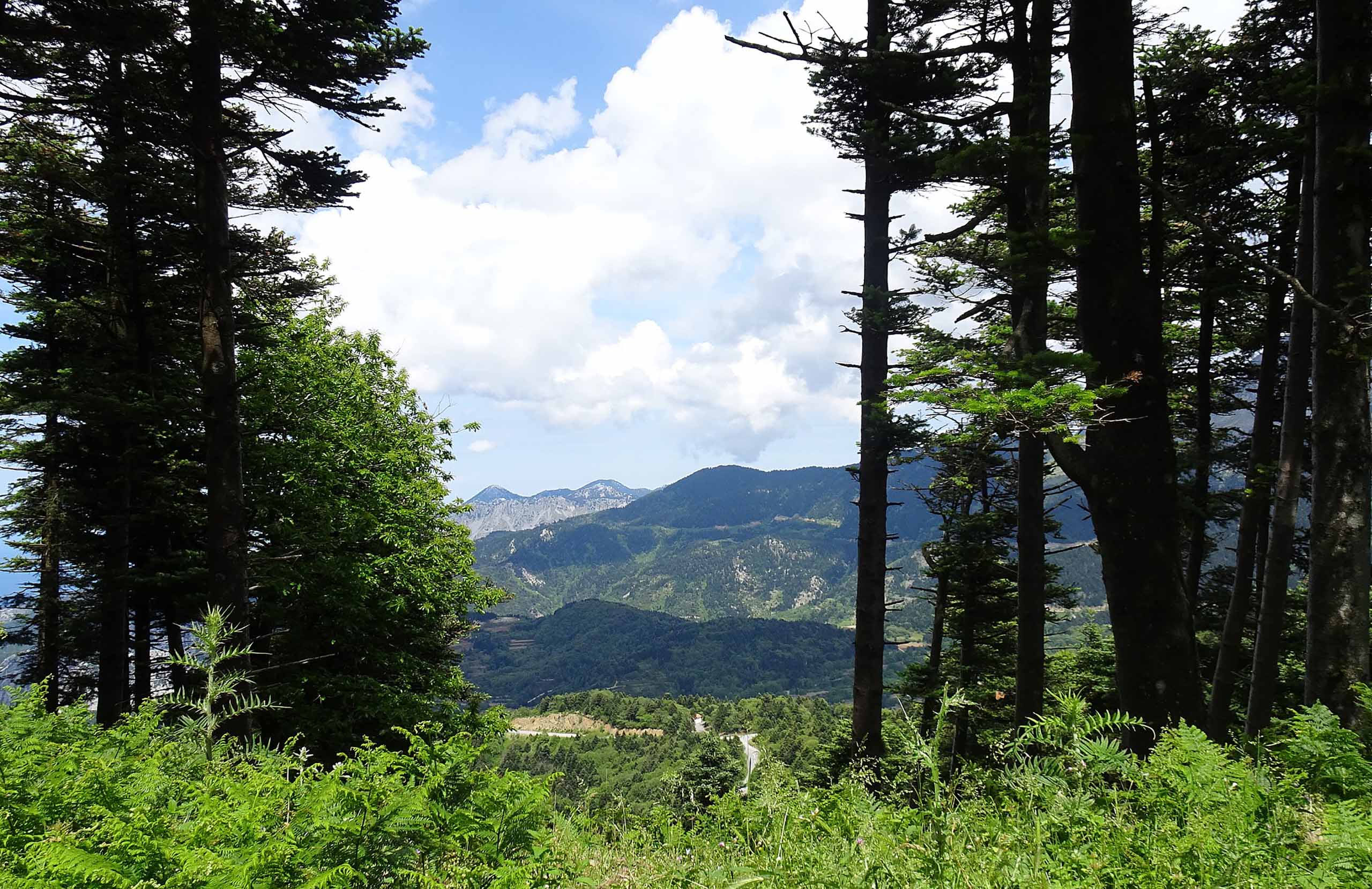
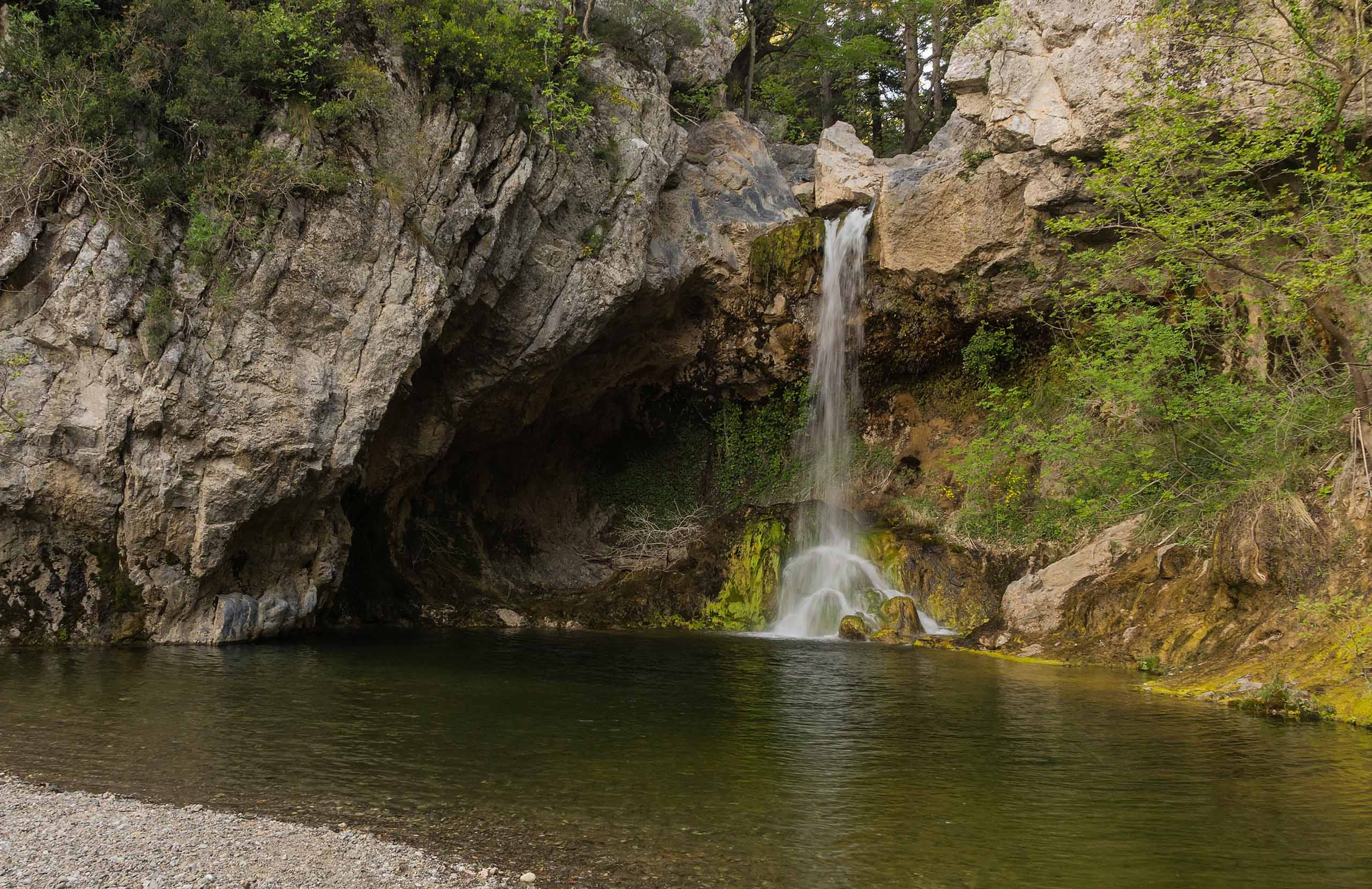
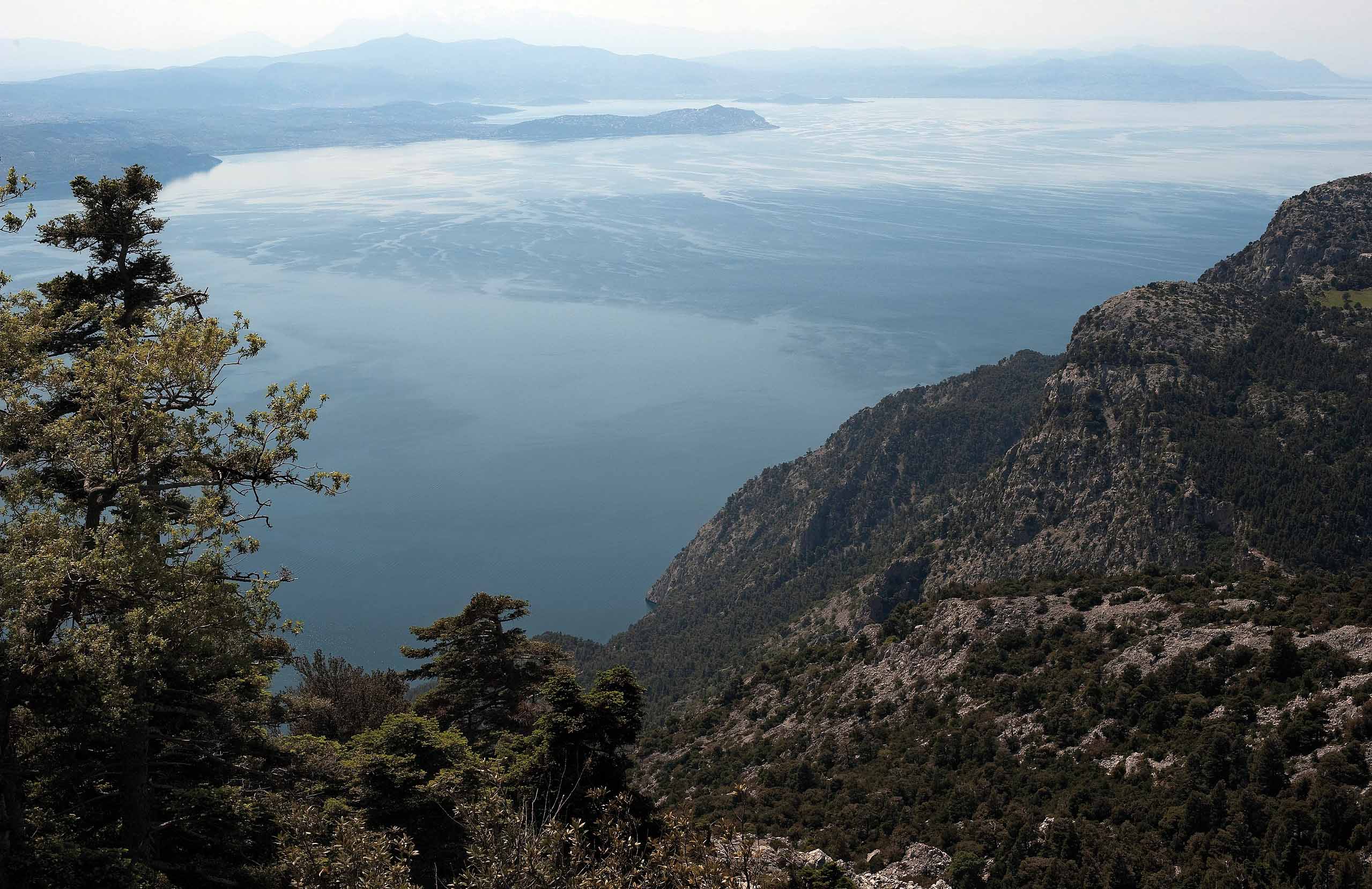
The north of the island is its softest landscape, with pine woods, plane trees and streams. A large fire in August 2021 burned through much of this ground, and parts of it are still recovering; young pines have come up over wide areas, and other stretches remain open. Around Osios David the woods survived, and the Drymonas waterfalls below the monastery fall through green.
The mountains
Mount Dirfys, in the centre, is the highest point on the island and has genuinely alpine ground near the summit. Steni is the usual starting point, and there is a refuge on the mountain.
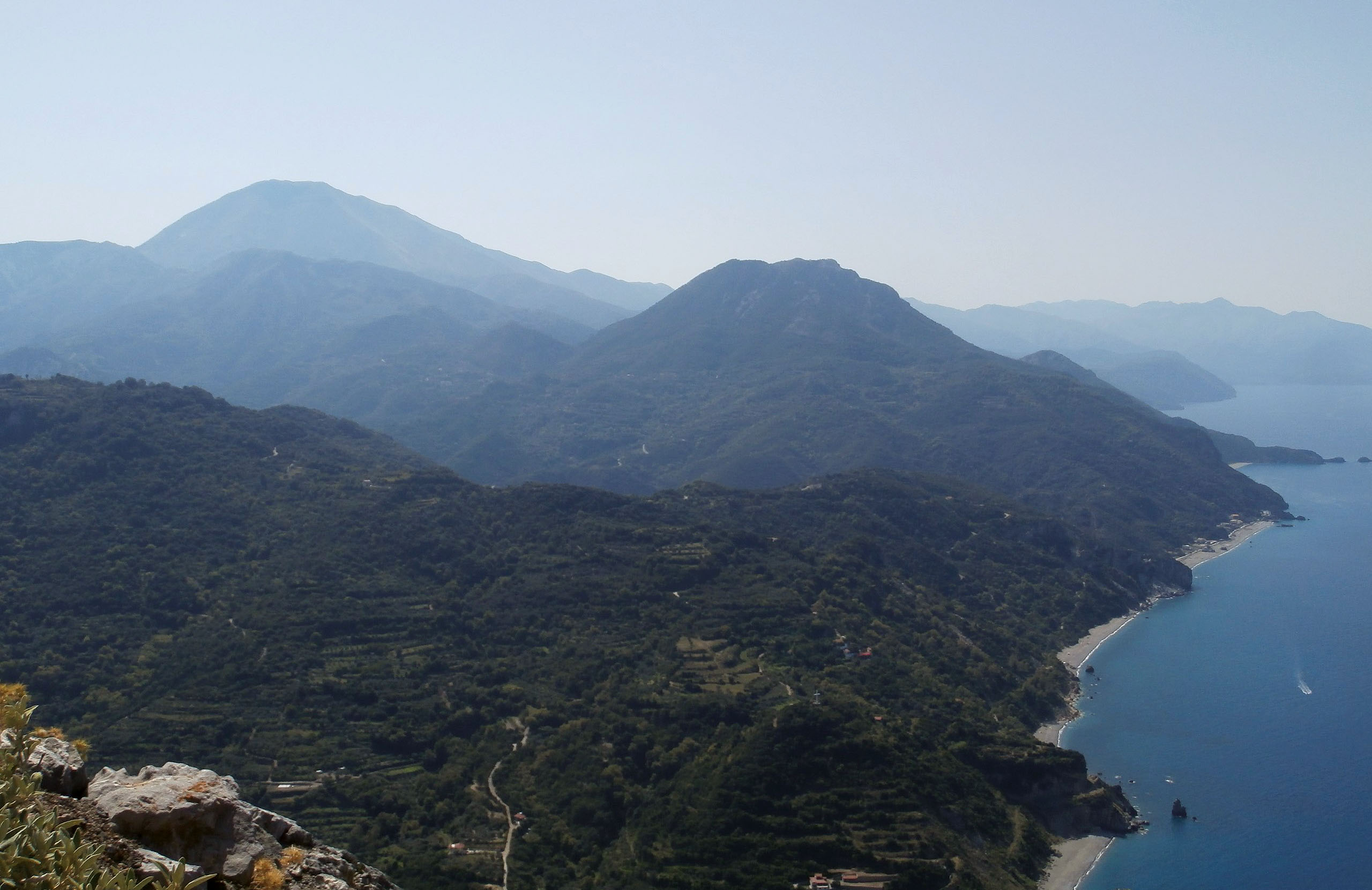
In the south, Mount Ochi rises above Karystos, with a dragon house at the top. The Dimosari Gorge runs down its eastern flank to the sea — about four hours of walking, through plane trees and running water, in country that is otherwise dry. It is the best-known walk on the island.
Cavo Doro, the cape at the southern tip, is one of the windiest stretches of water in Greece and has a fearsome reputation among sailors.
Beaches
Evia has a great deal of coast and the two sides are different.
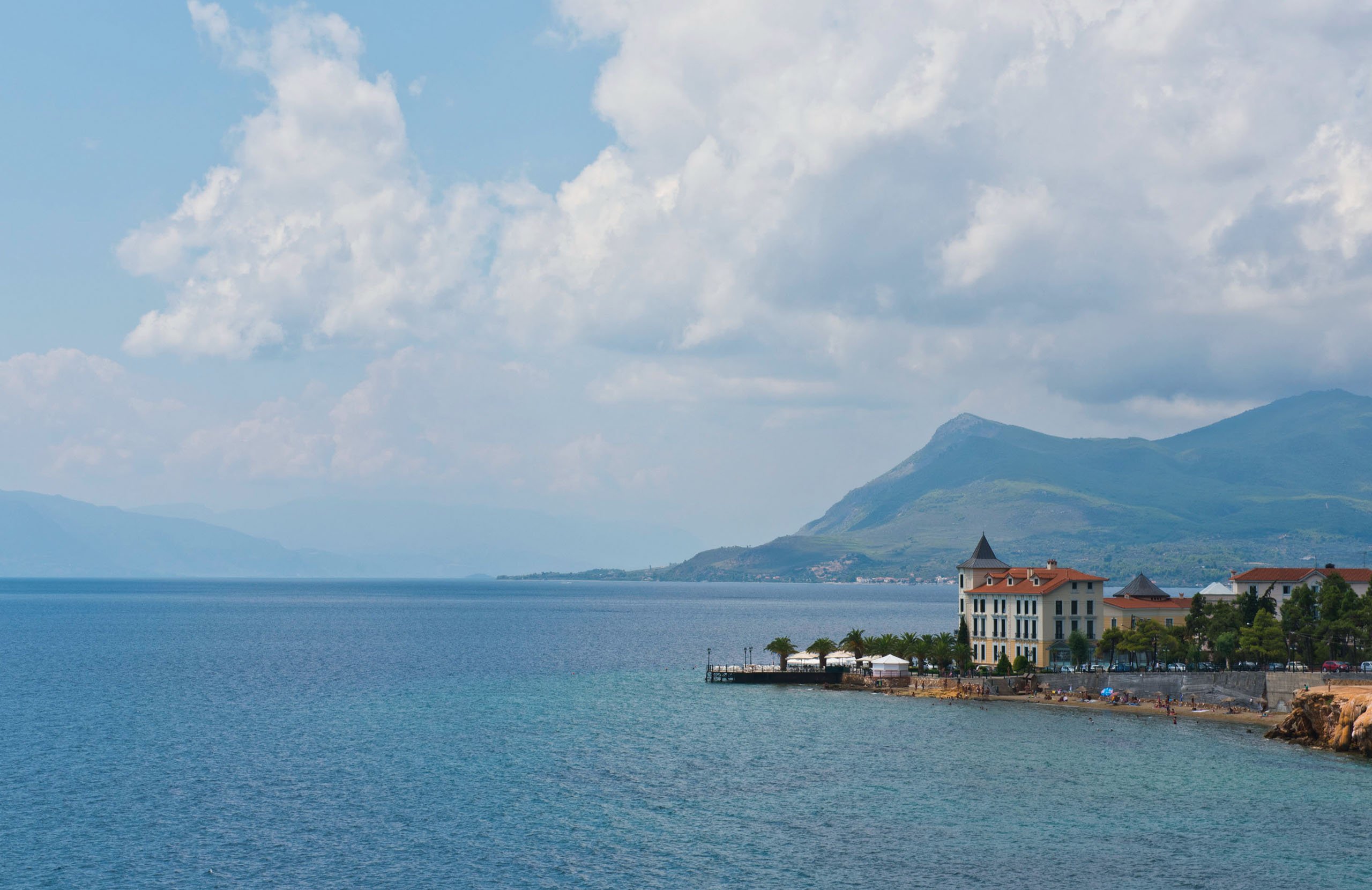
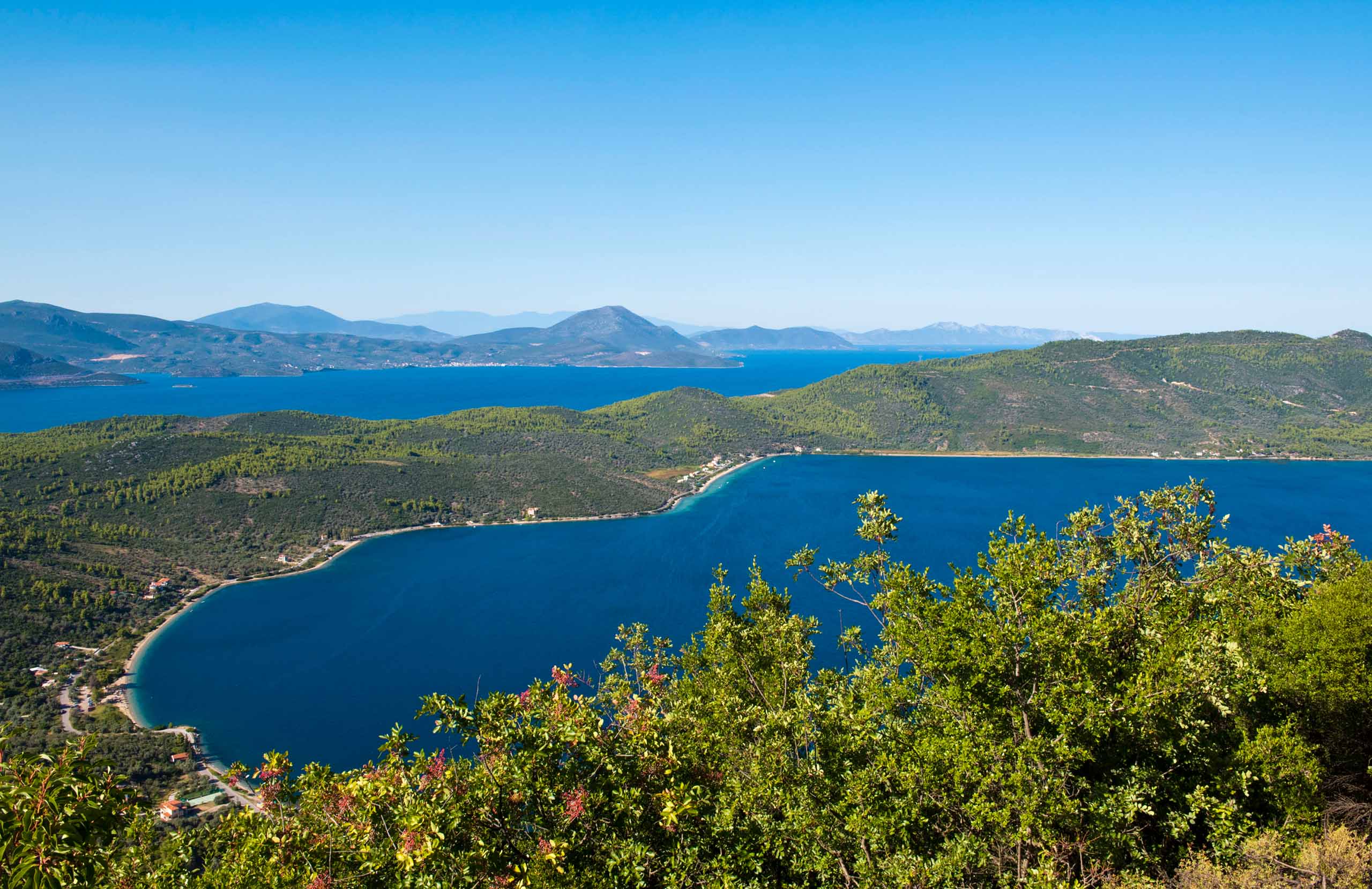
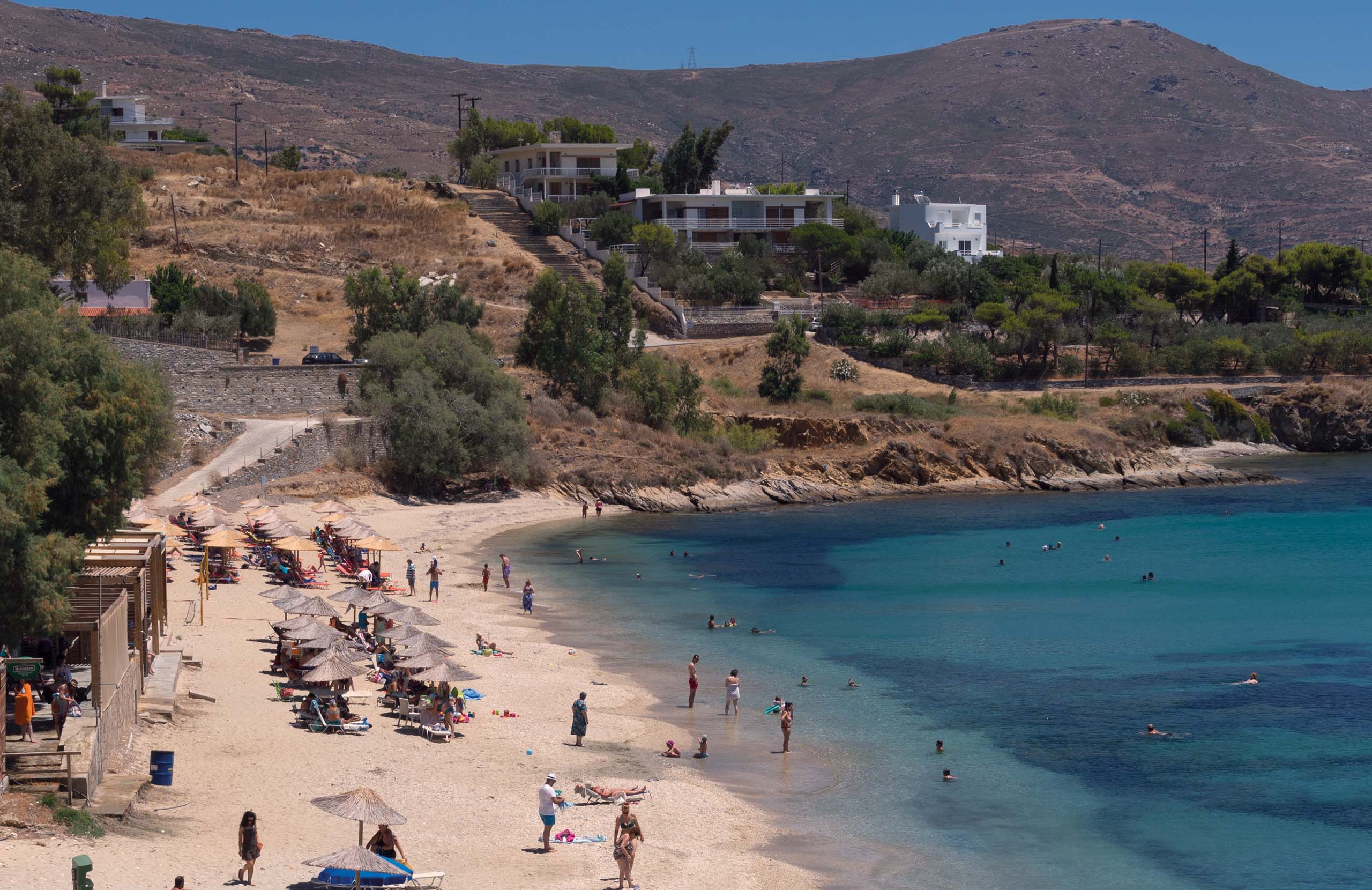
The west, facing the mainland across the Euboean Gulf, is sheltered and shallow. Eretria, Amarynthos and the beaches around Limni are calm, easy and busy with Athenians at weekends.
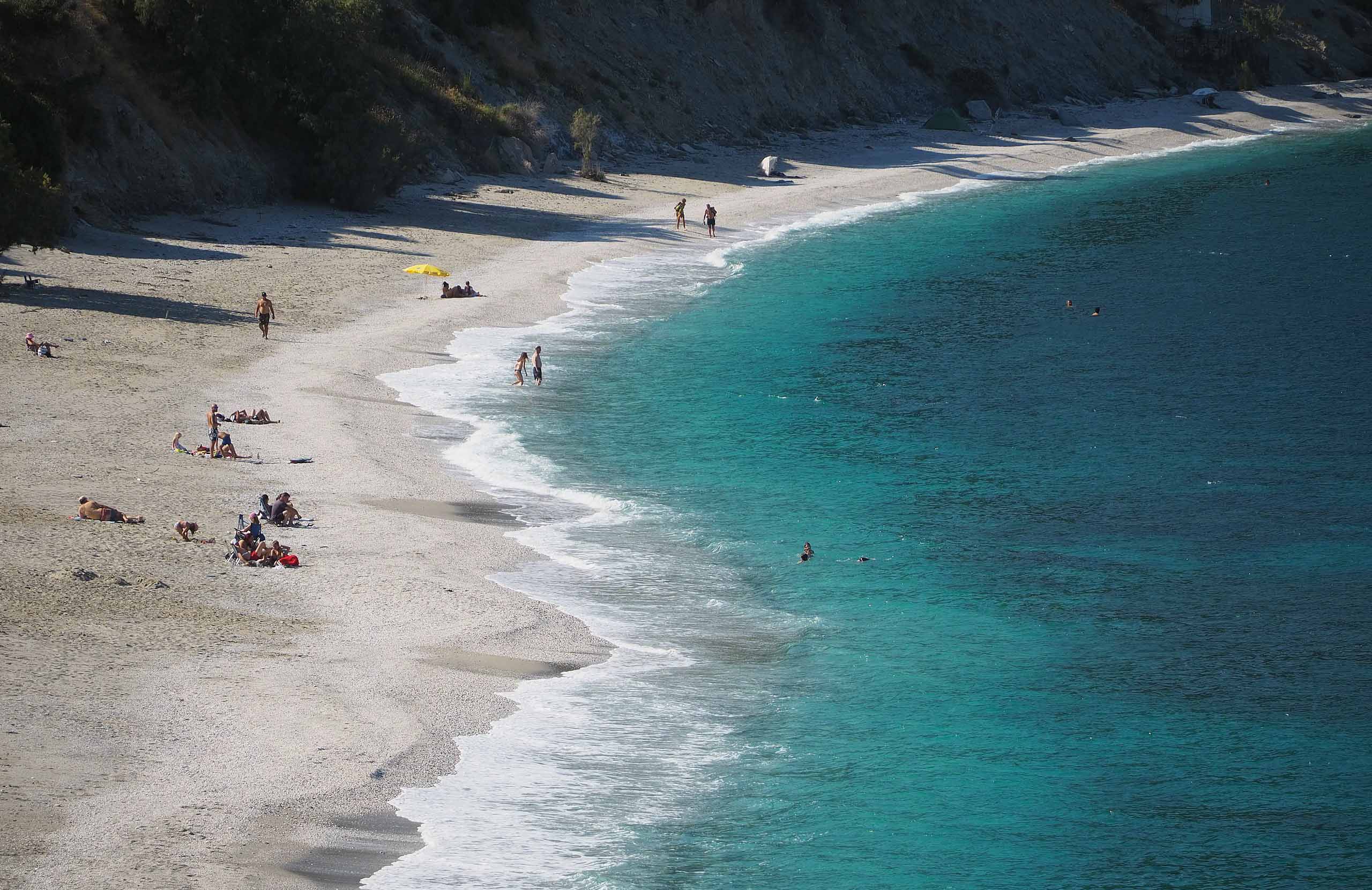
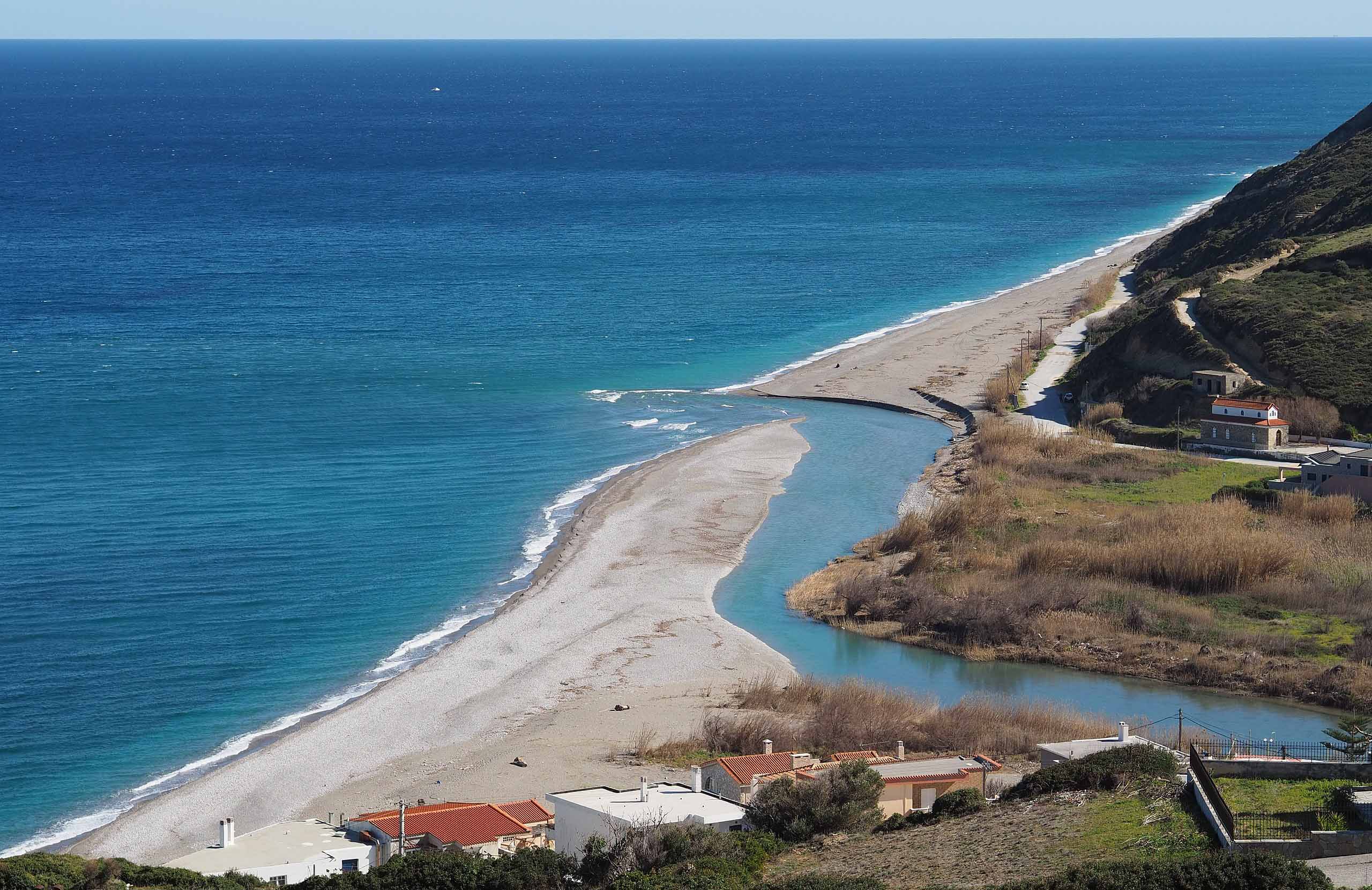
The east, open to the Aegean, is wilder. Chiliadou, below Dirfys, is the one people talk about: pebbles and clear deep water at the end of a winding road, reached in about an hour from Chalkida. Kalamos and the coast around Kymi are the same kind of place.
The south has the sand. Around Marmari, Nea Styra and Karystos the beaches are long and open, and the wind that makes this coast difficult for swimming on some days makes it good for board sports on others.
Off the northwest tip, the Lichadonisia are a small group of islets reached by boat and often described as the closest thing Greece has to a tropical lagoon.
Wellness
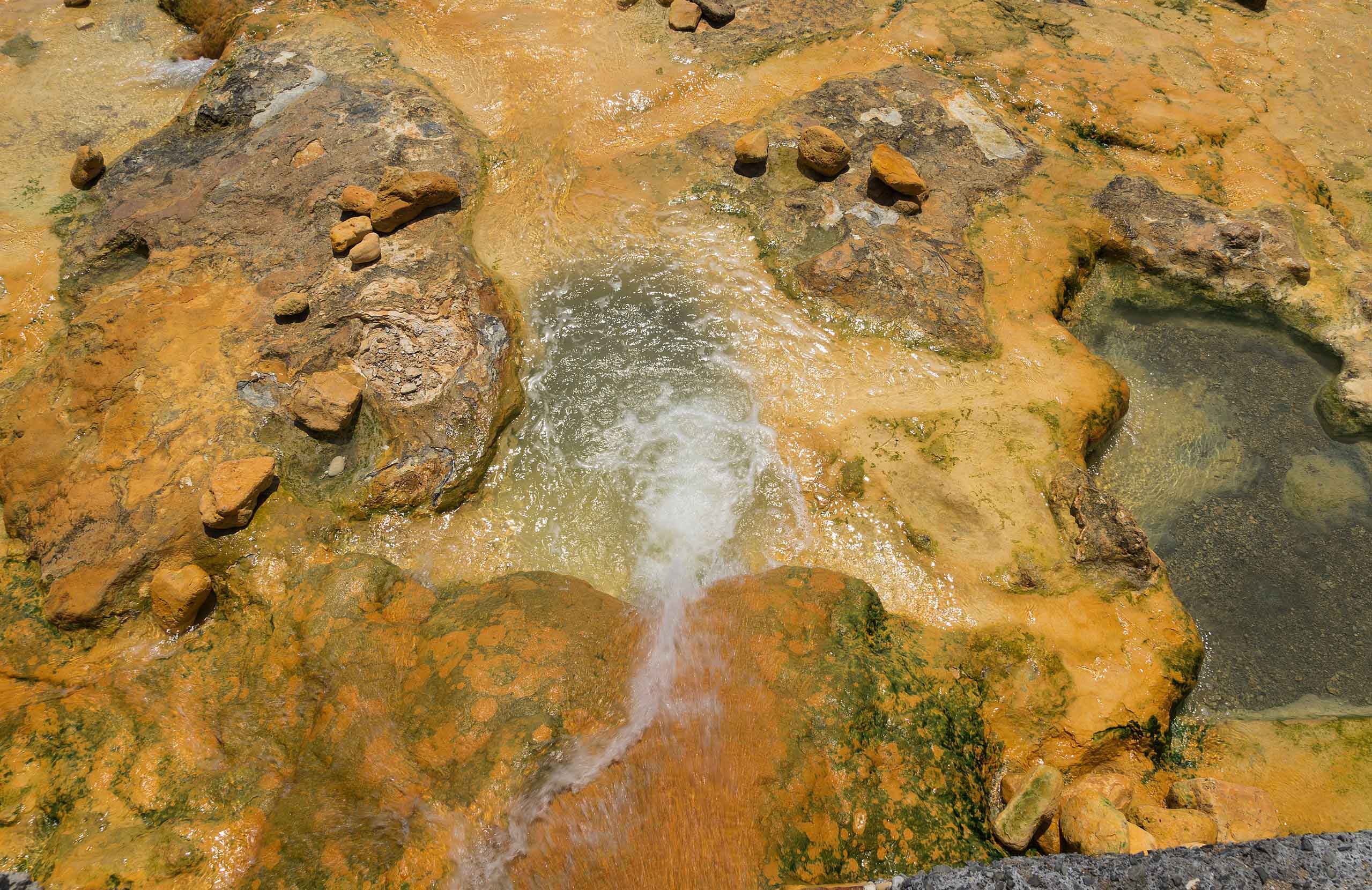
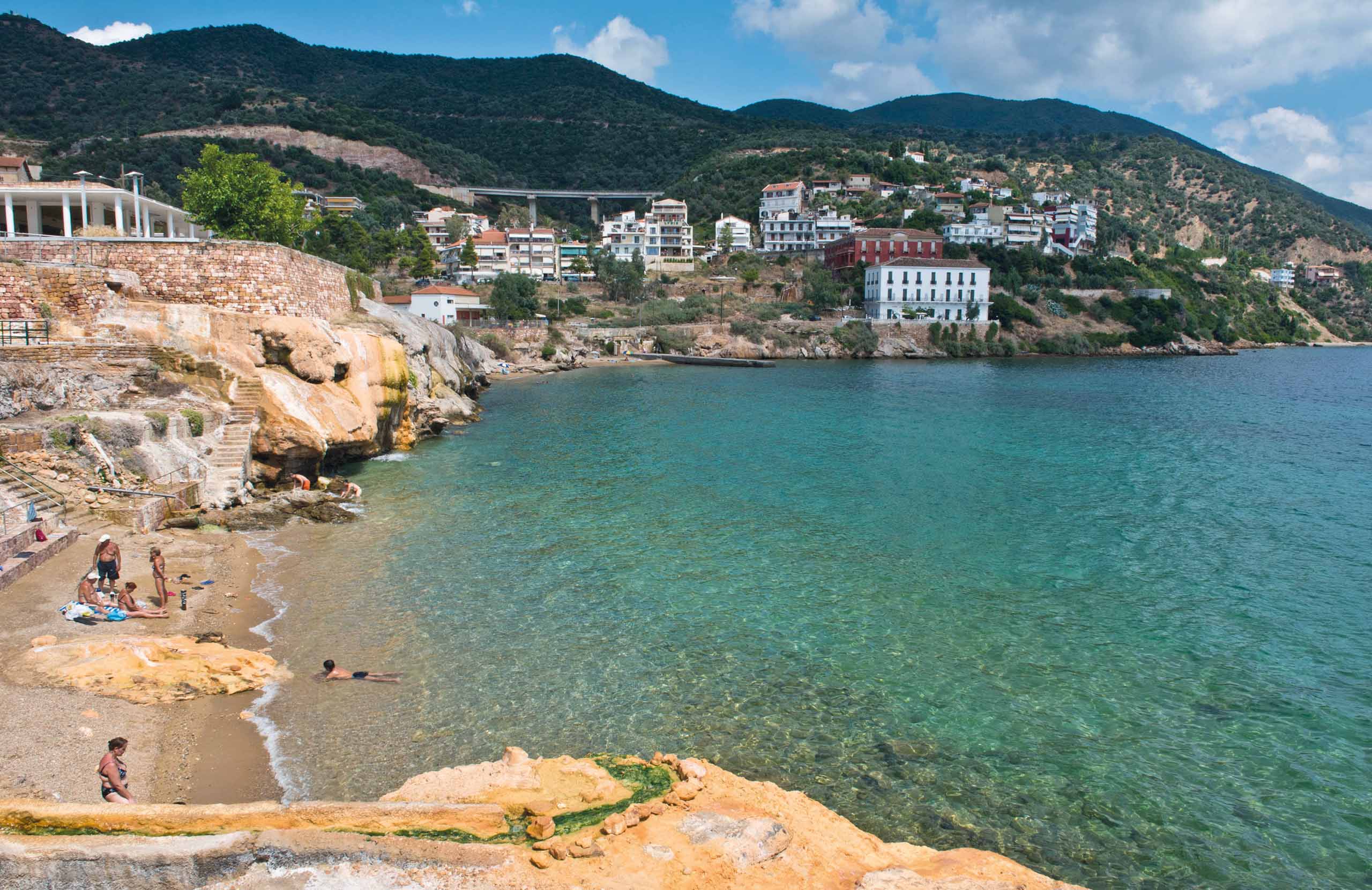
Loutra Aidipsou, on the northwest coast, is the best-known spa town in Greece and has been in use since antiquity. Around eighty hot springs rise here, and the water reaches the surface at high temperature, rich in minerals.
The town grew around them in the nineteenth and twentieth centuries, and it still fills with people who come specifically to take the waters. Some springs run straight into the sea, so you can sit where the hot water meets the cold without paying anything.
There are further hot springs at Gialtra, on the same coast.
Food & Drink
The south of the island is grazing country, and its cheeses are the thing to look for: a sharp touloumisio kept in skin, along with anthotyro and kefalograviera. Meat from animals raised on the slopes of Ochi is the local speciality.
Honey is the island's best-known product, particularly from the forests around Dirfys, and figs from Kymi are dried and eaten through the winter.
Northern Evia lived from pine resin until 2021 and the retsina made with it is part of the local table.
Where to Stay
Prices shown per night for a sample 3-night stay. Rates and availability vary by season — select your dates for live pricing.
Practical information
Getting there
Evia is the easiest large Greek island to reach because you do not need a boat. Two bridges cross at Chalkida — the old sliding bridge in the town and a modern high bridge just outside it — and Chalkida is about 80 km from Athens, roughly an hour and a quarter by car.
There are also frequent trains and buses from Athens to Chalkida, which makes it one of the few islands you can reach without driving.
Ferries connect the mainland to other parts of the island: Oropos to Eretria, Rafina to Marmari, Agia Marina to Nea Styra, and Arkitsa to Loutra Aidipsou. These crossings are short and save a long drive if you are heading for the far north or south.
Getting around
A car is necessary. Evia is 180 kilometres long, the mountain roads are slow and winding, and the distances between the north and south are greater than the map suggests — Chalkida to Karystos takes well over two hours.
Buses connect the main towns, but not usefully for sightseeing.
When to go
May, June, September and October are the best months across the island. July and August bring Athenians in large numbers to the west coast and the southern beaches.
Spring and autumn are the seasons for Dirfys, the Dimosari gorge and the walking generally. Winter is when the spa town at Aidipsos is at its busiest with Greek visitors, and there is snow on Dirfys.
Good to know
The fire of 2021 left visible traces in parts of northern Evia, alongside ground that has regrown. It is worth knowing before you drive north.
Check the times of the Euripus current if you want to see it running at full speed — the change is much more dramatic at some hours than others.
The Archaeological Museum at Eretria closes on Tuesdays, as most Greek museums do.
The Dimosari gorge takes about four hours and ends at a different point from where it starts. Arrange transport back before you set off.
Exploring Evia Island— been there?Tell others what you saw.
A photo and two lines are enough.
