Exploring the Halkidiki Peninsula
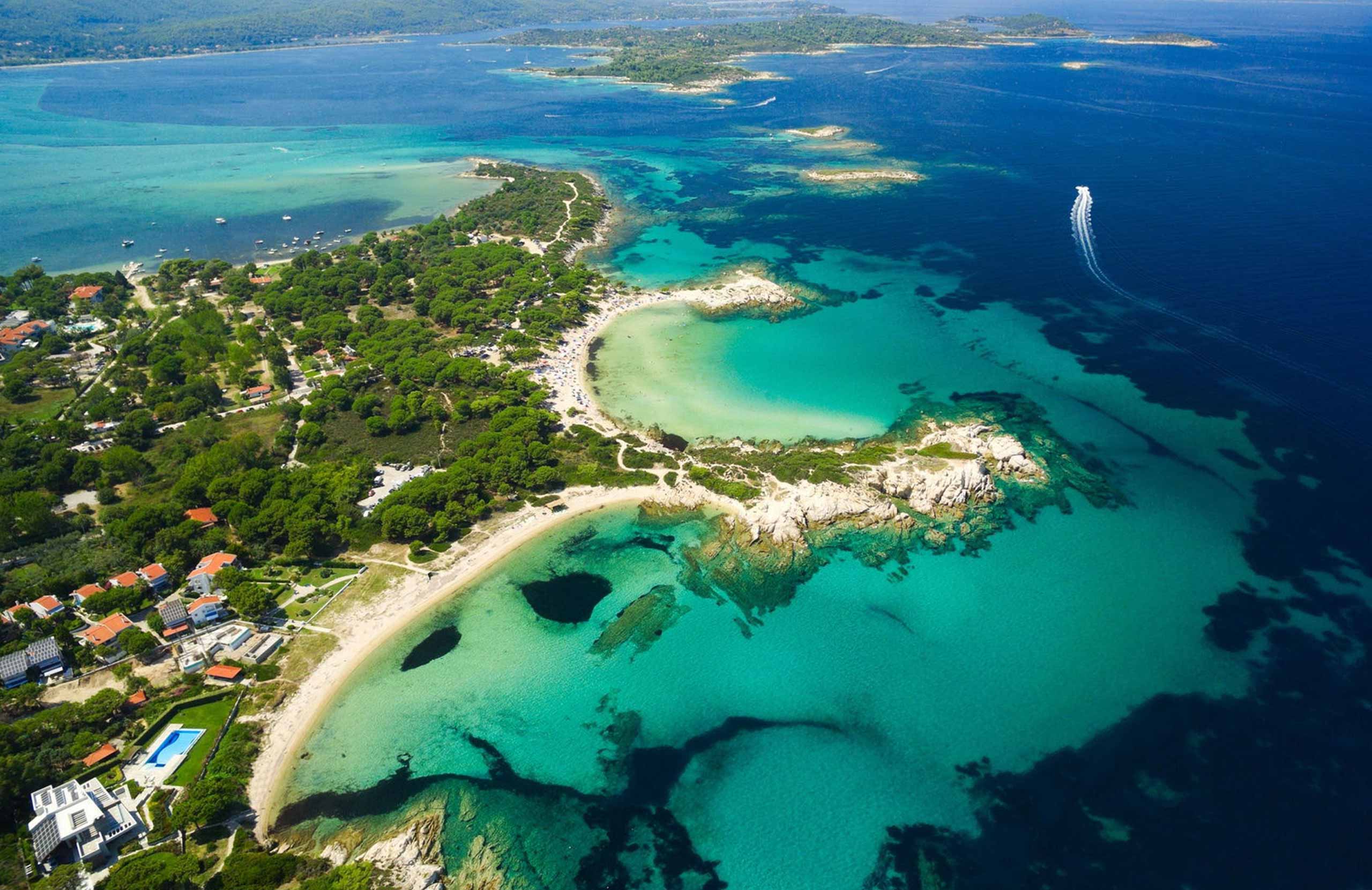
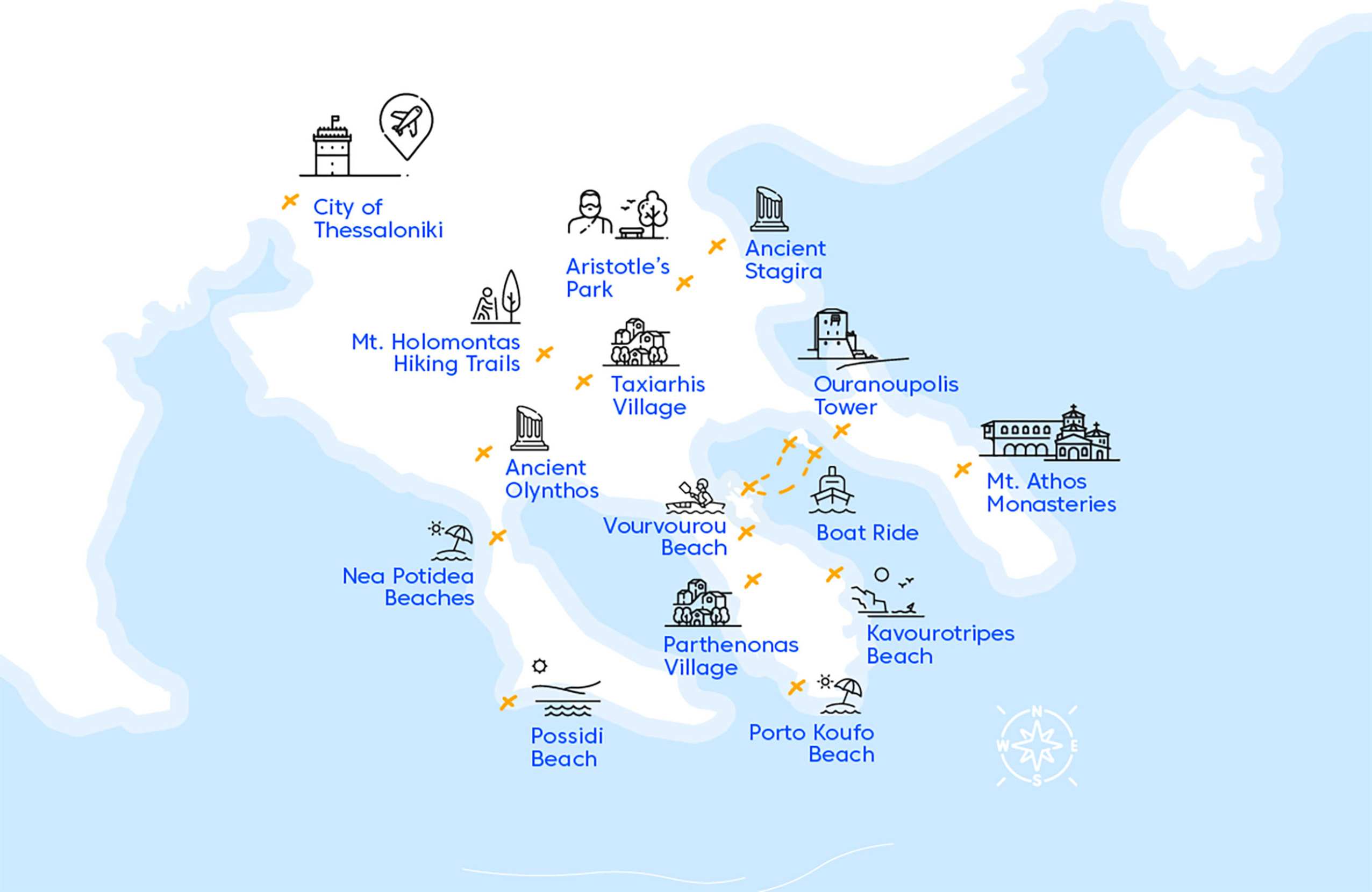
Halkidiki hangs below Thessaloniki in Macedonia and reaches into the Aegean with three long fingers of land.
Kassandra, the western one, is the developed one: resorts, beach bars and the busiest nightlife in northern Greece. Sithonia, in the middle, is greener, quieter and more indented, with pine forest running down to small coves. Mount Athos, the eastern one, is a self-governing monastic republic that most visitors will only see from a boat.
Behind the three peninsulas, the mainland part of Halkidiki holds olive groves, the birthplace of Aristotle, and a cave where the oldest human remains in Greece were found.
What travellers posted
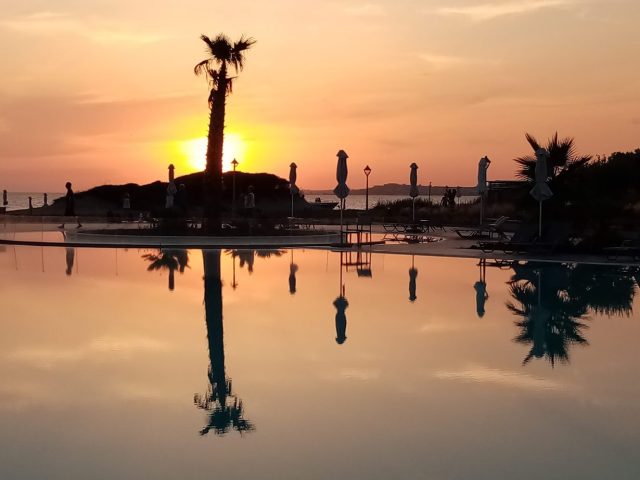
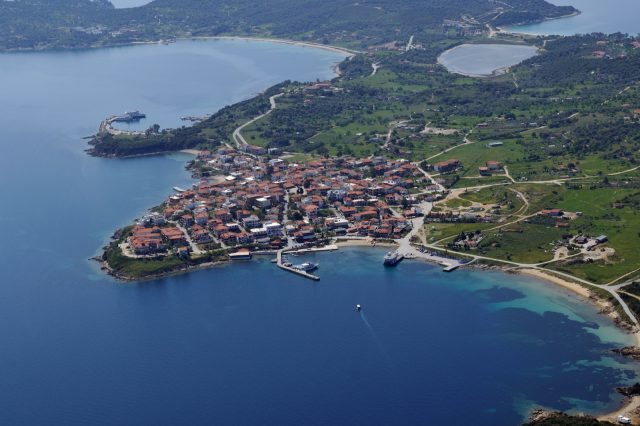
Been here? A photo and two lines are enough.
History & Culture
The Petralona Cave
At the foot of Mount Katsika, on the western side of Halkidiki, the Petralona Cave is one of the most important caves in Greece and the second most visited ancient monument in the north of the country.
In 1960 a group of amateur explorers found a human skull inside it. They removed it without recording where exactly it had lain, which has made it difficult to date ever since — estimates run between about 250,000 and 300,000 years.
Its importance is not only its age. It is the oldest human remain found anywhere in Greece, and it came out of the ground complete, which makes it one of the most useful cranial fossils in the European record. Stone tools and a great deal of fossil animal bone came from the same cave.
The cave also has an extensive display of stalactites and stalagmites.
It reopened on 28 February 2024 after five years closed for restoration, and the museum beside it followed in August of the same year.
Stagira
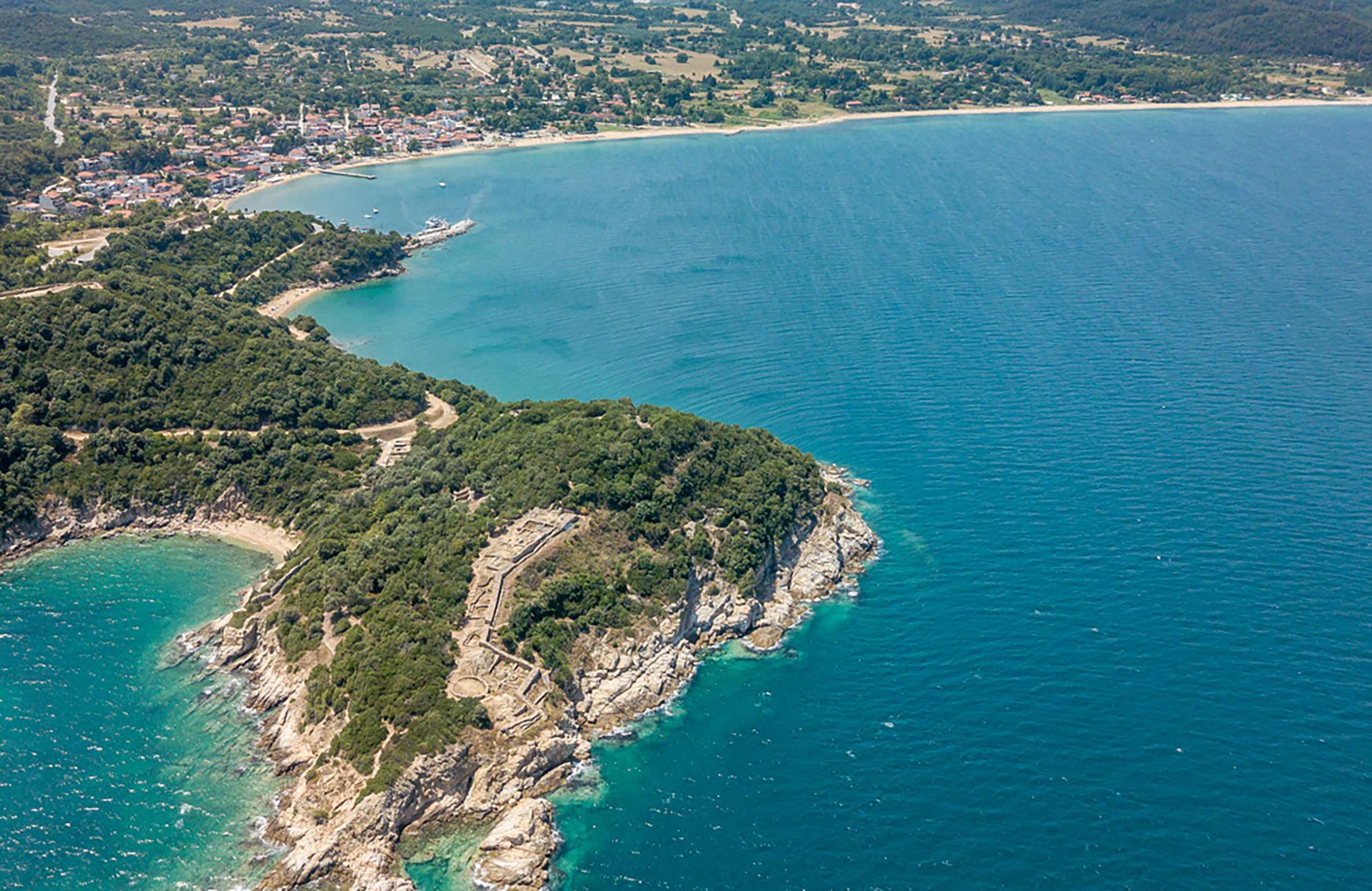
On the Liotopi peninsula, just outside the village of Olympiada, stand the remains of ancient Stagira.
The city was founded in the seventh century BC by colonists from the island of Andros. In 384 BC Aristotle was born here, and he later taught Alexander the Great nearby.
Systematic excavation ran from 1990 to 2000, and the site has been partly restored: sections of the city wall, a circular tower and a large square tower. It sits on a headland with the sea on both sides, and a coastal path runs round it. Allow two to three hours if you want to see all of it.
Olynthos and the museum
Olynthos, on the mainland, was destroyed by Philip II in 348 BC and never rebuilt, which is why its street plan survives so clearly. It is one of the best surviving examples of the grid system of Greek town planning, and several houses keep their pebble mosaic floors.
The Archaeological Museum of Polygyros, in the regional capital, holds the finds from across Halkidiki.
Mount Athos
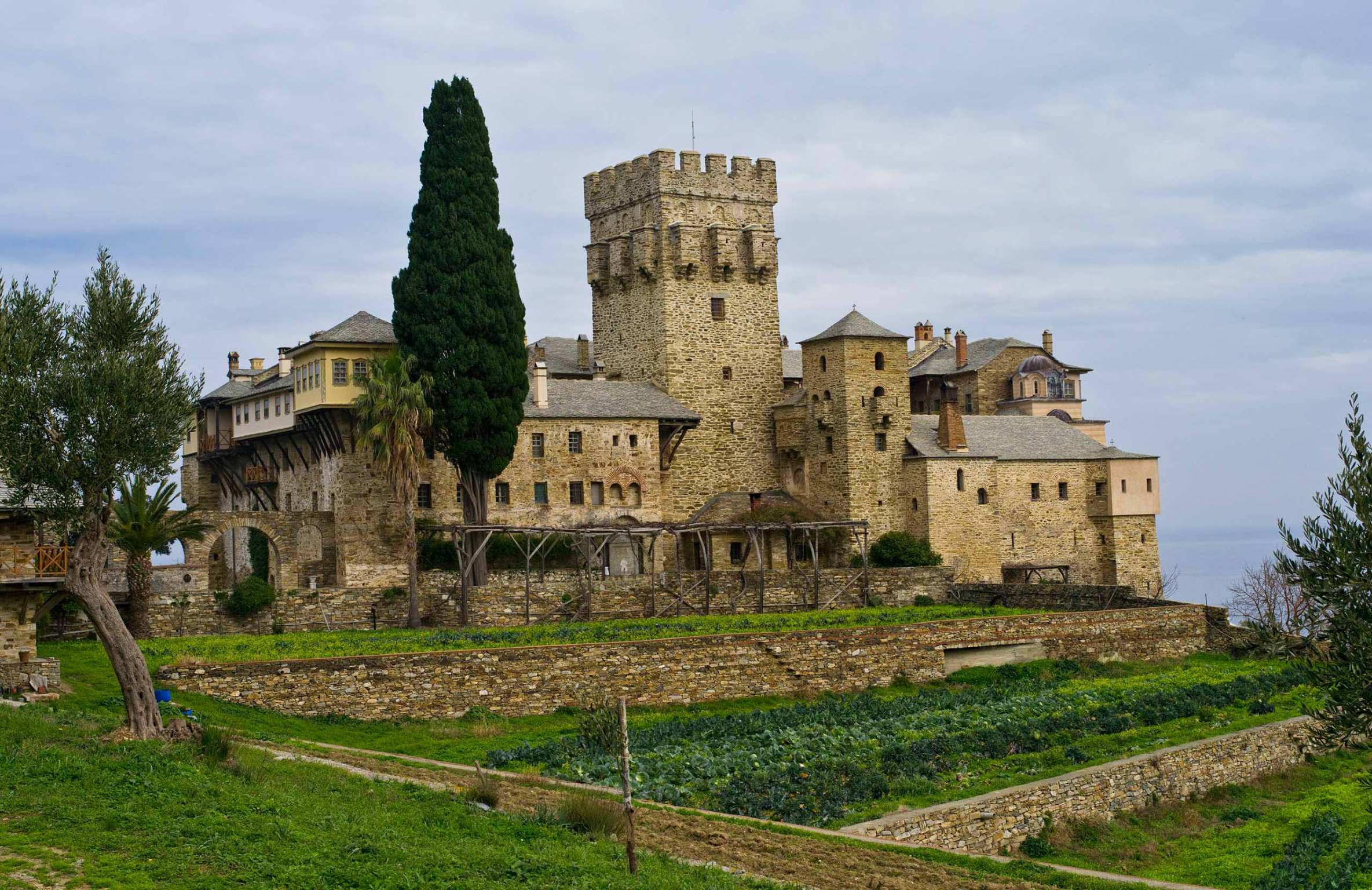
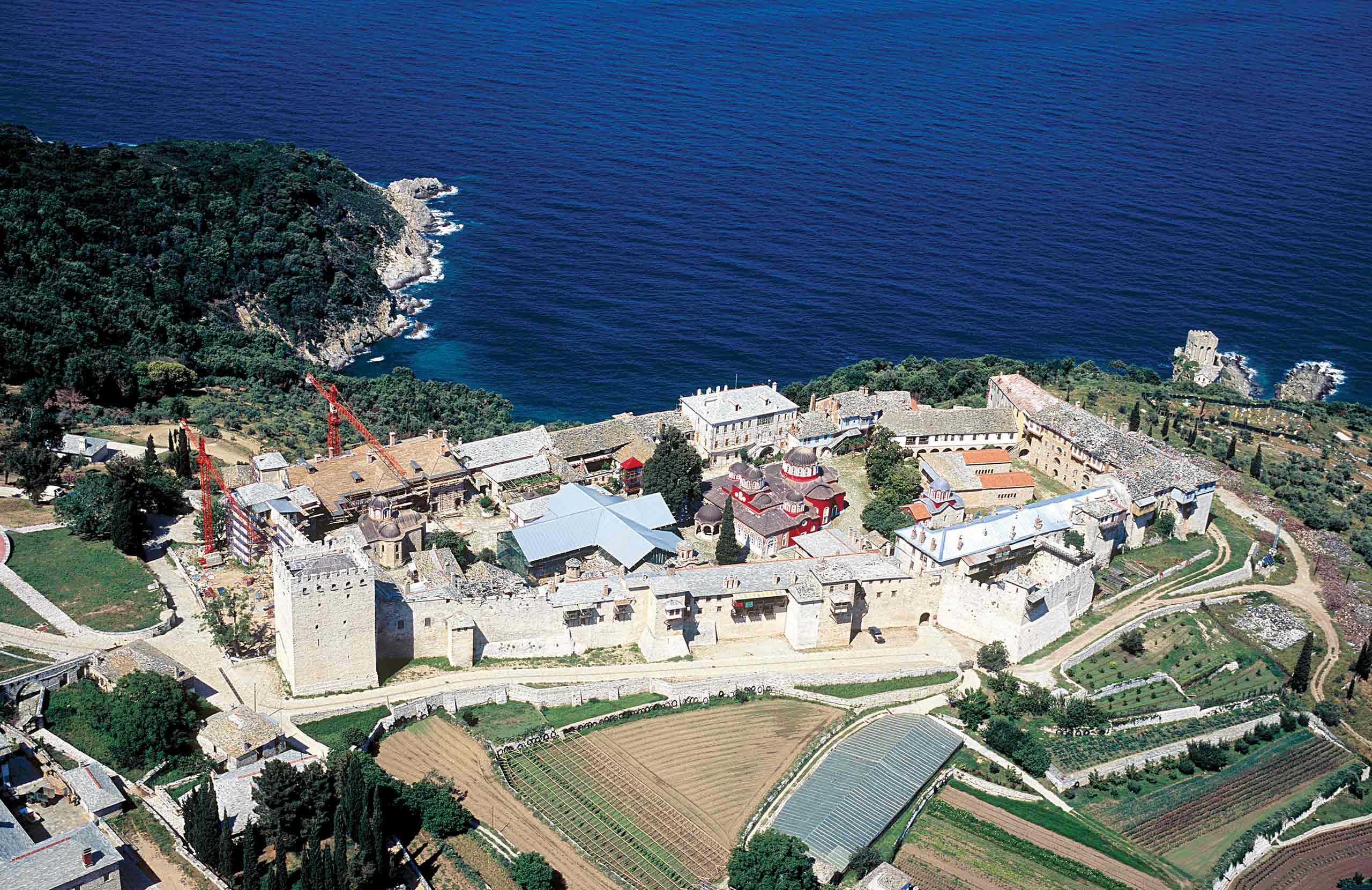
The eastern peninsula has been a self-governing monastic community for over a thousand years, with twenty monasteries and a population of monks.
Access is by permit only, and only for men. Everyone else sees it from the sea: boats leave from Ouranoupoli and run along the coast, close enough to see the monasteries on the cliffs.
Villages & Inland
Polygyros, inland, is the administrative capital and has the archaeological museum. Nea Moudania is the largest coastal town, with a working market and a marina.
Afitos, on the east coast of Kassandra, is the village people are sent to: stone houses on a low cliff, with a view across to Sithonia.
Ouranoupoli is the last settlement before the border of Mount Athos, and the boats to the peninsula leave from there. A Byzantine tower stands on its waterfront.
Olympiada, on the northeast coast, is a quiet fishing village beside the site of ancient Stagira.
Ammouliani, off the coast near Ouranoupoli, is the only inhabited island in northern Greece, twenty minutes by ferry.
Nature & Outdoors
Sithonia is the green finger. Pine forest covers most of it and comes down to the water in the coves along the east coast, and the road round the peninsula is one of the better coastal drives in northern Greece.
Inland, the Holomontas range is oak and chestnut forest with walking routes through it, and it stays cool when the coast is at its hottest.
At Agia Paraskevi, on the east side of Kassandra, there are natural hot springs, used since antiquity and now with a spa built around them.
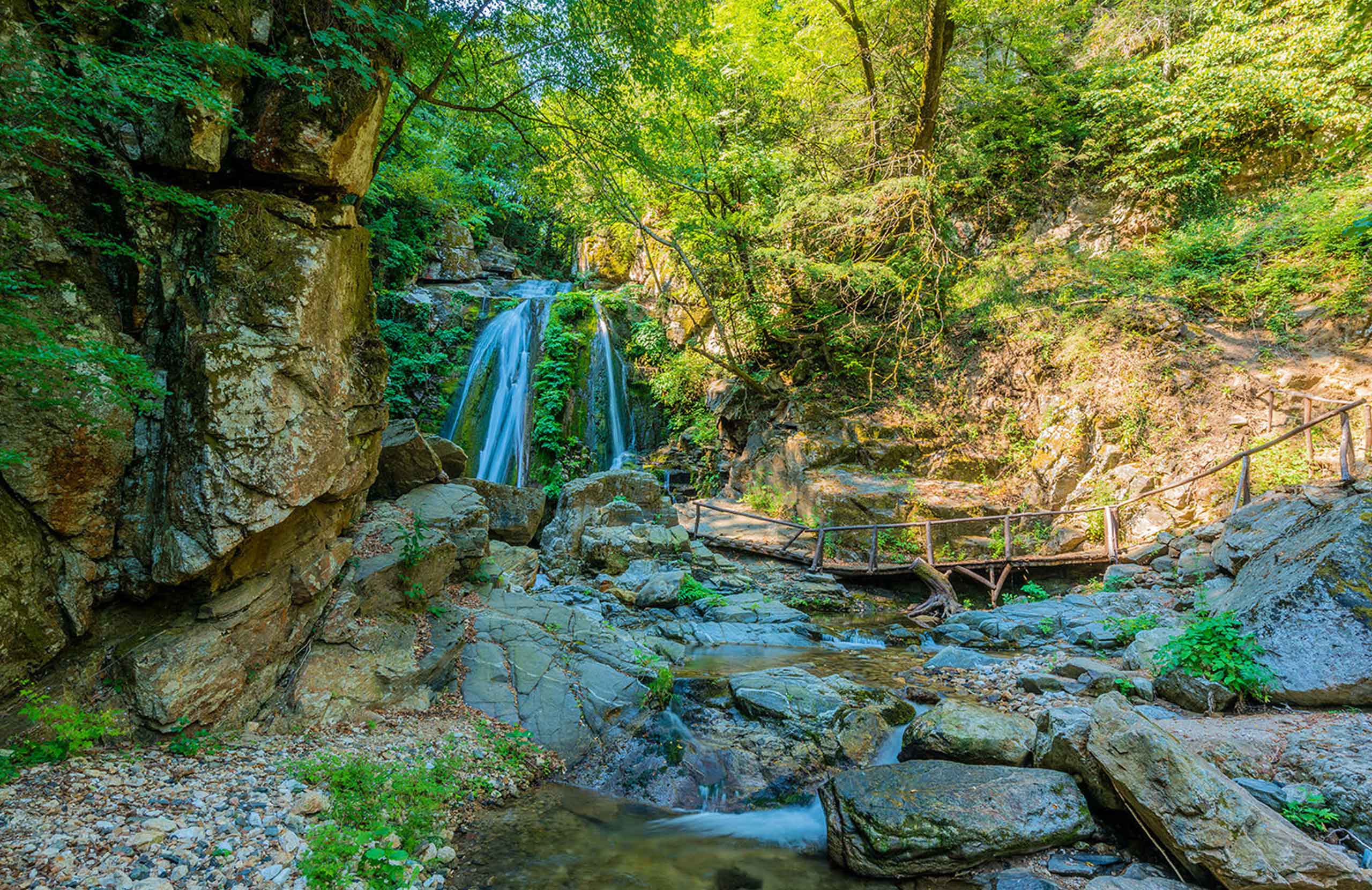
The Varvara waterfalls, inland in the north, fall through woodland and are a short walk from the road.
Beaches
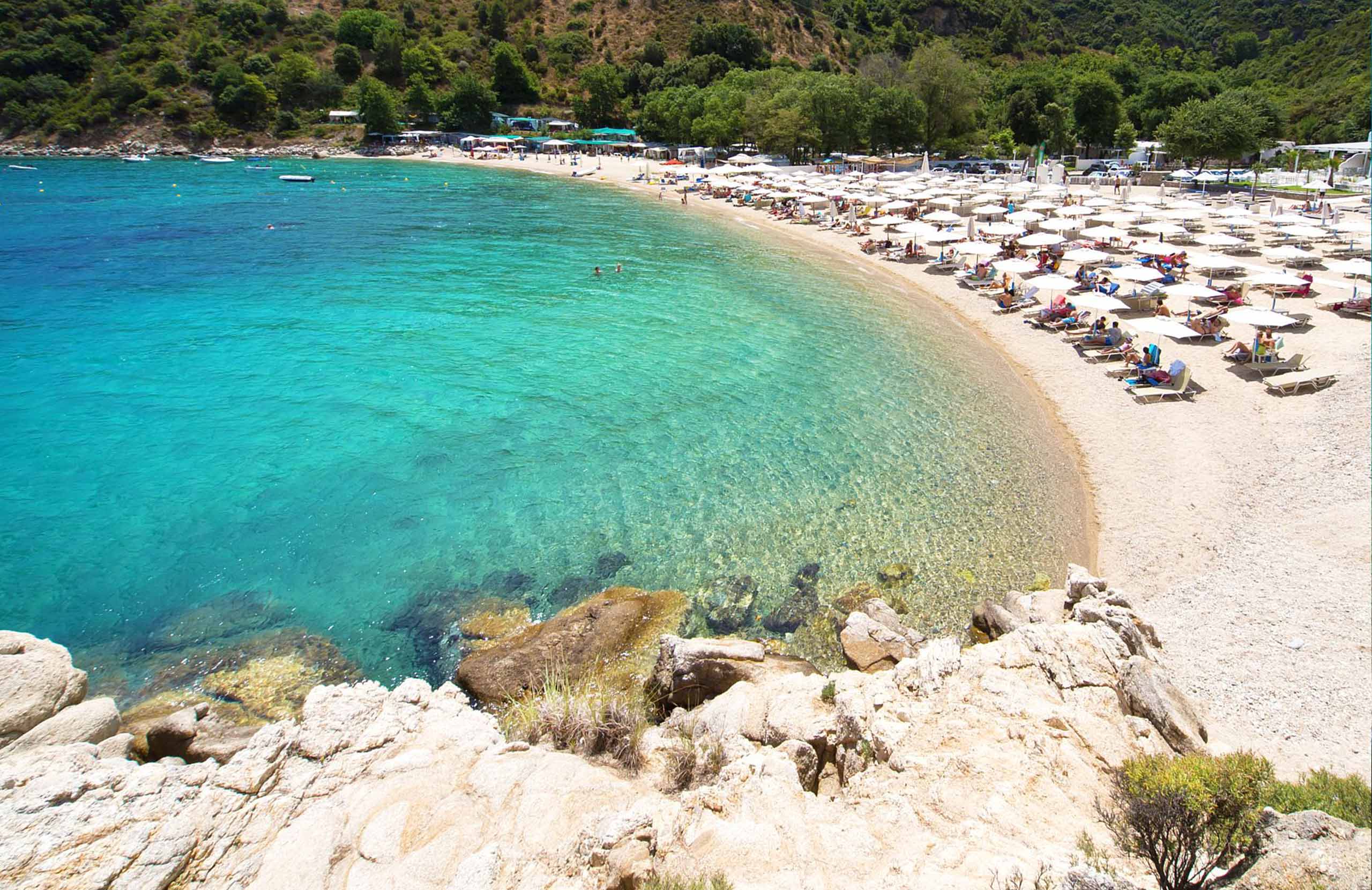
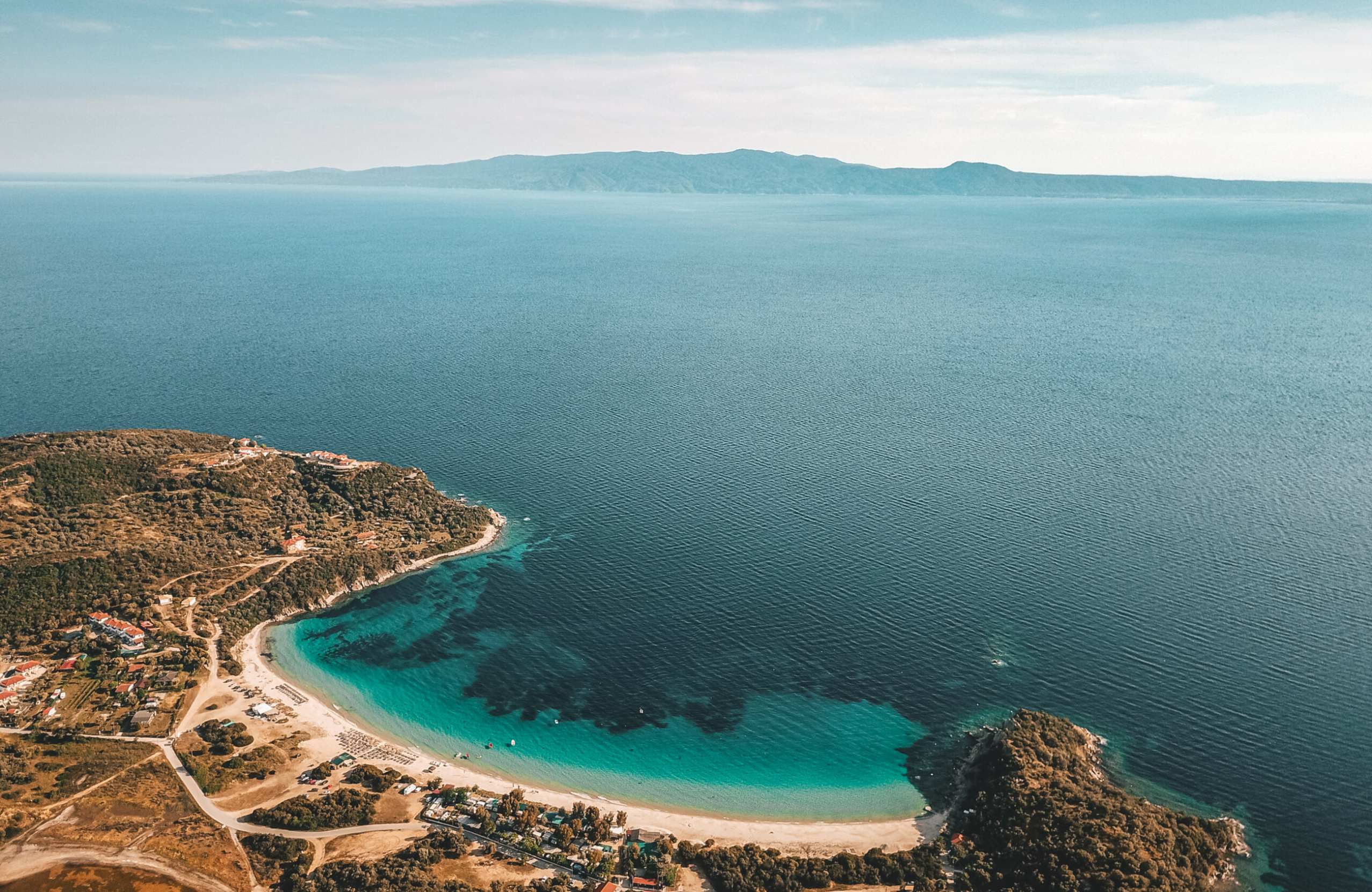
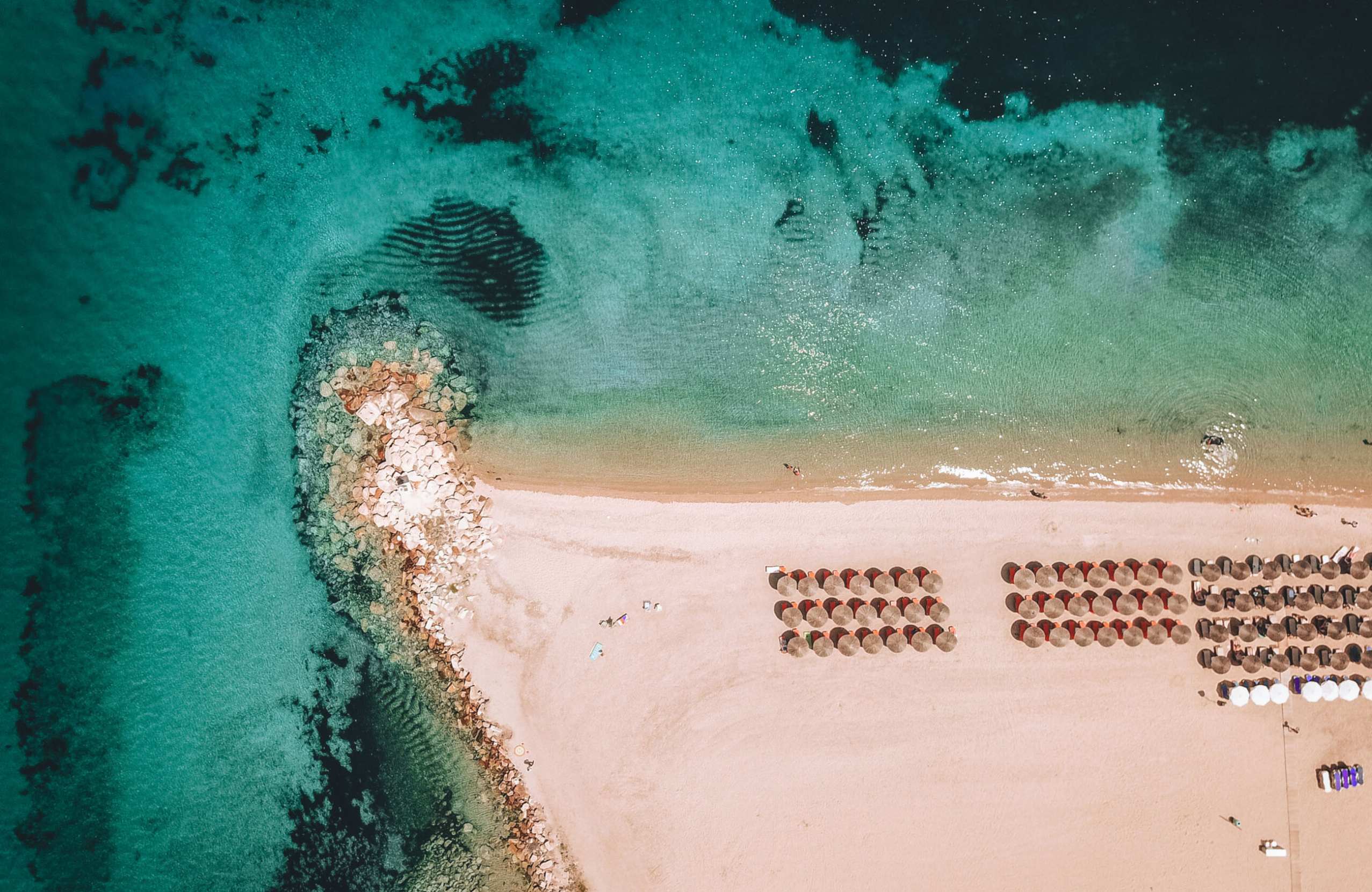
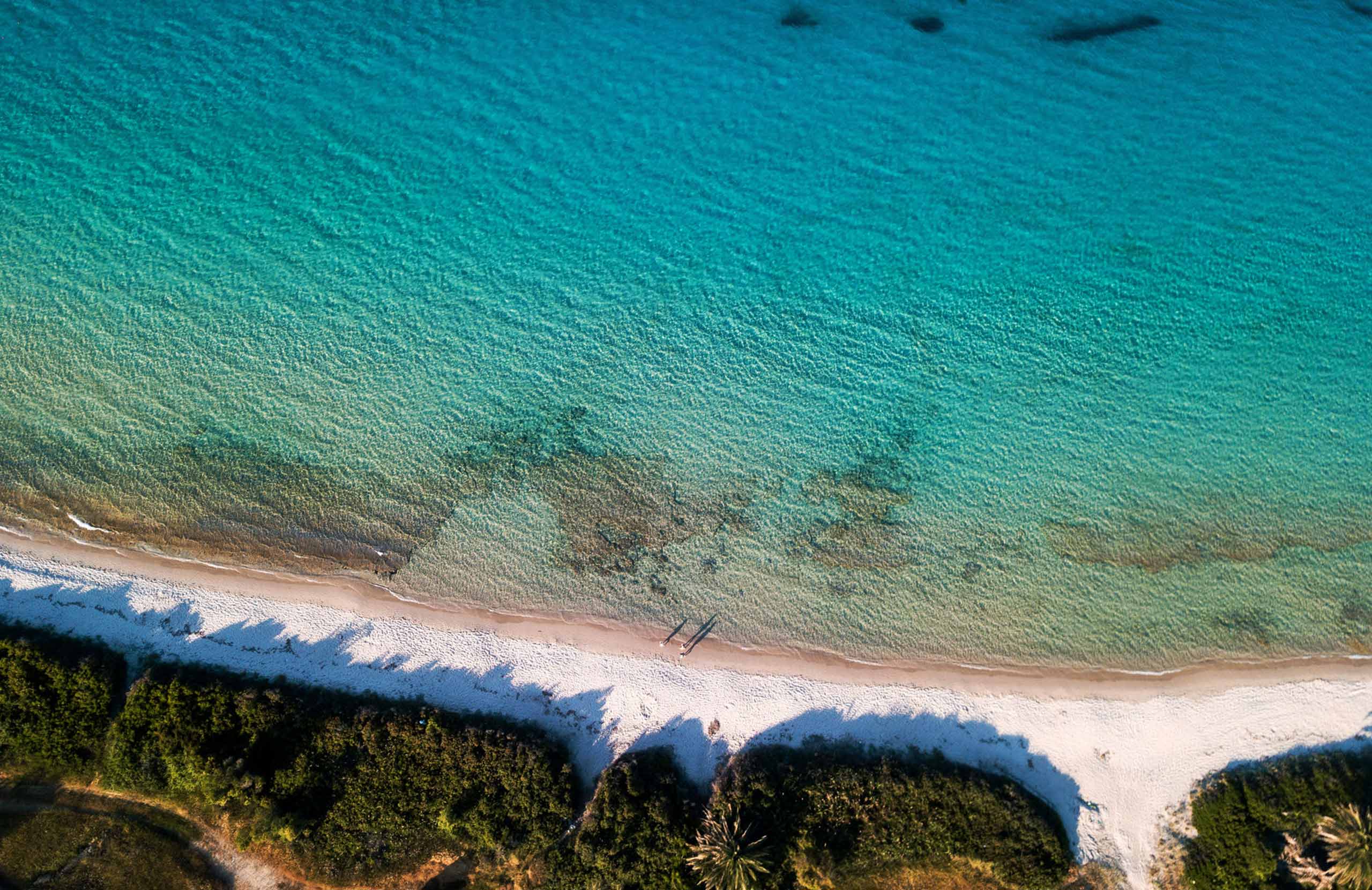
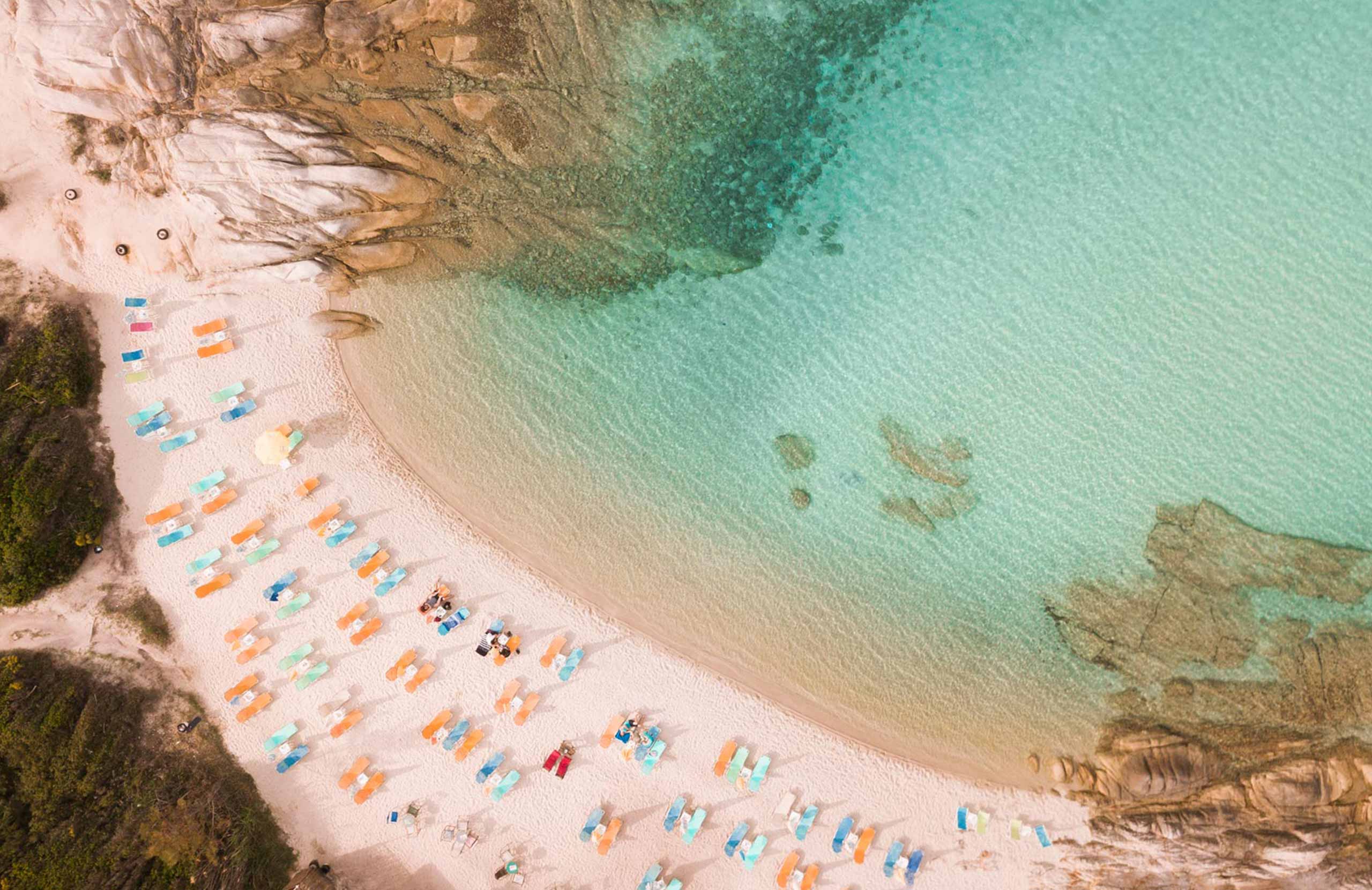
This is what Halkidiki is for. The peninsula has more good beaches than any comparable stretch of the Greek mainland, and they are sandy almost everywhere.
On Sithonia, Kavourotripes is a chain of small sand coves between smooth pale rocks, and it is the one that appears on postcards. Karydi has soft sand and shallow turquoise water. Armenistis is long and sandy with a well-known campsite behind it, and Toroni runs for kilometres with organised and free sections.
On Kassandra, Sani is fully organised with watersports, Kalogria is shallow and easy with children, and Possidi runs out to a long sand spit at the end of the peninsula.
Around Ouranoupoli and Ammouliani the water is calmer and the beaches quieter.

Activities
Nightlife is a genuine reason people choose Kassandra. The bars and clubs around Kallithea and Chaniotis run through the night in July and August, and the crowd is largely Greek and Balkan.
Golf: an eighteen-hole course sits in a resort on Sithonia, looking over the Aegean — one of very few full courses in northern Greece.
Diving centres work along both peninsulas, on reefs and drop-offs with good visibility.
Sailing is well served: there are marinas on Sithonia and Kassandra, and the three gulfs between the fingers give sheltered water.
Food & Drink
The green olive of Halkidiki is the region's product — large, firm, cracked or stuffed, and grown across the mainland part of the peninsula. The olive oil goes with it.
Fresh fish and seafood are the everyday food along the coast, and the mainland villages cook meat, pies and greens.
Halkidiki also has a serious restaurant scene. Four restaurants here hold Golden Caps in the 2026 national gastronomy awards — more than any region in Greece outside Athens, Santorini and Mykonos.
Local wine is made on Sithonia and in the mainland vineyards, and tsipouro is drunk everywhere.
Where to Stay
Prices shown per night for a sample 3-night stay. Rates and availability vary by season — select your dates for live pricing.
Practical information
Getting there
Halkidiki has no airport of its own. Thessaloniki airport is the gateway, between forty minutes and two hours away depending on which finger you are heading for.
Buses run from Thessaloniki to the main resorts, but they are built for residents rather than sightseers.
Getting around
A car is necessary. The three peninsulas are separate journeys — going from the tip of Kassandra to the tip of Sithonia means driving back to the neck and out again, which is well over two hours.
Roads are good, but the coastal roads on Sithonia are winding and slow.
When to go
June and September are the best months: the sea is warm and the crowds are smaller. July and August are very busy, particularly on Kassandra, and accommodation prices rise sharply.
May and October are good for walking, the archaeological sites and the inland villages, but many coastal businesses are closed.
Good to know
Mount Athos requires a permit (diamonitirion), issued in limited numbers, and women may not enter at all. Boat cruises from Ouranoupoli are open to everyone and keep a set distance from the shore.
Check the current opening hours of the Petralona cave before going; it reopened recently and arrangements have changed.
Halkidiki is a mass-market destination in high summer, especially Kassandra. If that is not what you want, Sithonia and the northeast coast around Olympiada are calmer.
Exploring the Halkidiki Peninsula— been there?Tell others what you saw.
A photo and two lines are enough.
