Exploring the Karditsa Area
- Canoeing-Kayaking, Cycling, Horseback Riding, Lakes, Mountains, Thermal Springs
- Geo Area: Thessaly

Karditsa sits in the western corner of the Thessalian plain, in Thessaly, where the flat farmland stops and the Agrafa mountains begin.
The town itself is small and flat, and it has more bicycles than any other town in Greece.
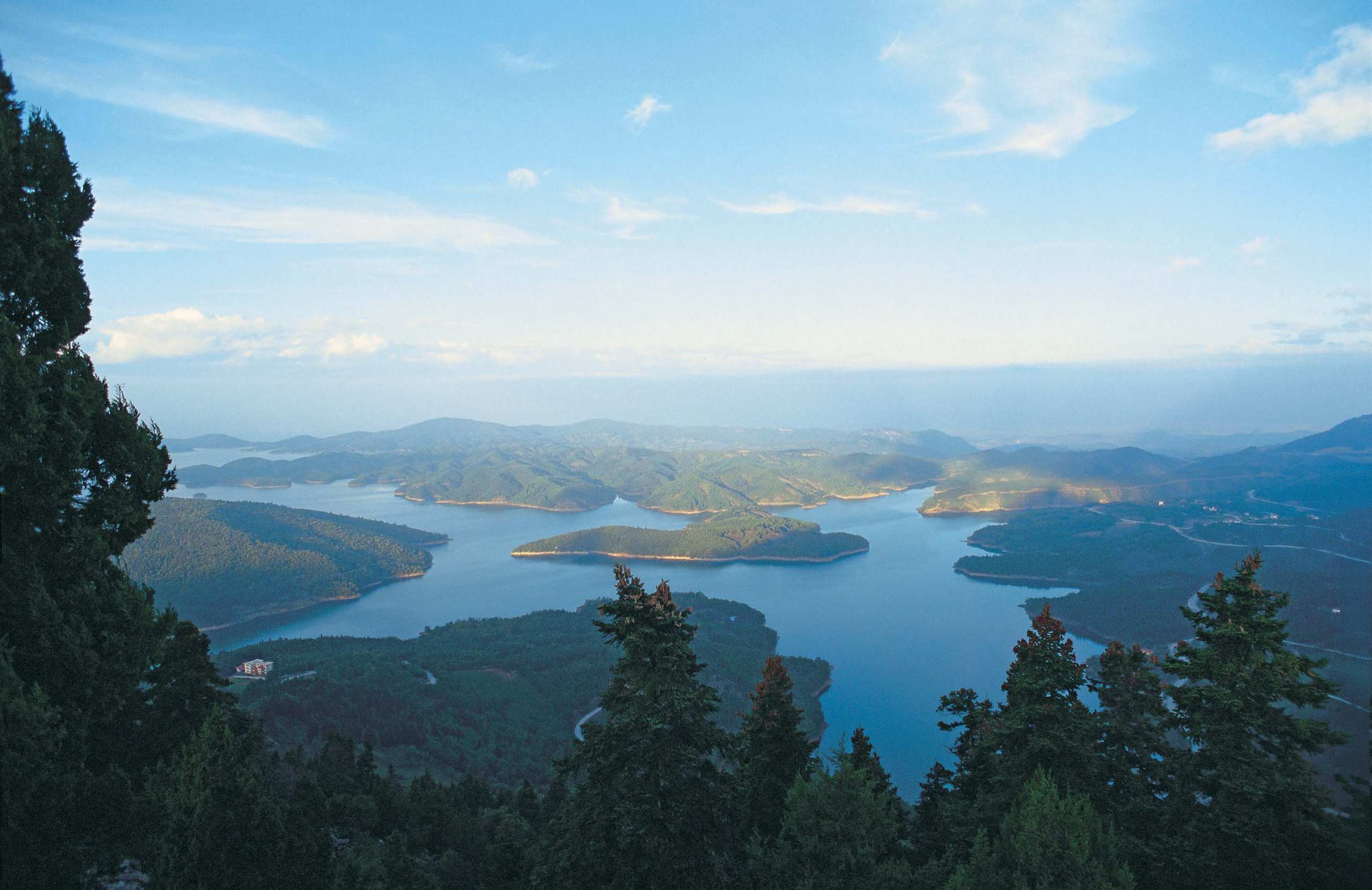
Twenty-five kilometres west and a thousand metres higher, Lake Plastiras fills a mountain basin that was farmland until 1959. It is artificial, and it is the reason most people come here. Around its shore are twenty villages, and behind them the Agrafa run west into some of the emptiest country in the mainland.
To the southeast there are hot springs that Greece has been taking the waters at for a century.
History & Culture
The Archaeological Museum of Karditsa holds the finds from the whole regional unit, from the Neolithic period to Roman times. Its most important material comes from ancient Metropolis, a city on the plain south of the town, including the sculptures and architectural pieces of an Archaic temple of Apollo.
The Folklore Museum covers the more recent past — costumes, tools and the equipment of a farming life that has largely gone.
In the town itself, the municipal market building and Pafsilipo Park are the two things worth walking to. The park is a wooded public garden with a small lake, laid out on the edge of the centre.


Nature & Outdoors
Lake Plastiras
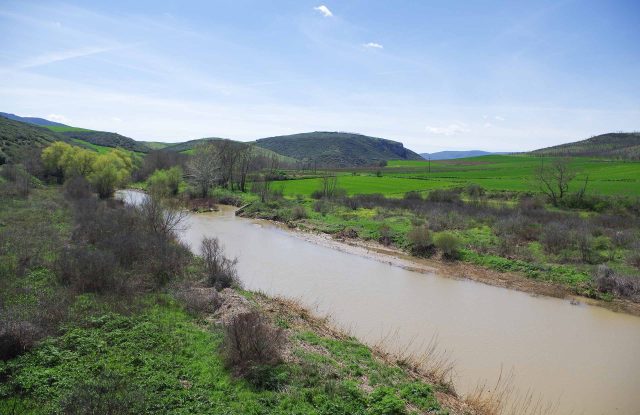
Until 1959 this was a highland farming basin called Nevropoli, with the Tavropos river running through it.
Nikolaos Plastiras, the soldier and politician, came from a village on its edge. Visiting after severe floods in the 1930s, he is said to have looked at the valley and remarked that one day there would be a lake here. The dam was built with reparations money owed by Italy, by a French contractor, and it was finished in 1959.
The result is a lake that looks entirely natural: deep blue water at about 800 metres, enclosed by slopes of fir, beech and chestnut, with villages hanging on the hillsides above it. It supplies Karditsa with water, irrigates the plain and produces electricity.
A road runs the whole way round, about forty-five kilometres, and it is one of the better drives in central Greece.
The Agrafa
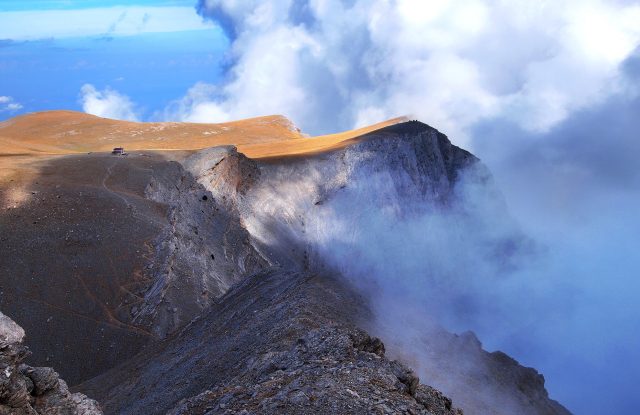
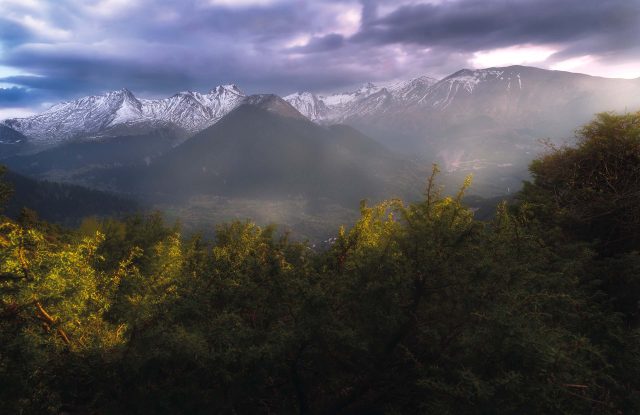
West of the lake, the Agrafa are the southern end of the Pindus and among the least inhabited mountains in Greece. The name means unwritten, because the Ottoman administration never managed to register these villages for taxation.
This is serious walking country, with old paths between remote settlements, and it continues south into Evrytania.

Villages & Inland
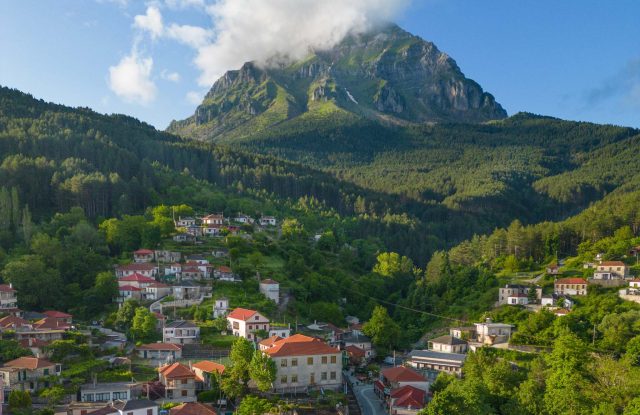
Twenty villages sit around Lake Plastiras, most of them looking down at the water.
Neochori and Pezoula are the largest and have most of the guesthouses. Kalyvia Pezoulas and Belokomitis are smaller and quieter. Kastania stands higher, in chestnut woods.
Away from the lake, Kanalia and Rentina are stone-built villages in the hills, and Morfovouni is where Plastiras was born.
None of these are museum villages. They are lived in, and most have one taverna.


Activities
On the lake
Kayaking and rowing run on the water, and there are boat trips. The road around the lake is a well-known cycling route, and mountain-bike trails run off it into the woods.
Horse riding centres operate on the western side, with rides through the forest and along the shore.
Walking
Marked paths run around parts of the lake and up into the Agrafa. The country here is steep and wooded, and the routes are best in spring and autumn.
In town
Karditsa has an unusually extensive network of bicycle lanes for a Greek town of its size, and bicycles are the normal way to move around the centre.

Wellness
Loutra Smokovou, thirty-five kilometres southeast of Karditsa, is a small spa settlement hidden in a wooded ravine at 450 metres, among oaks and plane trees.
The springs have been formally recognised as therapeutic, and the water is used for both bathing and inhalation treatment. The conditions it is prescribed for are respiratory, rheumatic and dermatological.
The place has a history. German troops destroyed it in 1943 after learning that a resistance officers' school was operating there. It was rebuilt in the 1950s, and by the middle of the 1960s it was the fourth most visited spa town in Greece.

Food & Drink
This is farming country, and the food is what the plain and the mountains produce.
Meat is the centre of it — pork and lamb, spit-roasted or slow-cooked. Cheeses come from the mountain flocks: feta and the soft white manouri. Honey comes from the fir and chestnut forests around the lake.
The plain grows the vegetables and the grain, and there is wine from the lower slopes.
Around Lake Plastiras the tavernas serve mountain cooking rather than Thessalian plain cooking — game, pies, and trout from the fish farms.
Where to Stay
Prices shown per night for a sample 3-night stay. Rates and availability vary by season — select your dates for live pricing.
Practical information
Getting there
Karditsa is about 300 km from Athens and 250 km from Thessaloniki, roughly three and a half hours from either by motorway. Larissa is an hour east, Meteora about an hour north, and Volos an hour and a half.
The town is on the railway line, with connections through Larissa. KTEL buses run from Athens and Thessaloniki.
Getting around
A car is needed for the lake and the mountains. Karditsa to Lake Plastiras is about twenty-five kilometres and takes forty minutes, because the road climbs.
The circuit road around the lake is about forty-five kilometres and takes an hour and a half with stops. It is narrow in places.
In the town itself, a bicycle is genuinely the best way to get about.
When to go
Spring and autumn are the best seasons: the lake is full, the forests change colour, and the walking is comfortable.
Summer is cool at the lake even when the plain below is very hot, which is why Greeks come. Winter brings snow to the Agrafa and to the higher villages, and the lake landscape under snow is worth the trip.
Weekends and the August holiday fill the guesthouses around the lake — book ahead.
Good to know
The lake road is winding and narrow in sections, with drops on one side. Take it slowly.
Guesthouses around the lake are small and few, and they are the accommodation — there are no hotels of any size.
Village tavernas close outside the season in the smaller settlements, particularly midweek in winter.
Check the current arrangements at Loutra Smokovou before going; it is a small operation and the season is limited.
Exploring the Karditsa Area— been there?Tell others what you saw.
A photo and two lines are enough.