Galaxidi
- Traditional Villages, Yacht Marinas
- Geo Area: Central Greece

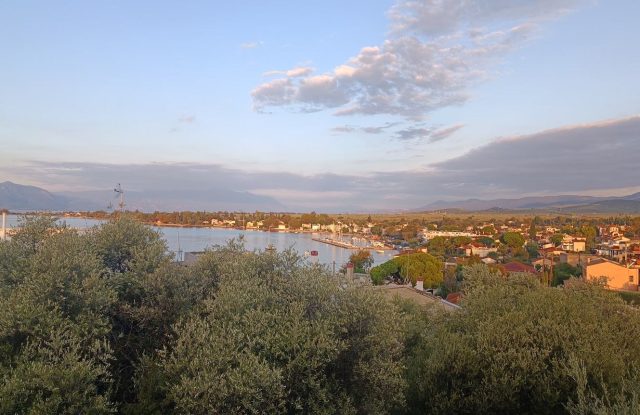
Galaxidi sits on the northern shore of the Corinthian Gulf, in Central Greece, on a small peninsula with a harbour on each side of it.
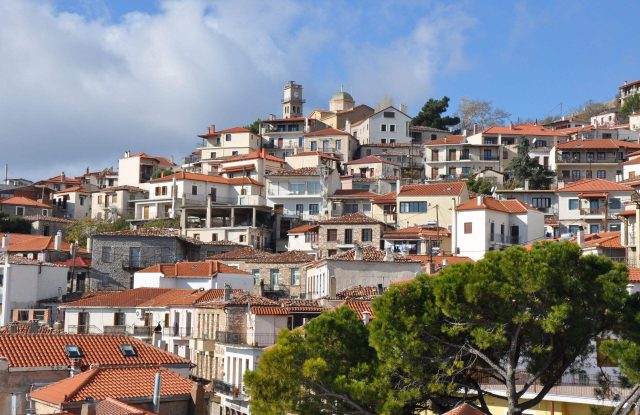
In the eighteenth and nineteenth centuries this was one of the great shipping towns of Greece. Its captains built stone and neoclassical houses along the lanes above the water, and those houses are still there and still lived in — a whole town of them, with very little modern building among them.
Galaxidi is about two and a half hours from Athens by road and forty minutes from Delphi, which makes it a comfortable base for visiting the site and staying by the sea.
History & Culture
Galaxidi's shipping rose after 1718, when a treaty between the Ottomans and Austria opened trade in the Adriatic, and for two centuries its ships carried cargo across the Mediterranean.
The numbers show how it ended. In 1892 the town owned 126 sailing ships. By 1903 there were 92. Steam had made wooden sailing vessels uneconomic, and although some Galaxidiot families moved into steamships and kept going into the 1930s, the shipbuilding and the shipyards had gone.
The two harbours
The main harbour is the one with the cafés along it. The second, Hirolakas, is on the northern side and is older. It is sometimes called the widows' harbour, after the families who waited there for ships that did not come back.
The museum and the Chronicle
The Nautical and Historical Museum occupies five rooms and holds ship models, navigational instruments, figureheads and charts.
Its most important object is the Chronicle of Galaxidi, written in 1704 by a monk named Efthymios — a local history covering several centuries, and one of the few documents of its kind to survive from Ottoman Greece.
The Church of Agios Nikolaos, above the town, has a carved wooden screen made around 1900 by woodcarvers brought from Epirus for the purpose.
In the town park are the tomb attributed to King Lokros and remains of the wall of ancient Oianthi, the settlement that stood here before.
The flour war
On Clean Monday, the first day of Lent, the people of Galaxidi meet at the harbour at midday with bags of flour and coloured powder and throw it at each other for hours.
The custom is old. An English traveller who came here in 1801 described it happening under Ottoman rule, and it took its present form from about 1840 — when it was the last celebration before the crews sailed for the season. The three days of festivities begin on the Friday evening with a fire in one of the squares.
It is one of the best-known carnival customs in Greece, and the town fills.


Activities
The Corinthian Gulf is enclosed, sheltered and deep, which makes it good sailing water. Galaxidi is a regular stop on the route between the Ionian and the Isthmus of Corinth, and boats tie up along both harbours.
Kayaking along the coast and out to the small islands offshore is straightforward in the calm morning water.
Inland, Mount Parnassus rises behind the town, with walking in summer and skiing in winter.
History & Culture
Galaxidi's beaches are pebble, small, and close to the town.
Kalafatis, at the entrance to the town, is the organised one, with sunbeds and calm shallow water.
Giannakis, on the other side, is quieter and undeveloped.
Rosiki, two kilometres out, and Agios Vasilios, at about four, are further along the coast and quieter again. All of them have clear water and low pine slopes behind them.
This is a gulf rather than an open sea, so the water is flat almost all summer and warmer than the Aegean.
Food & Drink
Galaxidi eats from the gulf. Fish, mussels and shrimp are the everyday food, and the tavernas along the harbour cook them simply.
The area behind the town is one of the largest continuous olive groves in Greece, running inland towards Amfissa, and the oil is the local product. Amfissa olives — large, dark and firm — are what to take home.
For sweets, the almond spoon sweet is the local one, eaten with coffee.
Where to Stay
Prices shown per night for a sample 3-night stay. Rates and availability vary by season — select your dates for live pricing.
Practical information
Getting there
Galaxidi is about 210 km from Athens, roughly two and a half to three hours by road via the motorway and then the coast. There is no railway and the bus service is limited, so most people drive.
Delphi is about 35 km away, forty minutes by car, which makes Galaxidi a common base for visiting it — quieter and on the sea, rather than staying in the village at the site.
Nafpaktos is an hour west along the coast, and Ossios Loukas about an hour and a quarter east.
Getting around
The town is small and entirely walkable — the two harbours, the museum, the church and the lanes between them take an afternoon.
The streets are cobbled and uneven, so wear something sensible.
A car is needed for anything outside the town.
When to go
May to October for the sea and the walking, with September and October the best months — warm water, mild days and far fewer people.
Clean Monday, in February or March, is the other reason to come. The town is completely full that weekend and accommodation must be booked well ahead.
Galaxidi stays open through the winter, which is unusual for a coastal town of this size, because of the weekend traffic from Athens.
Good to know
If you come for the flour war, wear clothes you intend to throw away. Nobody is exempt and nothing survives it.
Restaurants along the main harbour fill on summer weekends and at Clean Monday — book, or eat early.
The town is a good base for Delphi, and considerably quieter than staying at the site.
Galaxidi— been there?Tell others what you saw.
A photo and two lines are enough.