Ios is a small island in the Cyclades, between Naxos and Santorini, and it has two reputations that do not obviously go together.
For fifty years it has been one of the main party islands of Greece, and in July and August the bars of Chora run until morning.
It is also where ancient writers said Homer died. Herodotus and Pausanias both record it, tradition adds that his mother came from here, and a tomb on the northern coast has carried his name for centuries.
Between the two, Ios has a walled hilltop town, an Early Cycladic settlement that is the best preserved of its kind anywhere, and some of the largest sandy beaches in the Cyclades.
History & Culture
Homer
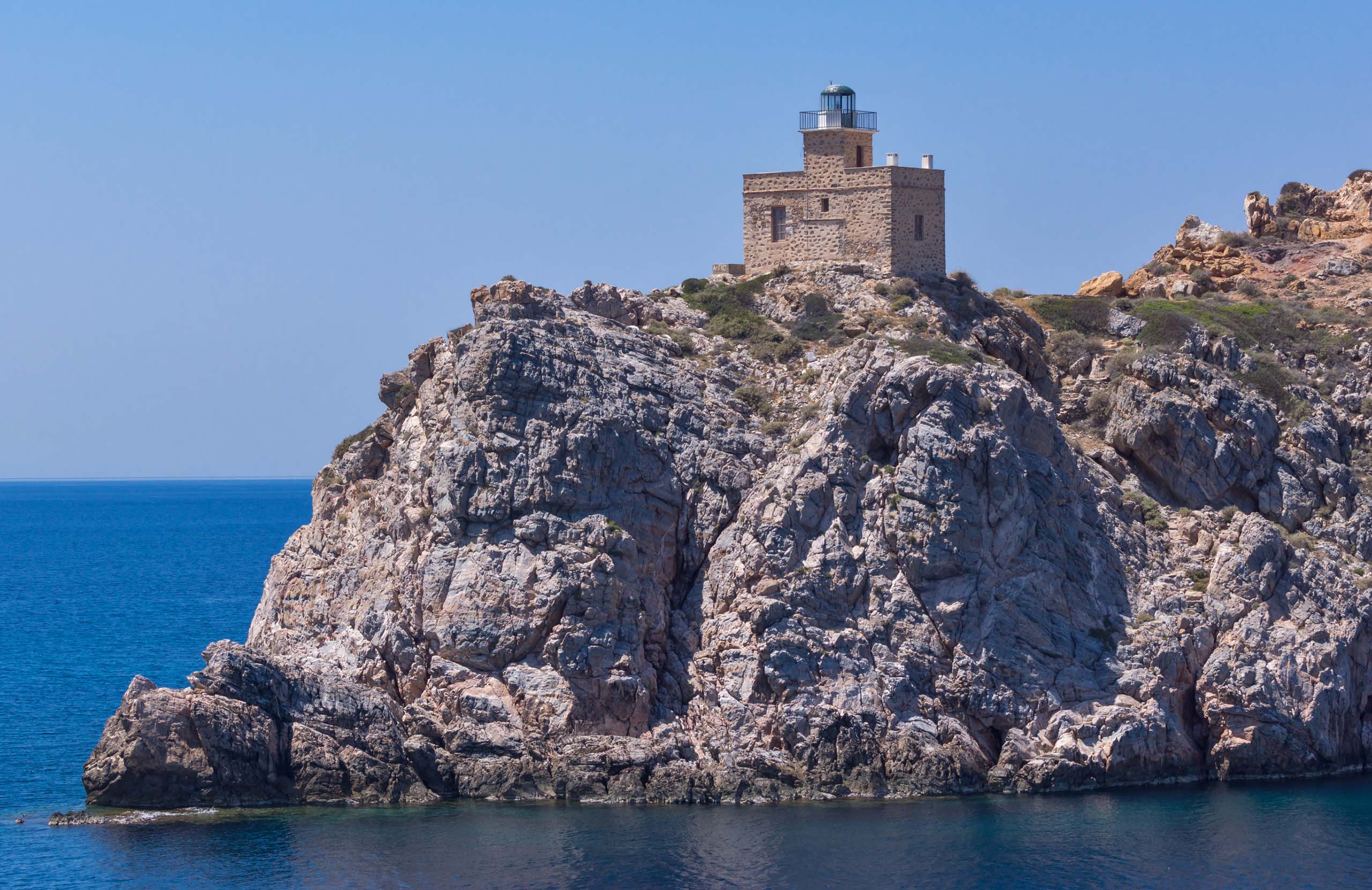
At Plakotos, on a hill above a bay in the north of the island, stand the remains of a Hellenistic tower. Islanders call it the Psaropyrgos, and for a very long time it has been known as the tomb of Homer.
The claim rests on the ancient writers rather than on the archaeology. Herodotus and Pausanias both record that Homer died on Ios, and the tradition that his mother came from the island is older still. What survives on the hill is a tower, and its identification as the tomb was made in the past and has stuck.
It is worth going for the position as much as the story. The hill looks north over the sea towards Naxos, and there is nothing else up there.
Skarkos
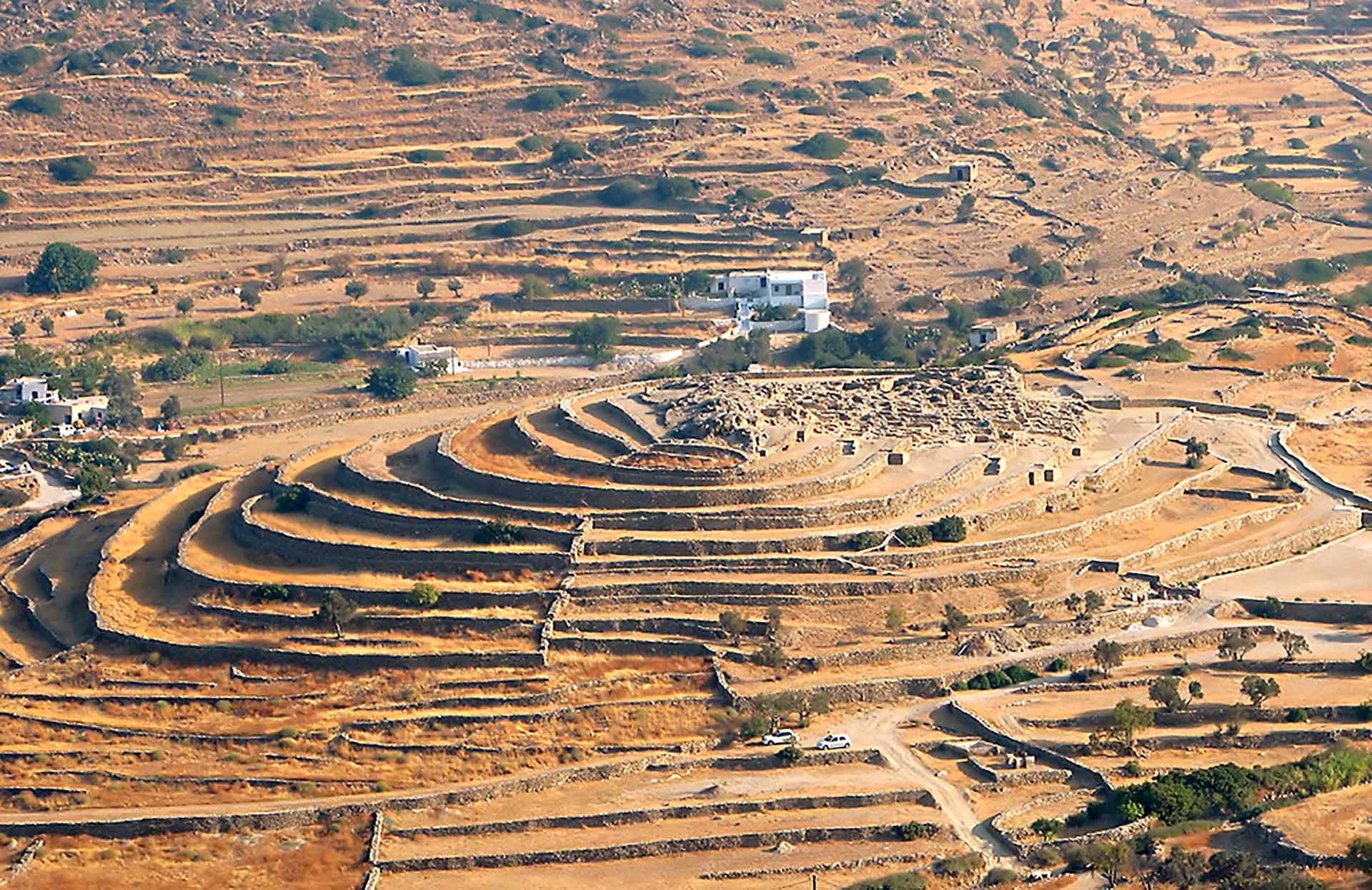
On a low hill in the middle of the western side of the island, near the harbour and the most fertile ground, is Skarkos — and it is the most important archaeological site in Ios by a distance.
It is an Early Cycladic settlement of the mid-third millennium BC, excavated systematically between 1984 and 1997. It covers about 1.1 hectares and probably held two or three hundred people, and it is the largest and best-preserved settlement of its culture anywhere.
That matters more than it sounds. Cycladic society was previously known almost entirely from cemeteries, and mostly looted ones. Skarkos is a place where people lived, with its buildings standing to a useful height, and it is the only organised archaeological site in the Cyclades that presents a settlement of this civilisation to the public.
Chora
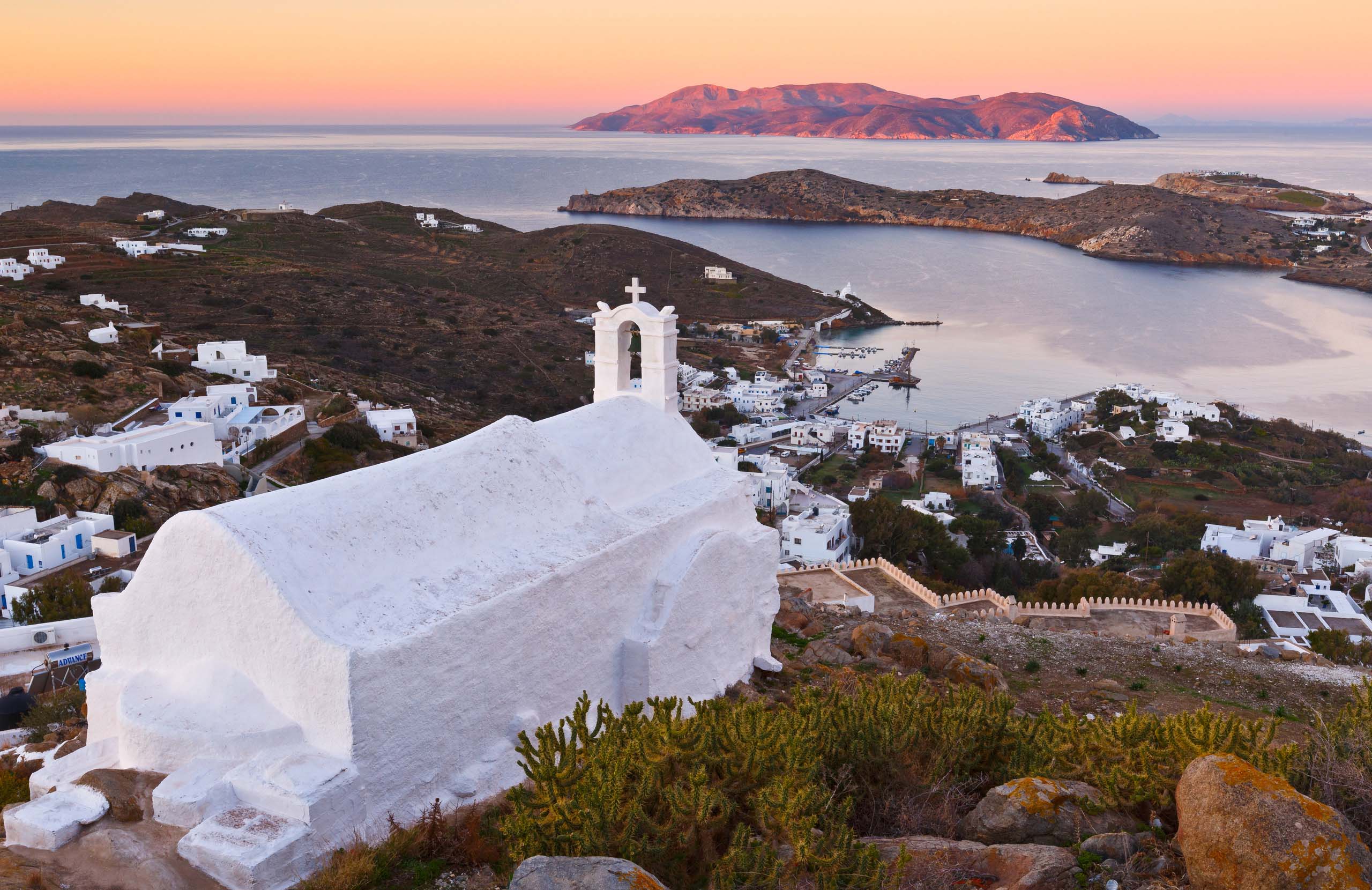
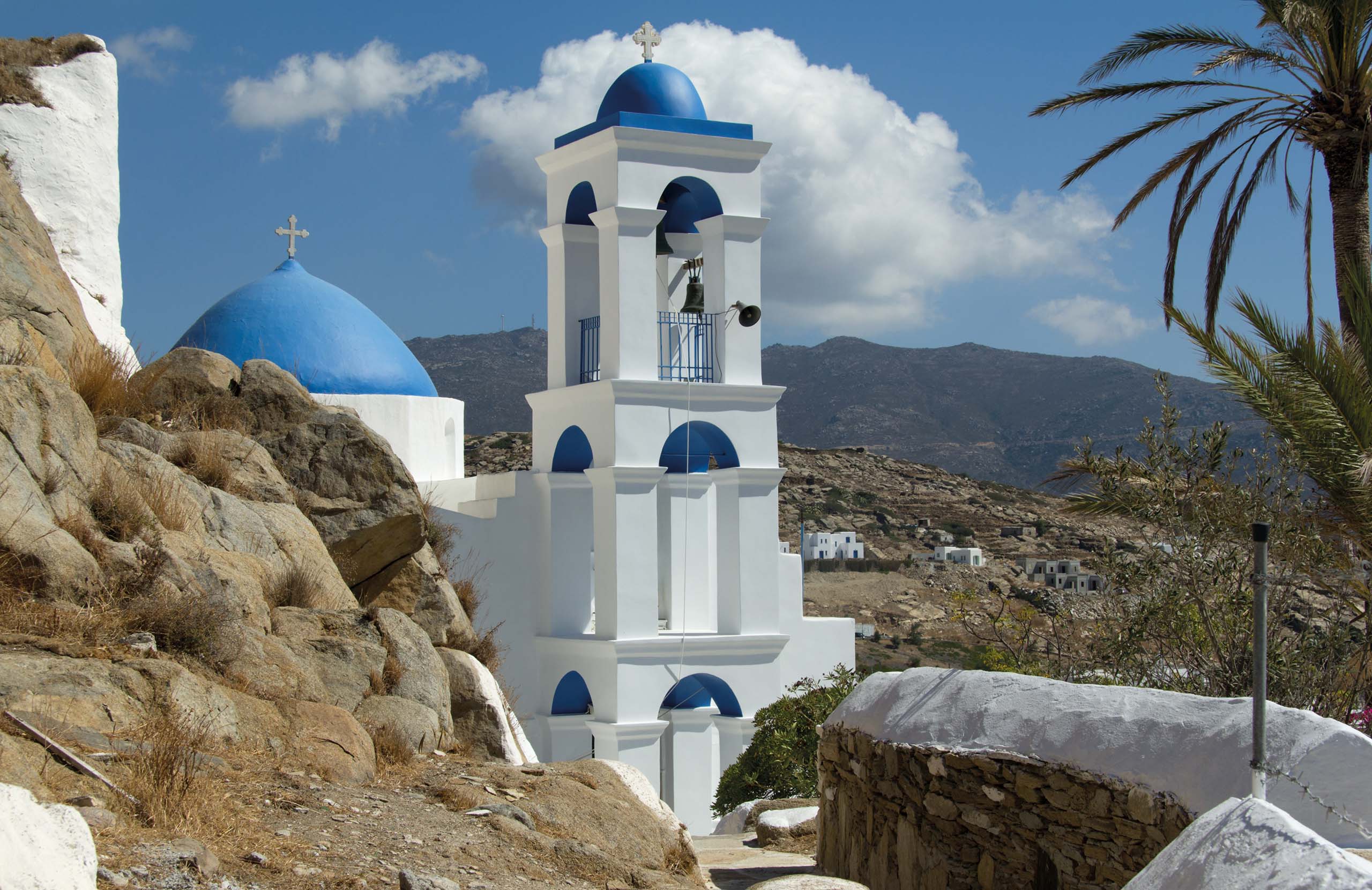
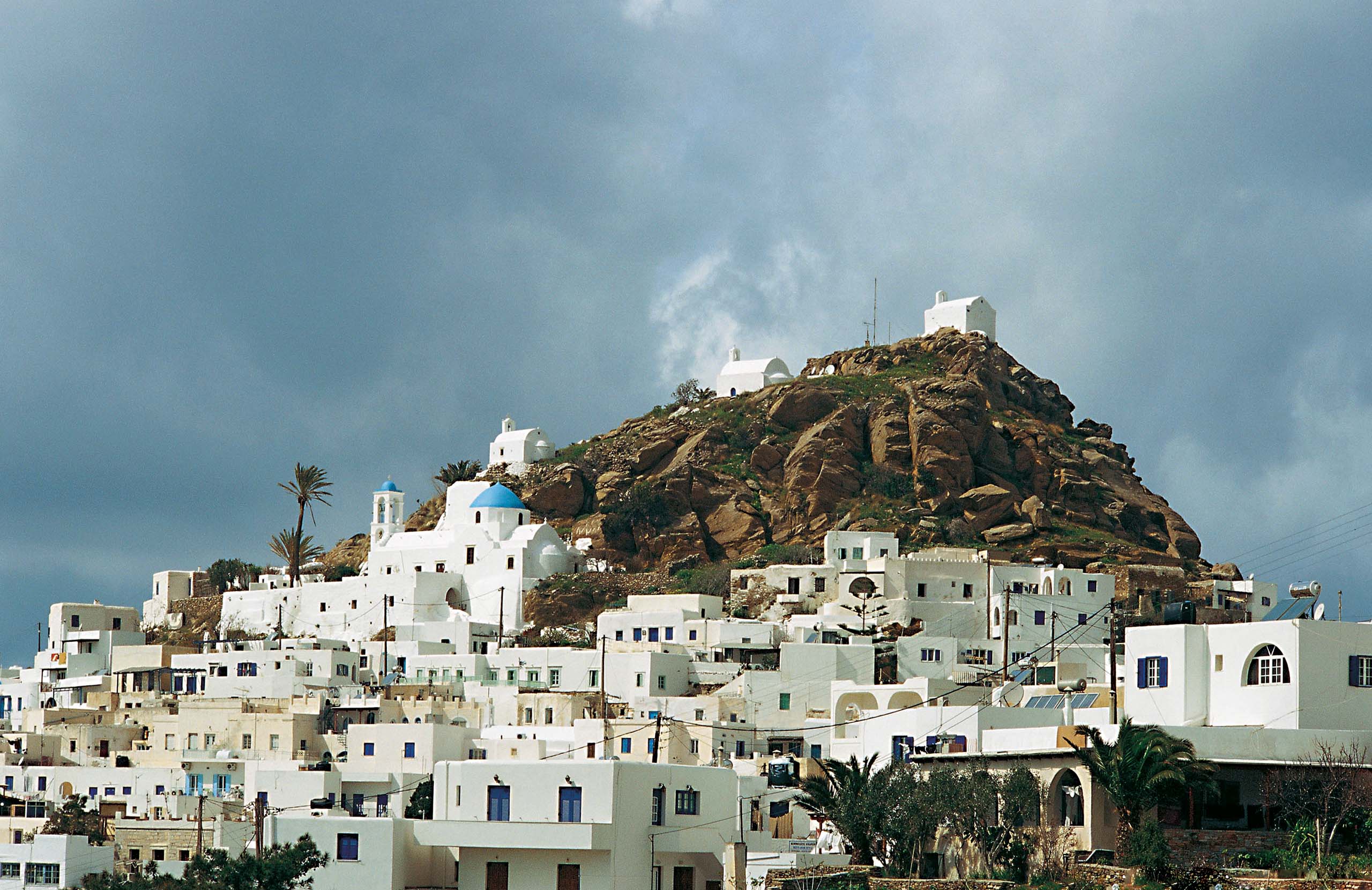
Chora is a listed traditional settlement and one of the best-preserved examples of Cycladic architecture: whitewashed houses stacked up a hill, stepped lanes too narrow for vehicles, and the remains of the ancient city walls, since the classical town stood on the same hill.
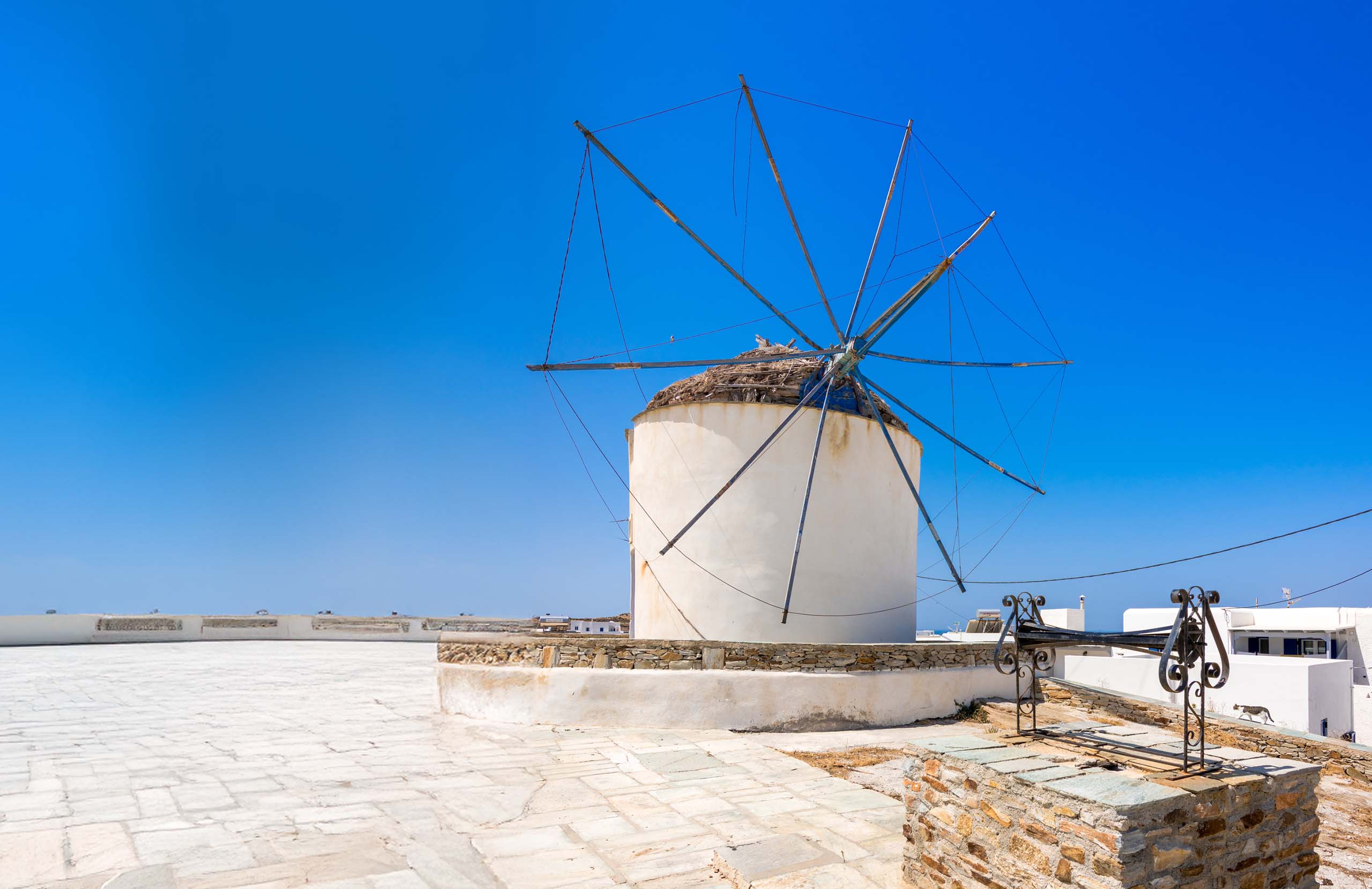
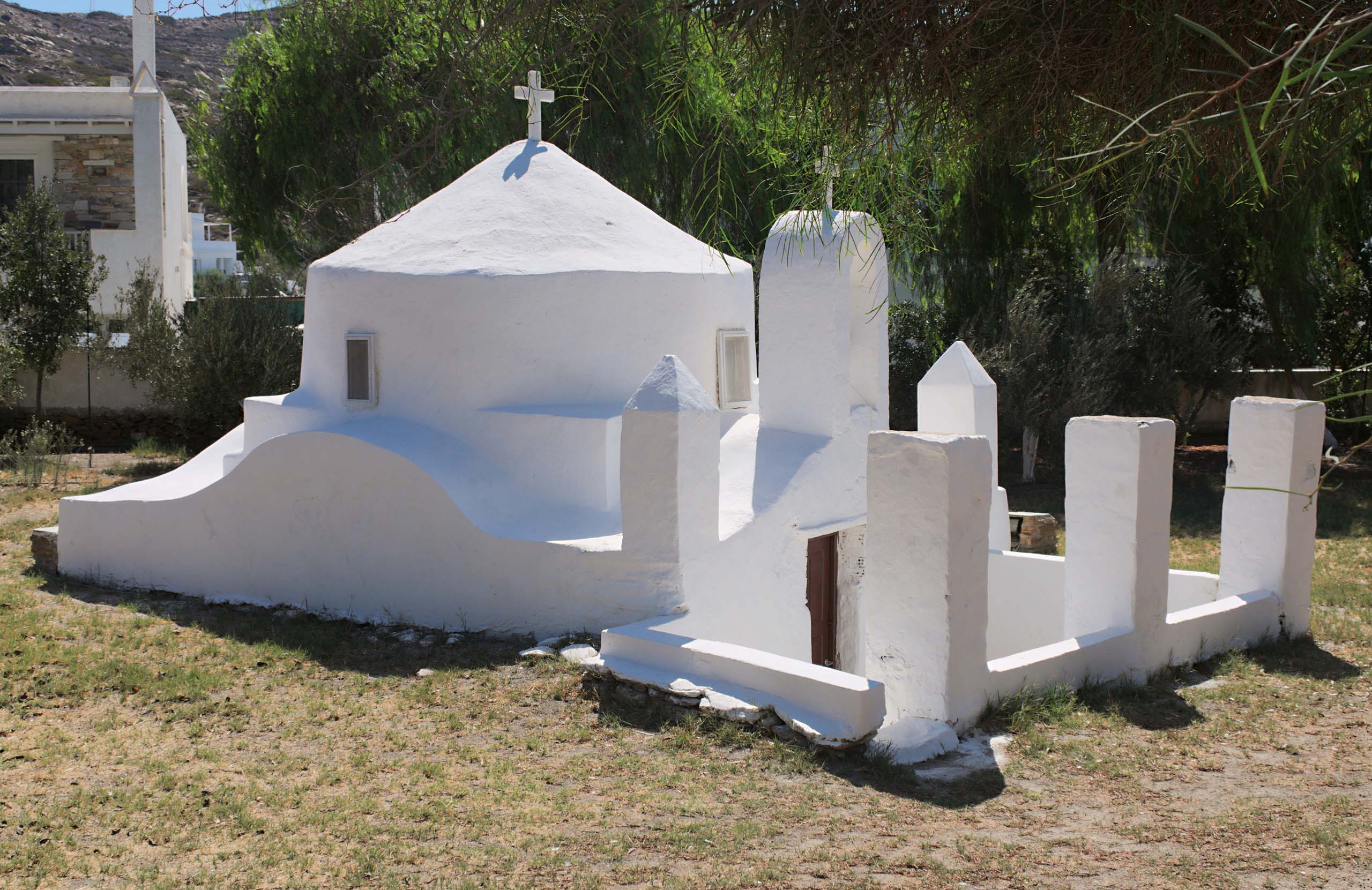
A line of windmills runs along the ridge above it, and at the top stands the church of Panagia Gremiotissa, of 1797, with the whole Aegean below.
Elsewhere on the island
A Roman aqueduct survives at Agia Theodoti, the Byzantine Palaiokastro stands above Psathi on the eastern side, and there are ancient remains at Epano Kampos.
The Archaeological Museum in Chora holds the finds, including the material from Skarkos.
Beaches
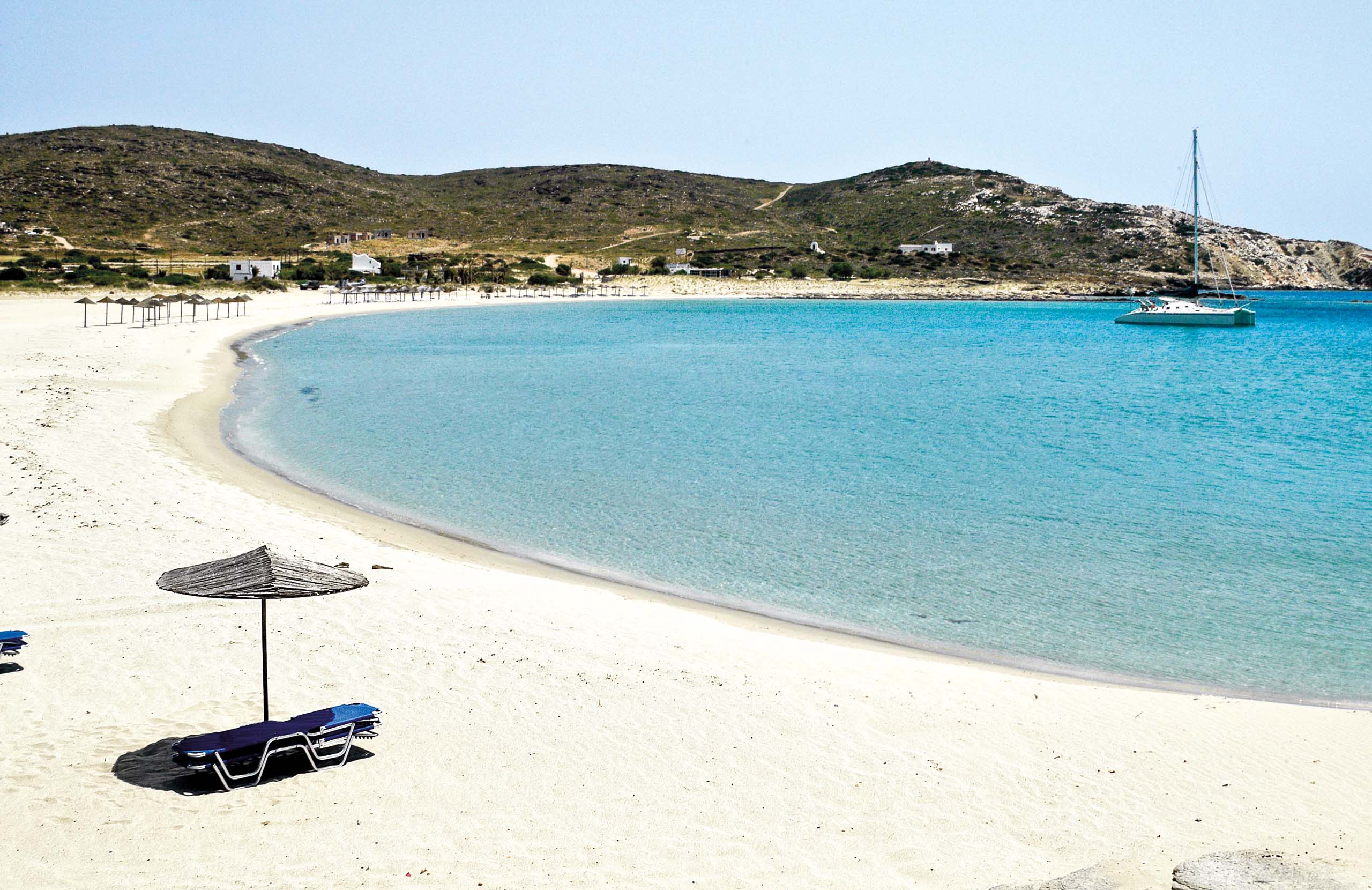
Ios has some of the best sandy beaches in the Cyclades, and they are large.
Mylopotas, below Chora, is the famous one — more than a kilometre of golden sand in a wide bay, fully organised, with watersports along its length and a bus every few minutes from the town. It is the centre of the island's summer.
Manganari, on the south coast, is a series of sheltered sandy coves with shallow water, calm and considerably quieter. It is reached by road or by boat.
Agia Theodoti, on the east coast, is wide, sandy and largely undeveloped, with the Roman aqueduct nearby.
Koumbara, near the port, is the sunset beach, and Psathi and Kalamos in the east are the ones that take some effort.
Activities
Nightlife
Ios has been a party island since the 1970s, and the bars are concentrated in the lanes of Chora, which means the whole of the nightlife is within a few minutes' walk. It runs from about midnight until dawn through July and August.
The island has been shifting upmarket in recent years, and there is now a good deal that is not about that at all — but in high summer, Chora at night is what Ios is known for.
Diving and the water
Two PADI dive centres operate on Mylopotas beach, one of them running since 2007 and the other since 2013. There is a shipwreck at about twelve metres offshore, shallow enough for newly certified divers, along with reef and cave sites reached by boat.
The same beach has windsurfing, waterskiing, kayaking and sailing.
Sailing
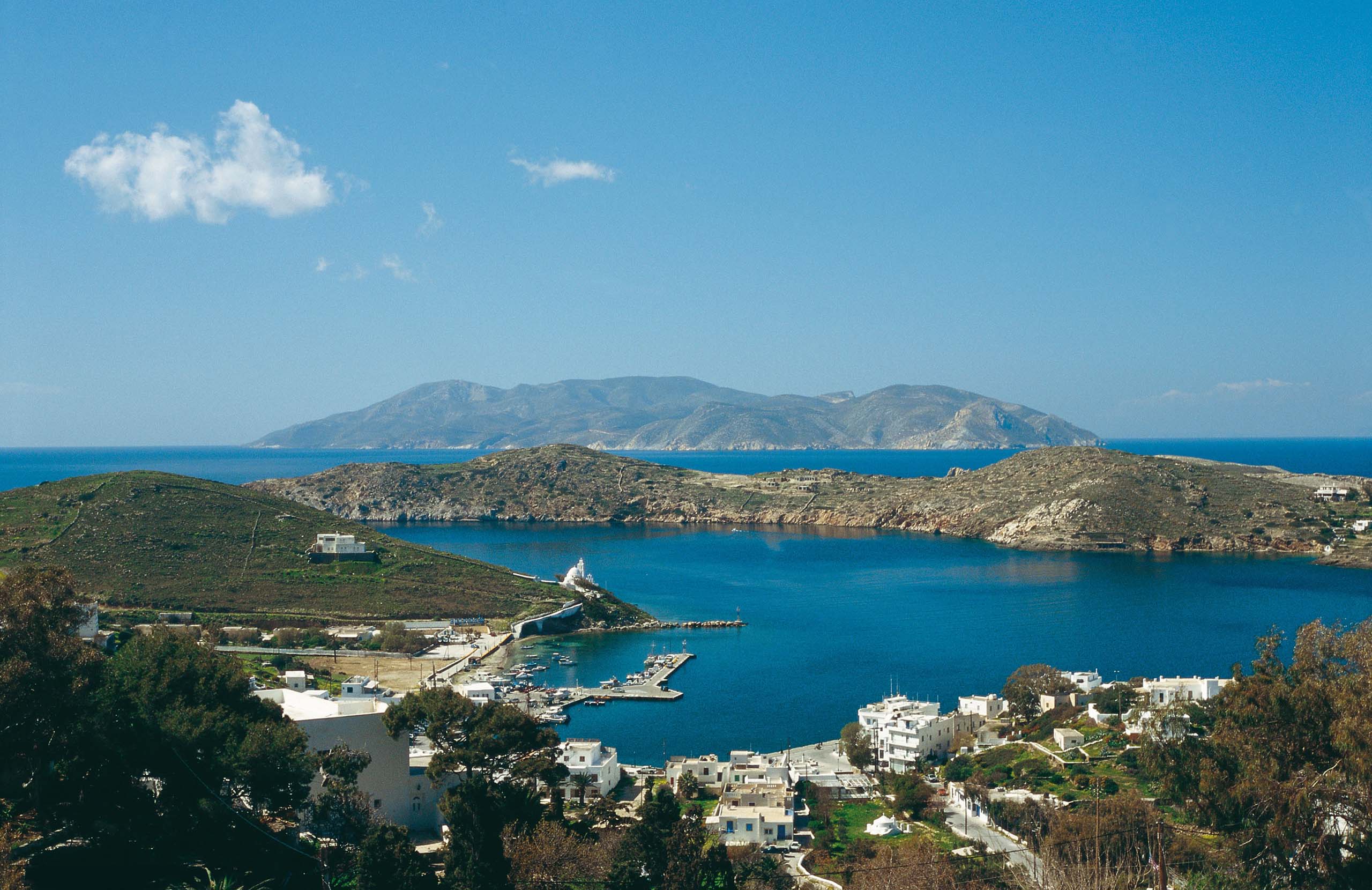
The harbour at Ormos is one of the most sheltered in the Aegean — so much so that it has been nicknamed Little Malta — and it is a standard stop on the Cycladic sailing routes.
Food & Drink
Skotyri is the island's cheese: sharp, aged in skins, and unlike anything from the neighbouring islands. It is eaten on its own, with honey, or in pies.
Beyond it, Ios eats what a Cycladic island eats — goat and lamb from the hills, fish from the boats, wild greens and capers.
The island also has a restaurant that holds a Golden Cap in the 2026 national gastronomy awards, which for an island this size is unusual.
Where to Stay
Prices shown per night for a sample 3-night stay. Rates and availability vary by season — select your dates for live pricing.
Practical information
Getting there
There is no airport. Ferries from Piraeus take between four and eight hours depending on the vessel.
Ios sits on the busiest line in the Cyclades, with frequent connections to Santorini — about forty minutes — and to Naxos, Paros, Mykonos and Folegandros. Many visitors fly to Santorini and continue by boat.
Getting around
The three points that matter — the port at Ormos, Chora and Mylopotas — are close together and connected by a frequent bus that runs late into the night in summer. For those three, you do not need transport.
For the rest of the island — Manganari, Agia Theodoti, Plakotos, Psathi — you need a car, a scooter or an ATV. Roads to the eastern and southern beaches are long and some of the last stretches are rough.
When to go
June and September give the same sea and beaches with far less noise. July and August are when the nightlife is at full volume and the island is full.
May and early October are quiet, warm enough, and the right time for Skarkos, Plakotos and walking.
Good to know
Chora is stepped and car-free, so accommodation there means carrying luggage up. Many people stay at Mylopotas or the port instead.
Skarkos has very little shade and is open ground. Go early, and check the opening days before setting out.
The tomb of Homer is a long drive north on a road that deteriorates near the end, and there are no facilities there at all.
If you want a quiet holiday, stay away from Chora at night in August — or choose June or September instead.
Ios Island— been there?Tell others what you saw.
A photo and two lines are enough.
