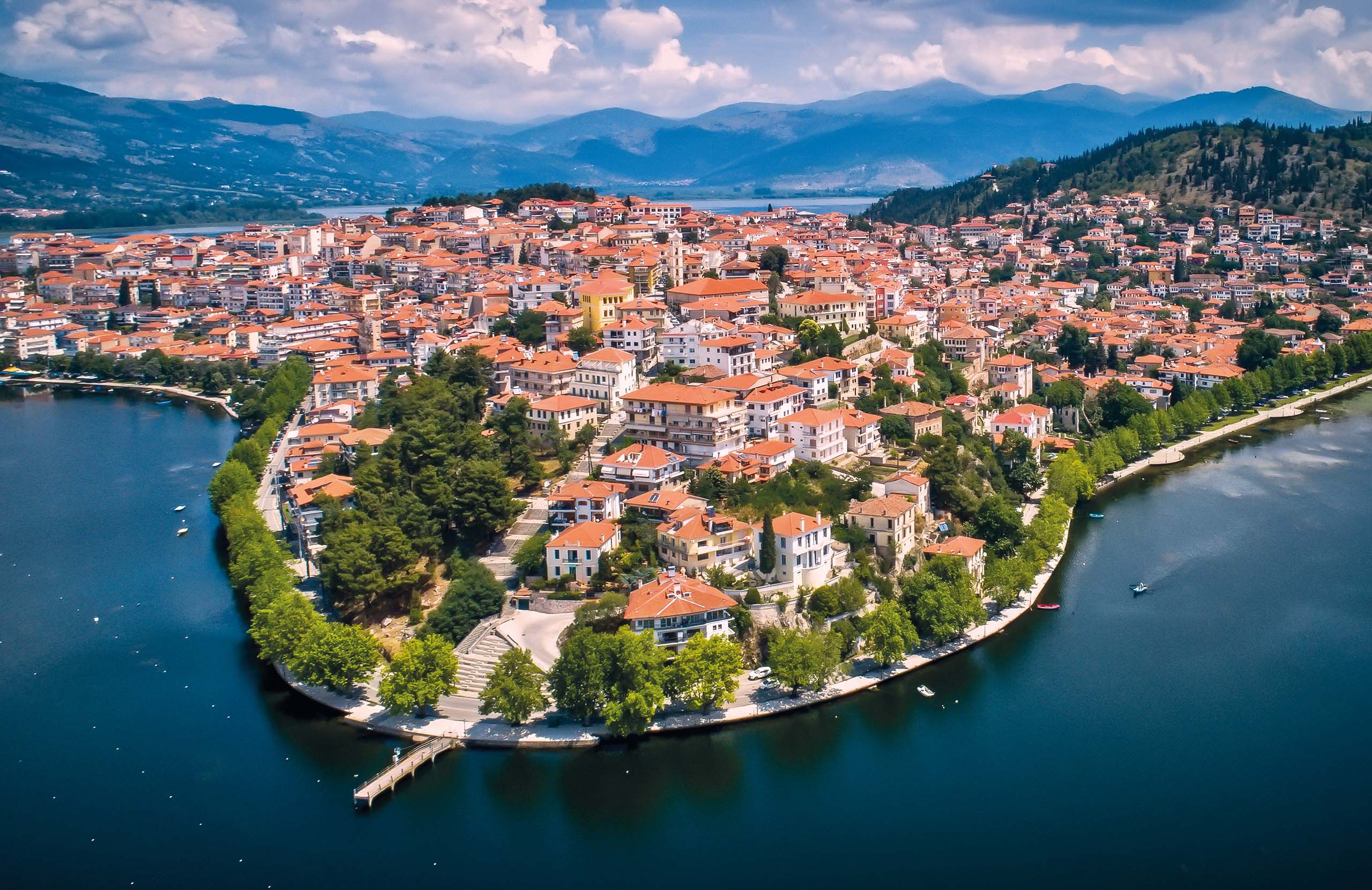
Kastoria stands on a peninsula that pushes out into a lake, at seven hundred metres, in the far west of Macedonia. Water surrounds it on three sides and mountains close it in.
Two things have shaped the town. One is the lake, which gave it fish, defence and a place to work leather. The other is fur — Kastoria has been making and trading it for more than five hundred years, and the money it brought built the mansions that still line the old quarters.
The town also has more than seventy Byzantine and post-Byzantine churches, and on the lakeshore just outside it, the excavated remains of a village that stood on stilts over the water seven thousand years ago.
History & Culture
Fur
Kastorians were working fur before the fourteenth century. The first written record is a patriarchal document of 1574, which entrusted the management of Mount Athos property to the guild of Kastorian furriers in Constantinople — a measure of how established they already were.
What made them distinctive was not the fur itself but the offcuts. In 1713 an Ottoman decree temporarily banned fur garments because raw material had run short, and Kastorian workshops turned to the chordades, the scraps normally thrown away, sewing them into whole garments. Doing it well required sorting skins by colour, type and even by which paw they came from — black fur was worked in ten or more distinguishable shades — and the trade developed specialist roles for each stage.
The skill spread with the people. From the nineteenth century Kastorian furriers and merchants emigrated in numbers and set up communities in Italy, Germany and Spain, and Kastoria became the specialist fur-processing centre of Europe.
The trade is under pressure now. Russian and Ukrainian buyers accounted for most of the market, and since 2022 much of that has gone.
The mansions and the churches
Fur money built the archontika, the merchants' mansions of the seventeenth to nineteenth centuries, concentrated in the Doltso and Apozari quarters. Several are open as museums, and their painted ceilings and enclosed upper floors are the best surviving domestic architecture of the period in northern Greece.
The town also holds more than seventy Byzantine and post-Byzantine churches, an extraordinary density for a place this size. Panagia Koumbelidiki, with its unusually tall drum, is the one people photograph. The Byzantine Museum holds the icons.
Dispilio
On the lakeshore four kilometres from the town, excavation uncovered a Neolithic lakeside settlement occupied from around 5500 BC — houses built on platforms over the shallow water.
Part of it has been reconstructed on the site as an open-air museum, and the finds include wooden structural remains preserved by the water, tools, pottery and seeds.
Argos Orestiko
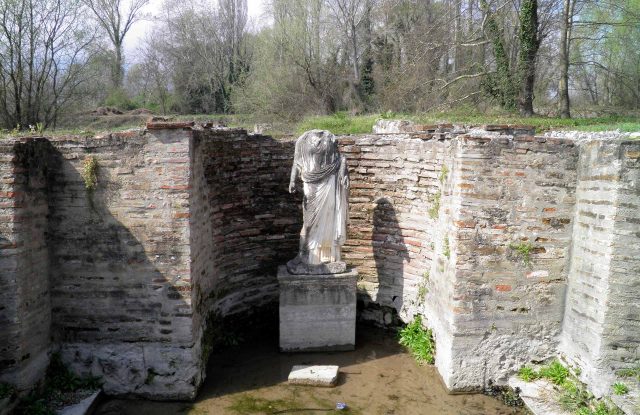
Ten kilometres south, Argos Orestiko stands on the ground of the ancient kingdom of Orestis. Excavations have uncovered early Christian basilicas and the building that housed the assembly of the Orestians.
Its Archaeological Museum holds the finds, including a shield of the Paeonian infantry and an inscribed decree that is the most important political document to survive from western Macedonia.


Nature & Outdoors
The lake
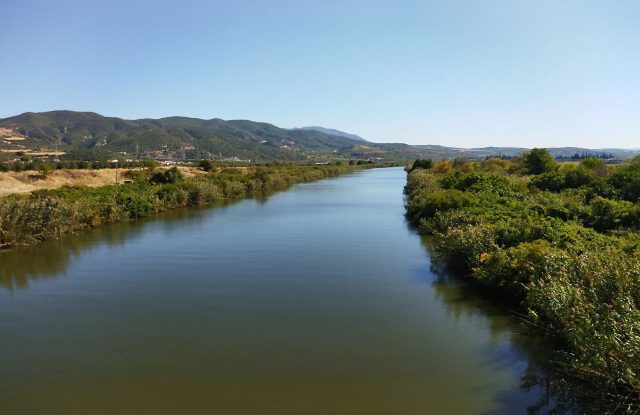
Lake Orestiada wraps around the town on three sides. It is shallow, rich in fish, and one of the better birdwatching sites in northern Greece — herons, cormorants, ducks and pelicans use it.
A footpath and cycle route runs around the whole peninsula, about nine kilometres, at the water's edge below the cliffs. It passes the Mavriotissa monastery, an eleventh-century foundation with external frescoes, and the Dragon's Cave, a small show cave with lakes and formations inside.
The mountains
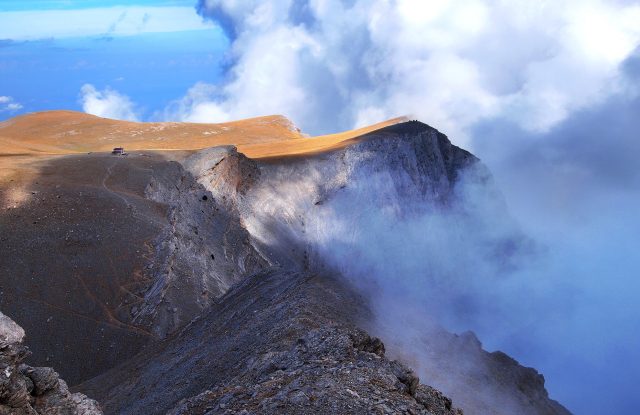
Mount Grammos rises on the Albanian border west of the town, reaching 2,520 metres. Near its summit lies Gistova, one of the alpine lakes that Greeks call dragon lakes, at 2,307 metres. Nestorio is the base for walking here.
Vitsi, to the north, is lower, wooded and has a small ski centre.
Nostimo
At the village of Nostimo, thirty-five kilometres from Kastoria, there is a petrified forest. The fossilised trunks show that this mountain country was a coastal region around twenty million years ago.


Villages & Inland
The Koresteia villages, north towards the border, are built of brick made from red clay and straw, which gives whole settlements a reddish colour that is unlike anywhere else in Greece.
Nestorio, twenty-eight kilometres west, sits on the Aliakmon at the foot of Grammos, in thick forest. Every summer it hosts a large open-air music festival on the riverbank.
Nearer the town, Mavrochori and Aposkepos are lakeside villages with traditional houses, and Polykarpi sits among apple orchards with paths down to the water.
Food & Drink
Kastoria has dishes that are genuinely its own and are hard to find elsewhere.
Sarmades are rolls of pickled cabbage — armia — stuffed and slow-cooked, and they are the winter dish here. Keftedes makalo are meatballs served in a thick sauce of garlic, tomato and flour. Grivadi sto tava is carp from the lake, baked in the oven.
Armiopita, a pie made with the same pickled cabbage, and ryzopita, a rice pie, appear on fewer menus but are worth asking for. Wild mushrooms from the mountain forests are fried simply.
The vineyards of western Macedonia grow Xinomavro, the region's red grape, and there are wineries around the lake open to visitors.

Where to Stay
Prices shown per night for a sample 3-night stay. Rates and availability vary by season — select your dates for live pricing.
Practical information
Getting there
Kastoria has a small airport about ten kilometres south, with limited flights. Most people arrive by road: it is roughly 200 km from Thessaloniki, about two and a half hours by motorway, and 530 km from Athens.
KTEL buses run from Thessaloniki and Athens. Prespa is about an hour and a half north, and Nymfaio an hour northeast.
Getting around
The old quarters are walked, and the lakeside circuit is walked or cycled. The town is compact but steep in places.
A car is needed for the villages, for Grammos, and for Nostimo. Mountain roads are slow and can be difficult in winter.
When to go
Spring and autumn are the best seasons — the lake is at its fullest, the forests turn, and the walking is comfortable.
Winter is genuinely cold and the lake sometimes freezes at the edges, which is part of the appeal. There is skiing on Vitsi.
Summer is warm but never crowded. The Nestorio festival takes place then.
Good to know
The Byzantine churches are mostly locked. Some open on request through the Byzantine Museum or the local ephorate — ask before setting out to find them.
Fur shops are everywhere in the town, and some visitors will not want to be sold to. It is easy enough to avoid, but it is part of what the place is.
Check current opening hours for the Dragon's Cave and the Dispilio museum; both are small operations with seasonal timetables.
Exploring the Kastoria Area— been there?Tell others what you saw.
A photo and two lines are enough.