Mastorochoria of Konitsa
- Forest, Traditional Villages
- Geo Area: Epirus

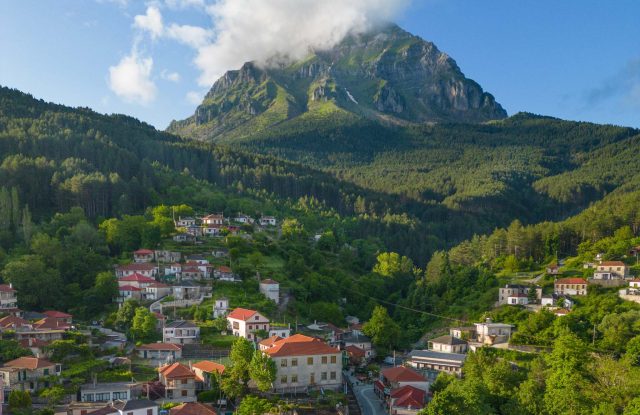
Mastorochoria, meaning "villages of the master craftsmen", is a group of stone villages in the mountains of Epirus, near the Albanian border. They stand on the slopes of Mount Grammos, above the Sarantaporos river, and fewer than a thousand people live in them today. From the 18th century, men from these villages worked as masons across Greece and the Balkans, building the stone bridges, churches and mansions the region is known for. Pyrsogianni, the largest village, has a museum of their craft. Nearby, the Aoos river offers rafting, and the Sarantaporos meets it near an old monastery built into the hillside.
What travellers posted

Been here? A photo and two lines are enough.
History & Culture
The masons of Mastorochoria, called koudaroi, left their villages every spring in organised groups and travelled to building sites across Greece, the Balkans and beyond, working on bridges, churches, schools and mansions. Among themselves, they spoke koudaritika, a working language that outsiders could not follow. It is no longer spoken today. The Museum of Stone Craftsmen in Pyrsogianni, in an old stone school built in 1927, keeps records and tools from this tradition, which lasted more than 400 years.
The best-known work of these masons stands outside the villages themselves: the bridge at Konitsa, over the Aoos river, built around 1870 by Kostas Frontsos of Pyrsogianni. Its single arch spans about 37 metres. Ottoman troops damaged it in 1913, and it was repaired that year. Near the southern edge of Mastorochoria, where the Sarantaporos joins the Aoos, the Monastery of Molyvdoskepastos stands on the hillside. Tradition dates its founding to the 7th century, and it was renovated in 1522; its wall paintings span the 13th to the 18th centuries.


Villages & Inland
Pyrsogianni, at about 850 metres on the slopes of Grammos, was the seat of Mastorochoria and is its largest village. Stone houses, fountains and cobbled lanes surround a central square with buildings from the 18th century, and the church of Agios Georgios, built in 1904, was modelled on the cathedral of Athens. Kastaniani, at a similar altitude between Grammos and Smolikas, stands in oak, beech and chestnut forest, and single-arch stone bridges cross the streams around it.
Vourmpiani, Drosopigi and Chionades are smaller villages of the same stone architecture, each with its own church, fountains and mansions built by families of masons. Further east, on the slopes of Mount Smolikas, Molista, Ganadio and Monastiri are three more stone villages, thinly populated today, that are also counted among the master-builders' settlements, though not all sources place them in the same administrative unit as the other villages.


Nature & Outdoors
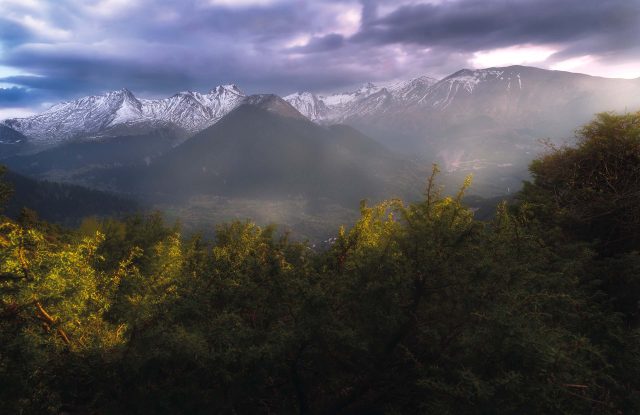
Mastorochoria lies in the valley of the Sarantaporos river, between the Grammos and Smolikas mountains. Forests of oak, beech, chestnut and fir cover the slopes around the villages, and the Sarantaporos flows south to join the Aoos river, near the Monastery of Molyvdoskepastos. The area lies within the Vikos-Aoos Geopark, a status for places with notable geology and landscape, and it borders the Grammos range, where bears and wolves live.
Paths and forest dirt roads connect the villages across Grammos and Smolikas, and walkers and mountain bikers use them to move between them. The forest is at its most colourful in autumn, and the streams around the villages run fullest in spring. Further south, near Konitsa, the Aoos runs through a wider valley where rafting and kayaking trips take place, on stretches with both easy and demanding rapids.
Where to Stay
Prices shown per night for a sample 3-night stay. Rates and availability vary by season — select your dates for live pricing.
Practical information
Getting there
The nearest airport is at Ioannina, and Konitsa is about an hour's drive from there. From Athens the drive to Ioannina takes about four and a quarter hours, and Konitsa is a further hour beyond it. From Konitsa, the villages of Mastorochoria are another 20 to 30 kilometres, on mountain roads that climb towards Grammos. There is no train station nearer than Ioannina.
Getting around
A car is needed, since the villages are spread across the mountainside and there is little public transport between them. Roads are paved but narrow and winding, and distances between villages take longer to drive than they look on a map. Base yourself in Konitsa or in one of the larger villages, such as Pyrsogianni, to visit the others.
Good to know
Check locally whether the Museum of Stone Craftsmen in Pyrsogianni is open before you go, since its hours are not fixed, and the same applies to the Monastery of Molyvdoskepastos. Mobile signal can be weak in the smaller villages, so download maps before you set out. Some villages have very few residents and no shop or taverna, so bring water and supplies from Konitsa or Pyrsogianni.
When to go
Spring and autumn bring mild weather and are the best seasons for walking between the villages, and autumn also brings the forest colours. Summer is warm, and it is the season for rafting and other activities on the Aoos river near Konitsa. Snow can close some mountain roads in winter, so check conditions before you travel then, and expect some villages to be very quiet.
Mastorochoria of Konitsa— been there?Tell others what you saw.
A photo and two lines are enough.