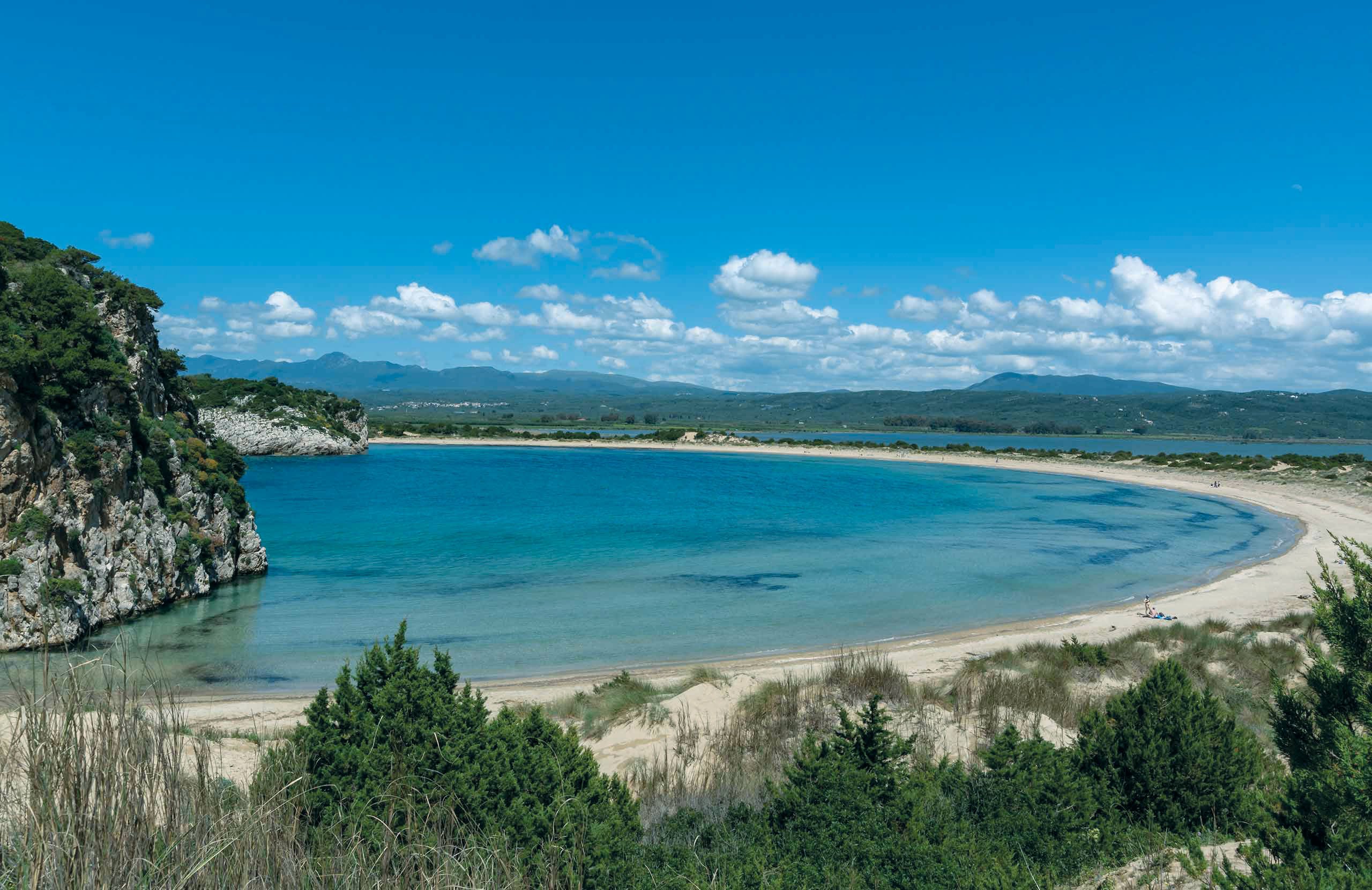

Voidokilia is a striking beach destination on the western coast of the Peloponnese, celebrated for its unique horseshoe shape and unspoiled natural beauty. The beach sits between two headlands and is bordered by the Gialova Lagoon, creating a serene landscape that feels untouched by modern development. The surrounding area is a harmonious blend of soft dunes, coastal wetlands, and rocky cliffs, making it an ideal spot for those looking to connect with nature.
Close to Voidokilia, you’ll find several charming towns and villages worth visiting. The town of Pylos, 20 minutes by car, is a must-visit for its historical importance and Venetian architecture. It also offers a picturesque harbor lined with cafes and restaurants. Gialova, just 10 minutes away, is a small seaside village with a relaxed atmosphere, known for its beachfront tavernas and easy access to the Gialova Lagoon.
One of the key attractions nearby is the Palace of Nestor, a remarkably well-preserved archaeological site offering a window into Mycenaean civilization. For nature enthusiasts, the Gialova Lagoon is perfect for birdwatching, while the Polilimnio Waterfalls, about 45 minutes away, provide a refreshing escape into nature with their lush surroundings and cascading waters.
History
On the north side of the beach are the ruins of a vaulted tomb from the Mycenaean period, which was excavated by archaeologist Spyros Marinatos. A settlement of the 4th millennium BC was also excavated in this area. According to Pausanias’ description, the tomb belonged to Nestor’s son, Thrasymides. The diameter of the tomb is 5 meters and there are traces of at least 7 tombs. The floor was paved with pebbles from the adjacent beach. The findings included stone arrowheads, two necklaces of amethyst and sardine, four gold plates, two Mycenaean vessels, loom flywheels and two most likely Mycenaean figurines.
On the south side of the beach are the ruins of a Medieval castle built by the Franks of the Peloponnese in the 13th century, which is known today as Paleokastro or Paleonavarino.
On the rock below Paleokastro there is a large cave called the Cave of Nestor. It has dimensions of about 30 x 16 meters and a large height, which in places reaches 30 meters. According to mythology, in this cave Hermes hid the herd he stole from Apollo. In this cave, the herds of Nileas, Nestor’s father, were kept, according to Pausanias (Messinian, 36.2). Archaeological research has revealed samples of human presence from the Late Neolithic, Early Helladic, Middle Helladic and Late Helladic III periods, but also later, to the classical times.


Where to Stay
Prices shown per night for a sample 3-night stay. Rates and availability vary by season — select your dates for live pricing.
Best Time to Visit:
The best time to visit Voidokilia is between May and September when the weather is warm and ideal for swimming and outdoor activities.
General Tips for Exploring and Transportation:
When visiting Voidokilia and the surrounding area, bring comfortable clothing and sturdy footwear, especially if you plan on hiking the nearby trails. A hat, sunscreen, and sunglasses are essential for sun protection, as there is little shade on the beach. Always carry water to stay hydrated, especially during hot summer days.
Voidokilia— been there?Tell others what you saw.
A photo and two lines are enough.
