Exploring the Zagori Area

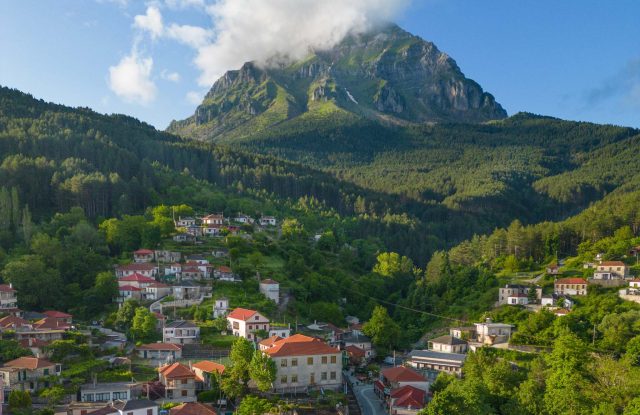
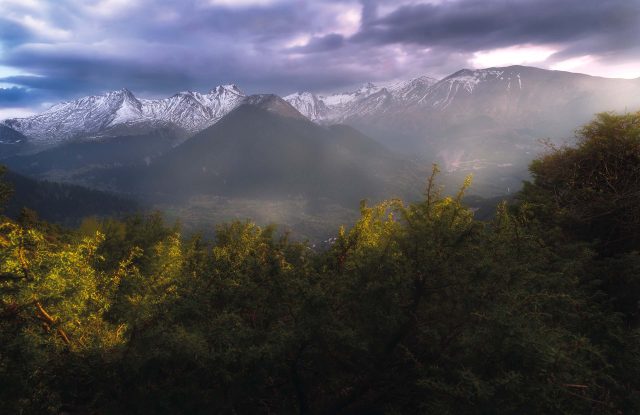
Zagori is a group of stone villages in the mountains of Epirus, north of Ioannina, spread across the slopes of the Pindus range.
There are forty-six of them. They are built of the same grey stone as the mountains, with slate roofs, and they are connected to each other by a network of cobbled paths, stepped ways and arched stone bridges that was built before there were roads.
In September 2023 UNESCO added Zagori to the World Heritage List as a cultural landscape — the first time Greece had a site inscribed in that category.
Between the villages runs the Vikos Gorge, and below it the Voidomatis, which is among the clearest rivers in Europe.
History & Culture
What UNESCO recognised
The inscription came on 19 September 2023, at the 45th session of the World Heritage Committee in Riyadh, under the name Zagori Cultural Landscape.
It was Greece's nineteenth entry on the list and the first under the category of cultural landscape — meaning the recognition is not of a single monument but of the whole relationship between the villages, the paths that link them and the mountains around them.
What the committee recognised specifically was the architecture: the houses, the old schools, the churches and the bridges, and the fact that they survive as a living system rather than a preserved museum. Eighteen villages form the protected core; the rest lie in the buffer zone.
The bridges
The stone bridges are the signature of Zagori. They were built between the seventeenth and nineteenth centuries by travelling master builders from the mountain villages of Epirus, paid for by wealthy emigrants who had made money abroad and sent it home.
The best known are the three-arched Kalogeriko — also called Plakidas — and the single-arched Kokkori bridge, both over tributaries of the Voidomatis. Dozens more survive across the region, and several old paths still cross them.
Museums and monasteries
The Monastery of Agia Paraskevi at Monodendri stands on the very edge of the Vikos Gorge, with a walkway cut into the cliff behind it.
The Rizarios Exhibition Centre at Monodendri and the Lazaridis Folklore Museum at Koukouli cover the crafts, the costume and the social history of the region.

Villages & Inland
Forty-six villages, and they differ from each other more than a visitor expects.
Papingo — Megalo and Mikro Papingo — sits below the sheer limestone towers of the Astraka and is the busiest.
Monodendri is on the lip of the Vikos Gorge, with the monastery and the main viewpoint at Oxya.
Tsepelovo and Kapesovo are higher and quieter, with mansion houses and old schools that show what the money from emigration built.
Koukouli, Dilofo, Vitsa and Vradeto are the smallest. Vradeto is reached by the Skala, a stepped stone path of about 1,200 metres cut in switchbacks up a cliff — until 1973 it was the only way in.
The villages are still lived in, and most have one taverna and a handful of guesthouses in restored houses.


Nature & Outdoors
The Vikos Gorge
The Vikos Gorge runs about twelve kilometres between Monodendri and the Papingo villages, and it is 990 metres deep. Measured against its width it is among the deepest gorges anywhere.
You can look into it from Oxya and from Beloi, both short walks from the road. Crossing it on foot takes six to seven hours, from Monodendri down to the riverbed and up to Papingo, and it is a serious day — there is no water on the route and no way out in the middle.
The rivers
The Voidomatis rises inside the gorge and runs out of it clear enough to see the bottom at any depth. It is one of the coldest rivers in Greece and one of the cleanest in Europe, and the stretch from Klidonia is run commercially for rafting and kayaking.
The Aoos cuts its own gorge on the northern side of Tymfi.
Tymfi and the dragon lake
Above Papingo, Mount Tymfi rises to over 2,400 metres. The path up to the Astraka refuge takes about three hours, and from there another hour reaches Drakolimni — the dragon lake — an alpine tarn just below the ridge, with the Aoos gorge falling away behind it.
Both the Vikos–Aoos and the northern Pindus are national parks, and the forests hold bear, wolf and chamois.


Food & Drink
Epirus is pie country, and Zagori is the middle of it. Pies here are made with hand-rolled pastry and whatever the season gives — wild greens, leeks, pumpkin, cheese — and every village makes them slightly differently.
The dairy is the other constant: feta, hard sheep's cheeses and thick yoghurt from flocks that graze high.
Mountain tea, wild herbs and honey come off the same slopes, and the meat is lamb, goat and, in winter, game.
Where to Stay
Prices shown per night for a sample 3-night stay. Rates and availability vary by season — select your dates for live pricing.
Practical information
Getting there
Zagori is reached through Ioannina, which has an airport with flights from Athens and is on the Egnatia motorway — about four and a half hours from Thessaloniki and five from Athens.
From Ioannina, the nearest villages are thirty to forty minutes away, Papingo about an hour and a quarter.
Getting around
A car is essential. There is a bus from Ioannina to some villages but it runs a few times a week and does not connect the villages to each other.
Distances between villages are short on the map and long on the road, because everything goes around ridges. Monodendri to Papingo is about an hour and a half by car, though they face each other across the gorge.
Roads can close in winter with snow.
When to go
Spring and autumn are the best: the rivers are full, the forests turn, and the walking is comfortable. October is exceptional.
Summer is cool at altitude and the villages are busy in August. Winter is the other season — snow, fires, and full guesthouses at Christmas and at Carnival.
The rafting season on the Voidomatis runs roughly from spring into early autumn.
Good to know
The Vikos crossing is not a stroll. Six to seven hours, a steep descent and a steeper climb, no water on the route, and no way to shorten it once you are in. Start early, carry everything, and tell someone.
Guesthouses are small and few, and they fill months ahead for August, Christmas and Easter.
Village tavernas often close midweek out of season. Check before driving an hour for lunch.
Mobile signal is patchy in the gorges.
Exploring the Zagori Area— been there?Tell others what you saw.
A photo and two lines are enough.