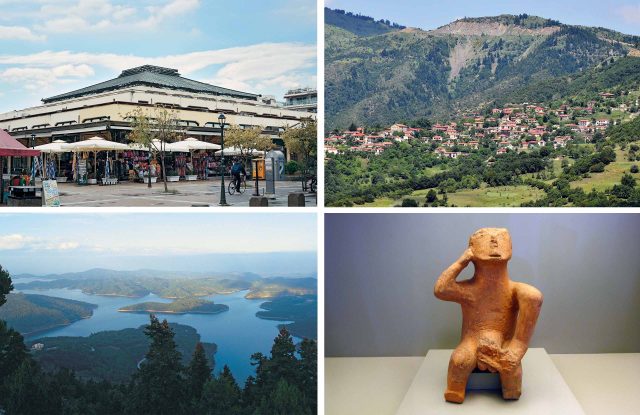


The rivers of Greece are less visited than the coast and, in several cases, more interesting. From the mythical waters of the Acheron to the tranquil beauty of the Aliakmonas, Greece’s rivers are more than just waterways—they are corridors of culture, history, and nature. Meandering through lush landscapes, dramatic gorges, and serene wetlands, Greek rivers offer countless opportunities for exploration and adventure. In this article, we explore some of the most enchanting rivers in Greece, perfect for travelers seeking a unique blend of nature and culture.
Which river, and what for
- Voidomatis, Epirus — cold spring water, clear all summer
- Aliakmon, Macedonia — the longest river inside Greece
- Acheron, Epirus — the mythical river of the dead, and springs you can stand in
- Nestos, Macedonia and Thrace — a long gorge upstream, a bird delta at the sea
- Achelous, Western Greece — the most white water in the country
- Evros, Thrace — the border river, with the largest delta for birds
- Pineios, Thessaly — through the Tempi valley below Mount Olympus
- Strymon, Macedonia — quiet water, and Lake Kerkini beside it
- Kalamas (Thyamis), Epirus — clear water and easy paddling
- Arachthos, Epirus — gorges, stone bridges and rapids
- Evrotas, Peloponnese — olive country below Sparta
- Ten more rivers worth knowing
Voidomatis River, Epirus
The Voidomatis is short, around fifteen kilometres, and fed by springs, which is why the water stays cold and clear through August. It begins below the village of Vikos, runs along the floor of the Vikos Gorge in Zagori, and joins the Aoos near Konitsa.
The lower stretch, below the old stone bridge, is where rafting and kayaking trips run. In summer the water is low and the trip is gentle enough for families; in spring it moves faster. Papigo, on the northern side of the gorge, is the usual base. Walkers cross the same water on the traverse through the gorge from Monodendri.

Aliakmon River, Macedonia
At 297 kilometres, the Aliakmon is the longest river running entirely inside Greece. It rises near the Albanian border in western Macedonia, curves east and south, and reaches the Thermaic Gulf south of Thessaloniki.
Much of the middle course is now a chain of reservoirs behind dams, so it is quieter water than it once was, and better for fishing and cycling on the banks than for paddling. The lower river passes close to Veria and Vergina, which makes it easy to combine a day by the water with the Macedonian royal tombs. Where it meets the sea, its delta joins those of the Axios and the Loudias to form one of the larger protected wetlands in the country, used by birds through the winter.

Acheron River, Epirus
In myth the Acheron was one of the rivers of the underworld, and the ancient Nekromanteion, where the dead were said to be consulted, stands above it. The river itself is more cheerful than its reputation.
It rises in the mountains of Epirus and comes out of the rock at Glyki in a set of springs cold enough that most people last only a minute standing in them. The springs are the busiest part in summer: people walk upstream in the shallow water, ride along the banks, or take short rafting runs. Further down the river widens and reaches the sea at Ammoudia, near Parga.

Nestos River, Macedonia and Thrace
The Nestos rises in Bulgaria and enters Greece through the Rhodope mountains, where it has cut a long, looping gorge on its way down to the plain. The gorge is the best part of it. A disused railway line and a path run along the side, and the river below is used for rafting in spring and easier kayaking later in the year.
Downstream the character changes completely. The delta between Kavala and Xanthi is flat and protected, with riverside forest that is unusual for Greece, and it is one of the main places in the north for birds.

Achelous River, Western Greece
The Achelous is the second longest river running entirely within Greece, and the one with the most white water. It rises in the Pindus, runs south past the Agrafa mountains, and reaches the Ionian Sea near Messolonghi.
The upper sections, known locally as the Aspropotamos, are what rafting trips use in spring while the snow is melting. Several large dams sit on the middle river, so the flow there depends on what the power stations are doing on a given day. In myth the river god Acheloos wrestled Heracles and lost a horn in the fight, which became the horn of plenty.

Evros River, Thrace
The Evros forms most of the land border between Greece and Turkey, and its lower course has been shaped by that. Access is restricted in places, so it is worth asking locally before walking near the bank.
The reason to come is the delta below Alexandroupoli. It is one of the most important wetlands in Europe for birds, and winter is the season, when large numbers arrive from further north. There are observation points and boat trips from the villages on the edge of the marsh. Upstream the river passes Soufli, the town known for silk.

Pineios River, Thessaly
The Pineios drains the whole Thessalian plain, collecting water from the Pindus and carrying it east to the Aegean. The interesting part is where it passes between Mount Olympus and Mount Ossa through the Tempi valley: a narrow, shaded corridor of plane trees with the road, the railway and the river all pressed together, and a small church built into the rock on the north side.
This is slow water, suited to canoeing rather than rafting, with easy walking along the banks. The coast where it reaches the sea is a short drive from Litochoro.

Strymon River, Macedonia
The Strymon enters Greece from Bulgaria and runs south-east to the Aegean near Amphipolis, where the stone lion still stands beside the road. Halfway along, the river was dammed in the 1930s to create Lake Kerkini.
The lake was built for irrigation and flood control, and became one of the better bird sites in Europe more or less by accident. Pelicans, herons and cormorants use it in large numbers, and flat-bottomed boats go out from the villages on the shore. Water buffalo are still kept on the wet ground around the edges. The Serres area is the base for visiting it.

Kalamas (Thyamis) River, Epirus
The Kalamas, called the Thyamis in antiquity, runs through the hills of Thesprotia and reaches the Ionian Sea opposite Corfu, north of Igoumenitsa.
It is an easy river: clear water, wide gravel beds and slow bends, which suits canoeing and kayaking rather than anything rougher. There are springs and a short gorge in its middle course, and at the coast its delta and lagoons are protected and used by birds. The valley was the old route inland from the sea, and there are ancient remains along it.

Arachthos River, Epirus
The Arachthos comes down from the Pindus near Metsovo and runs south through Tzoumerka to the Amvrakikos Gulf at Arta. Between the mountains and the plain it has cut a long, deep gorge, and that section is used for rafting and kayaking, from easy family runs to harder water in spring.
The river is also lined with stone bridges. The best known is the Plaka Bridge of 1866, which a flood destroyed in 2015; the rebuilt bridge opened in 2020 and the restoration received a European Heritage Award from Europa Nostra in 2021. In Arta itself stands the medieval bridge of the folk song.
Evrotas River, Peloponnese
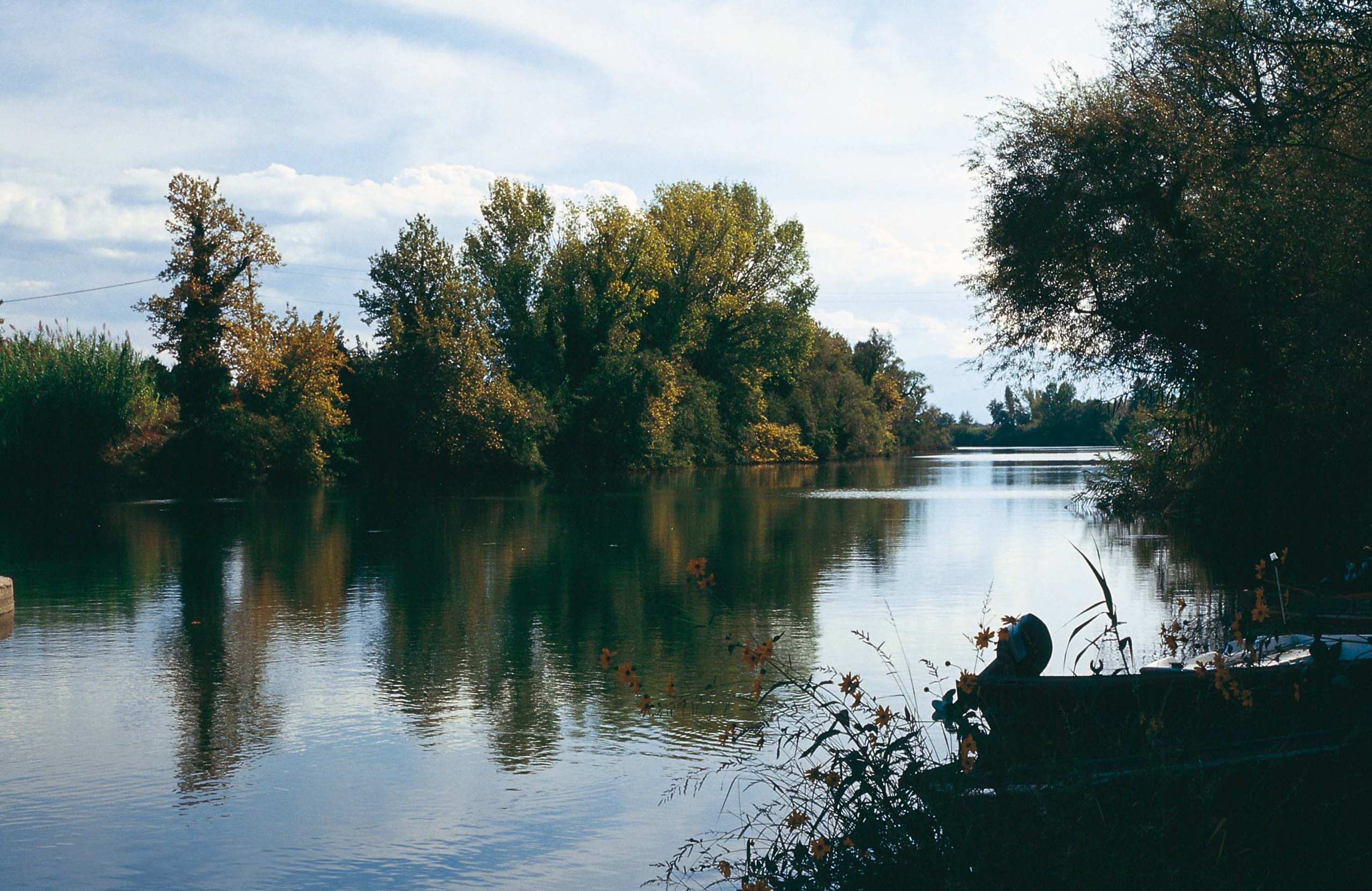
The Evrotas runs the length of Laconia, between the Taygetos range on one side and Parnon on the other, passing ancient Sparta on its way to the Laconian Gulf.
In summer it runs low, but the valley around it stays green with olive groves and citrus. The lower course is protected, and it holds freshwater fish found only in this river system. Byzantine Mystras sits on the slope above the valley, within sight of the water.

Ten more rivers worth knowing
- The Aoos runs below Konitsa through one of the wildest gorges in the Pindus, then crosses into Albania as the Vjosa.
- The Axios enters from the north and reaches the sea west of Thessaloniki, where its delta is protected and full of birds.
- The Alfeios is the longest river of the Peloponnese and passes the site of Ancient Olympia.
- The Lousios cuts a short, deep gorge in Arcadia, with monasteries built into the rock walls above it.
- The Mornos was dammed to form the reservoir that supplies most of Athens with water.
- The Evinos is used for rafting and kayaking in its middle section, and its reservoir feeds into the Mornos.
- The Sperchios crosses the plain below Thermopylae on its way to the Maliakos Gulf.
- The Louros rises from springs in Epirus and once fed the Roman aqueduct of Nikopolis.
- The Enipeas joins the Pineios in the Thessalian plain.
- The Tavropos, also called Megdovas, was dammed to create Lake Plastiras in Evrytania.
When to go
Rivers change more through the year than the coast does. Snowmelt from the Pindus fills the Arachthos, the Aoos and the Achelous in April and May, and that is when the harder rafting sections run. By July and August the same rivers are low and the trips are gentler, and the cold spring water of the Voidomatis and the Acheron is at its most welcome. Autumn is the quietest time, and winter is the season for the deltas of the Evros, the Nestos and the Axios, when birds arrive from the north. Snow can close the mountain roads to the gorges between December and March.
See them for yourself
All the rivers we cover → https://greekdestinations.gr/rivers/
Have you been to one of these rivers?
Much of what is worth knowing about a river comes from people who have been there: which section was low in August, where the path actually starts, where you can get into the water. If you have been, add what you know.