
Text updated:
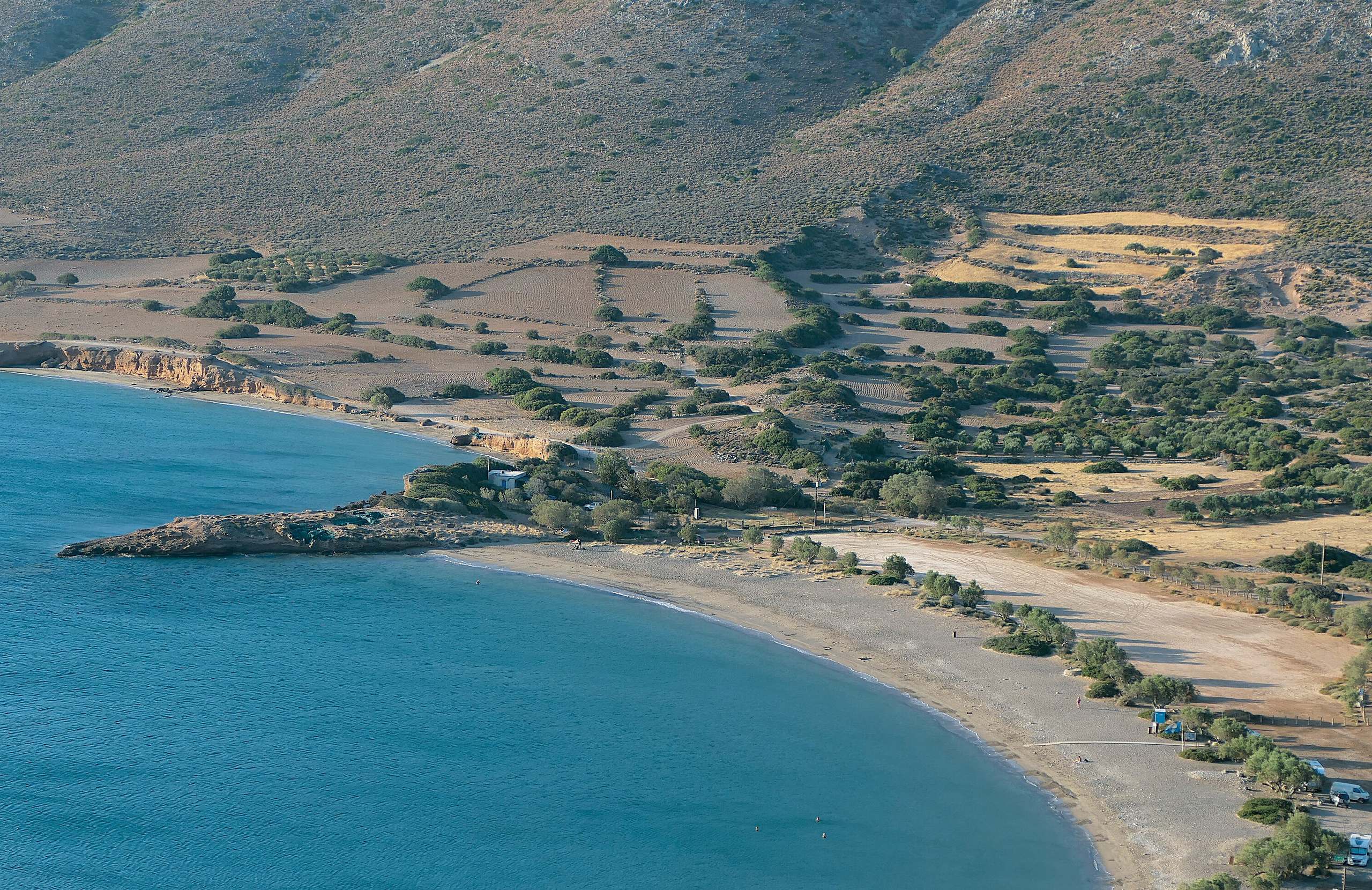
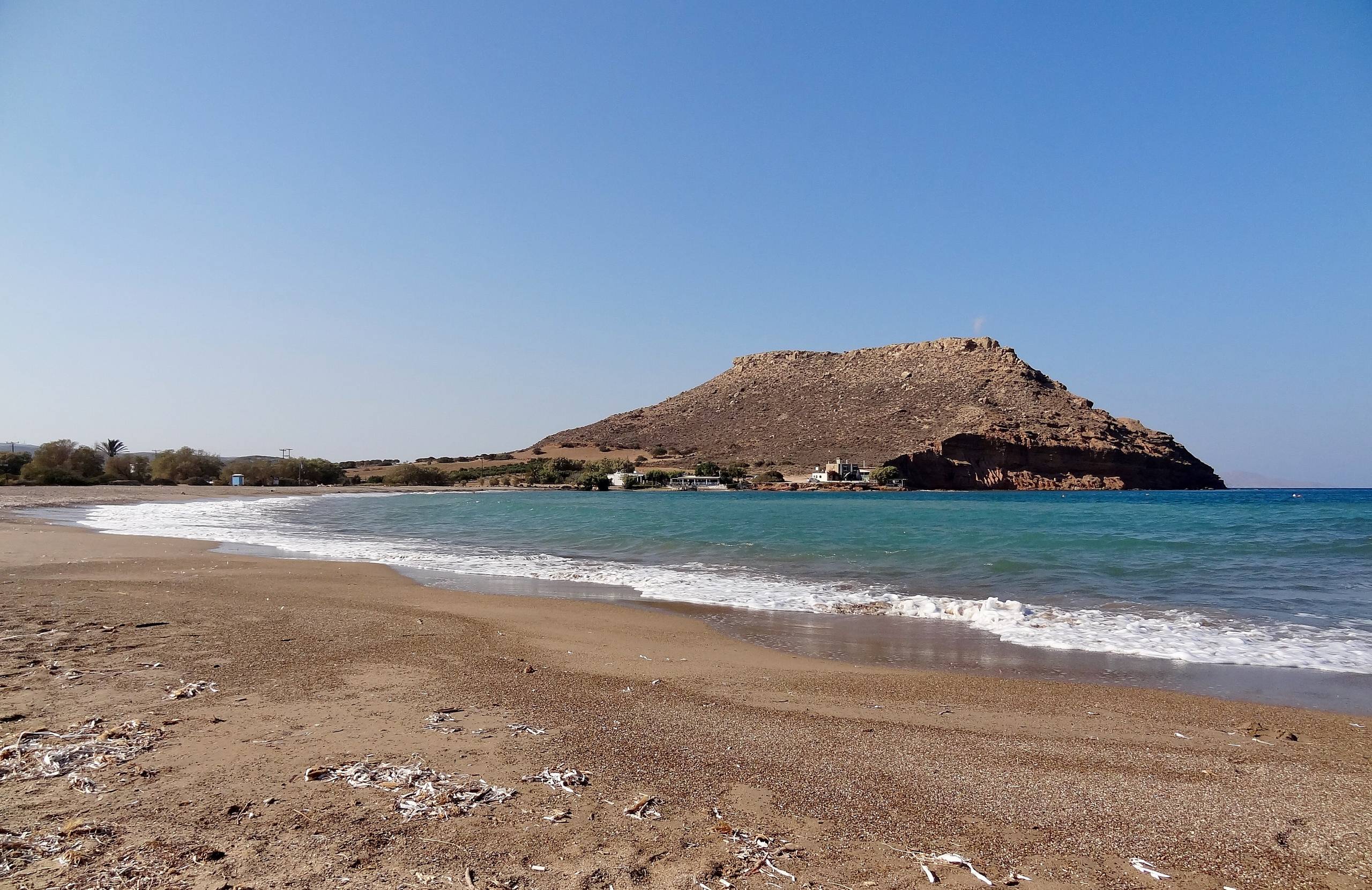
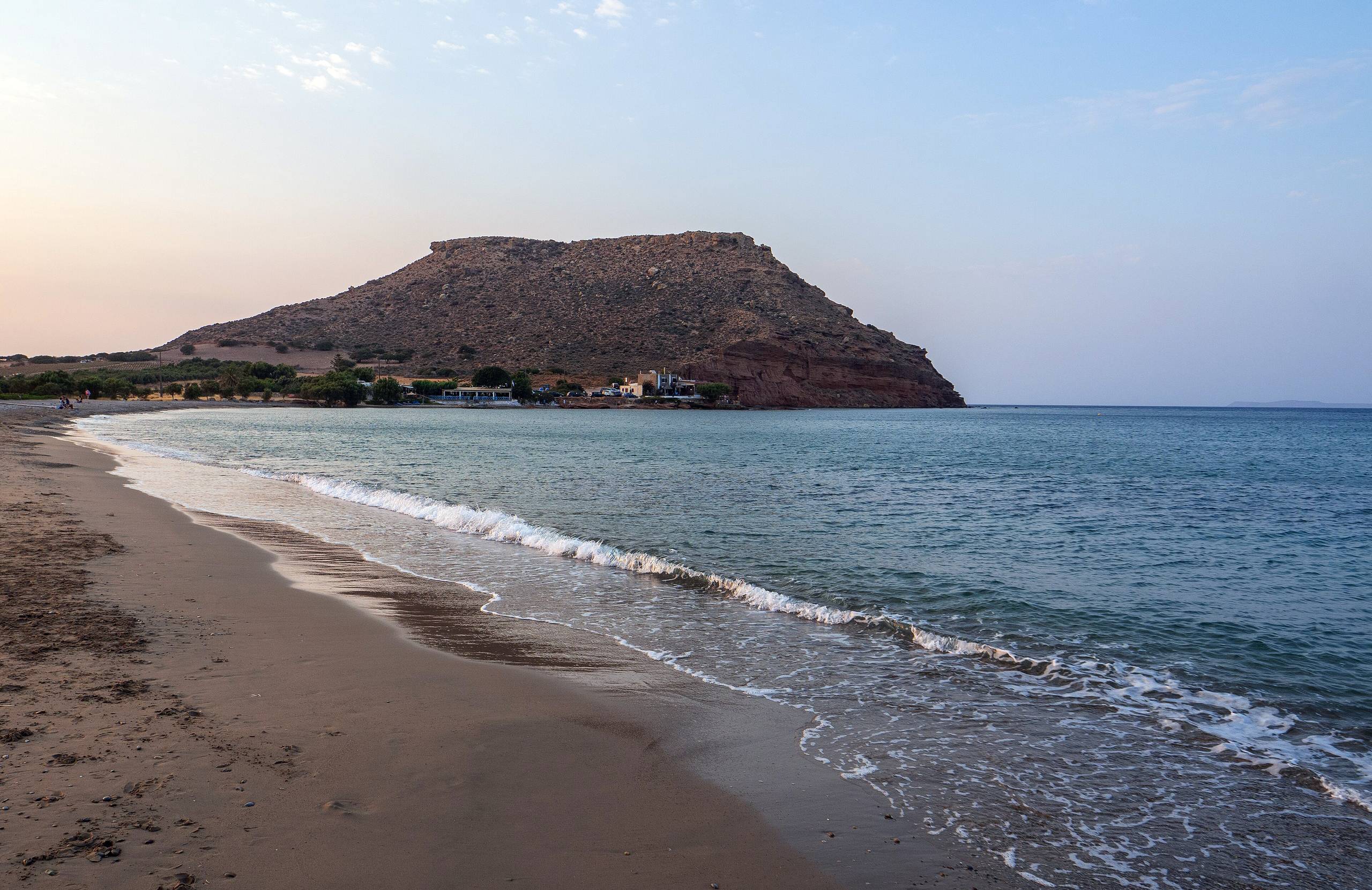
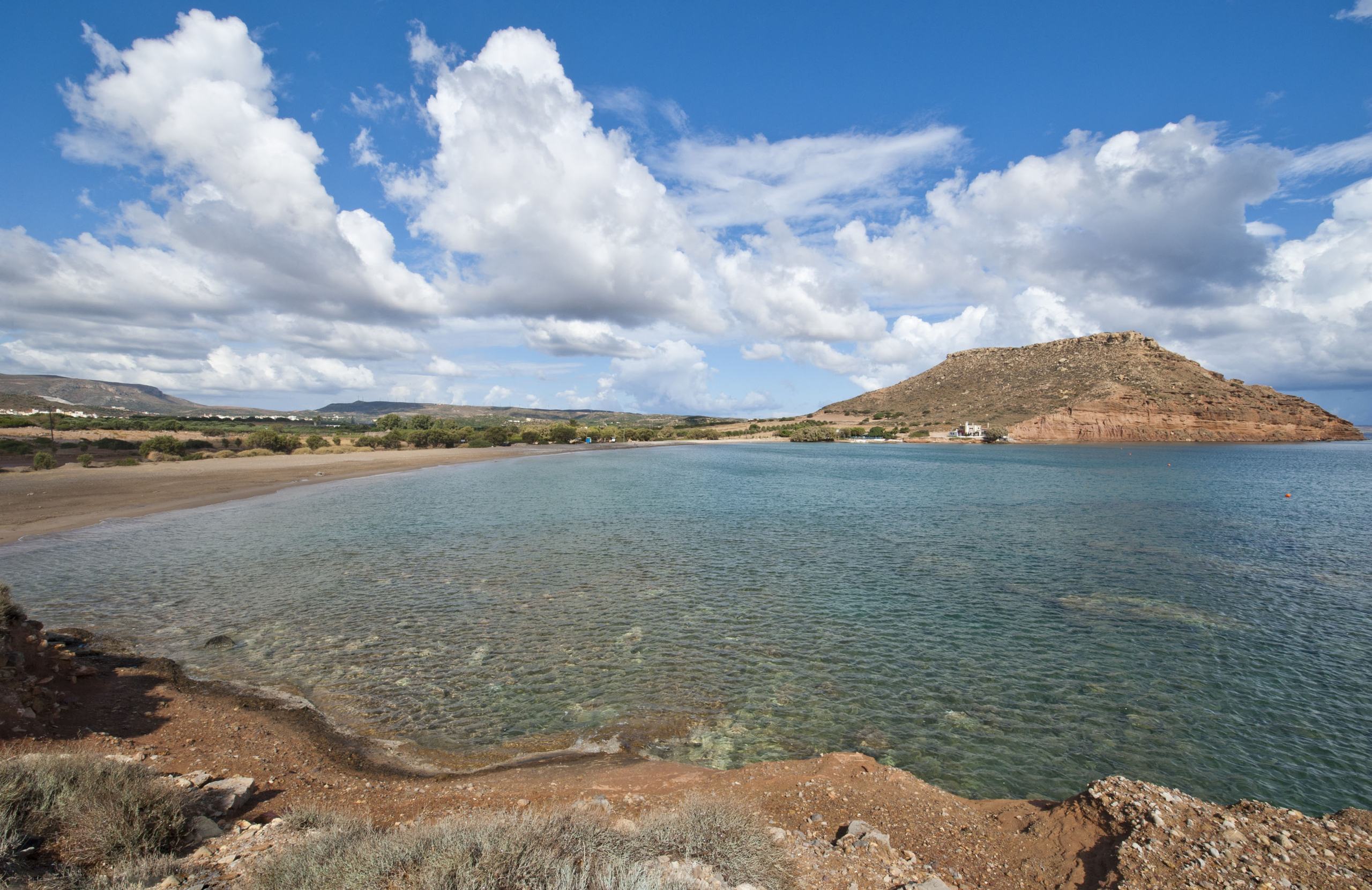
Chiona Beach is a sandy bay on the east coast of Crete, about 2 kilometres east of the village of Palaikastro. It lies just south of the rocky hill of Kastri, which separates it from Kouremenos Beach. The sand is soft and pale, the water is clear and shallow, and the sea floor slopes gently. Tamarisk trees line the back of the beach, and a few fish tavernas stand at its northern end. Opposite the bay lies the long, low islet of Grandes.
Behind the beach lie the remains of Roussolakkos, a large Minoan town. British archaeologists have excavated its streets and houses, and part of the town continues under the sea. In winter, water collects in a small wetland behind the sand. Along the rocky coast to the south-east there are several small coves, quieter than the main beach. The palm forest of Vai is about 10 kilometres to the north.
Chiona is about 20 kilometres by road from Sitia, the main town of the area, and about 81 kilometres from Agios Nikolaos. From the village of Palaikastro, a short road of about 2 kilometres leads east to the beach. Cars usually park on the open ground behind the sand.
The beach has few facilities, and most of the shade comes from the tamarisk trees. The gentle slope of the sea floor makes it a good choice for families with young children. Some visitors swim without clothes in the small coves to the south-east. Check whether the archaeological site of Roussolakkos is open before you go.