
Text updated:
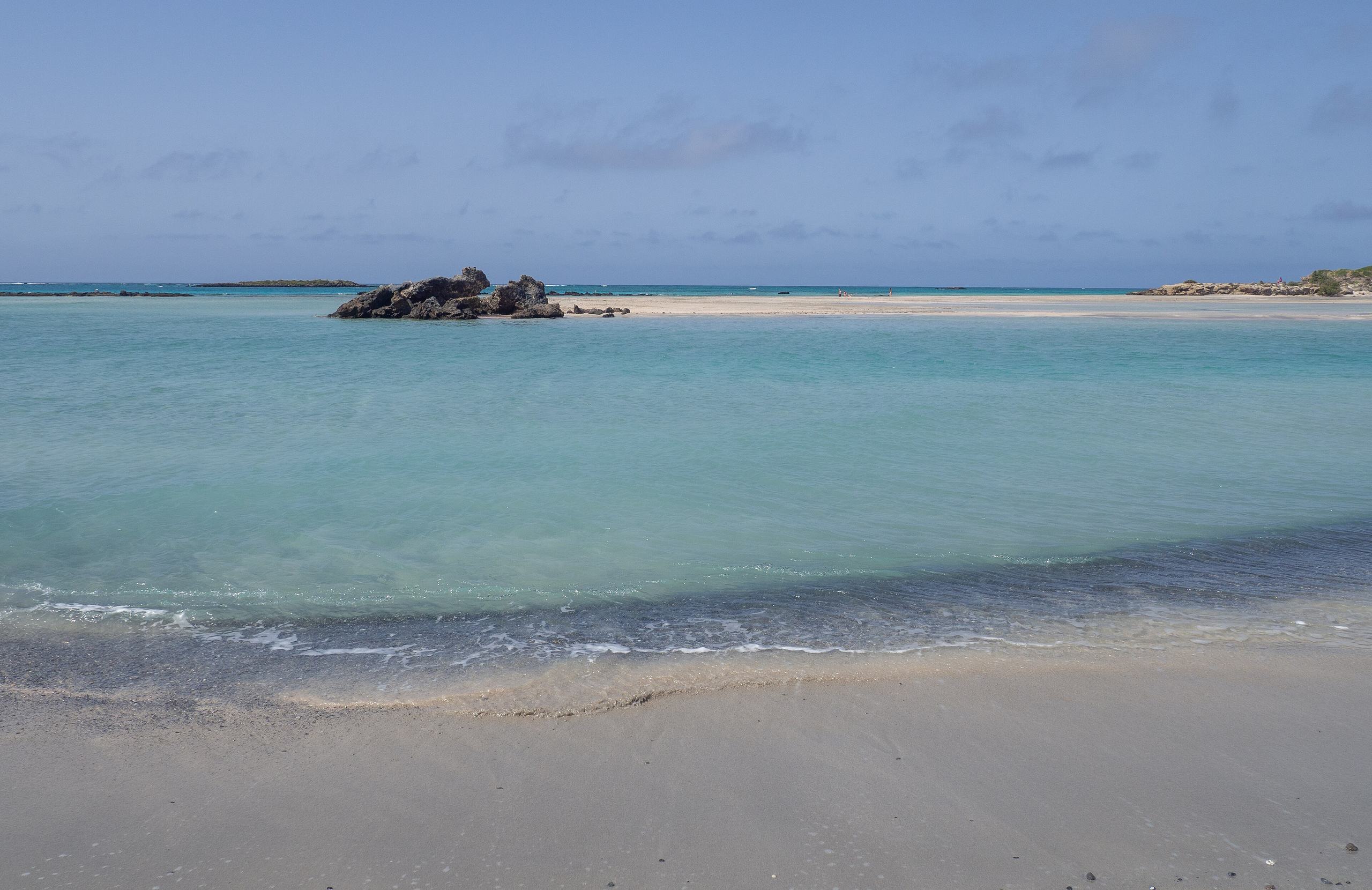
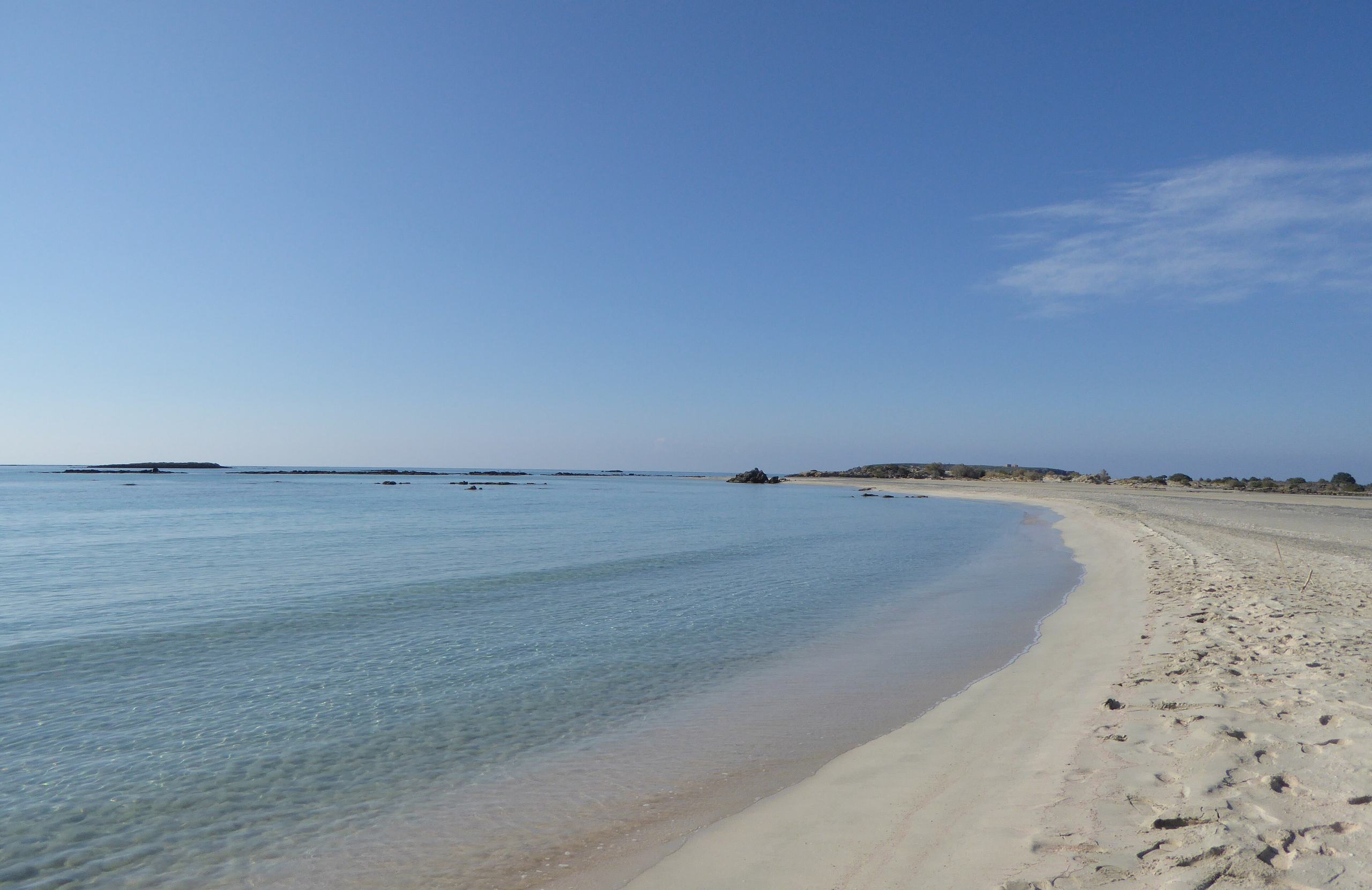
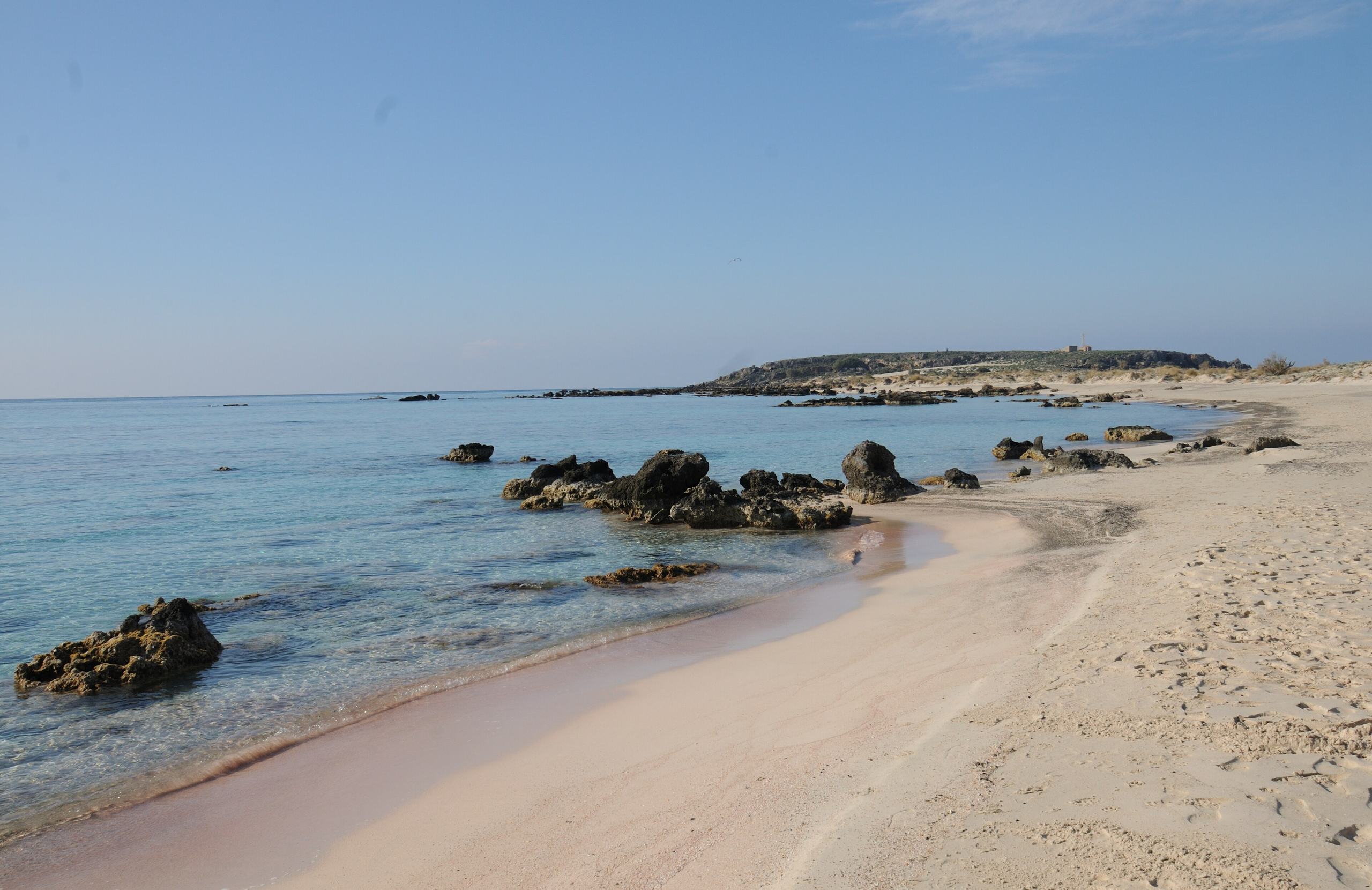
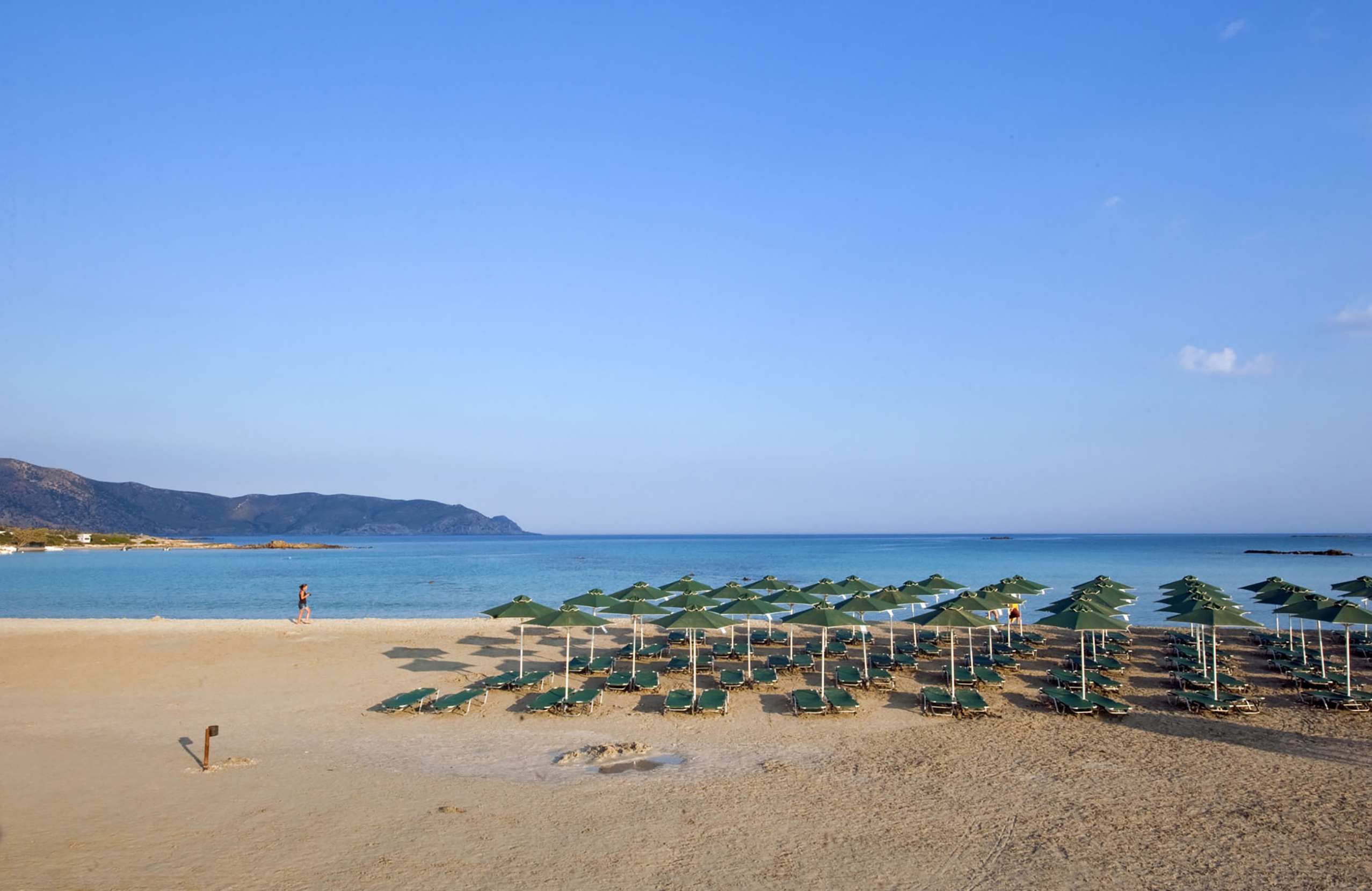
Elafonisi Beach is in the far south-west corner of Crete, in the west of the Chania area. A sandy beach on the mainland looks across a shallow lagoon to a small islet, also called Elafonisi. The water in the channel is usually only knee-deep, so visitors can walk across to the islet. The sand is pale, and along the water it has a pink tint in places, from tiny pieces of shell. The colour is usually much lighter than in many published photos. Most of the facilities are on the mainland side, and this is also the busiest part of the beach in summer.
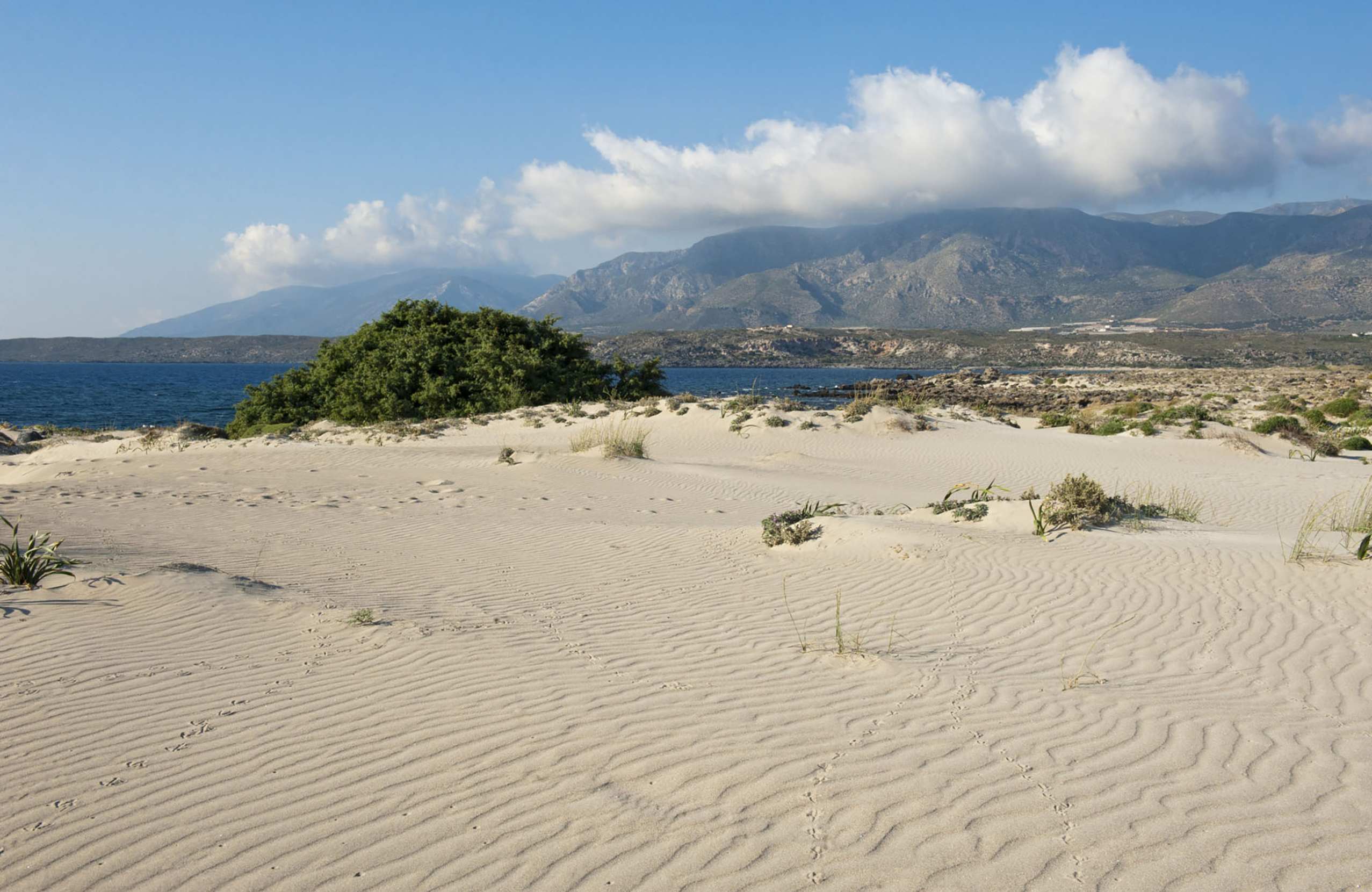
On the islet there are more coves of sand and low dunes. The islet and the coast opposite are protected as part of the Natura 2000 network, and fences keep people off parts of the dunes. On Easter Sunday 1824, during the Greek War of Independence, Ottoman and Egyptian troops attacked the people of the area who had taken refuge on the islet, and many were killed. A memorial on the islet recalls them. In 1907 the Austrian steamship Imperatrix sank after hitting the reefs off the islet. Kedrodasos Beach, with its grove of junipers, is a walk east along the coast.
Elafonisi is about an hour and a half by car from Chania, and about an hour from the town of Kissamos. The road is winding and passes through the village of Elos; the last stretch is a short dirt road. There are car parks a short walk from the sand. In summer, buses run from Chania and boats from Palaiochora, a small town on the south coast; check the timetables before you travel.
On the islet there is almost no shade, and umbrellas are usually not allowed there, to protect the plants. Camping, fires and taking sand or plants are not allowed in the protected area. The beach is open to the wind, and on windy days the fine sand blows across it. In July and August many visitors come every day, so it is best to arrive early in the morning.