


Alexandroupoli is the last Greek city before Turkey. It is a nineteenth-century port in Thrace, laid out on a grid around a lighthouse, with a long seafront promenade and around seventy thousand people. There is no old town: the city was built from nothing in the 1870s, when the railway arrived. That is not why people come.
The reason is what surrounds it. Within an hour's drive are the Evros Delta, one of the most important wetlands in Europe, and Dadia, the only forest on the continent where all four European vultures have been recorded. Between them is Soufli, a town that spent a century making silk and still makes it, on a small scale.
This is the least visited corner of Greece, and one of the most rewarding for anyone who travels for birds, borders or quiet.
History & Culture
The city is young and its landmarks are modest. The lighthouse on the seafront has worked since 1880 and is the city's emblem. It is lit at night, and the evening walk is organised around it.
The Archaeological Museum covers the Thracian world from prehistory to late antiquity: pottery, tools and gold from a region that lay between the Greek colonies on the coast and the Thracian kingdoms inland.
The Ethnological Museum of Thrace, in a restored mansion, is the better of the two for understanding recent history. It covers the crafts, the costumes and the population movements of a border region that changed hands repeatedly in the twentieth century.
The Ecclesiastical Museum holds Byzantine and post-Byzantine icons, many of them brought by refugees from Asia Minor and Eastern Thrace after 1922. All three museums tell the same story: a city whose people mostly arrived from somewhere else.
Ancient Zone and Makri
Twenty-five kilometres west of the city, near Dikella, stand the walls of an ancient city. For decades archaeologists called it Mesimvria. Excavation eventually showed that it was Zone, founded in the late seventh century BC by colonists from Samothraki, and prosperous through the fifth and fourth centuries as a trading port.
The fortifications run from the beach up to the acropolis. Inside them are the Temple of Apollo and a Sanctuary of Demeter. The site is both substantial and almost always empty, which is unusual in Greece.
Closer to the city, the seaside village of Makri lies among olive groves below Mount Zoni. Byzantine walls survive in the village, together with the remains of a tenth-century basilica. Above it opens the Cave of the Cyclops, a Neolithic shelter that local tradition connects with Homer's giant.
Villages & Inland
Soufli and silk
Fifty-eight kilometres up the Evros valley, Soufli was one of the great silk towns of the eastern Mediterranean. From the late nineteenth century until the Second World War, families across the district grew mulberry trees and raised silkworms, and the raw silk was sold to Europe.
The trade shaped the buildings. The koukoulospita, or cocoon houses, gave their upper floors to rearing worms. They were built of brick and stone to hold a steady temperature and humidity. They still line the streets, some restored and many not.
The industry ended when artificial fibres arrived and the district lost its mulberry fields under the border settlement of 1923. What survives is small: a few workshops, shops selling silk, and two museums.
The Silk Museum is in the Kourtidis mansion of 1883 and is run by the Piraeus Bank Group Cultural Foundation. It follows the whole traditional process, from egg to cloth. The Art of Silk Museum covers the machine age, with working machinery.
Soufli was the first Greek town named a Best Tourism Village by UN Tourism.
Nature & Outdoors
The Evros Delta
Twenty kilometres east of the city, the Evros river spreads into a delta of some twenty thousand hectares: lagoons, reed beds, salt marsh, sandbanks and riverine forest. The river is called the Maritsa in Bulgaria, where it rises, and it forms the border with Turkey.
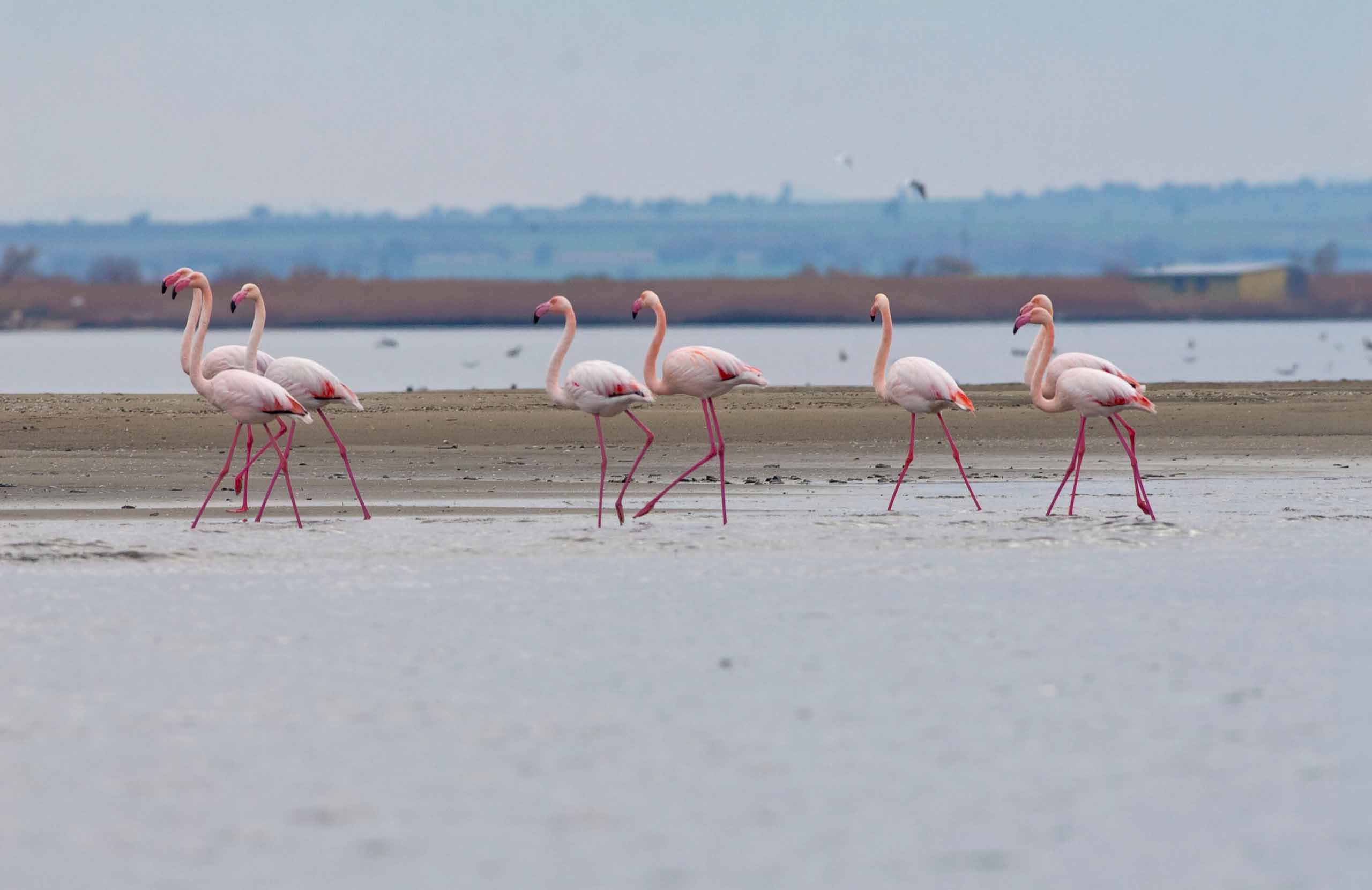
Three hundred and sixteen bird species have been recorded here, which is most of the species that occur in Greece. Winter is the extraordinary season: the delta fills with ducks, geese and swans, including the globally threatened lesser white-fronted goose. Pelicans, flamingos, herons, spoonbills and eagles are present for much of the year.
Access is through the information centre near Loutros, which runs guided boat and vehicle trips into the wetland. Part of the delta lies directly on the border and is not freely open. Going with the centre solves that, and takes you to the hides.
Dadia Forest
Sixty kilometres north, the Dadia-Lefkimi-Soufli Forest National Park covers oak and pine hills running up towards the Rhodope mountains. It is the most important site for birds of prey in Greece, and it holds the only breeding population of the cinereous vulture in the Balkans — a bird with a three-metre wingspan, which nests in mature pines and raises one chick a year.
In August 2023 the forest burned. The fire lasted more than two weeks, took around 73,000 hectares and killed twenty people. EU officials described it as the largest ever recorded in the Union. More than half the national park burned, including much of the nesting area of the vulture colony.
What happened afterwards is the part worth telling. Conservationists put up artificial nesting platforms and continued supplementary feeding. By 2025 the colony had reached 47 breeding pairs, more than at any point before the fire. The forest itself will take decades to recover. The birds did not wait.
There is an information centre at Dadia village, an observatory looking over a feeding station, and marked trails through both burnt and unburnt ground.


Beaches
The coast west of the city is sandy and shallow, and almost everyone on it is Greek.
The city beach is convenient rather than beautiful. Makri, twelve kilometres out, and Agia Paraskevi, at eighteen, are both better: greener behind and quieter. Dikella, at twenty kilometres, is the family choice, shallow and easy, and it sits just below the ancient site at Zone.
Kyani Akti, eight kilometres east, is the wild one: undeveloped, exposed and largely empty even in August.
This is not the water of the Aegean islands. The northern Aegean is shallower and warmer, and the beach culture here is aimed at people from Thessaloniki rather than at foreign visitors.
Food & Drink
Thracian cooking is the most Anatolian in Greece. It was shaped by refugees from Eastern Thrace and Asia Minor, and by centuries of Ottoman rule.
Kavourmas — meat cooked slowly and preserved in its own fat — is the regional speciality, together with soutzoukakia and the spiced sausages of Soufli, which people drive a long way to buy. Buffalo is farmed in the delta and appears on menus around it.
The drink is tsipouro rather than ouzo, taken seriously here and drunk with a spread of small plates. Wine-making in Thrace is a recent revival, and a few producers are worth a stop.
Where to Stay
Prices shown per night for a sample 3-night stay. Rates and availability vary by season — select your dates for live pricing.
Practical information
Getting there
Alexandroupoli has its own airport, about seven kilometres east, with daily flights from Athens and seasonal flights from elsewhere. Trains and buses connect the city with Thessaloniki, around five to six hours by road. It is also the mainland port for Samothraki, about two hours by ferry, and the last stop on the Greek railway before the Turkish border.
Getting around
You need a car. The city itself is walkable, but everything described here — the delta, Dadia, Soufli, the coast — is spread across a regional unit the size of a small country. The distances are long, and the roads are good and empty. Public transport connects the main towns but not the sites.
When to go
This is one of the few places in Greece where the best season is not summer. For birds, winter and spring are the point: the delta is at its fullest between November and March, and the migration of birds of prey peaks in spring and autumn. For swimming and warm evenings, come June to September. August is the only month when the coast gets busy, and even then it is quiet by Greek standards.
Good to know
Parts of the Evros Delta are on the border with Turkey and are not open to visitors on their own — go through the information centre, which arranges access. Bring binoculars; there is nowhere local to hire them. The fire damage at Dadia is still very visible, and it is better to know that before you arrive. Carry your passport or ID anywhere near the river.
Alexandroupoli and the Evros Area— been there?Tell others what you saw.
A photo and two lines are enough.
