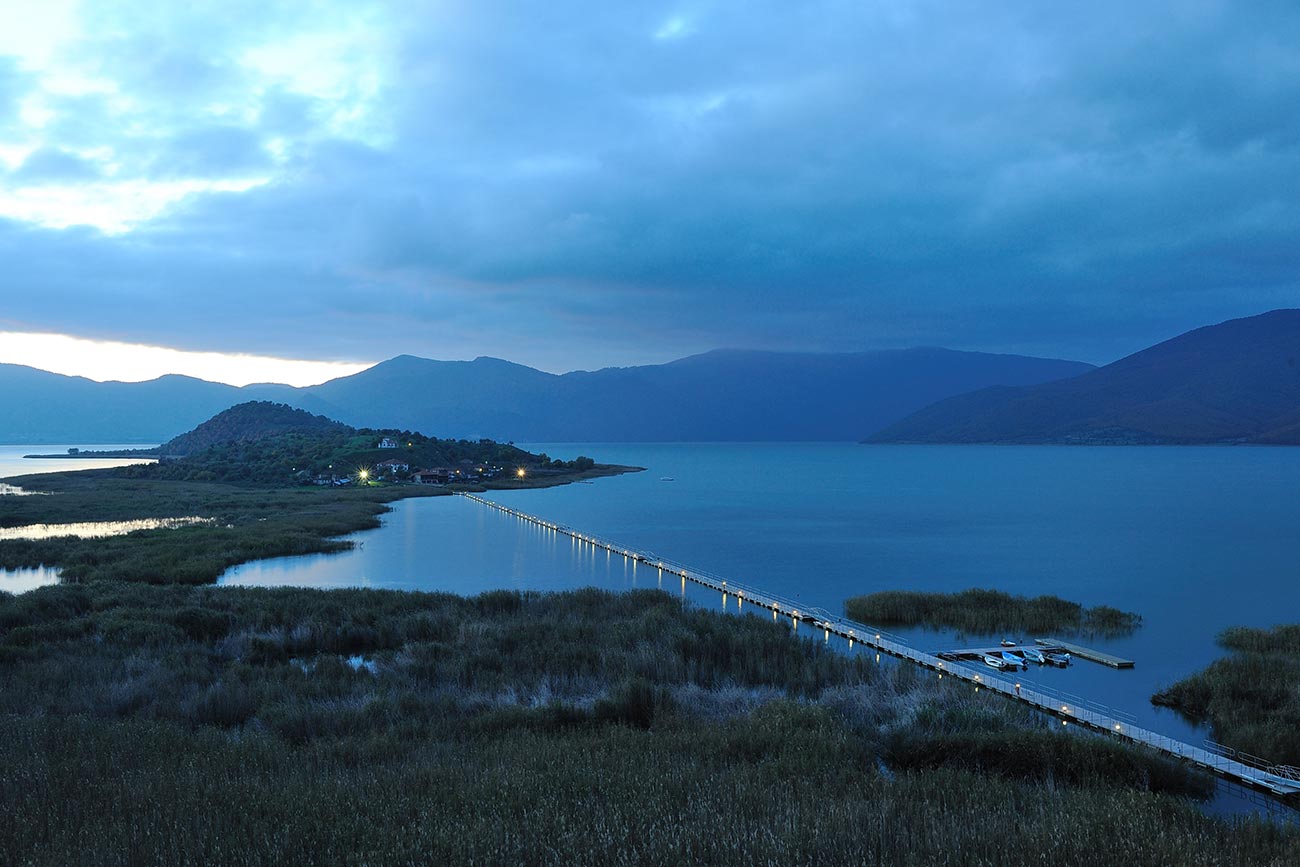

Prespa is two lakes in a mountain basin at the northwestern corner of Macedonia, at about 850 metres above sea level, ringed by peaks over two thousand.
Great Prespa is shared between Greece, Albania and North Macedonia — one of the few places where three countries meet on water. Small Prespa is shared with Albania alone. The two were once a single lake until a strip of land rose between them.
The basin is a national park and one of the most important places for birds in Europe. It also holds more than a hundred Byzantine monuments, hermitages cut into cliffs above the water, and villages of stone and mudbrick that have changed very little.
History & Culture
The basilica on the island
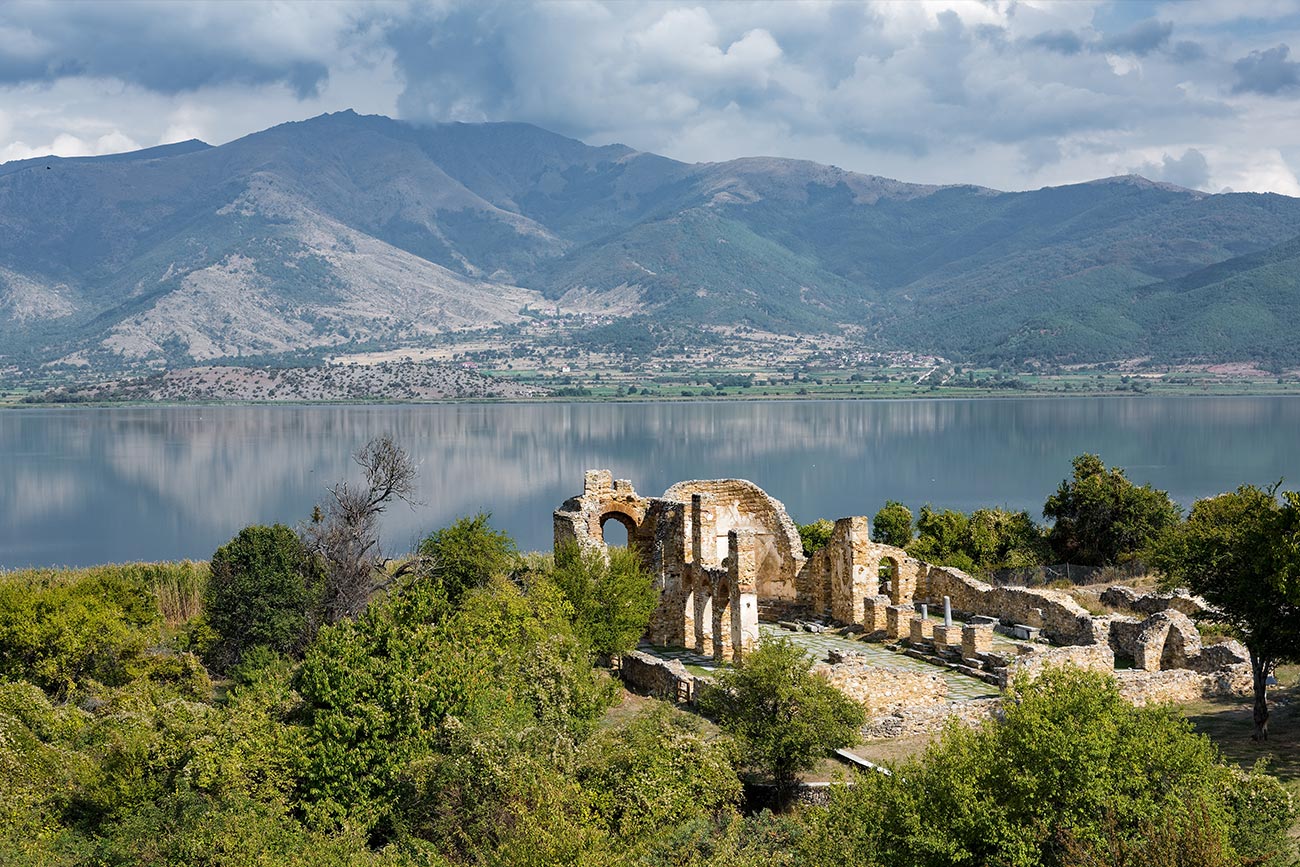
In 985 the Bulgarian tsar Samuel took Larissa and carried off the relics of its bishop, Saint Achilleios. The following year he built a church for them on a small island in Small Prespa and made Prespa the capital of his kingdom.
The Basilica of Agios Achilleios is a three-aisled timber-roofed church, and enough of it stands to give a real sense of its scale. For five centuries it was the cathedral of Prespa.
Excavations found four burials in the south aisle, which the excavator believed held members of Samuel's family — possibly Samuel himself. A fragment of gold-embroidered silk with eagles woven into it came out of one of the graves and is now in Thessaloniki.
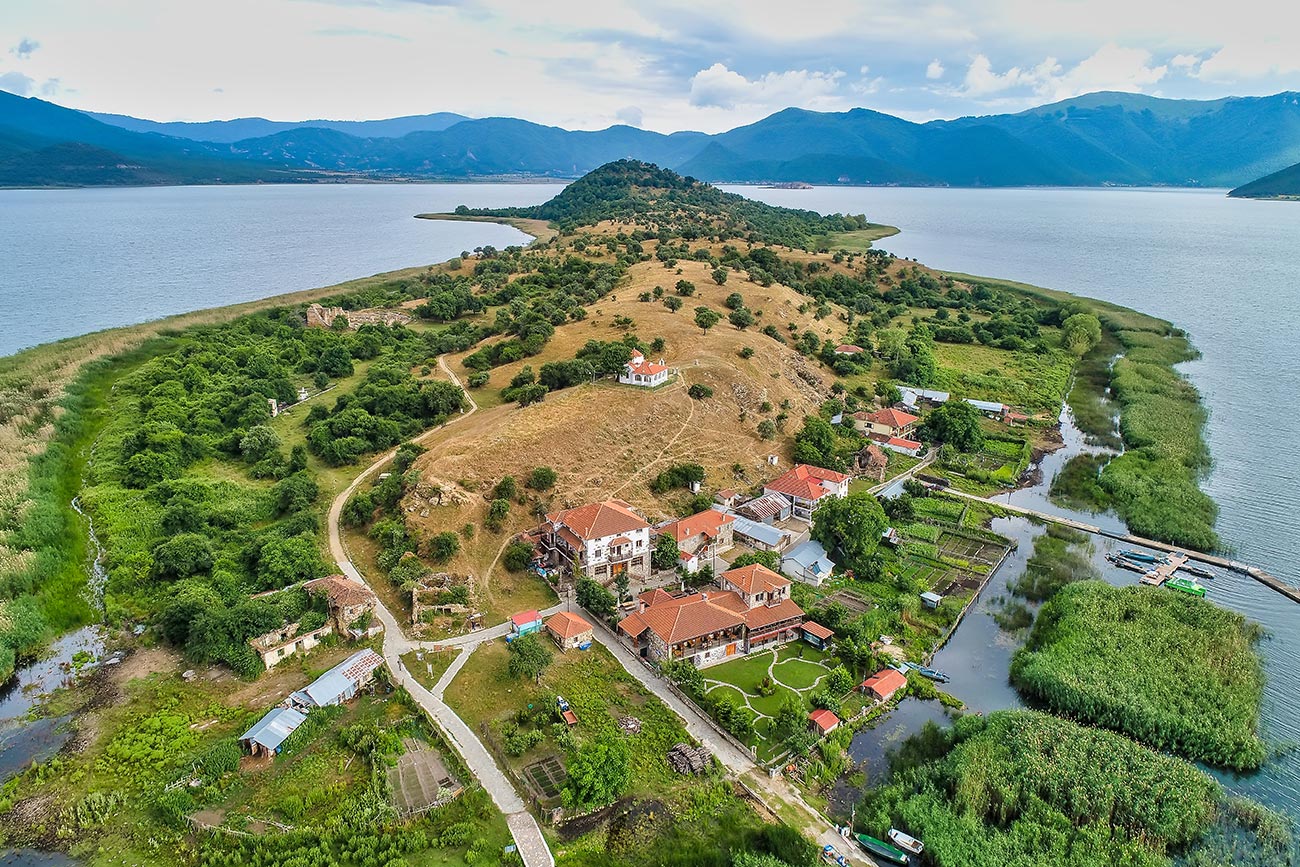
The island also holds a sixteenth-century monastery, and the remains of three more churches from the eleventh, fourteenth and fifteenth centuries. Beneath all of them lies a Hellenistic town.
Every August the basilica hosts a cultural festival.
The hermitages
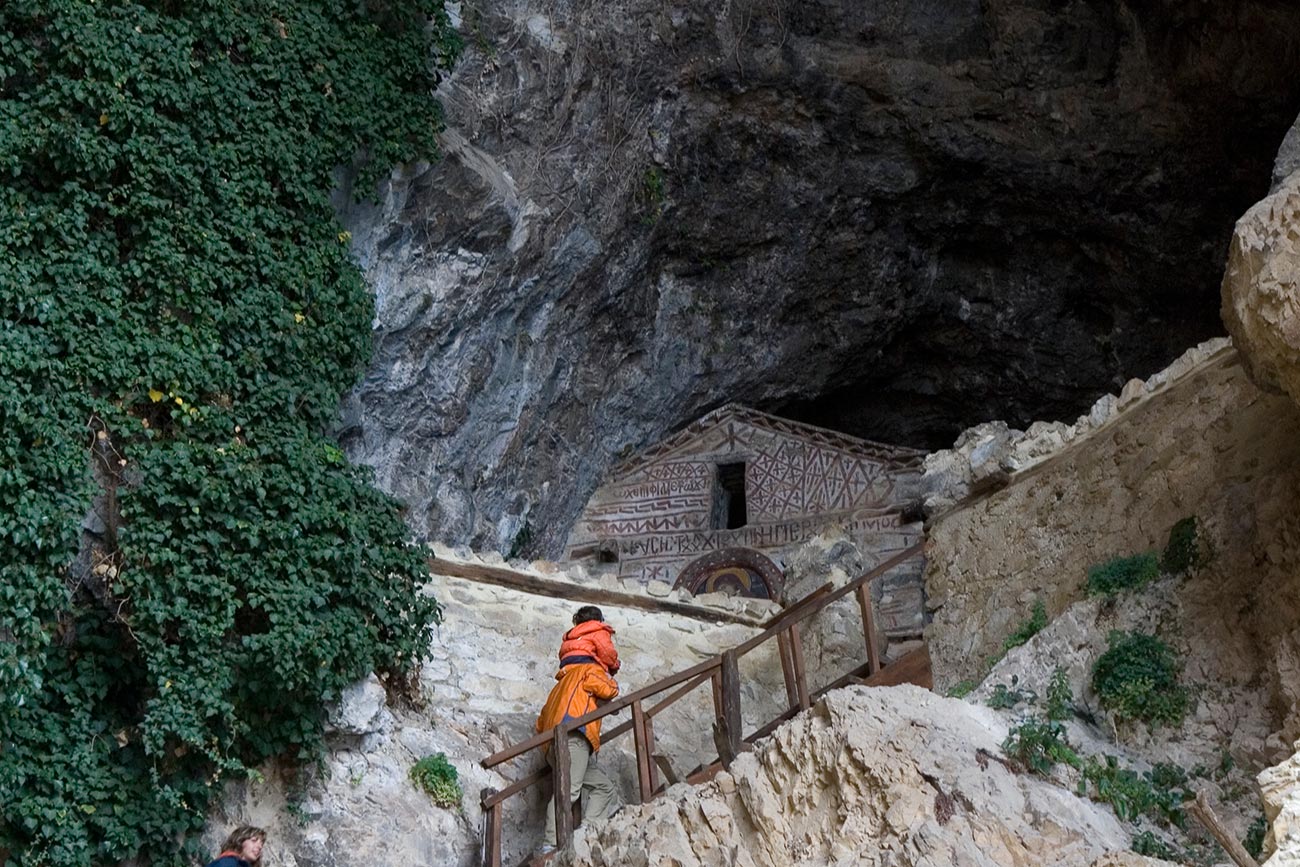
The southern shore of Great Prespa is a wall of cliffs, and in that wall, between the thirteenth and eighteenth centuries, monks cut out small chapels and cells. Several survive with their wall paintings — the Metamorfosi, Panagia Eleousa, the Analipsi — and there are painted images directly on the rock face.
You reach them by boat from the village of Psarades. Another, the hermitage of Agios Athanasios, was only uncovered in 2021 and is a short walk from the village along the shore.
A modern agreement
In June 2018, in the village of Psarades, Greece and North Macedonia signed the agreement that settled the dispute over the latter's name. It is known as the Prespa Agreement, after this place.
Villages & Inland
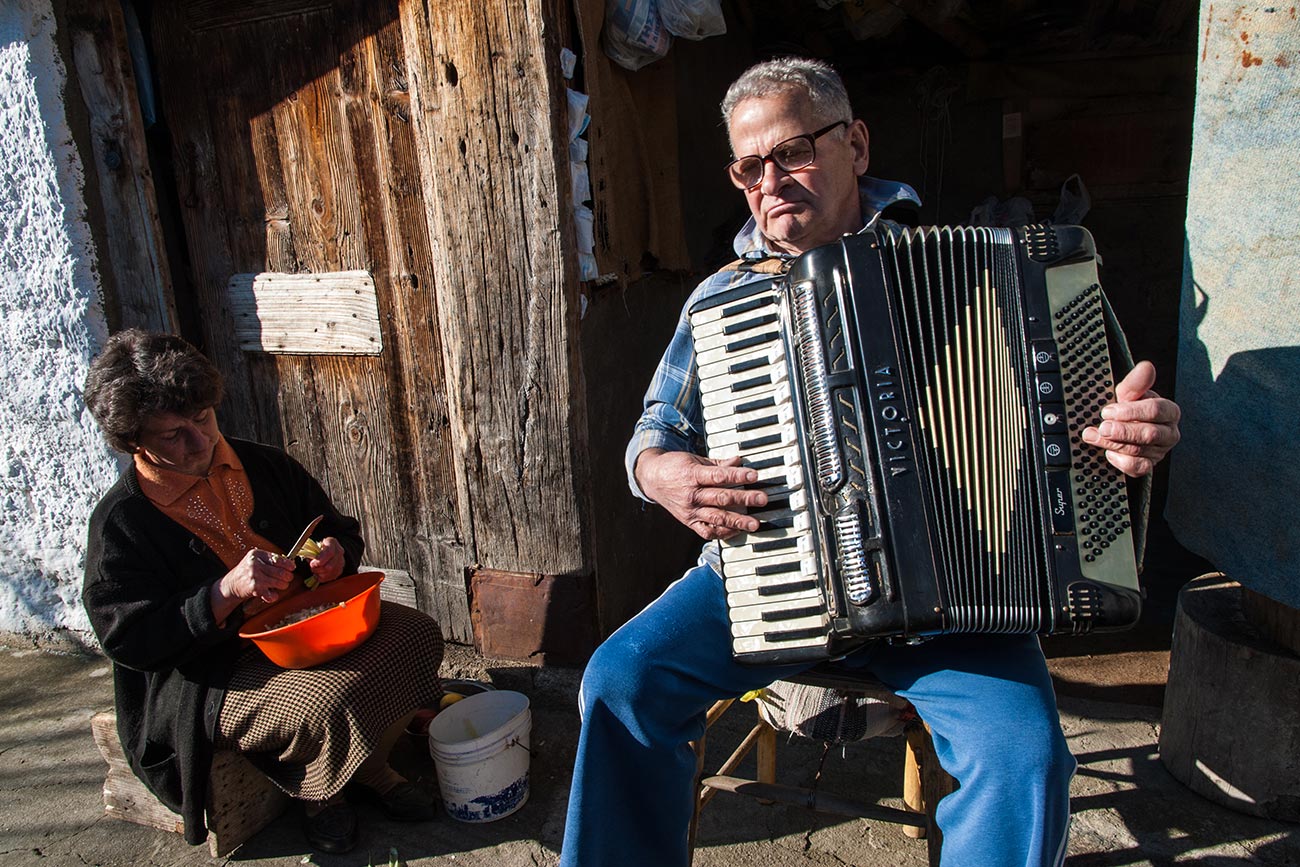
Agios Germanos is the largest village, built on a slope with stone houses and wooden balconies. Its church, of the early eleventh century, has Byzantine wall paintings, with a larger basilica added in 1882. There is a restored watermill, a traditional tsipouro still, and the information centre of the society that works to protect the lakes.
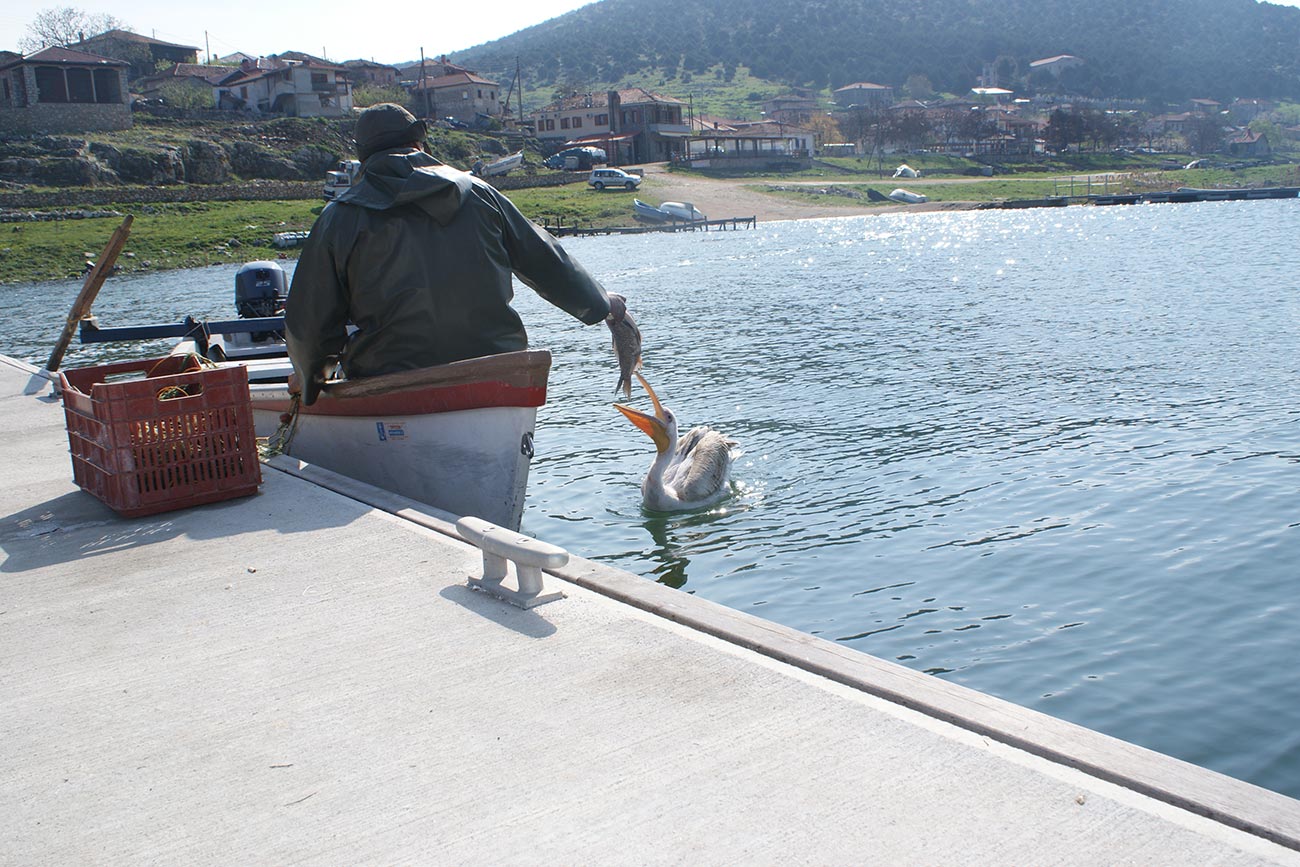
Psarades is the only Greek village on Great Prespa, and it sits directly on the water. Its houses are stone and mudbrick in the Macedonian style, and its harbour is where the boats leave for the hermitages. This is where the lake fish is eaten.
Agios Achilleios, on the island, has eleven houses and about twenty-five permanent residents. It is one of only two inhabited lake islands in Greece, and you walk to it across a floating footbridge 650 metres long.
Mikrolimni, Laimos, Platy and Vrontero are the other settlements around the shores. The church at Platy has sixteenth-century frescoes.
Nature & Outdoors
Part of Prespa was declared a national forest in 1974, and the protected area has grown since. It is one of the most important wetlands in Europe.
The birds
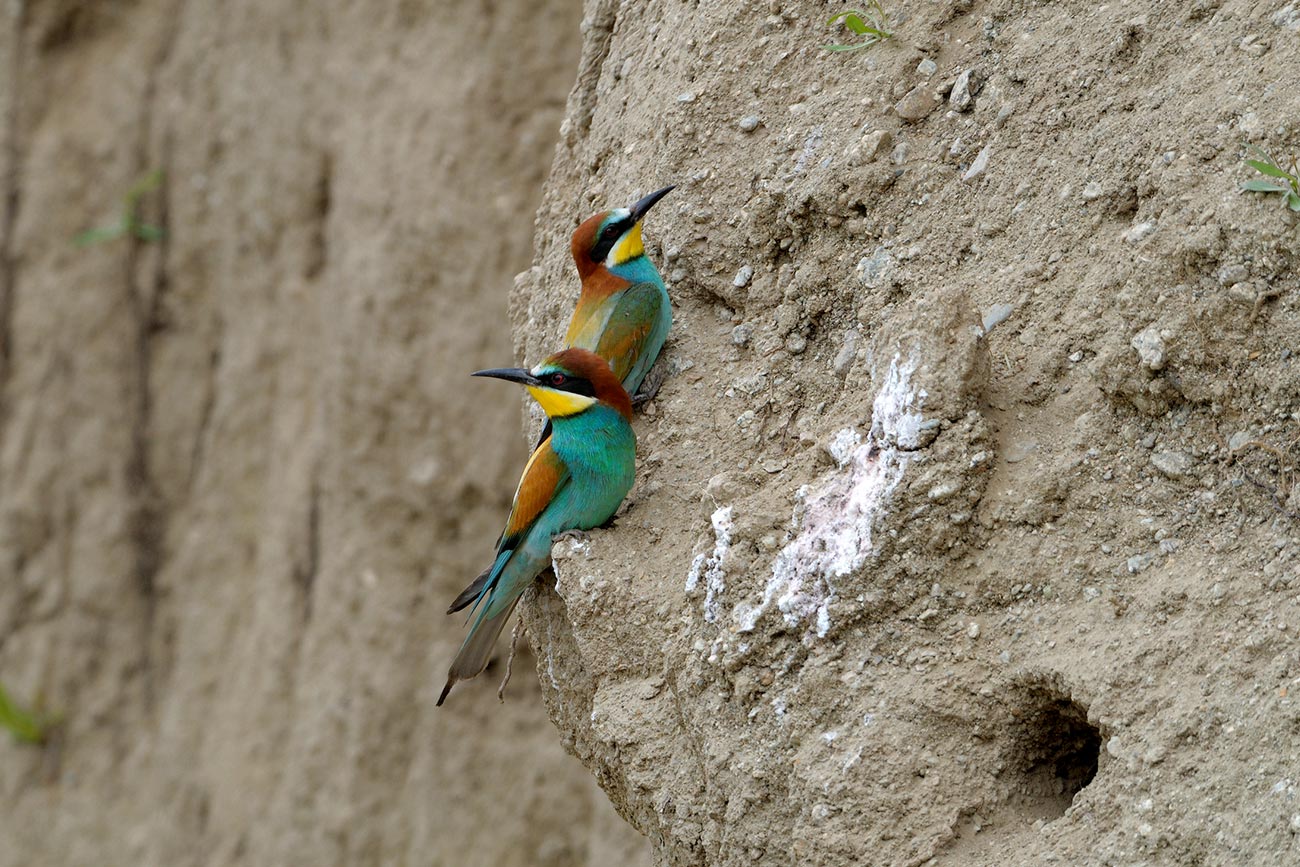
More than two hundred species have been recorded here.
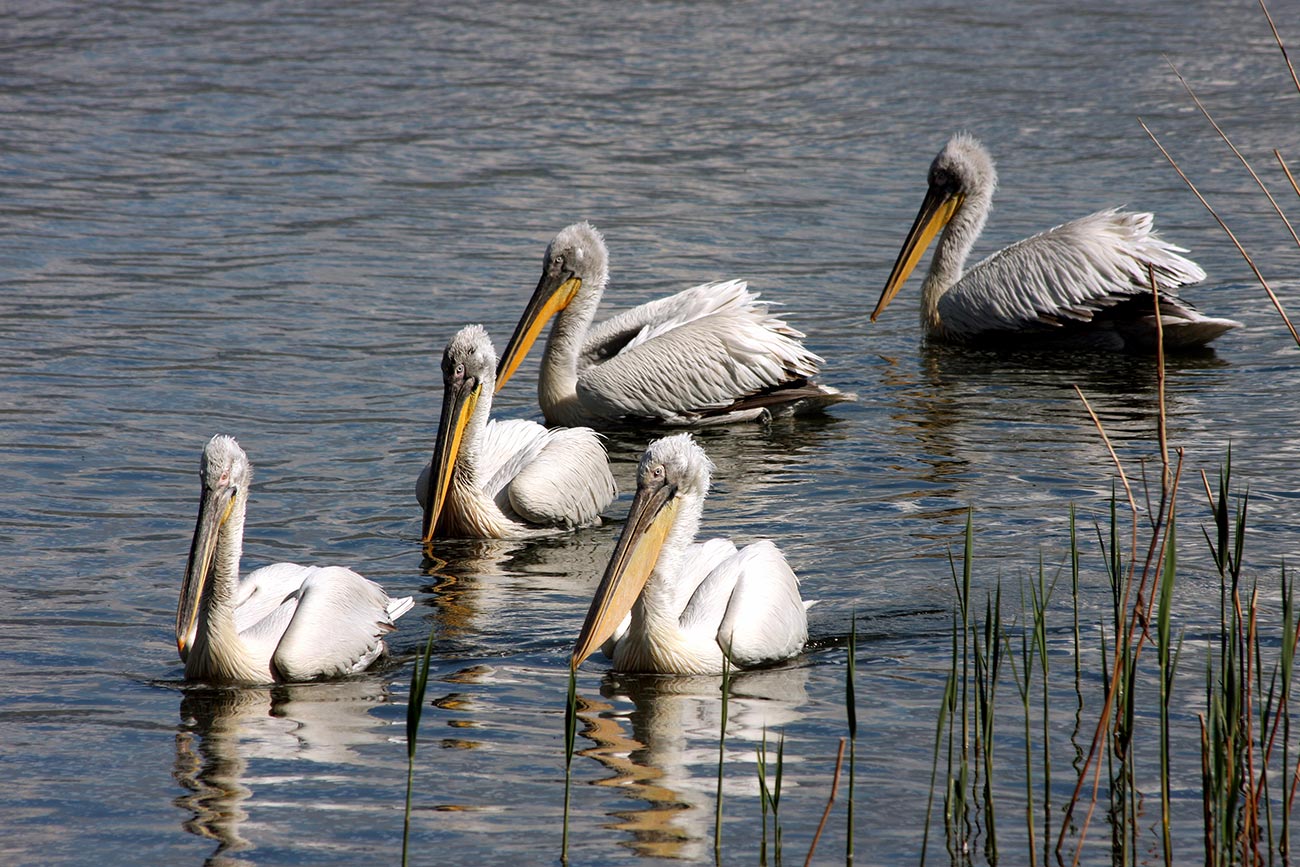
The reason Prespa is known internationally is the Dalmatian pelican, a globally threatened bird that breeds in the reedbeds of Small Prespa in numbers found almost nowhere else. The great white pelican breeds here too. In summer they fly between the two lakes — nesting on the small one, feeding on the large one — and the narrow strip of land between the lakes is the best place to watch them cross.
Greylag geese hold a permanent population here, unusually for a migratory bird. Herons and cormorants are everywhere.
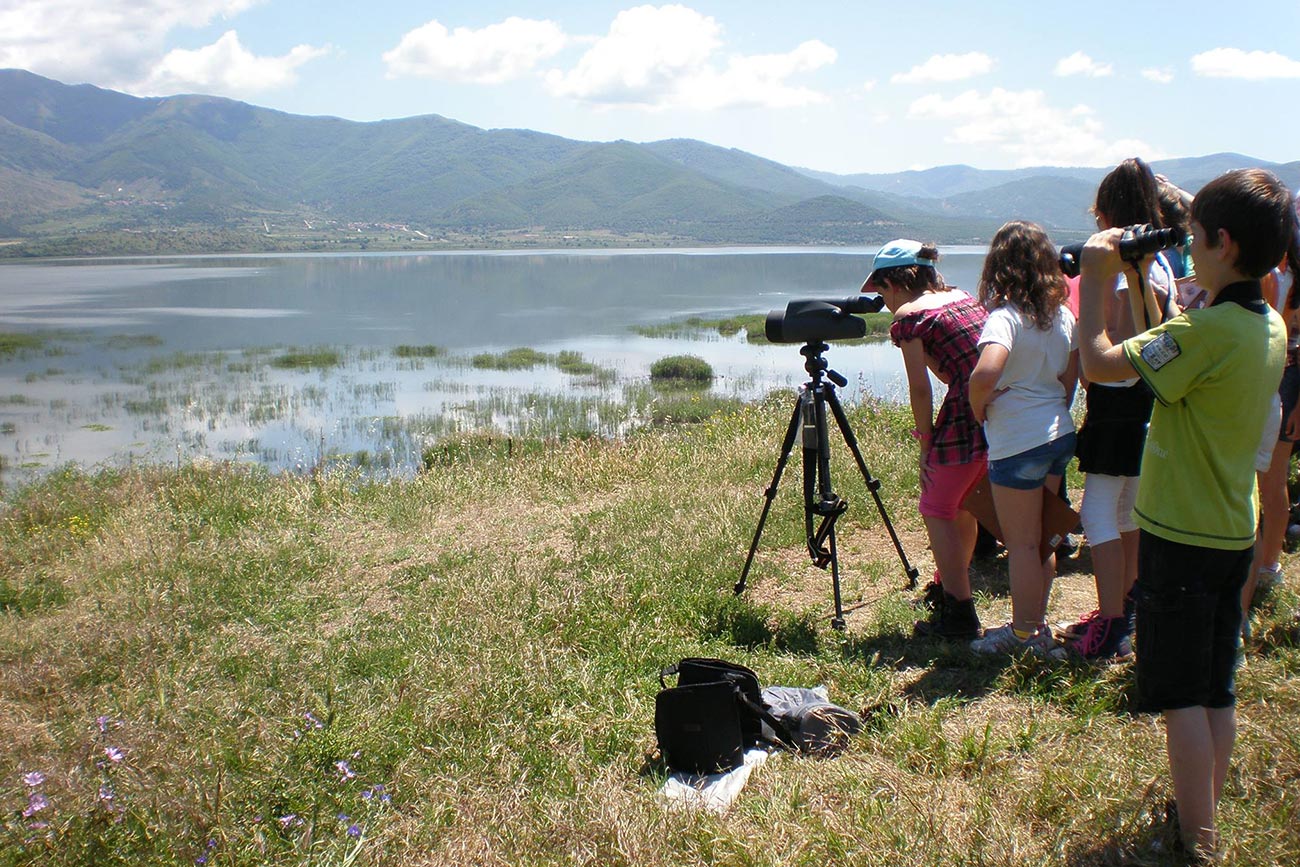
There is an observation point where members of the ornithological society will lend you a telescope.
The walking
Marked paths run from Psarades to Cape Roti, five kilometres out along the shore with a view into the international part of the lake, and from Agios Germanos up into the mountains. Above the villages rise the slopes of Varnous.
Near the chapel of Agios Georgios, on the road between the lakes, stands a group of ancient junipers.
Food & Drink
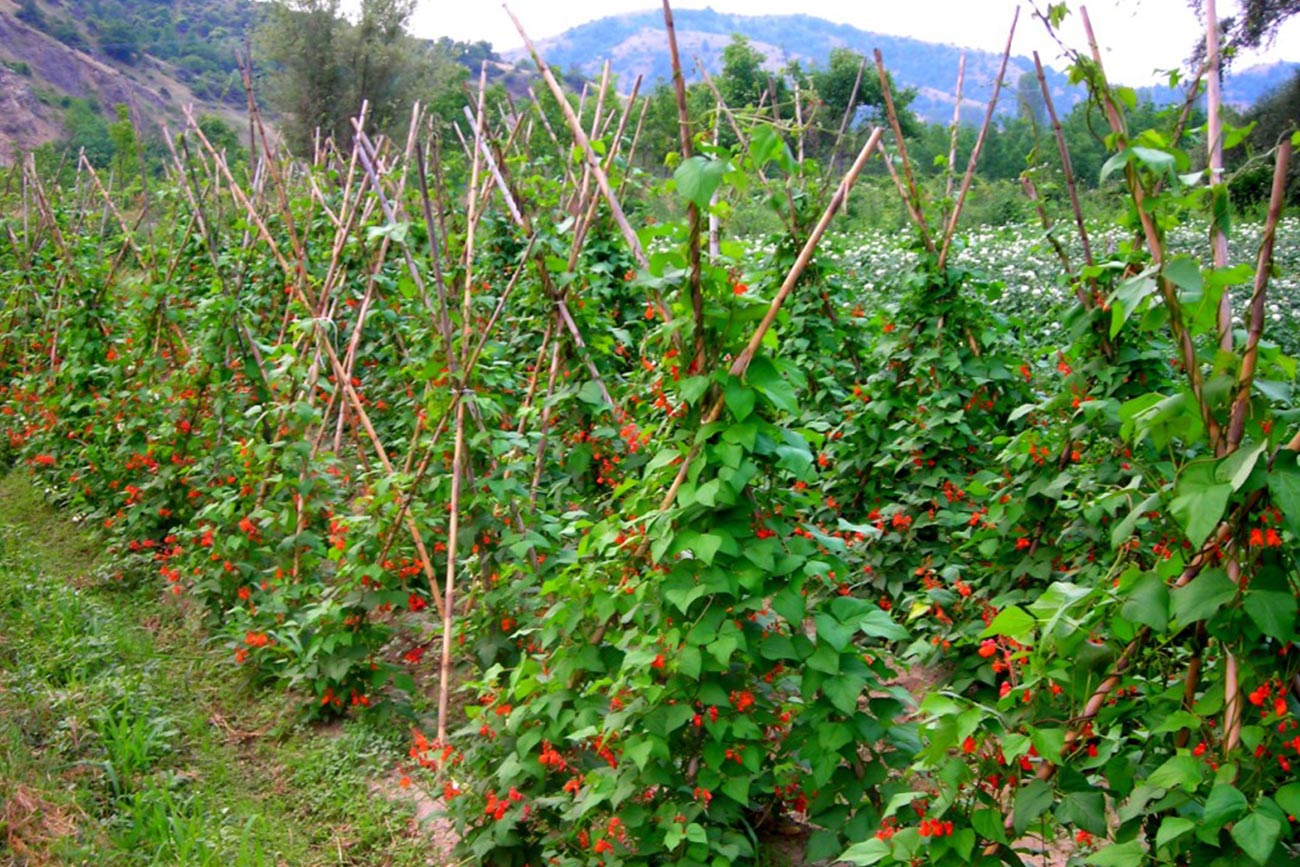
Prespa is known across Greece for its beans. They are grown on the plain between the lakes and they are the thing people take home.
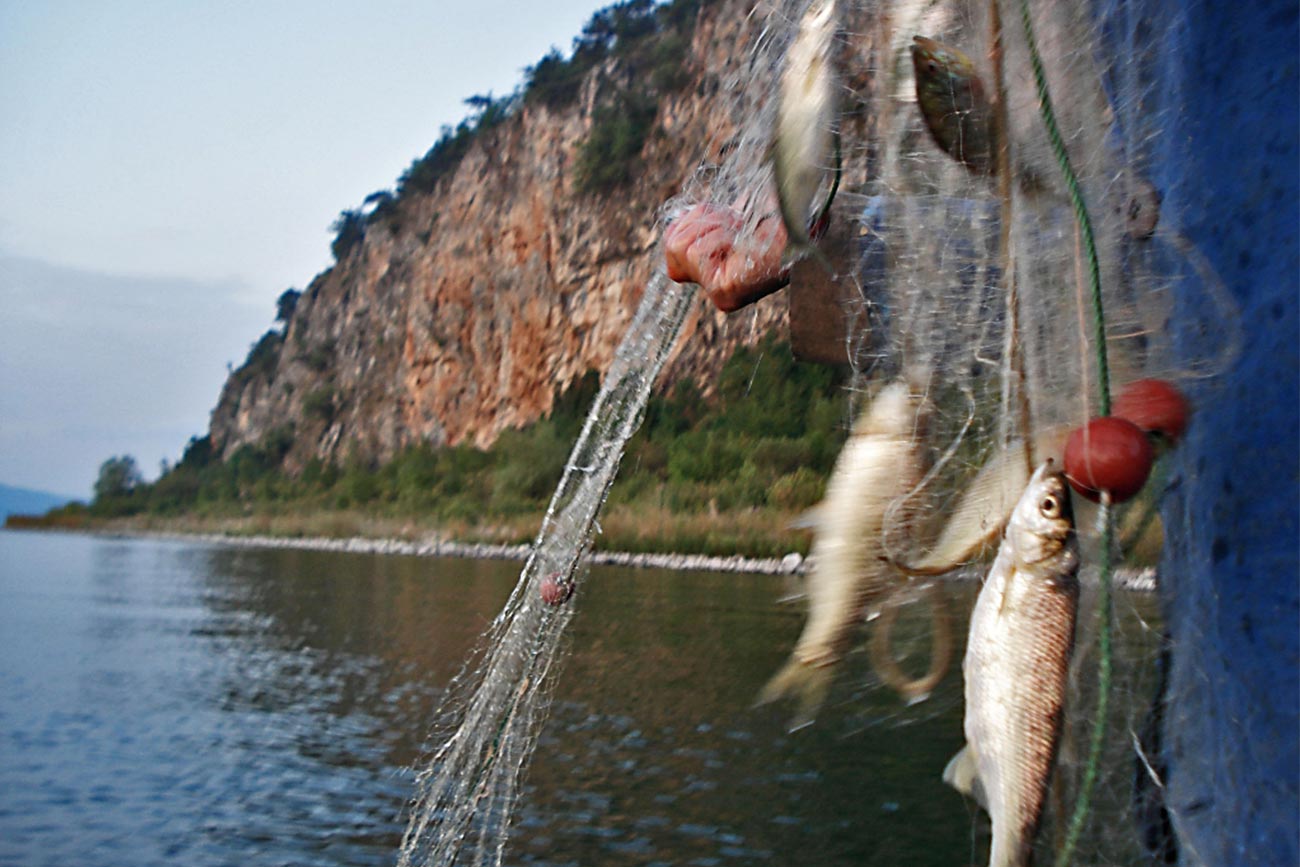
The other local food is fish from the lakes — carp, and small fish dried in the sun, which are a standard meze in the villages. Freshwater fish has a stronger flavour than sea fish and not everyone takes to it.
Agios Germanos has a working tsipouro distillery, and the villages sell honey, herbs and preserved fruit.
Where to Stay
Prices shown per night for a sample 3-night stay. Rates and availability vary by season — select your dates for live pricing.
Practical information
Getting there
Prespa is about 45 km from Florina on a mountain road through Pisoderi, and roughly 200 km from Thessaloniki. From Athens it is around 600 km.
You need a car. Bus service into the basin is minimal and does not suit sightseeing. The nearest airports are Kastoria and Thessaloniki.
Getting around
The villages are spread around both lakes, and distances between them are short but slow. Boats leave Psarades for the hermitages and the three-border point; ask at the harbour.
The footbridge to Agios Achilleios is walked, not driven, and takes about ten minutes each way.
When to go
Spring is the best season: the pelicans are nesting, the meadows flower, and the light on the water is at its best.
Autumn is quieter and the colours are exceptional. Summer is warm but never crowded by Greek standards, and the water is swimmable.
Winter is cold — the lakes sometimes freeze at the edges — but the birds are still there and the basin under snow is extraordinary. Fewer places are open.
Good to know
Bring binoculars. They change the visit completely, and there is nowhere local to hire them.
Keep your distance from nesting birds. The pelican colonies are the reason the area is protected, and parts of the reedbeds are off limits.
You are on an international border. Carry identification, and do not attempt to cross the water into Albania or North Macedonia except on an organised boat trip.
Accommodation is in small guesthouses in Psarades, Agios Germanos and Laimos, and there are few of them. Book ahead.
Village tavernas often close outside the season, particularly midweek in winter.
Exploring Prespa Lakes— been there?Tell others what you saw.
A photo and two lines are enough.
