
The river of Sparta is the Evrotas. It crosses Laconia, in the southern Peloponnese, through a long farming valley with the Taygetos range on one side and Mount Parnon on the other. It is not a river for boats or rafting, because long parts of its bed are dry in summer. Visitors meet it in other ways. They cross it beside Sparta, look down on it from the hill of the Menelaion, or walk to the Palaiomonastiro, a monastery built into the cliff of its gorge. At the end of its course, the delta on the Laconian Gulf is a protected wetland where many birds gather, and sea turtles nest on its long beach every summer.
Geography
The Evrotas is 82 kilometres long and flows from north to south through Laconia. It begins at springs near the village of Skortsinos, in southern Arcadia, at about 430 metres. It ends in the Laconian Gulf, near the town of Skala.
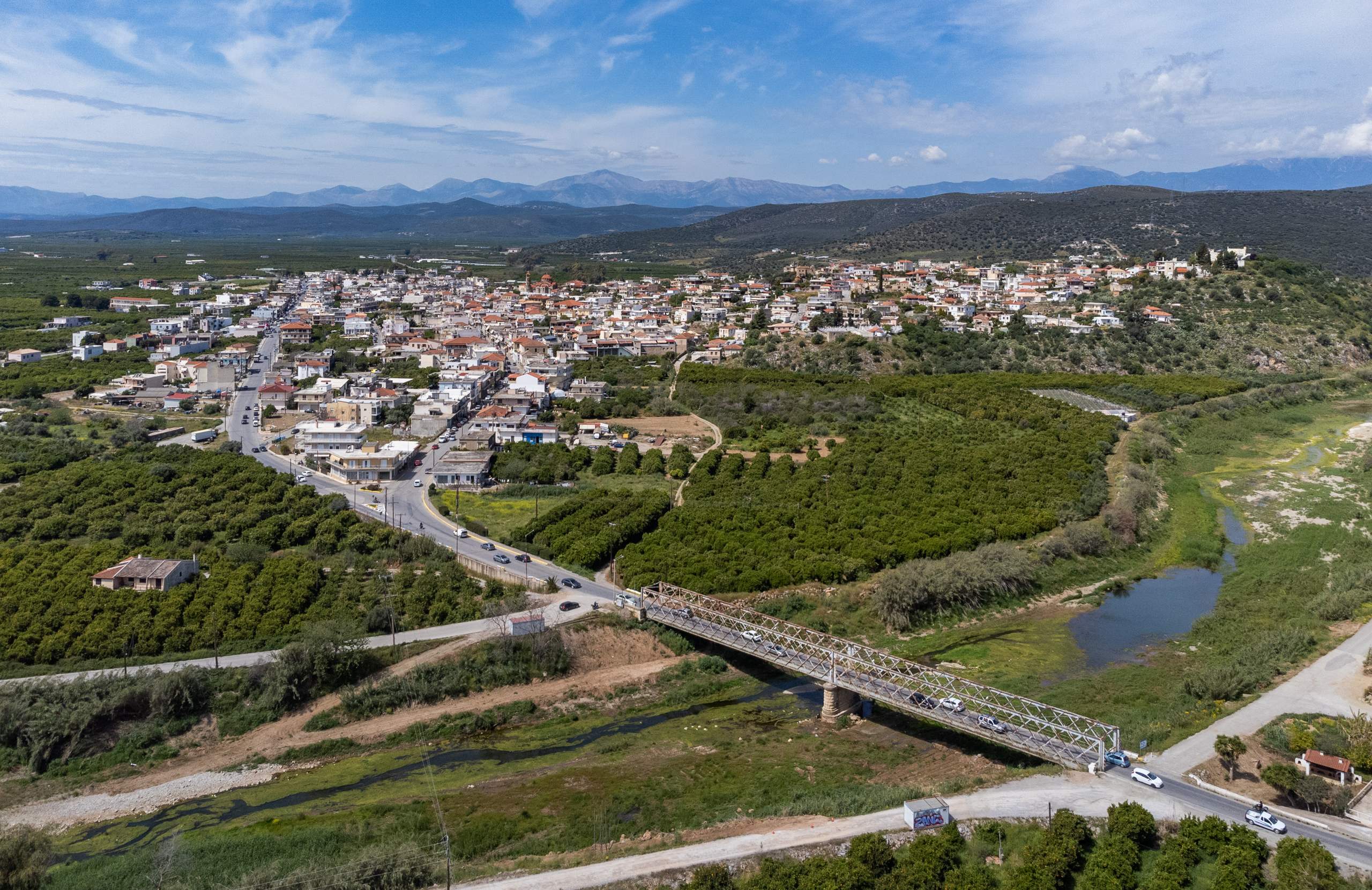
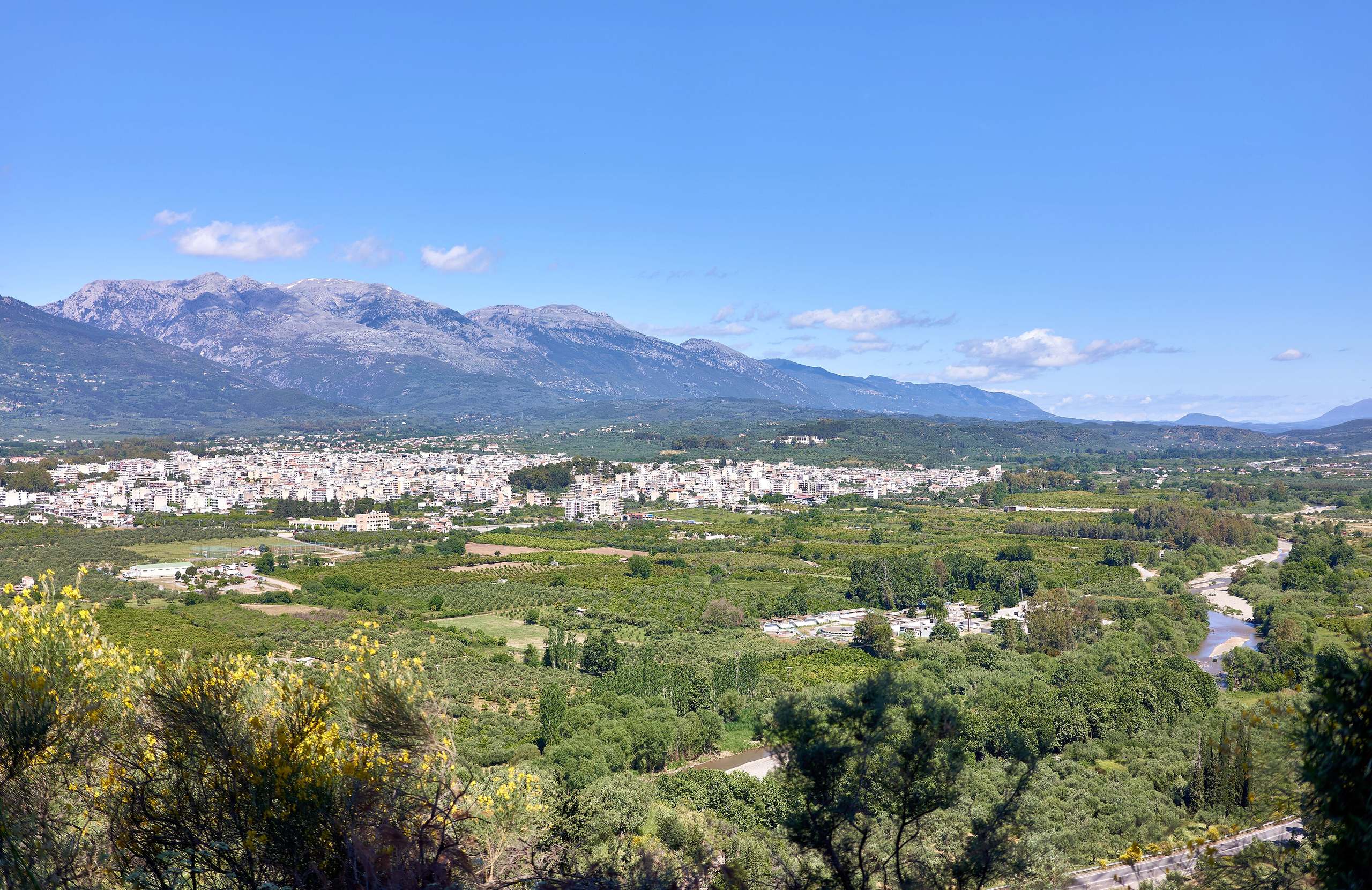
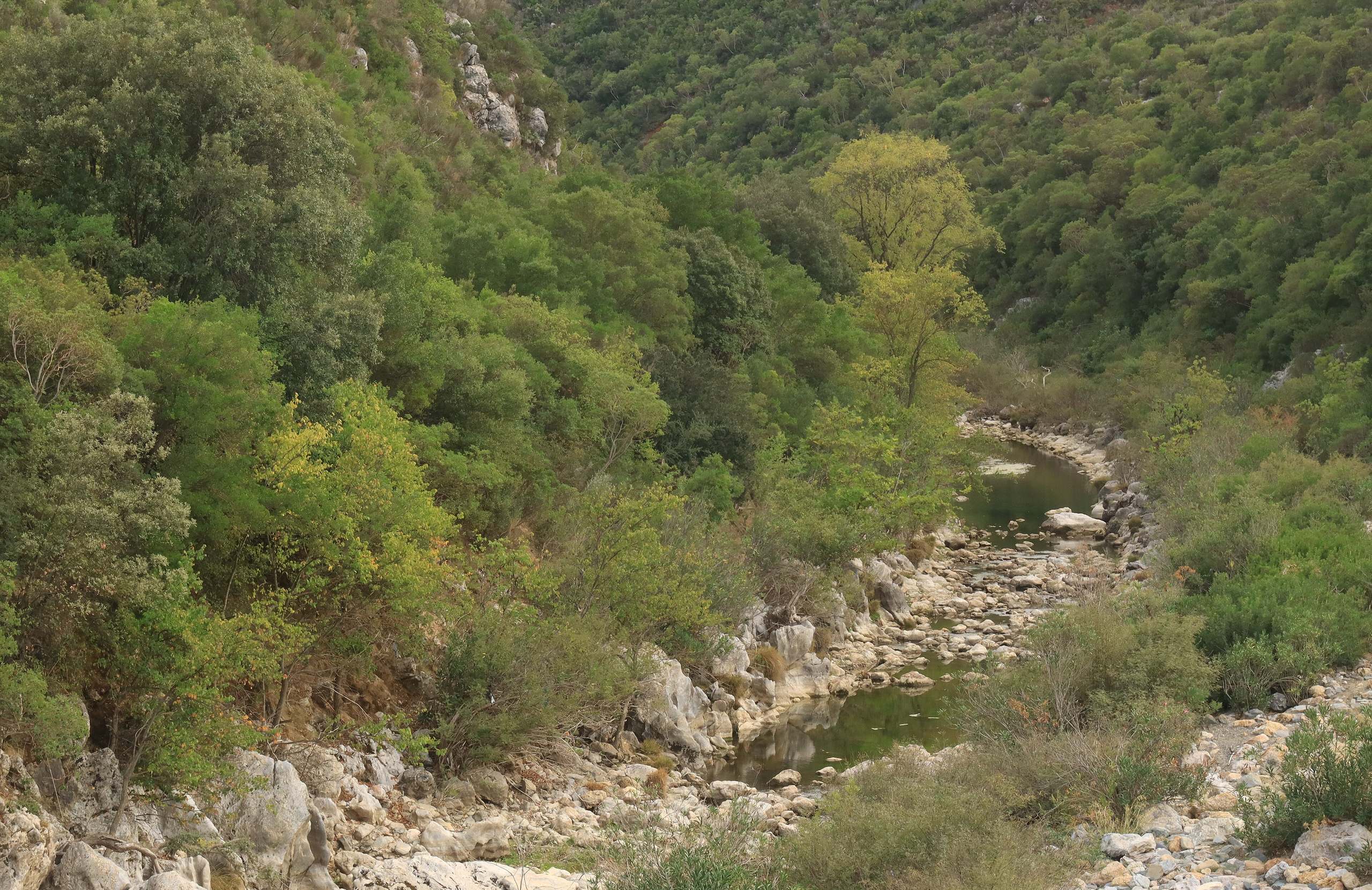
The river runs in a long valley between two mountain ranges, Taygetos on the west and Parnon on the east, and streams from both feed it. The town of Sparta stands on its west bank, about halfway down the valley. Further south, near the village of Vrontamas, the river passes through a gorge about six kilometres long, with no road in it. In its last part it runs straight between flood banks, across the farmland of the plain of Elos.
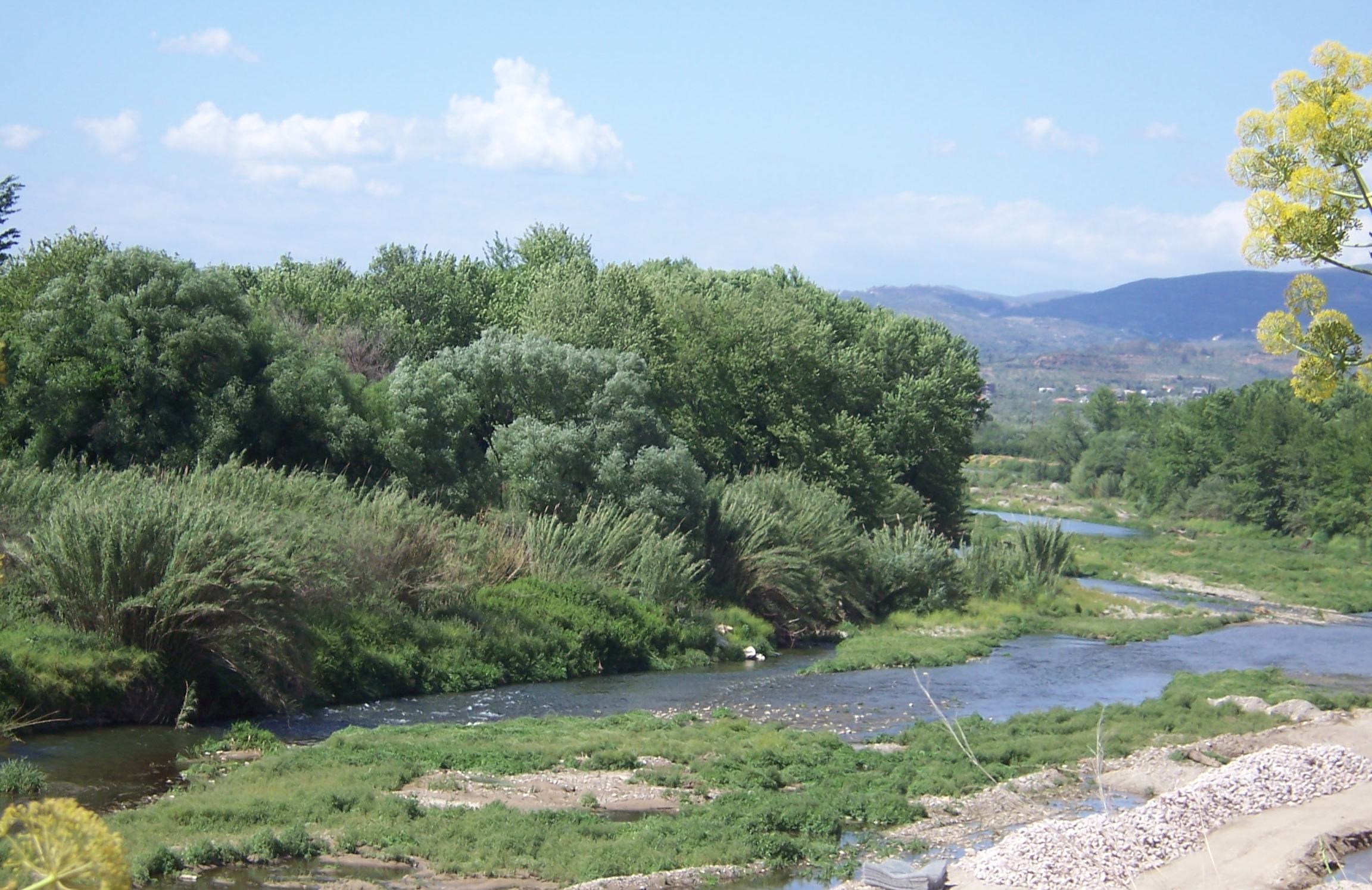
Large parts of the river have no water on the surface in summer. Wells and irrigation channels take it for the fields, mainly citrus groves. In winter the river can flood.
Nature & Outdoors
Wildlife gathers at the delta. The river mouth and the coast beside it belong to the European Natura 2000 network of protected areas, and more than two hundred species of birds have been recorded there. Loggerhead sea turtles lay their eggs every summer on the beach of the delta, which is about fifteen kilometres long.
Along the banks further up grow strips of riverside forest, with plane trees and willows. Near the villages of Skoura and Lefkochoma the forest is up to about 300 metres wide. Three kinds of small fish live only in the southern Peloponnese, and one of them lives only in the Evrotas.
Cold springs rise beside the river at Vivari, near the village of Pellana, and form clear pools. In the gorge near the village of Vrontamas the riverbed is dry for much of the year, and walkers use it as their path, below cliffs where birds of prey nest.
History & Culture
Ancient Sparta grew beside the Evrotas, and the modern town stands on its west bank. In Greek myth the river is named after Eurotas, an early king of the land. His daughter was called Sparta.
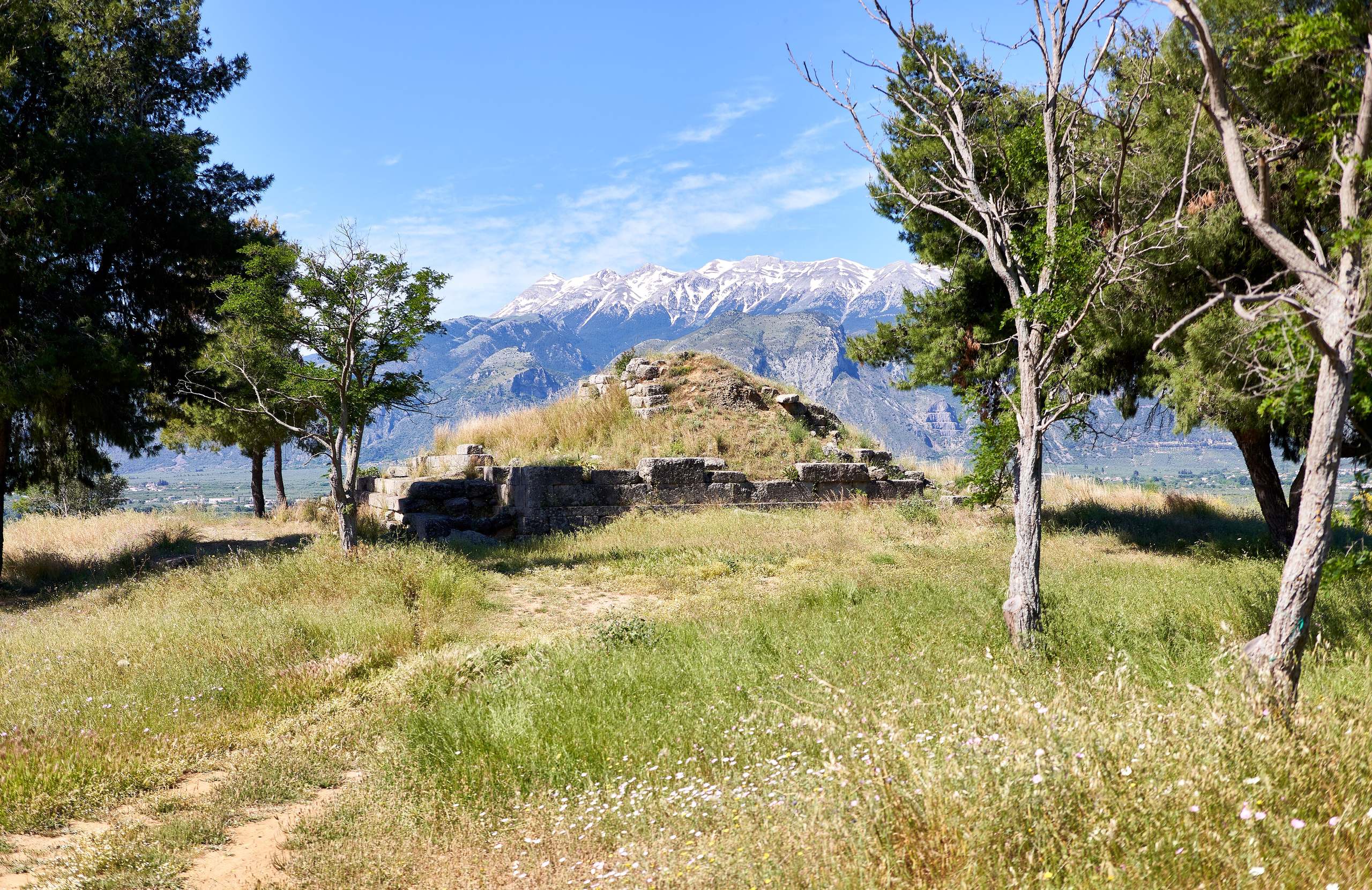
On a hill of the east bank, across the river from the town, is the Menelaion. Menelaus and Helen were worshipped there from the 8th century BC. A visitor sees the remains of a large stone building on the hilltop and a wide view over the valley to Taygetos.
In the gorge near the village of Vrontamas, the Palaiomonastiro is a small monastery built into the cliff above the river, with wall paintings. It dates from about 1100. In September 1825, during the Greek War of Independence, several hundred villagers took shelter in it. The army of Ibrahim Pasha besieged it for three days and then burned it, and almost all of them died.
Practical information
Getting there
The town of Sparta is the base for the river, and a road bridge crosses it beside the town. The Menelaion is about four kilometres from Sparta, on the east bank. For the gorge, drive to the village of Vrontamas and follow the signs to the Palaiomonastiro, about five kilometres further. The last ten minutes are on foot, on a stone path. For the delta, drive to the town of Skala. A dirt road of about six kilometres leads from the bridge of Skala to the river mouth.
When to go
The river has most water in winter and spring. Migrating birds stop at its wetlands in spring. From late spring to autumn the gorge of Vrontamas is usually dry, and this is when its riverbed can be walked. Sea turtles nest on the beach of the delta in summer. The valley is one of the hottest places in Greece in July and August, so go out early in the day then. After heavy winter rain the river can flood; keep away from the banks.
Good to know
Do not expect a flowing river in summer: long parts of the bed are dry. On the beach of the delta, turtle nests are protected. Go there only by day, do not drive on the sand and keep away from marked nests. A sea turtle protection group runs an information station at Mavrovouni beach, near the port of Gytheio. To see the inside of the Palaiomonastiro, arrange it first with the priest of the village of Vrontamas. The walk in the gorge follows the riverbed, with no road near it, so take water. Some riverside tracks need a 4×4.
Evrotas River— been there?Tell others what you saw.
A photo and two lines are enough.
