
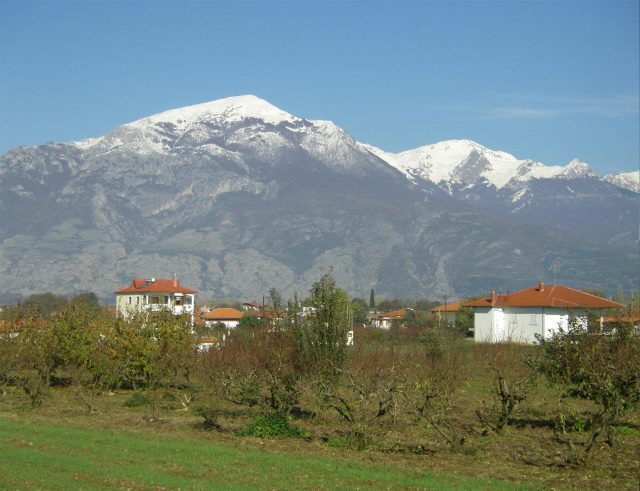
Edessa stands on the edge of a cliff in Macedonia, where the plateau ends and the Macedonian plain begins. A river runs through the middle of the town, reaches that edge, and falls.
This is why Edessa is called the city of waters, and why its older name, Vodena, means the same thing.
The falls are the reason most people come, but they are recent. Until the end of the fourteenth century the water was held in a basin west of the town, and something — most probably an earthquake — sent it over the rock instead.
Below the cliff lies the ancient city. Above it, in the old quarter of Varosi, restored Macedonian houses stand on the site of the ancient acropolis.
What travellers posted

Been here? A photo and two lines are enough.
History & Culture
The city below the rock
At the foot of the cliff, in a green area called Longos, is the only surviving part of ancient and medieval Edessa. Inscriptions show the city was organised as a proper town from the fourth century BC.
Its walls were built of large squared blocks in the late fourth or early third century BC, and they were more than two metres thick. They were rebuilt on a large scale in the third century AD, to protect the city against Gothic raids. The southern gate is one of the best-preserved pieces of fortification in Macedonia.
The ancient city had clay pipes carrying water to public fountains, a drainage system, and baths outside the walls. People lived there until the late sixth or early seventh century AD. After that they moved up onto the rock, where the acropolis became the Byzantine castle of Vodena.
The site is open to visitors, but it has not been fully presented: there are excavation trenches and temporary shelters, and it takes some effort to understand what you are looking at.
Varosi
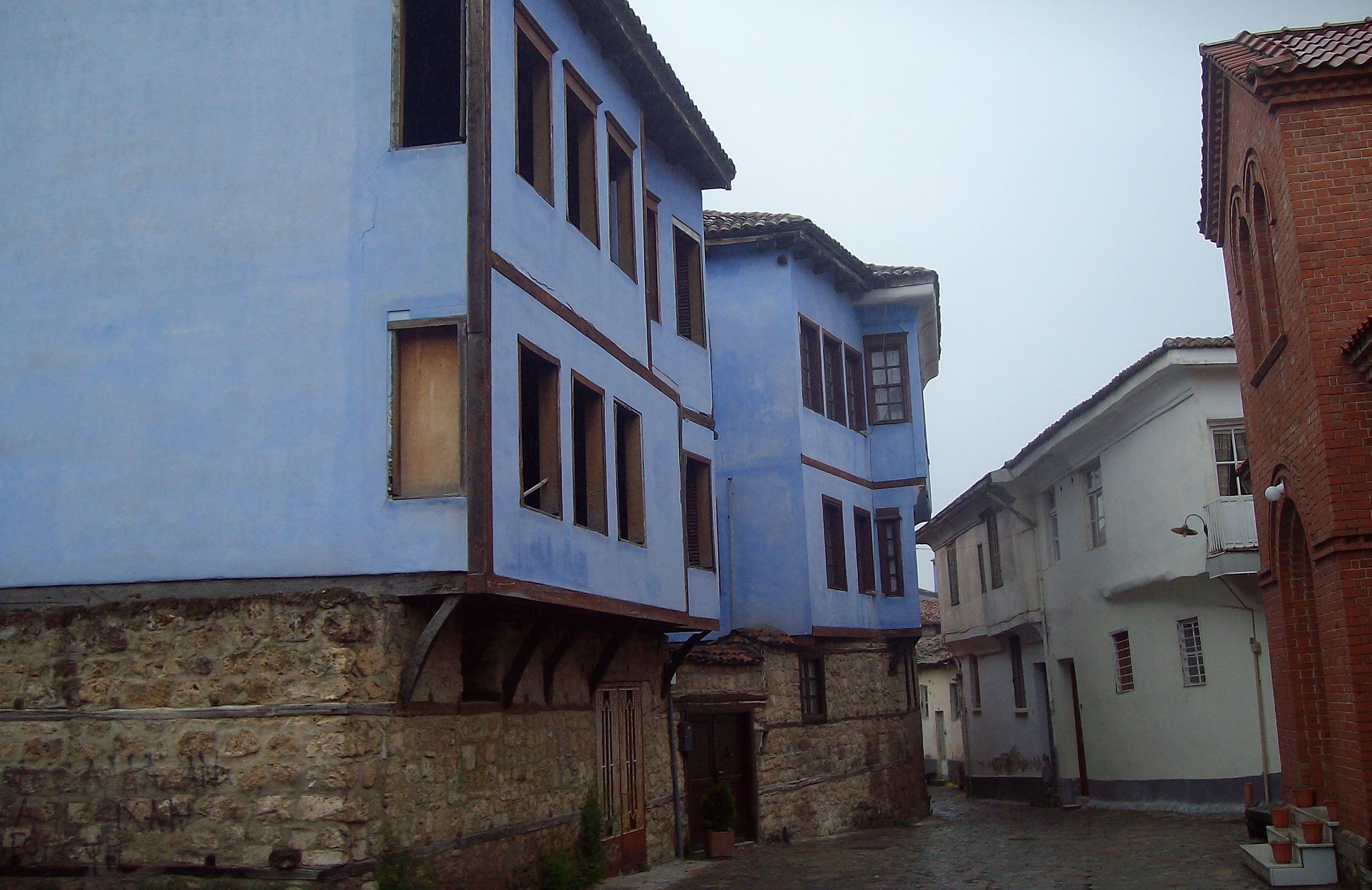
Varosi is the old quarter on top of the rock, built where the ancient acropolis stood. Under Ottoman rule this was the Christian neighbourhood.
Its houses have been restored — painted timber-framed buildings in the Macedonian style, along narrow stone-paved lanes. The Byzantine church of the Dormition of the Virgin is here, with wall paintings of 1380. One restored mansion is open as a visitor centre about the quarter itself.
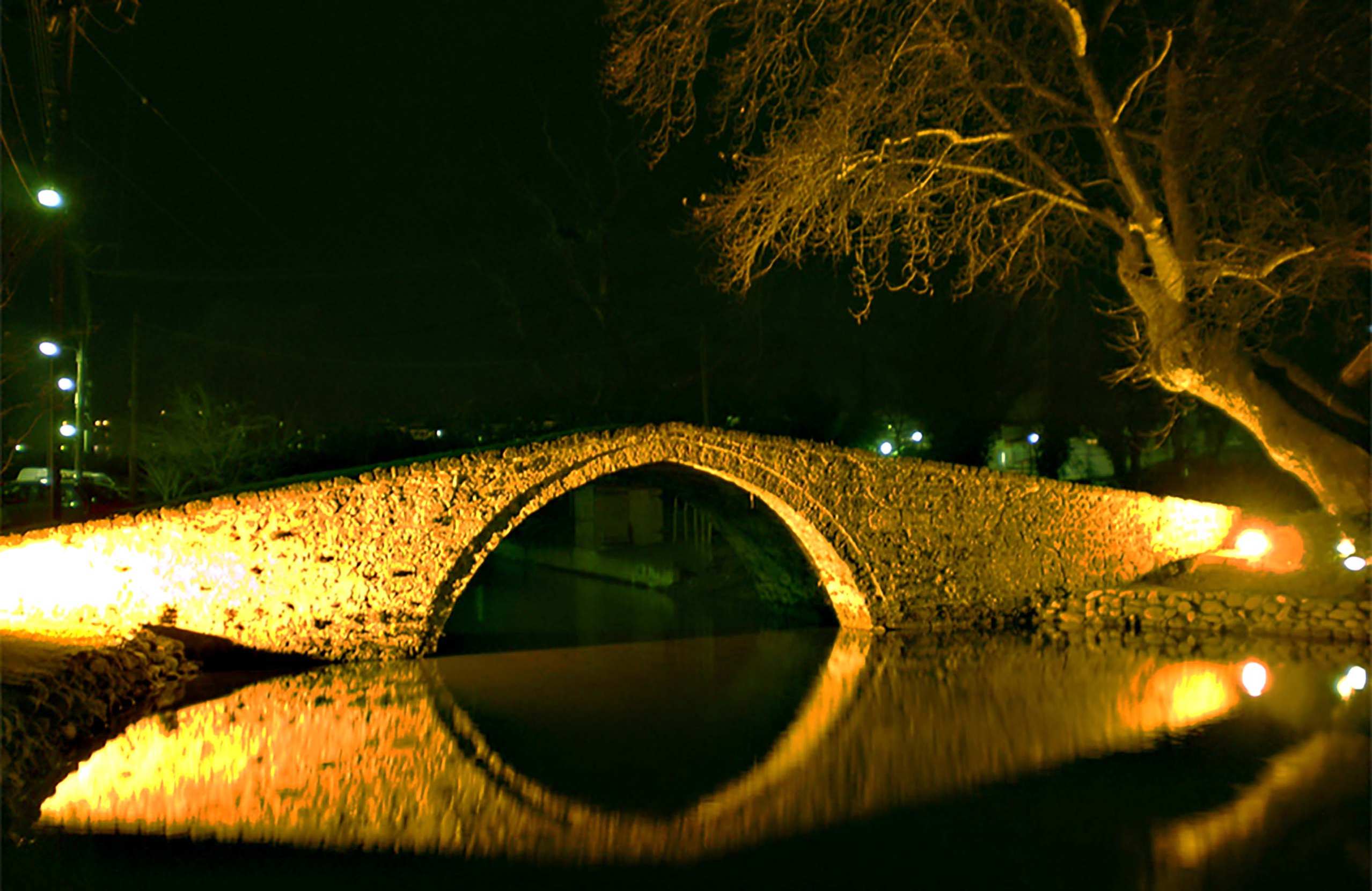
Near the town hall stands a Byzantine bridge, on a route that may have carried the ancient Via Egnatia.
The factories
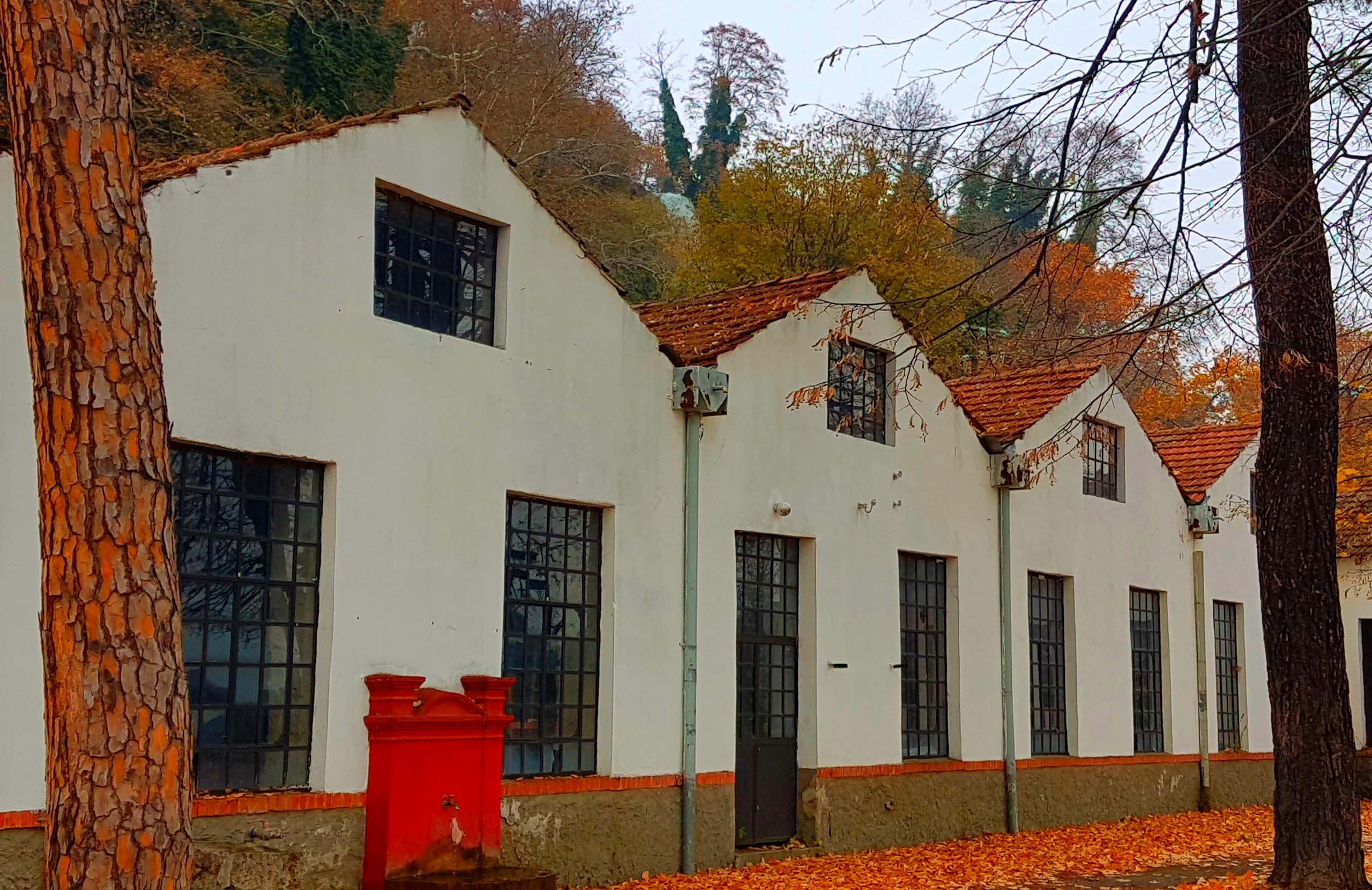
At the end of the nineteenth century the falling water was free power, and textile factories were built to use it — among them a hemp works called the Kannavourgio, whose building still stands in the waterfall park. The railway reached Edessa in the 1890s and connected it to Thessaloniki, Veria, Florina and Monastir.
Nature & Outdoors
The waterfalls
The water comes down from Mount Voras, crosses the town, and drops off the cliff in several places.
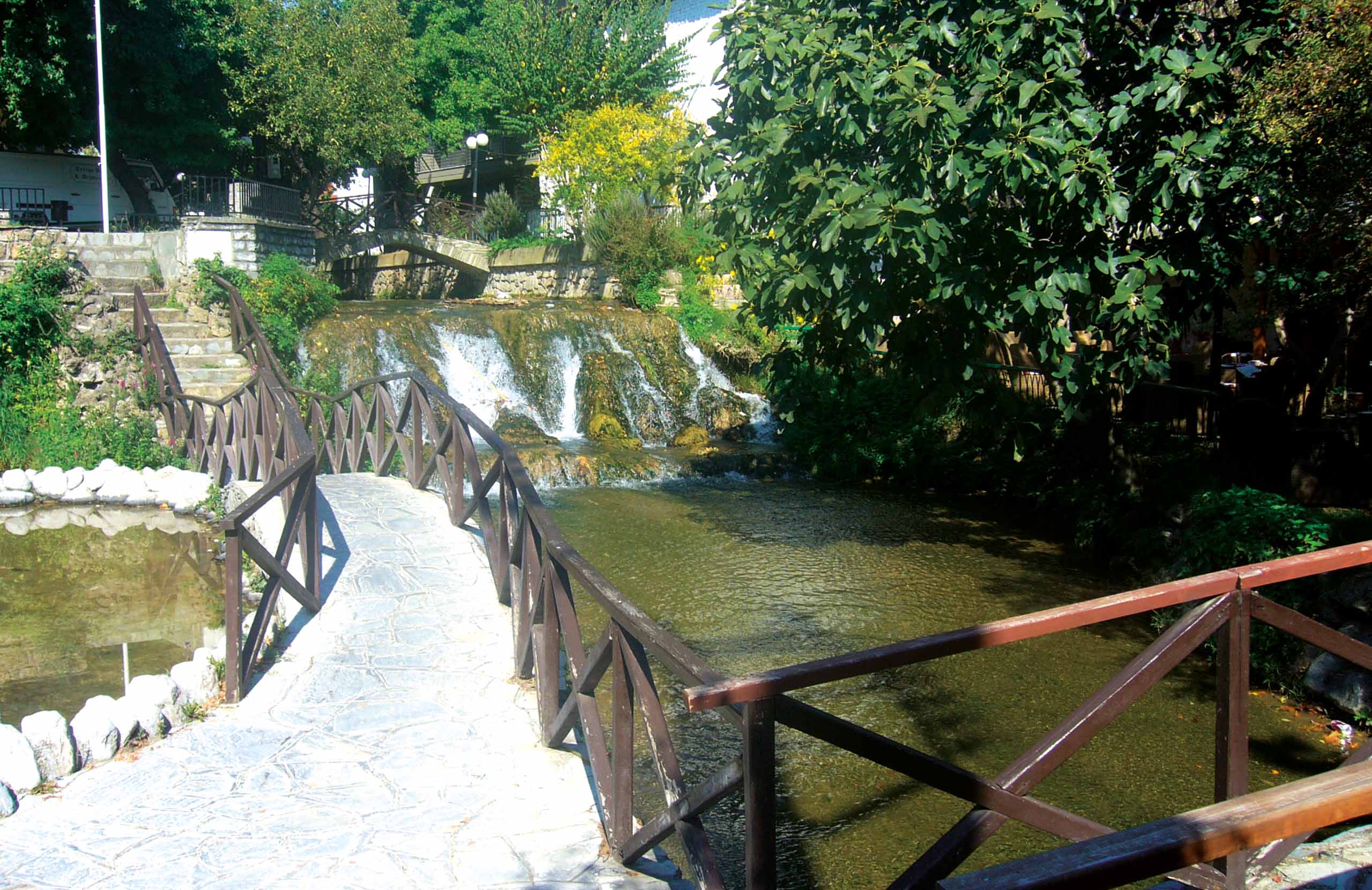
Two falls are the large ones. Karanos is the vertical one, named after the first king of Macedon, and it is described as the largest waterfall in the Balkans. The Twin Falls are the other.
Behind Karanos there is a small cave with stalactites and a built walkway, so you can stand behind the falling water and look out through it at the plain below.
The park
You reach the falls through the Waterfall Park, which is the only way in. It is a shaded area of old plane trees, stone paths and small bridges, and it contains rather more than the falls: an information centre, a small aquarium of local freshwater fish and reptiles, a botanical garden, restored watermills, and the old factory buildings.
Together these make up the Open-Air Water Museum, created in 1993 to preserve the pre-industrial and industrial workshops that the river once powered.

Food & Drink
Edessa is a cherry town. The orchards on the hills around it produce the Vodena cherries, which are eaten fresh, preserved as a spoon sweet, and made into dozens of other things.
Two times of year are built around them. When the trees flower, at the end of March and beginning of April, the Cherry Roads open — walking and cycling routes through the orchards towards the ancient city, past old wild cherry trees.
In June the Edessa Cherry Festival runs for about a week, with producers selling in the town, tastings at a mill in the water museum, and events across the town.
Where to Stay
Prices shown per night for a sample 3-night stay. Rates and availability vary by season — select your dates for live pricing.
Practical information
Getting there
Edessa is about 95 km west of Thessaloniki, roughly an hour and a half by car on the motorway. There are regular buses from Thessaloniki, and the town is also on the railway line, with a station close to the centre. The nearest airport is Thessaloniki.
Getting around
The centre is small and walkable, and the Waterfall Park is a short walk down from the town, or a very short drive. Varosi is a few minutes on foot from the centre. The ancient city at Longos is below the cliff and is reached by road, so a car or a taxi helps. A car is necessary for anywhere outside the town.
When to go
April to October. Late March and early April are the cherry blossom, and June is the cherry festival. Spring is also when the falls carry the most water. Summer is comfortable here because of the altitude and the trees, and autumn turns the park orange. In winter the town is quiet and the park is often very cold, but the falls sometimes partly freeze.
Good to know
The Waterfall Park charges for entry to the cave behind Karanos and to some of the museum buildings, while the park itself is generally free. Check current hours and prices, which change with the season. The path behind the falls gets wet and slippery — wear shoes with grip and expect spray. The flow of Karanos is regulated, so the falls are more impressive at some times than others. The ancient site at Longos has little shade and few explanatory signs.
Edessa— been there?Tell others what you saw.
A photo and two lines are enough.
