

Drama sits at the foot of the mountains of eastern Macedonia, where the plain meets the Rhodope range. Its name comes from an older form meaning water, and water is the reason the city is where it is: springs rise in the middle of it.
From the end of the nineteenth century until the Second World War, tobacco made Drama rich. The merchants built mansions, neoclassical schools and enormous brick warehouses to store and process the leaf, and those buildings still define the city centre. Many have been restored and now hold hotels, cafés and cultural spaces.
Around the city are mountains, a river cave, one of the best wine regions in Greece, and some of the last old-growth forest in Europe.
History & Culture
The tobacco city
Between about 1880 and 1940, Drama was one of the most important commercial towns in Macedonia, and tobacco was the reason.
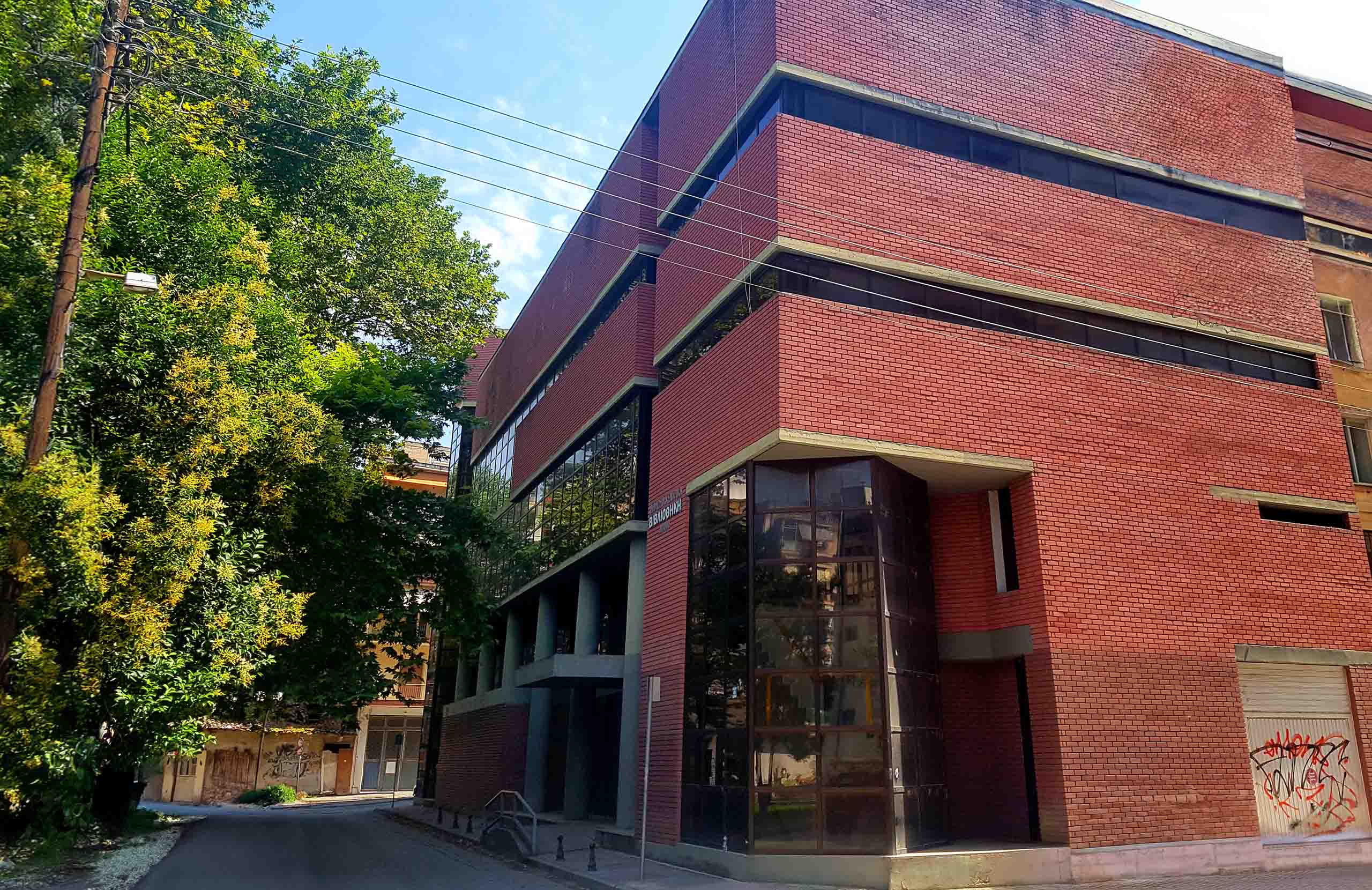
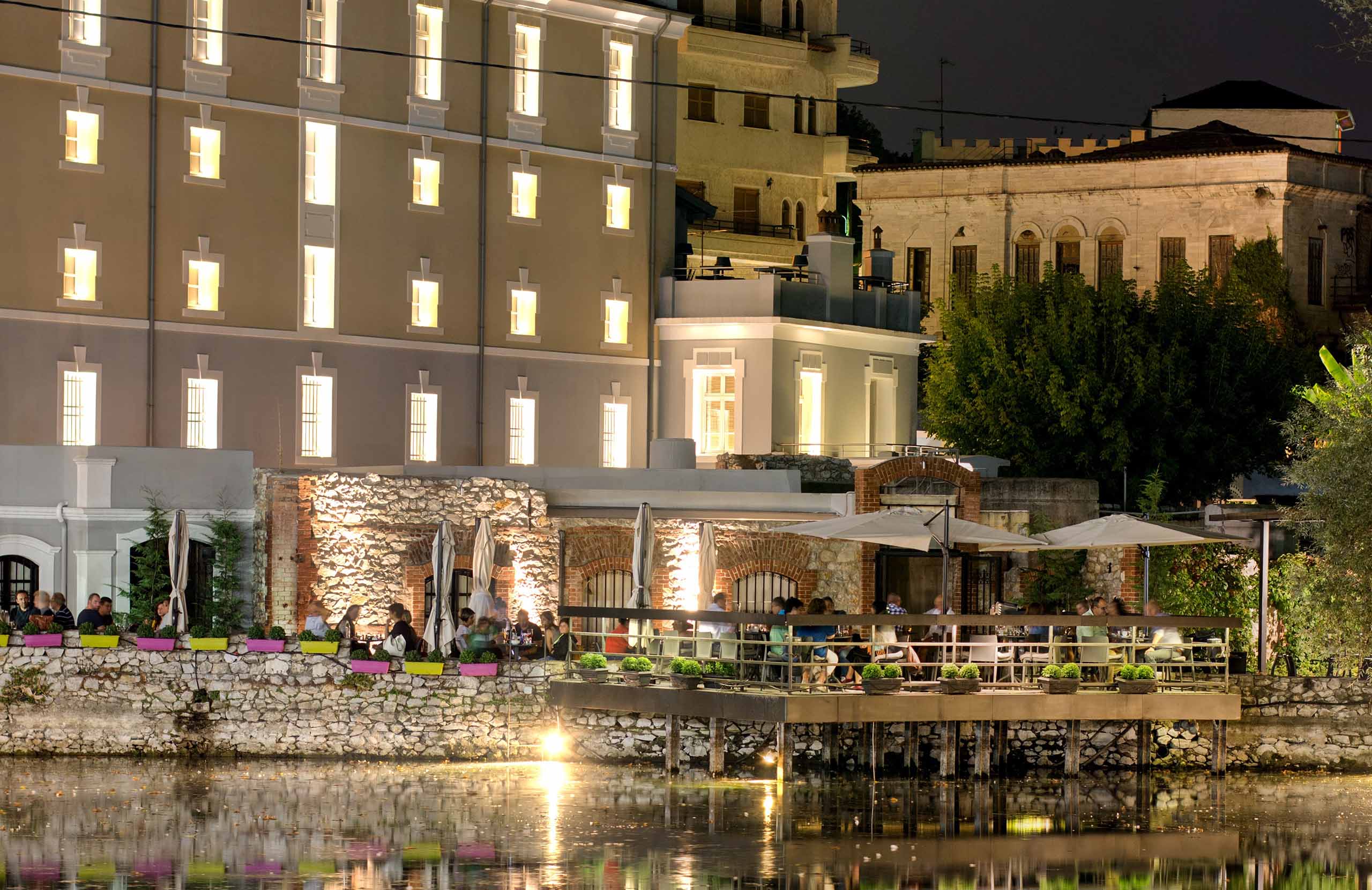
The warehouses were built to hold and treat the leaf, and they are unlike anything else in Greek towns: four and five storeys of brick, with long rows of windows, designed by central European architects. The largest, built in 1924 for a Swiss tobacco merchant by an Austrian architect, is now a hotel. Others stand around the Agia Varvara springs, restored or waiting to be.
Alongside them are the mansions of the merchants, the neoclassical school building of 1907–1909, and the railway station of 1895.
What the warehouses also hold
One of the tobacco warehouses was used in 1943 to imprison the Jewish community of Drama before they were sent to the extermination camps in Poland. Almost none returned. A memorial and a plaque stand at the spot, near the open-air theatre in the Agia Varvara park.
Churches, mosques and museums
The city centre keeps the churches of Saint Nicholas and the Archangels Michael and Gabriel, along with Ottoman mosques; one of them has been converted into a cultural venue.
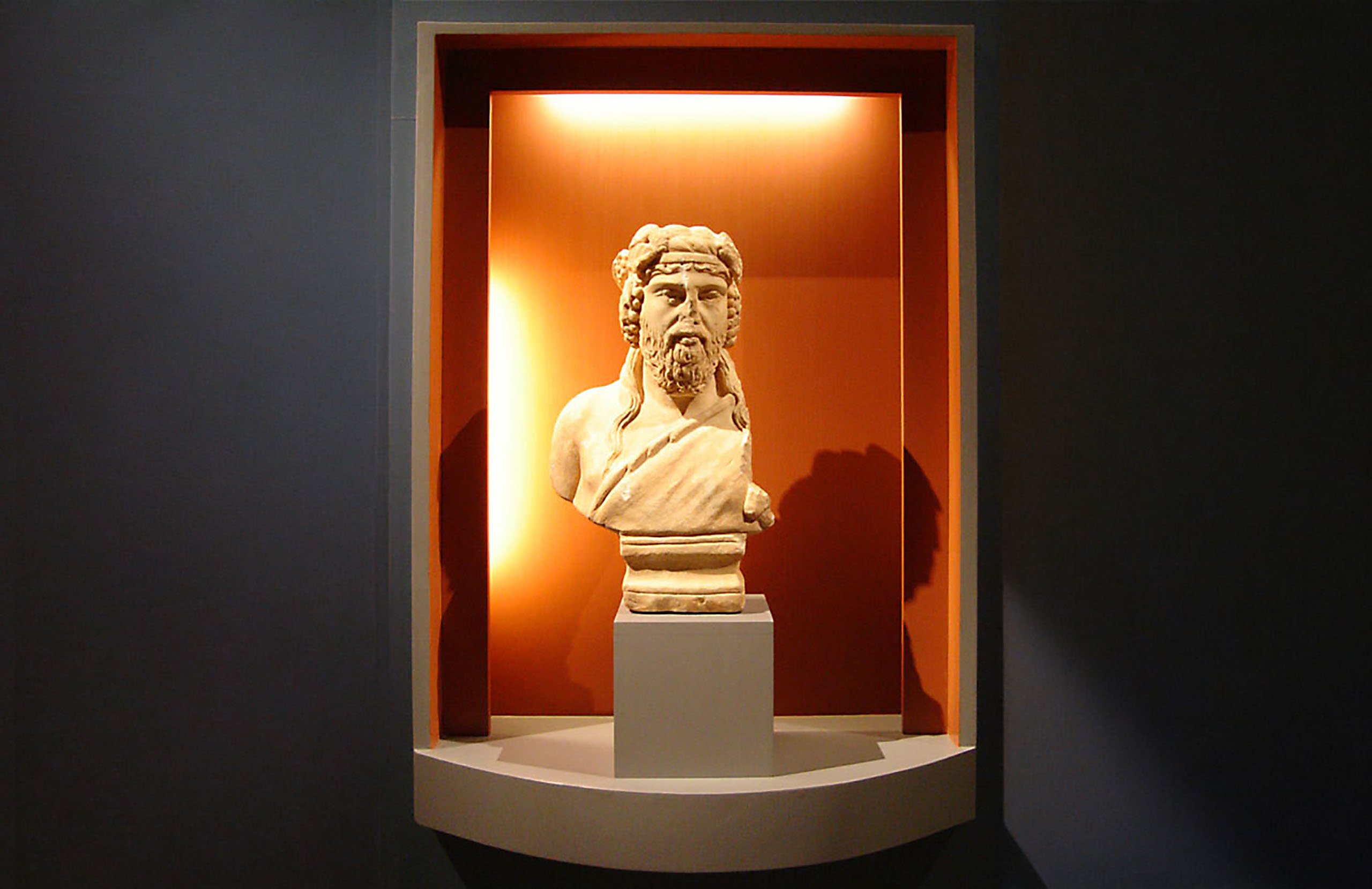
The Archaeological Museum covers the region from the Neolithic to the Byzantine period. Its best-known object is a marble head of Dionysus, which belongs to the older story of this place.
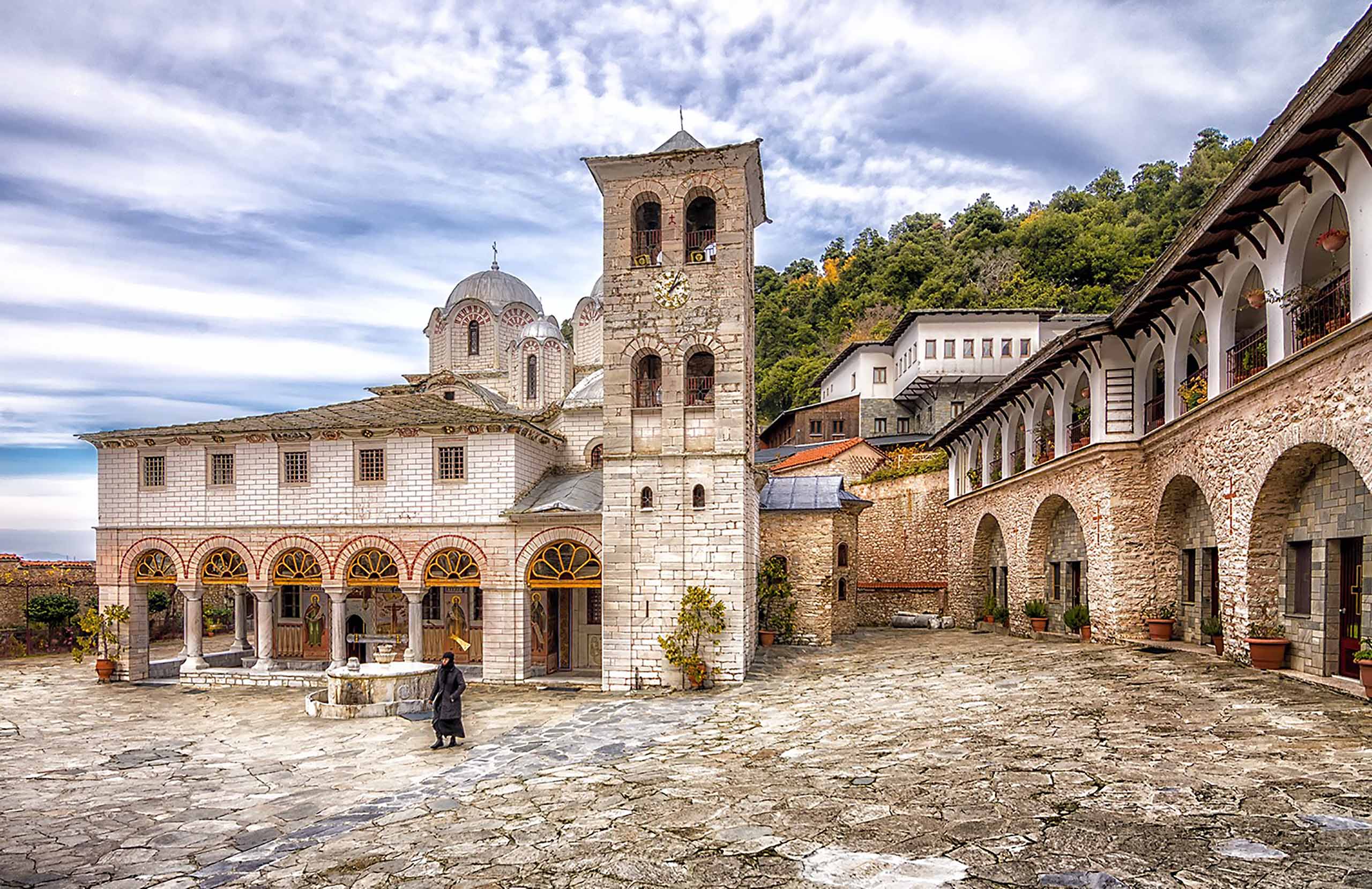
North of the city, on a wooded slope at about 750 metres, stands the Monastery of Panagia Eikosifoinissa, described as the oldest monastery still in use in Greece. It is a women's monastery and it is about thirty-six kilometres from Drama.



Nature & Outdoors
The springs in the city
The Agia Varvara park covers six hectares in the centre of Drama and is built around the springs that give the city its name. Water runs everywhere through it, under old trees and past a small church.
Local tradition says that when the Ottomans tried to pull the church down, water rose and covered it, and it was saved. On 4 December people still float candles on the water.
The park's layout was designed by a team from the university in Thessaloniki, and it was later shown in a European exhibition of notable public squares.
The Angitis Cave
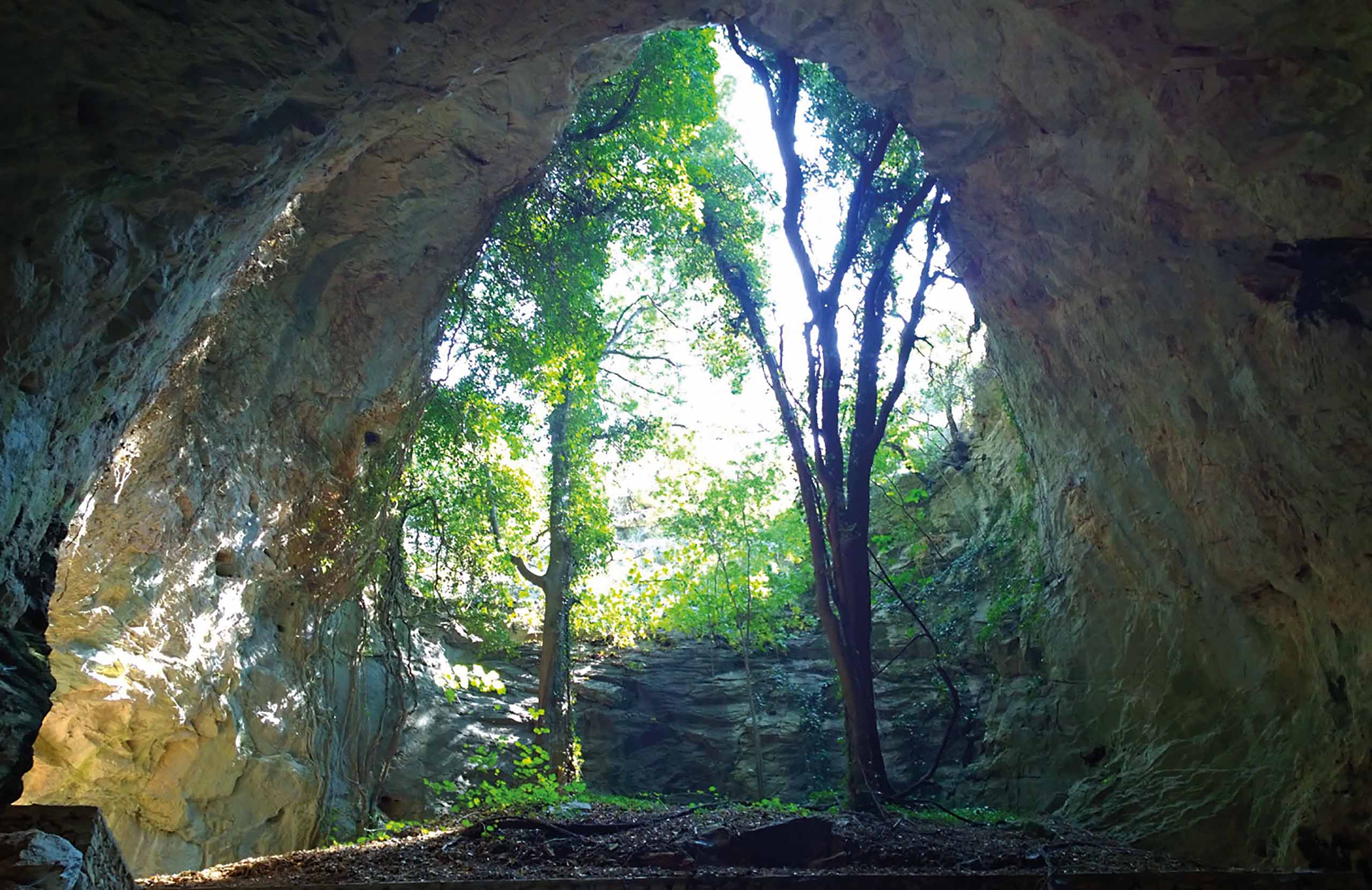
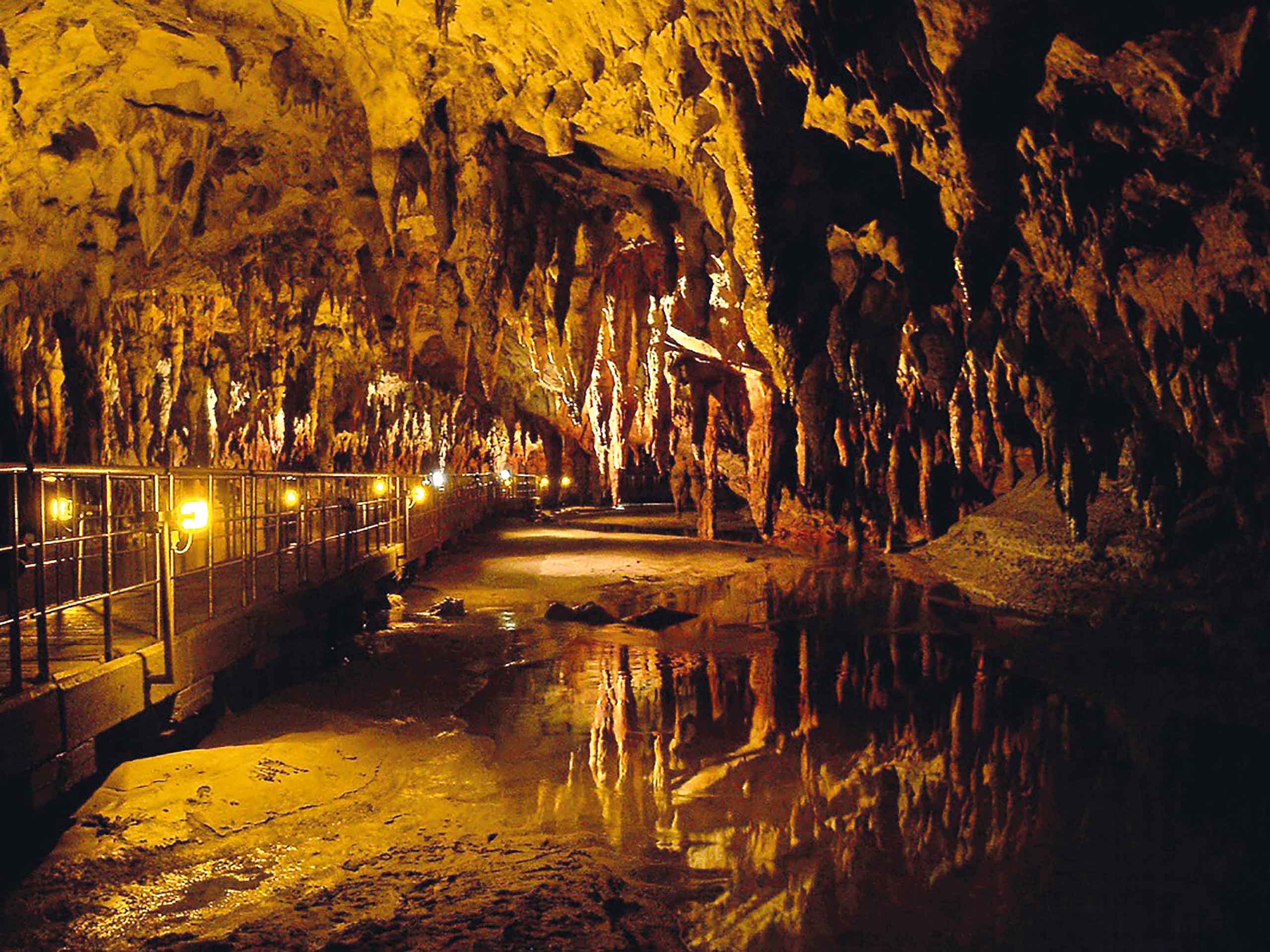
Twenty-five kilometres northwest of the city, near the village of Piges, the Angitis river rises inside a cave and runs along its floor. You walk in beside the water.
French cavers explored it in 1978. More than twenty-one kilometres have been mapped, and five hundred metres are open to visitors, on a walkway above the river. Its other name, Maara, may come from an Arabic word for a small cave.
The mountains and the forests
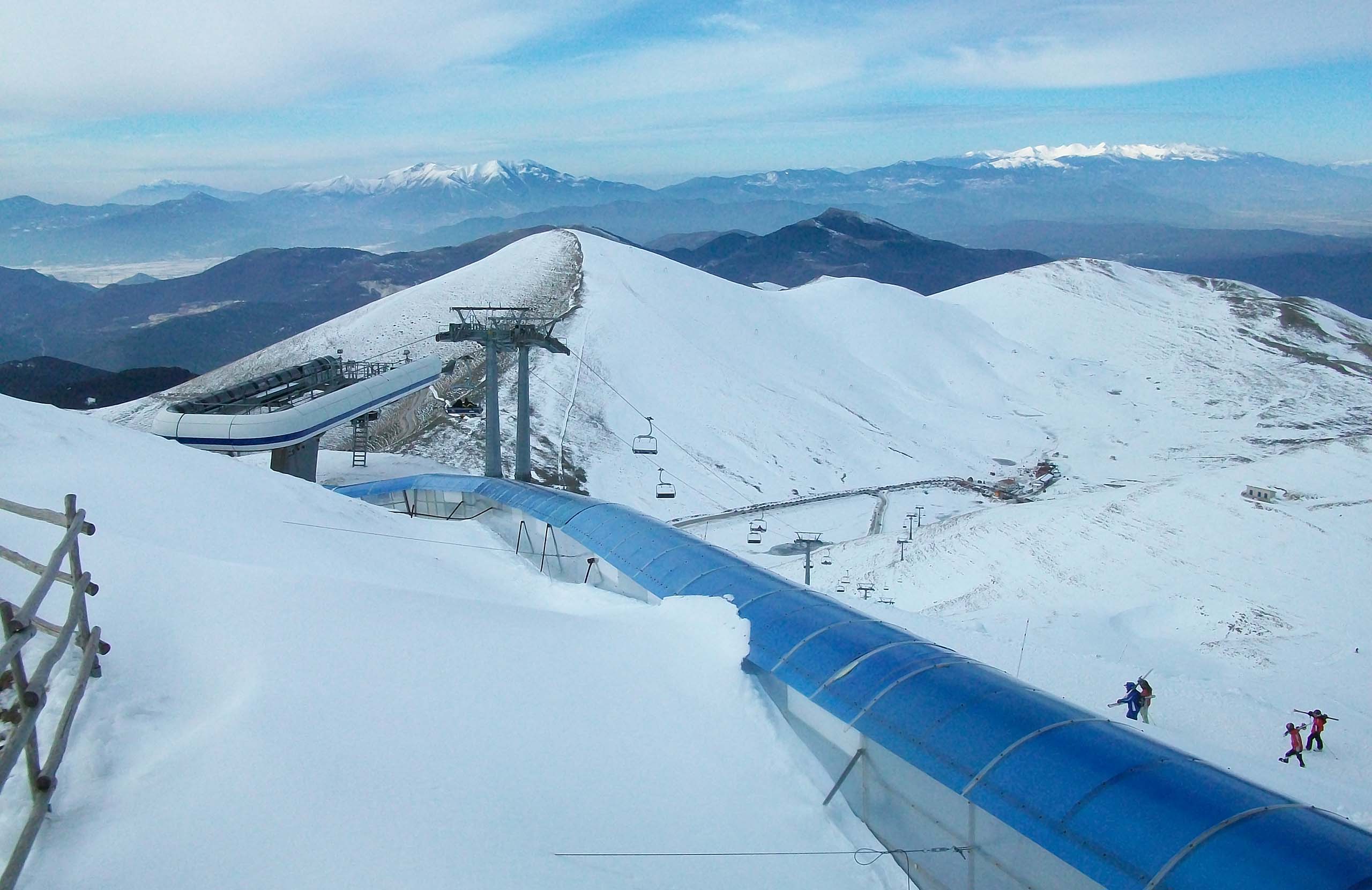
Mount Falakro, about thirty-five kilometres north, has a ski centre and paths for walking and mountain biking in summer.
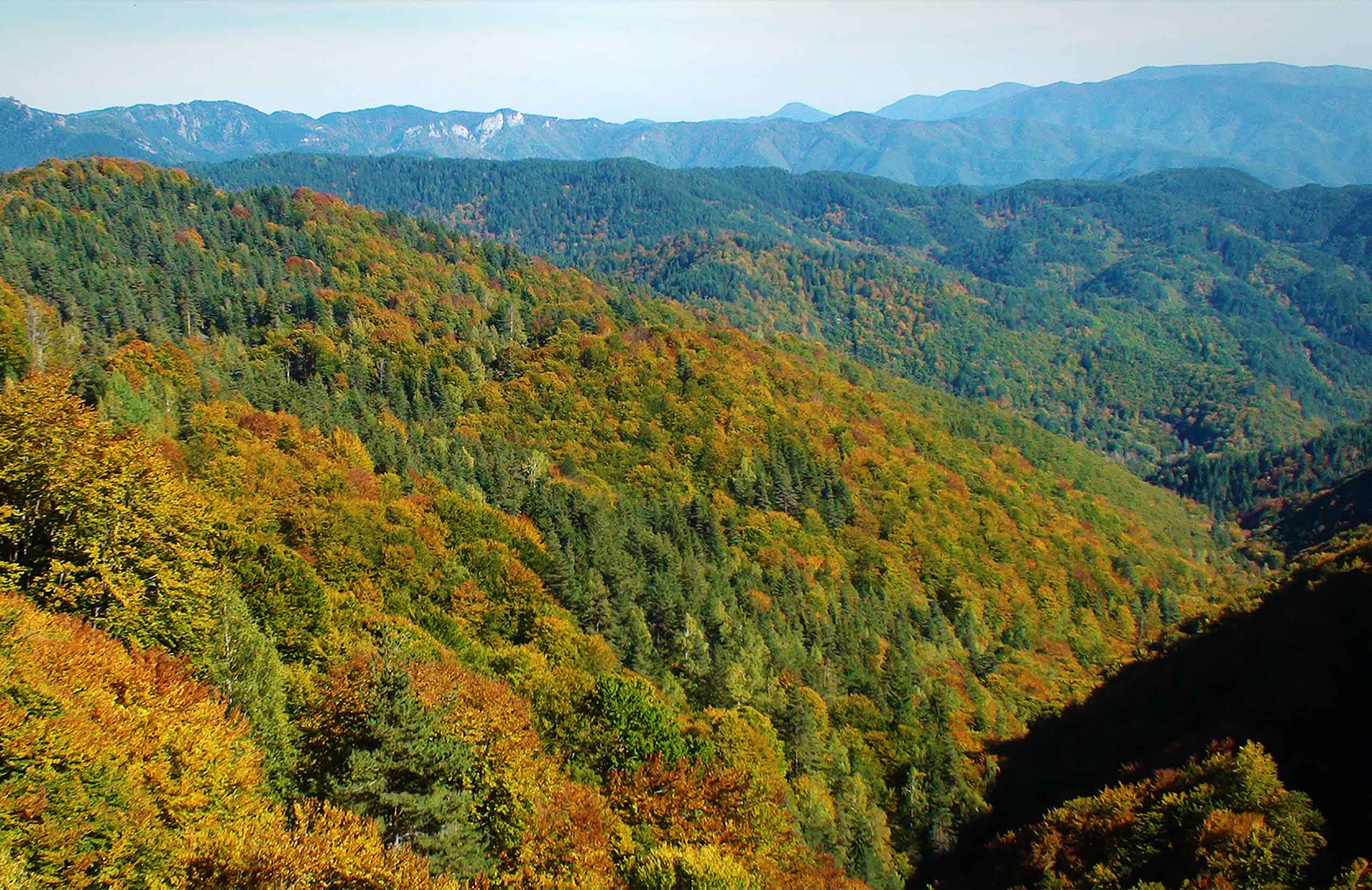
Further into the Rhodope are two forests that are unusual for Greece. Elatia, also called Karadere, is a spruce forest where trees reach sixty metres. Beyond it, the Virgin Forest of Frakto is one of the very few old-growth forests left in Europe — beech, fir and spruce that have never been cut. It is protected and access is controlled.
The Nestos river runs about fifty kilometres east, through gorges and then out into a delta full of birds.
Activities
Oneiroupoli
Since 2004, Drama has built a Christmas park in its municipal garden and main square, and it has grown into one of the largest events of its kind in Greece. It runs for about a month, entry is free, and it brings visitors from across the country and from the neighbouring Balkan states. Locals call it the Rovaniemi of Greece.
The film festival
The Drama International Short Film Festival takes place every September and is the main event of its kind in Greece, drawing filmmakers from across Europe.
Outdoors
There is skiing on Falakro in winter, paragliding from Korylovos at its southern end, and rafting and kayaking on the Nestos. The Nestos delta is one of the better birdwatching sites in northern Greece.

Food & Drink
Wine
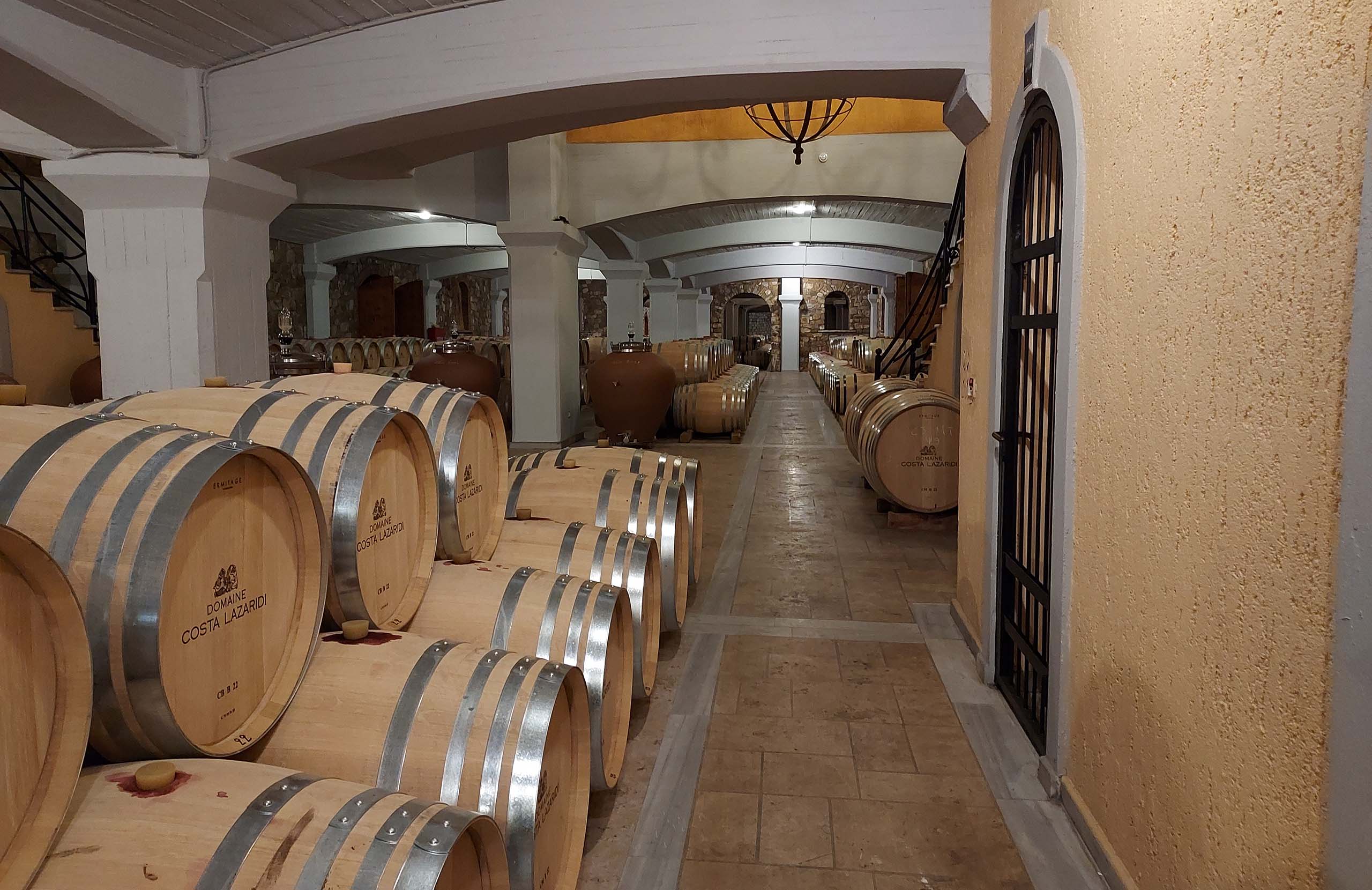
Drama came late to the Greek wine map and then changed it. Vineyards were planted here in earnest only from the 1980s and 1990s, but the combination of mountain climate and good soil turned out to suit both international and Greek grape varieties.
There is no protected designation of origin here, but three protected geographical indications — Drama, Adriani and Agora. Most of the wineries lie southeast of the city and around the old town of Adriani, which is also known for its tsipouro, and several are open to visitors with tasting rooms.
The connection is old. Grape pips from the Neolithic period were found at the village of Sitagroi, and a sanctuary of Dionysus at Kali Vrysi was in use until the fourth century AD.
The table
Local cooking here is more Anatolian and Balkan than southern Greek. Sorvas is a yoghurt soup, keskek is chicken cooked with cracked wheat, and there are cabbage pies, twisted pies, bombari and piroshki.
The plateau of Kato Nevrokopi grows the best-known potatoes in Greece, and the forests around Sidironero produce mushrooms that appear on menus all over the country.
Where to Stay
Prices shown per night for a sample 3-night stay. Rates and availability vary by season — select your dates for live pricing.
Practical information
Getting there
Drama is about 160 km east of Thessaloniki, roughly an hour and three quarters by motorway, and about 35 km north of Kavala. The nearest airport is Kavala, half an hour away, with flights from Athens and seasonal European connections. Buses run from Thessaloniki and Kavala, and the city is on the railway line.
Getting around
The city centre is walkable — the park, the warehouses, the museums and the squares are all within twenty minutes on foot.
Everything else needs a car. The cave is 25 km away, Falakro 35, the forests further, and the wineries are scattered around the plain. Public transport reaches the larger villages but does not suit sightseeing.
When to go
Spring and autumn are the best seasons for the mountains, the forests and the wineries.
December is the other answer. The Christmas park runs for about a month and the city fills up — book accommodation well ahead if you come then.
September brings the short film festival. Winter is for the ski centre on Falakro.
Good to know
Check whether the Angitis Cave is open before driving out; opening hours change with the season and it can close after heavy rain.
Access to the Virgin Forest of Frakto is restricted and requires permission from the forestry service. Do not plan a visit without arranging it first.
Wineries generally need to be contacted in advance for a visit and tasting, particularly outside the summer.
Drama is a working city, not a resort, which means it is open all year and reasonably priced, but also that August is quiet rather than busy.
Exploring the Drama Area— been there?Tell others what you saw.
A photo and two lines are enough.
