
The Tavropos, also known as the Megdovas, is a mountain river of central Greece. It begins in the Agrafa Mountains in Thessaly, fills Lake Plastiras behind a dam, and then runs through the forested valleys of Evrytania, in Central Greece, to Lake Kremasta on the Achelous River. Visitors know its two ends for different reasons. Lake Plastiras, near the town of Karditsa, is a popular place for canoeing, cycling and swimming, with villages and guesthouses around its shore. The lower river, west of the town of Karpenisi, is one of the easier rafting rivers of Greece and passes under the old stone bridge of Viniani. The two parts are reached by different roads.
Geography
The Tavropos, also called the Megdovas, is 78 kilometres long. It begins in the Agrafa Mountains, in the western part of the Karditsa area in Thessaly, and it ends in Lake Kremasta, the large reservoir on the Achelous River. Before that reservoir was made in the 1960s, the Tavropos joined the Achelous directly.
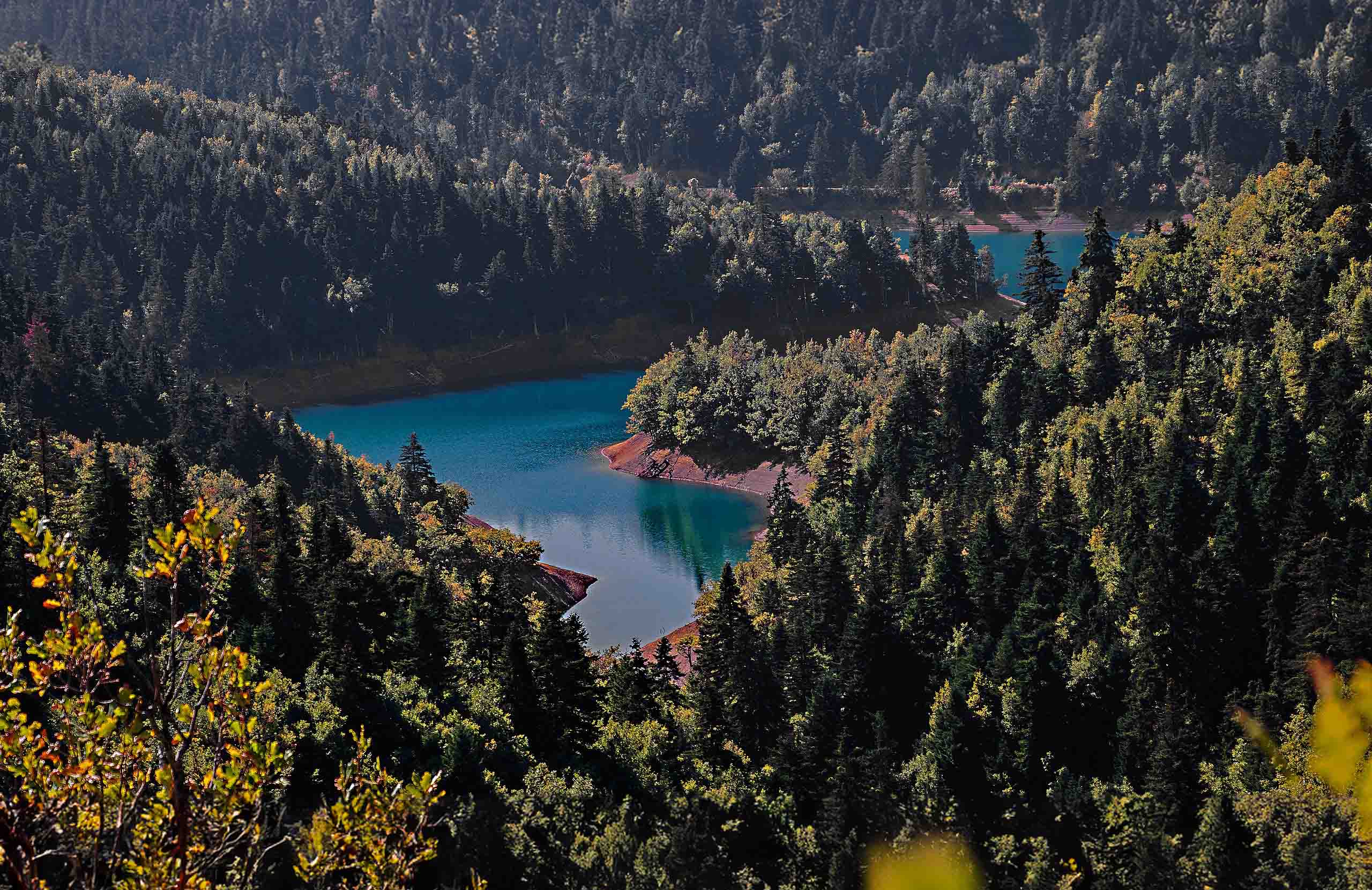
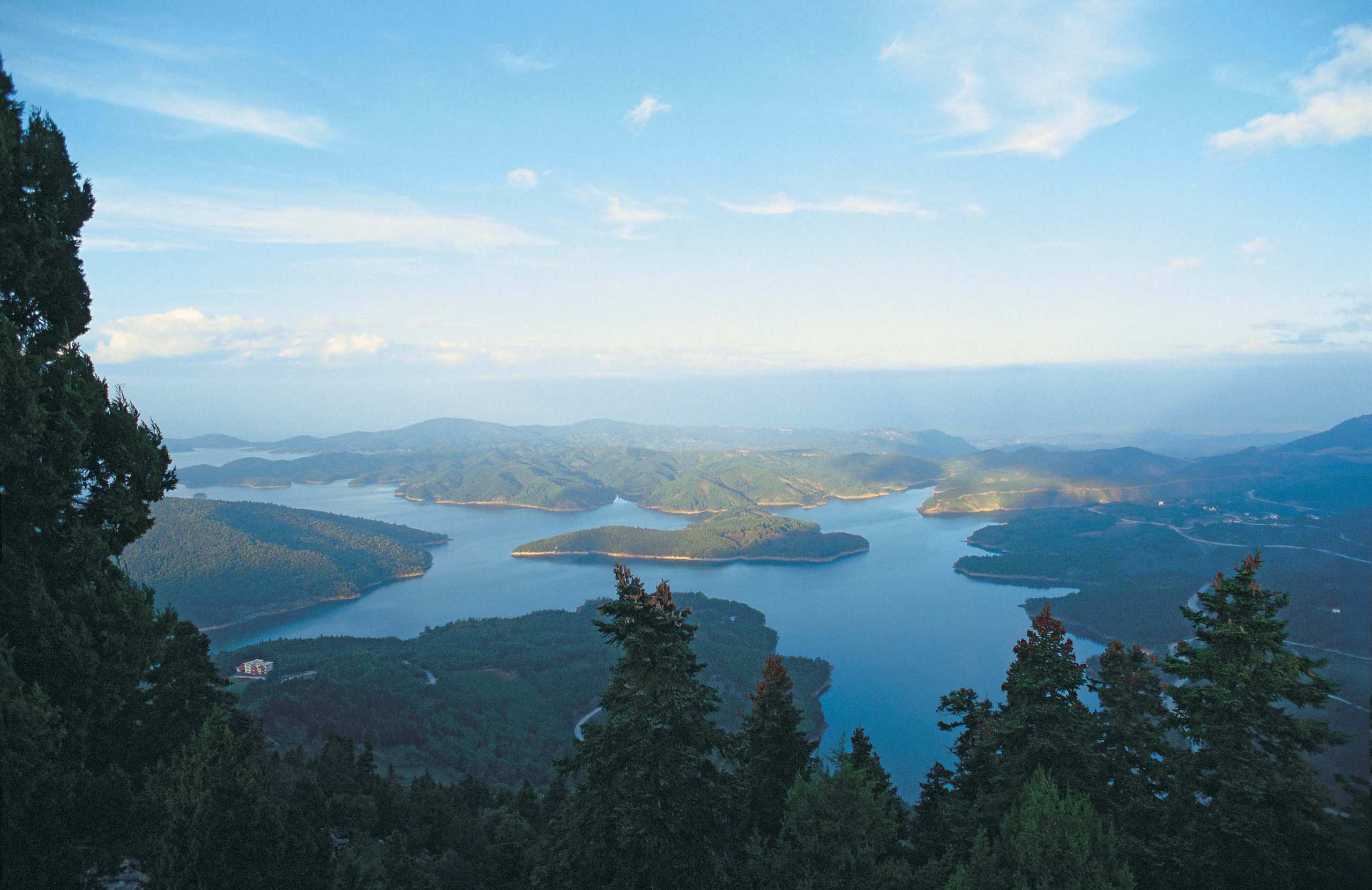
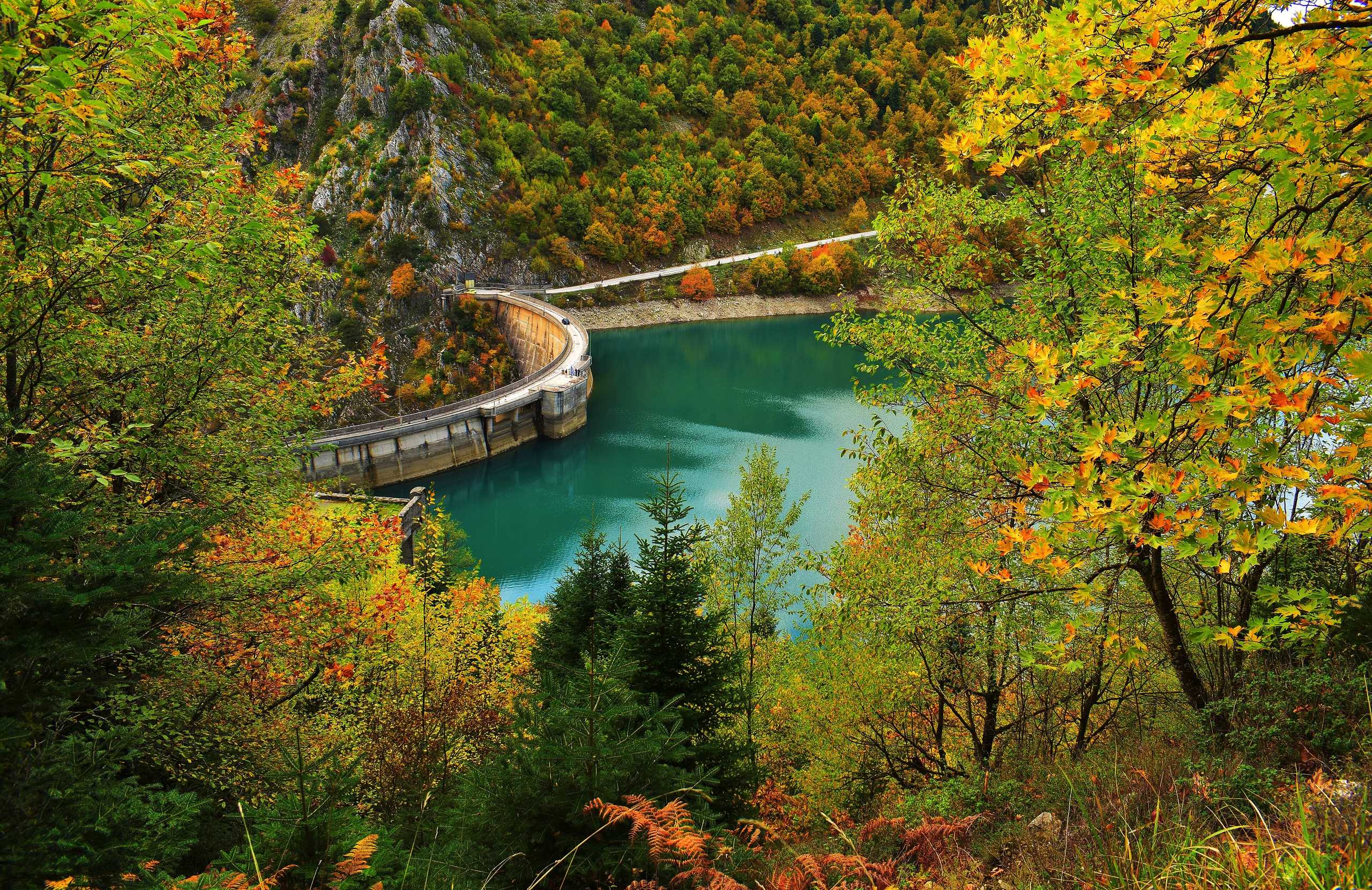
Near its source the river is held back by a dam 83 metres high and forms Lake Plastiras. The lake is about 12 kilometres long and has fir forest around it. Its water produces electricity, irrigates the plain of Thessaly and supplies the town of Karditsa.
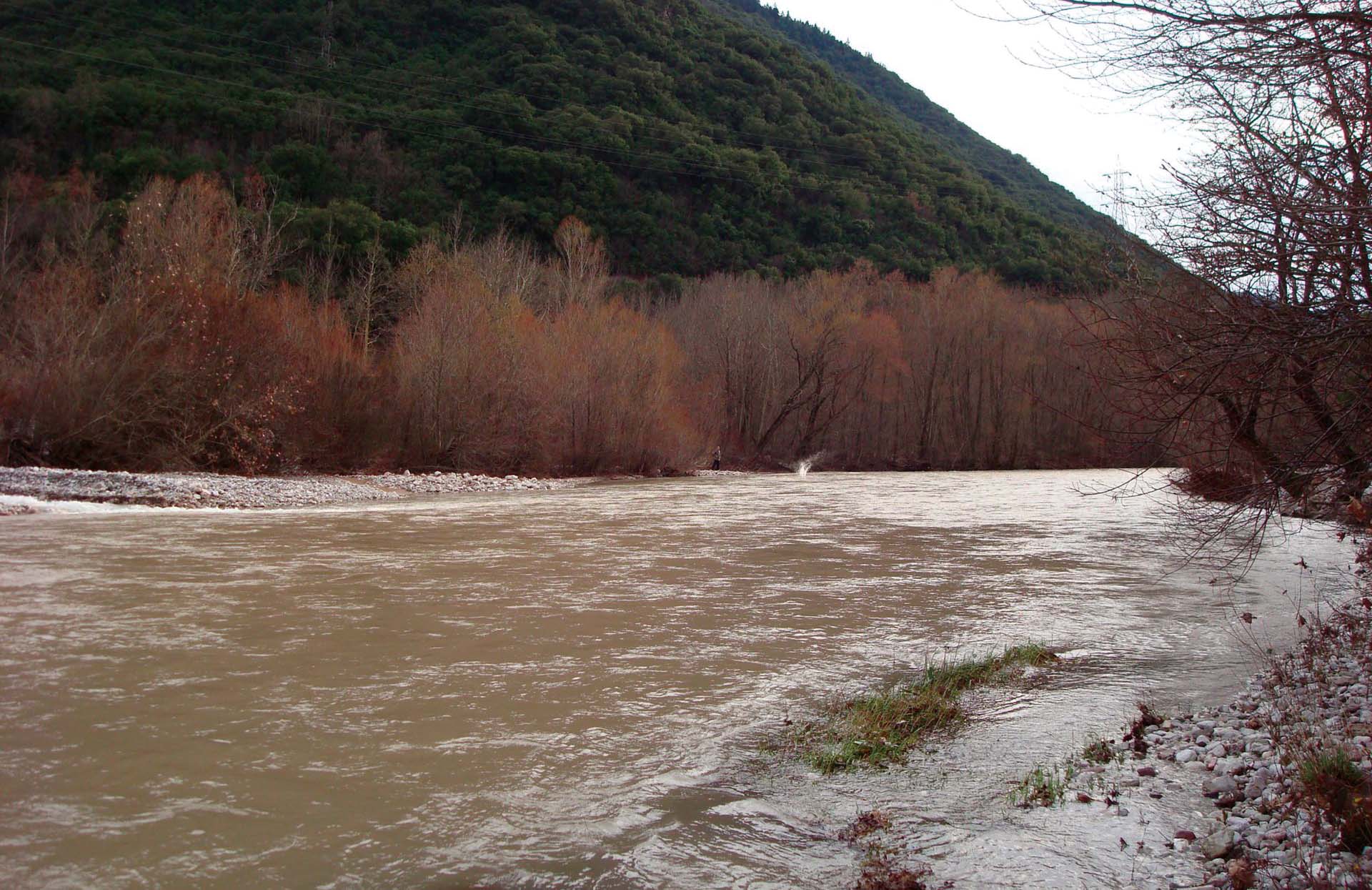
Below the dam the river passes into Evrytania. There it runs through a deep, forested valley with a few small villages and old stone bridges. In its last part it forms the border between Evrytania and the neighbouring area of Aetolia-Acarnania. The river rises fast after heavy rain.
Activities
The lower river, in Evrytania, is known for rafting. The usual run is about ten kilometres and passes under the old stone bridge of Viniani. It is an easy river, graded 1 to 2, and it suits beginners. Trips are run by companies based around the town of Karpenisi, mostly between November and May. Many trips stop at the waterfall of Viniani, in a side gorge that is also used for canyoning.
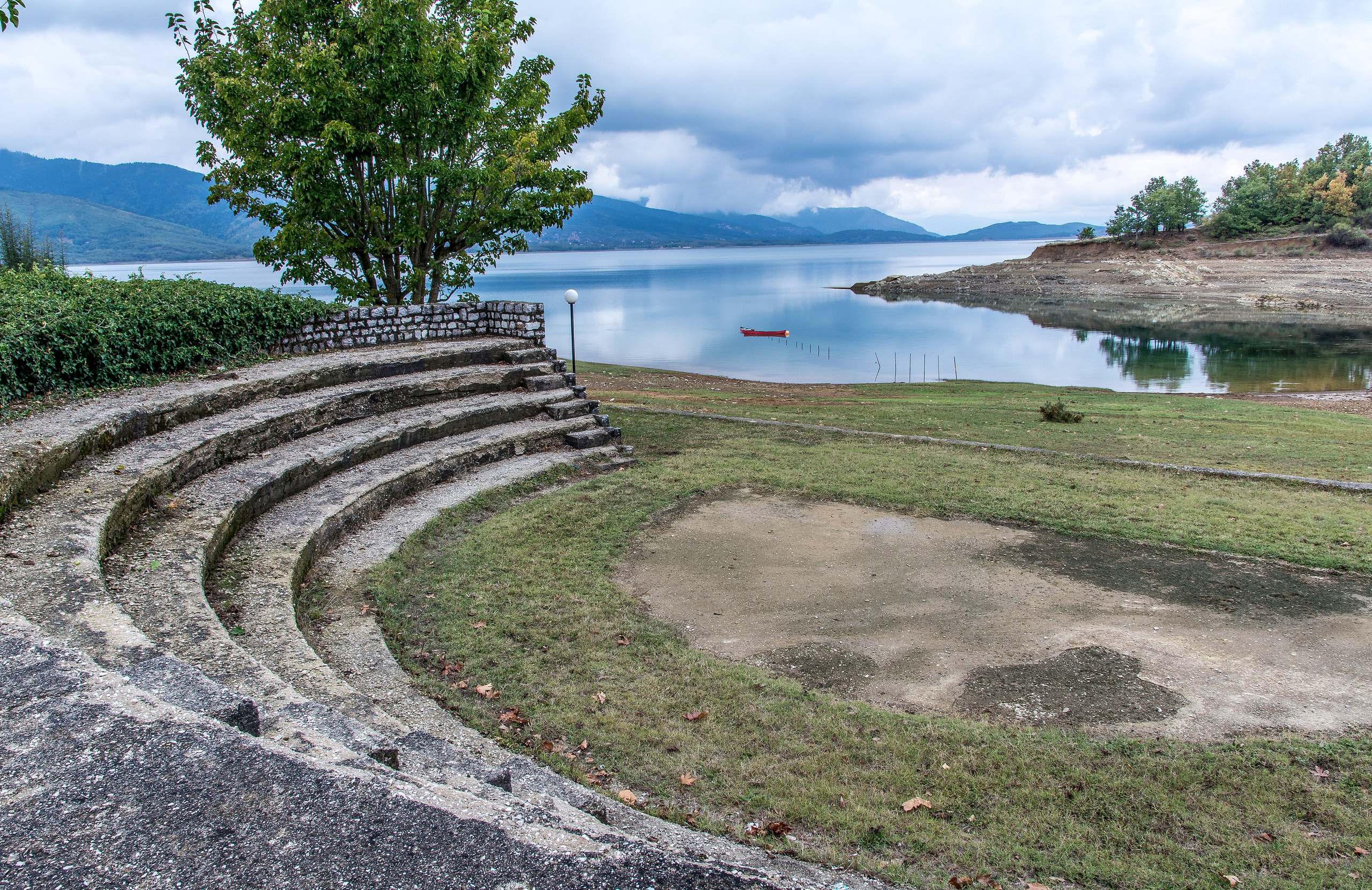
On Lake Plastiras, in the Karditsa area, the activities are on calm water. Visitors rent canoes and pedal boats, or join a guided tour to the small island near the village of Neochori. In summer people swim from the beaches of Pezoula and Lambero. A lakeside route of about 35 kilometres is used for cycling, with bike centres at the settlements of Kalyvia Pezoulas and Neochori.

History & Culture
The stone bridge of Viniani crosses the river between the villages of Palia Viniani and Nea Viniani, in Evrytania. It has a single arch about 33 metres long and was probably built in the second half of the 17th century by masons from Epirus. For a long time it was the only crossing of the river between the town of Karpenisi and the villages to the west. The European E4 walking trail passes over it. A local story says that when the river was in flood, the roar of a bull was heard at the bridge. The name Tavropos contains the Greek word for bull.
Lake Plastiras is named after Nikolaos Plastiras, a general and prime minister who was born in the nearby village of Morfovouni. He proposed the dam in the 1920s, and it opened in 1960.
Practical information
Getting there
The lake and the rafting stretch are far apart, on different roads. Lake Plastiras is about half an hour by car from the town of Karditsa and about 335 kilometres from Athens. The lower river is reached from the town of Karpenisi. The road from there towards Agrinio crosses the Tavropos about 25 kilometres west of the town, and the rafting trips start in that area. The stone bridge of Viniani is between the villages of Palia Viniani and Nea Viniani.
When to go
Rafting on the lower river runs mostly from November to May. Lake Plastiras is visited all year: people swim and paddle in summer, and many come in autumn and winter for the forest and the villages. After heavy rain the river rises quickly and becomes dangerous, so do not go into it on your own then.
Good to know
Go rafting only with an organised company, which provides the boat, the equipment and a guide. The run takes about two hours on the water. Book ahead, because trips depend on the level of the river. On Lake Plastiras fishing is allowed only with a rod. A swimming race of five kilometres across the lake, between the beaches of Pezoula and Lambero, is usually held in early August.
Tavropos (Megdovas) River— been there?Tell others what you saw.
A photo and two lines are enough.

