Epirus Administrative Region Welcomes Guests to Its Unique Attractions
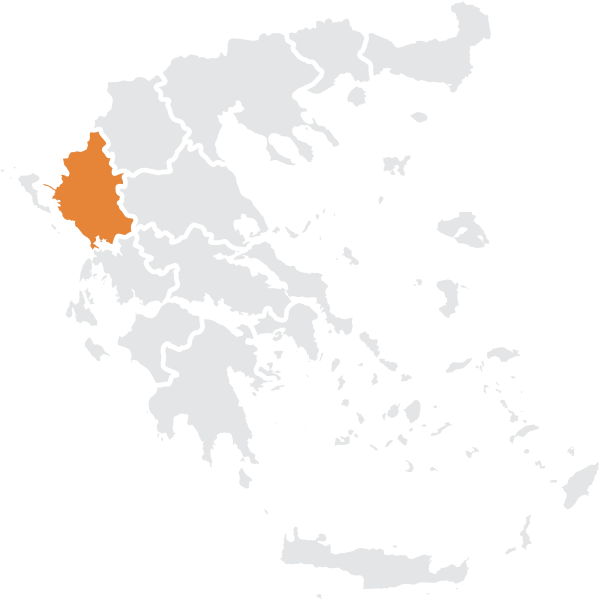
Nestled in the northwestern part of Greece, Epirus is a treasure trove of stunning landscapes, rich history, and vibrant culture. Known for its dramatic mountains, crystal-clear rivers, and traditional villages, Epirus offers an authentic Greek experience away from the bustling tourist hotspots.
Natural Wonders
Epirus is home to breathtaking natural attractions, including the Vikos Gorge, one of the deepest gorges in the world, and the Pindus Mountains, perfect for hiking and outdoor activities. The Vikos-Aoos National Park is a haven for nature lovers, featuring diverse flora and fauna, along with well-marked hiking trails that allow visitors to explore its beauty up close.
Cultural Heritage & Local Experiences
The region is steeped in history, with significant archaeological sites such as the ancient theater of Dodona, renowned for its oracle and ancient rituals. The historic city of Ioannina, with its stunning lake and impressive castle, showcases Byzantine architecture and offers a glimpse into the region’s past.
Visitors can immerse themselves in authentic local experiences, from savoring delicious traditional dishes like moussaka and souvlaki to participating in vibrant local festivals. The Ioannina Carnival and the Zagori Festival celebrate the region’s rich cultural heritage through music, dance, and local cuisine, attracting both residents and tourists alike.
Epirus Regional Projects
Epirus is actively enhancing its tourism appeal through various initiatives:
Cultural Heritage Restoration: Significant investments have been made in restoring historical sites, such as the ancient theater of Dodona and Byzantine churches, preserving the region’s rich heritage.
Infrastructure Development: Recent upgrades to transportation networks, including the E65 highway and local public transport, have improved accessibility, making it easier for visitors to explore the region.
Sustainable Tourism Initiatives: Eco-tourism projects, especially in the Vikos-Aoos National Park, promote responsible tourism while conserving the natural environment.
Community Engagement: Programs empowering local artisans and promoting traditional crafts create unique visitor experiences and support the local economy.
Why Visit Epirus?
With its captivating landscapes, rich cultural tapestry, and a commitment to sustainable tourism, Epirus offers a unique and enriching experience for travelers. Whether you’re an adventure seeker, a history enthusiast, or a culinary explorer, Epirus promises unforgettable memories and authentic Greek hospitality.
Top Exciting Travel Routes in Epirus for Every Adventurer

- Outdoor Adventurers & Thrill-Seekers
Epic Adventures in Epirus: Thrilling Outdoor Experiences in Greece’s Untamed Wilderness
For thrill-seekers and nature enthusiasts, Epirus is a dream come true! This region is a playground of mountains, gorges, rivers, and forests, making it one of the top destinations in Greece for outdoor adventure. From hiking to rafting and even skiing, Epirus provides endless opportunities for those eager to embrace the great outdoors.
Conquer the Vikos Gorge: A Hiker’s Ultimate Challenge
One of the most spectacular natural attractions in Epirus is the Vikos Gorge. Known as the deepest gorge in the world in relation to its width, it offers a challenging yet rewarding hike through its dramatic landscape. Starting from Monodendri, hikers can follow the marked trails down into the gorge, where they’ll encounter Voidomatis River at the bottom. With crystal-clear waters and stunning rock formations, the gorge offers picture-perfect moments at every turn. For a unique perspective, head to the Oxya viewpoint for panoramic views of the entire gorge, framed by the towering cliffs.
Rafting on the Arachthos and Voidomatis Rivers
For water sports enthusiasts, Epirus’ rivers provide the perfect setting for whitewater rafting. The Arachthos River, which flows through deep gorges and lush valleys, offers an exciting rafting experience, particularly during the spring melt when the river is at its most powerful. Experienced guides lead rafters through class III-IV rapids, offering both adrenaline-pumping action and moments of serenity as you pass through some of Greece’s most beautiful scenery.
For a more tranquil experience, Voidomatis River is ideal. Its crystal-clear waters are so pure that you can drink from them directly, and the gentle rapids provide a more relaxed rafting experience. Along the way, rafters can stop at the Byzantine Monastery of Agioi Anargyroi, a peaceful, secluded site only accessible by river.
Skiing in Epirus: A Winter Wonderland
Epirus isn’t just a summer destination. In winter, the region’s high mountains become a skier’s paradise. The Anilio Ski Center near Metsovo is one of Greece’s best-kept secrets, offering uncrowded slopes and a charming atmosphere. From beginner-friendly runs to off-piste routes for more advanced skiers, Anilio caters to all skill levels. For après-ski relaxation, Metsovo’s cozy mountain lodges offer warming drinks, local specialties, and panoramic views of the snow-capped peaks.
Tzoumerka: A Premier Destination for Canyoning and Rock Climbing
The Tzoumerka Mountains, located south of the Vikos Gorge, are perfect for more extreme sports. For canyoning, Kouiassa Gorge is a must-visit. This stunning gorge offers thrilling opportunities to rappel down waterfalls, slide through narrow rock passages, and swim in crystal-clear pools. The gorge’s natural beauty, combined with the adrenaline of canyoning, makes it one of the top destinations for this activity in Tzoumerka. The Arachthos River winds through some of the most dramatic scenery in the Tzoumerka region, with steep cliffs and lush green landscapes creating the ideal backdrop for rock climbing. Strogoula peak in Tzoumerka is also a prime location for rock climbing, with several routes that cater to both beginners and advanced climbers. With its jagged peaks and stunning vistas, Tzoumerka offers a raw and untamed beauty that’s hard to find elsewhere in Greece.
For thrill-seekers and nature enthusiasts, Epirus is a dream come true! This region is a playground of mountains, gorges, rivers, and forests, making it one of the top destinations in Greece for outdoor adventure. From hiking to rafting and even skiing, Epirus provides endless opportunities for those eager to embrace the great outdoors.
Conquer the Vikos Gorge: A Hiker’s Ultimate Challenge
One of the most spectacular natural attractions in Epirus is the Vikos Gorge. Known as the deepest gorge in the world in relation to its width, it offers a challenging yet rewarding hike through its dramatic landscape. Starting from Monodendri, hikers can follow the marked trails down into the gorge, where they’ll encounter Voidomatis River at the bottom. With crystal-clear waters and stunning rock formations, the gorge offers picture-perfect moments at every turn. For a unique perspective, head to the Oxya viewpoint for panoramic views of the entire gorge, framed by the towering cliffs.
Rafting on the Arachthos and Voidomatis Rivers
For water sports enthusiasts, Epirus’ rivers provide the perfect setting for whitewater rafting. The Arachthos River, which flows through deep gorges and lush valleys, offers an exciting rafting experience, particularly during the spring melt when the river is at its most powerful. Experienced guides lead rafters through class III-IV rapids, offering both adrenaline-pumping action and moments of serenity as you pass through some of Greece’s most beautiful scenery.
For a more tranquil experience, Voidomatis River is ideal. Its crystal-clear waters are so pure that you can drink from them directly, and the gentle rapids provide a more relaxed rafting experience. Along the way, rafters can stop at the Byzantine Monastery of Agioi Anargyroi, a peaceful, secluded site only accessible by river.
Skiing in Epirus: A Winter Wonderland
Epirus isn’t just a summer destination. In winter, the region’s high mountains become a skier’s paradise. The Anilio Ski Center near Metsovo is one of Greece’s best-kept secrets, offering uncrowded slopes and a charming atmosphere. From beginner-friendly runs to off-piste routes for more advanced skiers, Anilio caters to all skill levels. For après-ski relaxation, Metsovo’s cozy mountain lodges offer warming drinks, local specialties, and panoramic views of the snow-capped peaks.
Tzoumerka: A Premier Destination for Canyoning and Rock Climbing
The Tzoumerka Mountains, located south of the Vikos Gorge, are perfect for more extreme sports. For canyoning, Kouiassa Gorge is a must-visit. This stunning gorge offers thrilling opportunities to rappel down waterfalls, slide through narrow rock passages, and swim in crystal-clear pools. The gorge’s natural beauty, combined with the adrenaline of canyoning, makes it one of the top destinations for this activity in Tzoumerka. The Arachthos River winds through some of the most dramatic scenery in the Tzoumerka region, with steep cliffs and lush green landscapes creating the ideal backdrop for rock climbing. Strogoula peak in Tzoumerka is also a prime location for rock climbing, with several routes that cater to both beginners and advanced climbers. With its jagged peaks and stunning vistas, Tzoumerka offers a raw and untamed beauty that’s hard to find elsewhere in Greece.
Route Highlights
(in Places & Attractions)
Ioannina is the largest city in Epirus, built on a promontory that pushes out into Lake Pamvotida, with the ridge of Mitsikeli rising behind the water.
Its castle is one of the oldest still standing in Greece, and people live inside it. For thirty-four years, from 1788, it was the seat of Ali Pasha, who ran Epirus and much of western Greece as a state of his own and was killed on the island in the middle of the lake.
The city has been a centre of silversmithing for centuries, it has the oldest continuously inhabited Jewish quarter in Greece, and four kilometres from its centre is the first cave in the country ever opened to visitors.
(in Places & Attractions)
Metsovo, a picturesque town nestled in the Pindus mountains, is known for its traditional architecture and stunning landscapes. The town has a population of around 2,500 residents, maintaining a quaint and intimate atmosphere. The surrounding area features rugged mountains, dense forests, and clear rivers, making it a haven for nature lovers.
Nearby towns worth visiting include Ioannina, about an hour's drive west, known for its historic lake and castle, and Kalambaka, also around an hour away, famous for the Meteora monasteries perched atop towering rock formations. Each of these locations offers unique attractions and a taste of local culture.
Metsovo itself is a hub of cultural heritage with attractions like the Averoff Gallery and the Tositsa Mansion Museum. The nearby Monastery of Saint Nicholas and the Monastery of Voutsas provide historical insights and beautiful views, each about 30 minutes to an hour away. The town receives a fair amount of tourism all year round, attracting visitors with its blend of quiet retreats and active outdoor adventures.
(in Rivers)
The Arachthos River, a stunning waterway in western Greece, flows for approximately 135 kilometers, coursing through the Epirus region before emptying into the Ambracian Gulf. Originating in the Pindus Mountains, the river is renowned for its striking natural beauty, characterized by dramatic gorges, lush forests, and scenic villages that offer a variety of outdoor experiences.
Arachthos is particularly famous for kayaking and rafting, with the Tzoumerka Mountains and the historic Plaka Bridge serving as prime gateways for these activities. The river’s challenging rapids and clear waters create the perfect playground for both beginners and seasoned adventurers looking for an adrenaline rush.
For those who prefer a more relaxed pace, the Arachthos Gorge offers scenic hiking trails with breathtaking views. Closer to the river’s mouth, the village of Kommeno is ideal for exploring the significant wetlands of the Arachthos delta, a paradise for birdwatchers, home to species such as flamingos, herons, and pelicans. Fishing, leisurely walks, and enjoying the tranquil scenery along the waterfront are also popular activities here.
The historic town of Arta, just a short distance from the delta, provides another gateway to the river. Known for its ancient "Bridge of Arta" and Byzantine churches, Arta combines cultural exploration with access to the natural beauty of the river and its surroundings.
(in Rivers)
The Voidomatis River flows through Zagori in Epirus, from the springs beneath Vikos Gorge to its meeting with the Aoos River near Konitsa. Its clear, turquoise waters run through a wooded valley, framed by limestone cliffs and the mountains of Tymfi.
Visitors come for rafting and kayaking between the Aristi and Klidonia bridges, as well as walking routes that follow the river beneath large plane trees. The water stays cold even in summer, and its pale riverbed is visible through the current.
Along the valley, old stone crossings, small monasteries and prehistoric rock shelters add another dimension to the natural landscape. The Klidonia stone bridge is a particularly recognisable landmark, surrounded by woodland and clear flowing water.
(in Mountains & Gorges)
Tzoumerka, also called the Athamanika Mountains, is a mountain range in the southern Pindus, on the border between Epirus and Thessaly. Its highest peak, Kakarditsa, reaches 2,429 metres. The Arachthos river runs along the western side of the range, and the Achelous runs along the eastern side.
The range is part of a national park that has forests of black pine, beech and fir, a river gorge and waterfalls. Stone villages such as Syrrako and Kalarrytes lie inside it, and paths lead from them into the mountains. Rafting trips run on the Arachthos, and the single-arch Plaka Bridge crosses it. The nearest towns are Ioannina and Arta, each about an hour and a half away by car.
(in Mountains & Gorges)
Vikos Gorge is a deep canyon in the Pindus mountains, in the Epirus region of northern Greece. It lies in Zagori, an area of stone villages, below the high peaks of Mount Tymfi. The main section is about 12 kilometres long, and its rock walls rise up to about 1,000 metres above the river bed. Near its northern end, springs start the Voidomatis River.
The best-known way to see the gorge is the long walk from Monodendri to Vikos village. Shorter walks lead to viewpoints at the edge of the gorge, where visitors look straight down. The gorge is part of Vikos–Aoos National Park, which protects the wildlife and plants of the mountains around it.


- Cultural Explorers & History Enthusiasts
Discover Epirus: A Journey Through Greece’s Timeless Villages and Majestic Mountains
Epirus, located in the northwestern part of Greece, offers a rich tapestry of history, culture, and unspoiled nature. Travelers who venture into this rugged region find themselves transported back in time, as they explore stone villages, stunning mountain vistas, and centuries-old bridges that connect them.
Zagorochoria: A Village Lover’s Paradise
The Zagorochoria region, consisting of 46 traditional stone-built villages, is a highlight of Epirus. Among them, Papingo and Monodendri stand out for their beauty and historical significance. Papingo, nestled beneath the shadow of the Astraka Towers, offers travelers the opportunity to explore narrow stone-paved streets lined with traditional houses featuring slate roofs. A trek up to the Drakolimni alpine lake on Mount Tymfi from Papingo will reward visitors with breathtaking views of the surrounding peaks and an atmosphere that feels otherworldly. Equally impressive, Monodendri serves as a gateway to the Vikos Gorge, Europe’s deepest gorge. A hike to the cliffside Agia Paraskevi Monastery, built into the rocks, provides jaw-dropping views of the gorge below and is a spiritual experience that merges history, architecture, and nature.
Arta: A Journey Through Byzantine and Ottoman Eras
Famous for its rich blend of Byzantine and Ottoman architecture, Arta is renowned for the Church of the Panagia Parigoritissa, a beautiful example of Byzantine art, and its iconic Ottoman-era bridge over the Arachthos River, which is steeped in legend and folklore. The town’s unique history, spanning centuries, offers a captivating glimpse into the region’s cultural evolution.
The Stone Bridges of Epirus
Epirus is home to some of the most spectacular stone bridges in Greece, many of which date back to the 18th and 19th centuries. The Plaka Bridge, spanning the Arachthos River, is not only the longest single-arch bridge in the country but also a masterpiece of stone craftsmanship. After collapsing in a 2015 flood, it has since been restored and serves as a symbol of Epirus’ resilience. Similarly, the Kokkoros Bridge and the three-arched Kalogeriko Bridge in Zagori are equally stunning, offering incredible photo opportunities and a chance to step into the past.
Metsovo: A Blend of Tradition and Alpine Charm
Further south, the town of Metsovo is a mountain retreat like no other. Known for its traditional architecture and alpine charm, Metsovo offers visitors a glimpse into the unique culture of Vlachs, the region’s semi-nomadic people. The town is famous for its local cheeses, particularly Metsovone and Metsovela, which can be enjoyed alongside local wines at cozy tavernas that overlook the lush, forested slopes. A visit to the Tositsa Museum, housed in a 19th-century mansion, gives insight into the town’s rich history and folk traditions.
Gastronomy: Epirus’ Rich Culinary Tradition
While exploring the villages, a highlight is indulging in local dishes that reflect the region’s rich agricultural heritage. Pies (pites) are a staple of the local diet, particularly chortopita, made with wild greens, and kreatopita, a meat-filled variation. In the mountains, travelers can enjoy heartier fare such as slow-cooked lamb, kontosouvli (spit-roasted pork), and dairy products made from sheep and goat milk. Restaurants in Metsovo, Zagori, and Ioannina also offer an abundance of local wines, many of which come from vineyards perched on the slopes of Mount Pindus.
Cultural Insights and Local Festivals
Throughout the year, Epirus’ villages celebrate a variety of festivals (or panigyria), where locals come together to dance, sing, and share traditional food. Participating in these celebrations offers an authentic window into the heart of Epirus’ culture.
Epirus, located in the northwestern part of Greece, offers a rich tapestry of history, culture, and unspoiled nature. Travelers who venture into this rugged region find themselves transported back in time, as they explore stone villages, stunning mountain vistas, and centuries-old bridges that connect them.
Zagorochoria: A Village Lover’s Paradise
The Zagorochoria region, consisting of 46 traditional stone-built villages, is a highlight of Epirus. Among them, Papingo and Monodendri stand out for their beauty and historical significance. Papingo, nestled beneath the shadow of the Astraka Towers, offers travelers the opportunity to explore narrow stone-paved streets lined with traditional houses featuring slate roofs. A trek up to the Drakolimni alpine lake on Mount Tymfi from Papingo will reward visitors with breathtaking views of the surrounding peaks and an atmosphere that feels otherworldly. Equally impressive, Monodendri serves as a gateway to the Vikos Gorge, Europe’s deepest gorge. A hike to the cliffside Agia Paraskevi Monastery, built into the rocks, provides jaw-dropping views of the gorge below and is a spiritual experience that merges history, architecture, and nature.
Arta: A Journey Through Byzantine and Ottoman Eras
Famous for its rich blend of Byzantine and Ottoman architecture, Arta is renowned for the Church of the Panagia Parigoritissa, a beautiful example of Byzantine art, and its iconic Ottoman-era bridge over the Arachthos River, which is steeped in legend and folklore. The town’s unique history, spanning centuries, offers a captivating glimpse into the region’s cultural evolution.
The Stone Bridges of Epirus
Epirus is home to some of the most spectacular stone bridges in Greece, many of which date back to the 18th and 19th centuries. The Plaka Bridge, spanning the Arachthos River, is not only the longest single-arch bridge in the country but also a masterpiece of stone craftsmanship. After collapsing in a 2015 flood, it has since been restored and serves as a symbol of Epirus’ resilience. Similarly, the Kokkoros Bridge and the three-arched Kalogeriko Bridge in Zagori are equally stunning, offering incredible photo opportunities and a chance to step into the past.
Metsovo: A Blend of Tradition and Alpine Charm
Further south, the town of Metsovo is a mountain retreat like no other. Known for its traditional architecture and alpine charm, Metsovo offers visitors a glimpse into the unique culture of Vlachs, the region’s semi-nomadic people. The town is famous for its local cheeses, particularly Metsovone and Metsovela, which can be enjoyed alongside local wines at cozy tavernas that overlook the lush, forested slopes. A visit to the Tositsa Museum, housed in a 19th-century mansion, gives insight into the town’s rich history and folk traditions.
Gastronomy: Epirus’ Rich Culinary Tradition
While exploring the villages, a highlight is indulging in local dishes that reflect the region’s rich agricultural heritage. Pies (pites) are a staple of the local diet, particularly chortopita, made with wild greens, and kreatopita, a meat-filled variation. In the mountains, travelers can enjoy heartier fare such as slow-cooked lamb, kontosouvli (spit-roasted pork), and dairy products made from sheep and goat milk. Restaurants in Metsovo, Zagori, and Ioannina also offer an abundance of local wines, many of which come from vineyards perched on the slopes of Mount Pindus.
Cultural Insights and Local Festivals
Throughout the year, Epirus’ villages celebrate a variety of festivals (or panigyria), where locals come together to dance, sing, and share traditional food. Participating in these celebrations offers an authentic window into the heart of Epirus’ culture.
Route Highlights
(in Places & Attractions)
Dodoni lies twenty-two kilometres south of Ioannina, in Epirus, in a narrow valley at the foot of Mount Tomaros, six hundred metres above sea level.
It was the oldest oracle in Greece — older than Delphi — and for most of its life it had no temple at all. People worshipped in the open air, around a single oak tree.
The tree and the priests
The sanctuary belonged first to an earth goddess, and the worship of Zeus came later, brought by the Selloi, a people of Epirus, in the second millennium BC. Zeus was worshipped here with Dione, and the two of them were said to live in the oak.
Homer describes the priests of Dodoni as men who never washed their feet and slept on the ground. Later the oracle was served by priestesses called the Peleiades — the doves. Herodotus was told that the sanctuary began when a black dove flew here from Egypt, settled on the oak, and spoke with a human voice.
The god answered through the tree. Priests listened to the sound of the leaves moving, and to bronze vessels hung around the sanctuary that rang when the wind touched them.
The questions people asked
What makes Dodoni different from every other oracle is that the questions survive.
From about the sixth century BC, people who came here wrote their question on a thin strip of lead, folded it, and handed it in. Thousands of these strips have been dug out of the ground, and they are not the questions of kings.
They ask whether to marry, whether the child is his, whether to buy the land, where the missing blankets went, whether to keep sheep or take up trade. It is the most direct record we have of what ordinary Greeks worried about.
Pyrrhus and the end
The sanctuary grew into a proper complex under Pyrrhus, king of Epirus, in the third century BC. He built the theatre, one of the largest in Greece, seating somewhere between fifteen and seventeen thousand people, together with a stadium, a council chamber and temples.
At the end of the fourth century AD, under the emperor Theodosius, Christian basilicas were built inside the sanctuary and the sacred oak was cut down.
Dodoni was then lost for fourteen hundred years. An English traveller identified the valley in 1832, excavation confirmed it in 1875, and systematic work began in the 1950s.
What to see today
The theatre is what people come for. It has been restored over many years and it is used again for performances in summer.
Beside it stands the Sacred House, the temple of Zeus, which grew from a simple enclosure around the tree into a walled building in at least four stages. An oak grows on the spot today — not the original one, but planted where it stood.
Around them are the bouleuterion, where the council of the Epirote federation met, the stadium, temples of Dione, Aphrodite and Themis, and the foundations of an early Christian basilica.
Above the sanctuary is the acropolis, with its walls and gates, and a water cistern cut into the rock. Few visitors climb up to it, and the view down over the whole valley is the best on the site.
The finds are not here. The lead tablets, the bronzes and the votive offerings are in the Archaeological Museum of Ioannina, about half an hour away.
(in Places & Attractions)
Arta sits on a loop of the Arachthos river in southern Epirus, where the mountains come down to a wide plain of orange groves.
It was Ambracia in antiquity, and for two centuries in the Middle Ages it was the capital of the Despotate of Epirus — which is why a town of this size holds some of the finest Byzantine churches in Greece.
South of it the plain ends in the Ambracian Gulf, an almost closed sea of lagoons and reedbeds with its own resident population of dolphins. North and east rise the Tzoumerka mountains.
And on the edge of the town stands the bridge that every Greek child learns a song about.
(in Places & Attractions)
Zagori is a group of stone villages in the mountains of Epirus, north of Ioannina, spread across the slopes of the Pindus range.
There are forty-six of them. They are built of the same grey stone as the mountains, with slate roofs, and they are connected to each other by a network of cobbled paths, stepped ways and arched stone bridges that was built before there were roads.
In September 2023 UNESCO added Zagori to the World Heritage List as a cultural landscape — the first time Greece had a site inscribed in that category.
Between the villages runs the Vikos Gorge, and below it the Voidomatis, which is among the clearest rivers in Europe.
(in Places & Attractions)
Ioannina is the largest city in Epirus, built on a promontory that pushes out into Lake Pamvotida, with the ridge of Mitsikeli rising behind the water.
Its castle is one of the oldest still standing in Greece, and people live inside it. For thirty-four years, from 1788, it was the seat of Ali Pasha, who ran Epirus and much of western Greece as a state of his own and was killed on the island in the middle of the lake.
The city has been a centre of silversmithing for centuries, it has the oldest continuously inhabited Jewish quarter in Greece, and four kilometres from its centre is the first cave in the country ever opened to visitors.
(in Rivers)
The Aoos River rises in the Pindus mountains of Epirus, near Metsovo, and flows north-west to Albania, where it is called the Vjosa. About 70 to 80 kilometres of its course are in Greece. The easiest place to see the river is Konitsa, a small town near the border. There the Aoos comes out of a gorge between Mount Tymfi and Mount Smolikas, under a single-arch stone bridge built in 1870. A marked path leads from the bridge through the gorge to the Stomio monastery in about two hours. In spring, companies based in Konitsa run rafting and kayaking trips on the river. Higher up, the Aoos passes through the forests of the Northern Pindos National Park and the village of Vovousa. The Voidomatis River joins it below Konitsa.
(in Rivers)
The Arachthos River, a stunning waterway in western Greece, flows for approximately 135 kilometers, coursing through the Epirus region before emptying into the Ambracian Gulf. Originating in the Pindus Mountains, the river is renowned for its striking natural beauty, characterized by dramatic gorges, lush forests, and scenic villages that offer a variety of outdoor experiences.
Arachthos is particularly famous for kayaking and rafting, with the Tzoumerka Mountains and the historic Plaka Bridge serving as prime gateways for these activities. The river’s challenging rapids and clear waters create the perfect playground for both beginners and seasoned adventurers looking for an adrenaline rush.
For those who prefer a more relaxed pace, the Arachthos Gorge offers scenic hiking trails with breathtaking views. Closer to the river’s mouth, the village of Kommeno is ideal for exploring the significant wetlands of the Arachthos delta, a paradise for birdwatchers, home to species such as flamingos, herons, and pelicans. Fishing, leisurely walks, and enjoying the tranquil scenery along the waterfront are also popular activities here.
The historic town of Arta, just a short distance from the delta, provides another gateway to the river. Known for its ancient "Bridge of Arta" and Byzantine churches, Arta combines cultural exploration with access to the natural beauty of the river and its surroundings.
(in Mountains & Gorges)
Tzoumerka, also called the Athamanika Mountains, is a mountain range in the southern Pindus, on the border between Epirus and Thessaly. Its highest peak, Kakarditsa, reaches 2,429 metres. The Arachthos river runs along the western side of the range, and the Achelous runs along the eastern side.
The range is part of a national park that has forests of black pine, beech and fir, a river gorge and waterfalls. Stone villages such as Syrrako and Kalarrytes lie inside it, and paths lead from them into the mountains. Rafting trips run on the Arachthos, and the single-arch Plaka Bridge crosses it. The nearest towns are Ioannina and Arta, each about an hour and a half away by car.
(in Mountains & Gorges)
Vikos Gorge is a deep canyon in the Pindus mountains, in the Epirus region of northern Greece. It lies in Zagori, an area of stone villages, below the high peaks of Mount Tymfi. The main section is about 12 kilometres long, and its rock walls rise up to about 1,000 metres above the river bed. Near its northern end, springs start the Voidomatis River.
The best-known way to see the gorge is the long walk from Monodendri to Vikos village. Shorter walks lead to viewpoints at the edge of the gorge, where visitors look straight down. The gorge is part of Vikos–Aoos National Park, which protects the wildlife and plants of the mountains around it.

- Luxury & Wellness Seekers
Epirus for the Sophisticated Traveler: Immersive Experiences in Greece’s Scenic Beauty
While Epirus is known for its rugged beauty and adventurous activities, it also caters to the discerning traveler seeking luxury and exclusivity. With boutique hotels, private tours, and gourmet experiences, Epirus offers a luxurious way to experience its natural splendor.
High-End Retreats in Zagori
In the Zagori region, luxury accommodations provide the perfect base for exploring the area while indulging in five-star comforts. With spa facilities, infinity pools overlooking mountain landscapes, and suites that combine traditional stone architecture with modern design, these retreats offer the ultimate in relaxation. After a day of exploring nearby attractions like Vikos Gorge or Papingo’s natural pools, guests can unwind with treatments that incorporate local ingredients like wild herbs and olive oil.
Wellness Tourism: Escape and Rejuvenate
Epirus’ untouched landscapes also make it the perfect destination for wellness tourism. Luxury wellness centers offer yoga retreats and meditation workshops in serene settings, surrounded by forests and rivers. The Ammoudia Springs, known for their therapeutic properties, provide a natural spa experience, allowing visitors to soak in mineral-rich waters that have been revered since ancient times.
Private Wine Tours and Farm-to-Table Dining
The region, known for its stunning landscapes and cultural richness, offers the perfect backdrop for wine enthusiasts to explore boutique wineries. Visitors can enjoy exclusive tastings after private vineyard tours, where they can learn about the winemaking process and the unique terroir of the area. A highlight of the wine scene in Epirus is the local Debina variety, a white grape native to the region, particularly thriving in Zitsa, a well-known wine-producing area. Debina wines are celebrated for their delicate aromas, crisp flavor, and refreshing acidity, often used to produce sparkling and still wines.
Pair this with a farm-to-table dining experience at one of the region’s gourmet restaurants, where chefs create contemporary dishes using locally-sourced ingredients. Dishes like slow-cooked lamb with foraged herbs or trout fresh from the region’s rivers are paired with fine wines to create a dining experience that’s both authentic and sophisticated.
Yachting and Exclusive Coastal Experiences
Epirus is not just about mountains. The coastal town of Preveza and the nearby Sivota Islands offer exclusive yachting experiences. Charter a private yacht for a day trip to the Blue Lagoon or the pristine beaches of Meganisi, where you can swim in turquoise waters and sunbathe in total privacy.
While Epirus is known for its rugged beauty and adventurous activities, it also caters to the discerning traveler seeking luxury and exclusivity. With boutique hotels, private tours, and gourmet experiences, Epirus offers a luxurious way to experience its natural splendor.
High-End Retreats in Zagori
In the Zagori region, luxury accommodations provide the perfect base for exploring the area while indulging in five-star comforts. With spa facilities, infinity pools overlooking mountain landscapes, and suites that combine traditional stone architecture with modern design, these retreats offer the ultimate in relaxation. After a day of exploring nearby attractions like Vikos Gorge or Papingo’s natural pools, guests can unwind with treatments that incorporate local ingredients like wild herbs and olive oil.
Wellness Tourism: Escape and Rejuvenate
Epirus’ untouched landscapes also make it the perfect destination for wellness tourism. Luxury wellness centers offer yoga retreats and meditation workshops in serene settings, surrounded by forests and rivers. The Ammoudia Springs, known for their therapeutic properties, provide a natural spa experience, allowing visitors to soak in mineral-rich waters that have been revered since ancient times.
Private Wine Tours and Farm-to-Table Dining
The region, known for its stunning landscapes and cultural richness, offers the perfect backdrop for wine enthusiasts to explore boutique wineries. Visitors can enjoy exclusive tastings after private vineyard tours, where they can learn about the winemaking process and the unique terroir of the area. A highlight of the wine scene in Epirus is the local Debina variety, a white grape native to the region, particularly thriving in Zitsa, a well-known wine-producing area. Debina wines are celebrated for their delicate aromas, crisp flavor, and refreshing acidity, often used to produce sparkling and still wines.
Pair this with a farm-to-table dining experience at one of the region’s gourmet restaurants, where chefs create contemporary dishes using locally-sourced ingredients. Dishes like slow-cooked lamb with foraged herbs or trout fresh from the region’s rivers are paired with fine wines to create a dining experience that’s both authentic and sophisticated.
Yachting and Exclusive Coastal Experiences
Epirus is not just about mountains. The coastal town of Preveza and the nearby Sivota Islands offer exclusive yachting experiences. Charter a private yacht for a day trip to the Blue Lagoon or the pristine beaches of Meganisi, where you can swim in turquoise waters and sunbathe in total privacy.
Route Highlights
(in Places & Attractions)
Zagori is a group of stone villages in the mountains of Epirus, north of Ioannina, spread across the slopes of the Pindus range.
There are forty-six of them. They are built of the same grey stone as the mountains, with slate roofs, and they are connected to each other by a network of cobbled paths, stepped ways and arched stone bridges that was built before there were roads.
In September 2023 UNESCO added Zagori to the World Heritage List as a cultural landscape — the first time Greece had a site inscribed in that category.
Between the villages runs the Vikos Gorge, and below it the Voidomatis, which is among the clearest rivers in Europe.
(in Places & Attractions)
Papingo is a pair of stone villages, Megalo Papingo and Mikro Papingo, on the northern slopes of Mount Tymfi in Zagori, in the Epirus region. Stone houses roofed in grey slate line cobbled lanes on a steep hillside above the Voidomatis river, three kilometres of narrow road separating the two villages. Most visitors come to walk: the Vikos Gorge and the high trails of Tymfi both start from here, and staying overnight means reaching the mountain before the day-trippers from Ioannina arrive. Together the villages hold only a few hundred residents, and most guesthouses occupy restored stone mansions rather than purpose-built hotels.
(in Places & Attractions)
Preveza is a picturesque coastal town located at the mouth of the Ambracian Gulf in northwestern Greece, offering a charming blend of historical significance and natural beauty. The town is characterized by its picturesque landscapes, with lush greenery and a stunning coastline. Preveza’s population swells during the tourist season, reflecting its appeal as a holiday destination.
Key attractions include the ancient ruins of Nikopolis, just a short drive from the city, offering a glimpse into the Roman era with its well-preserved structures. The town's Venetian Castle provides historical insights and panoramic views of the sea and the surrounding areas. Additionally, the nearby town of Parga, approximately an hour’s drive away, is worth visiting for its beautiful beaches and vibrant atmosphere.
Preveza is a well-developed tourist destination, especially popular in the summer months. It offers a mix of quiet spots for relaxation and lively areas for more active holidays. The town’s vibrant waterfront is lined with cafes, tavernas, and shops, providing a bustling atmosphere. The surrounding natural areas offer opportunities for outdoor activities such as hiking, bird watching, and water sports.
(in Rivers)
The Aoos River rises in the Pindus mountains of Epirus, near Metsovo, and flows north-west to Albania, where it is called the Vjosa. About 70 to 80 kilometres of its course are in Greece. The easiest place to see the river is Konitsa, a small town near the border. There the Aoos comes out of a gorge between Mount Tymfi and Mount Smolikas, under a single-arch stone bridge built in 1870. A marked path leads from the bridge through the gorge to the Stomio monastery in about two hours. In spring, companies based in Konitsa run rafting and kayaking trips on the river. Higher up, the Aoos passes through the forests of the Northern Pindos National Park and the village of Vovousa. The Voidomatis River joins it below Konitsa.
(in Mountains & Gorges)
Mount Tymfi is a limestone mountain in the Zagori area of Epirus, in north-western Greece, about 60 kilometres from the city of Ioannina. Its highest peak, Gamila, reaches 2,497 metres. The upper part of the mountain is a bare plateau with high cliffs on its northern and western sides, and the Vikos Gorge runs along its south-western edge. Most visitors come to walk. A marked path climbs from the villages of Papingo to a mountain refuge at 1,950 metres, and from there to Drakolimni, a small lake where alpine newts live. The stone villages of Zagori stand around the foot of the mountain. Snow covers the heights from autumn until late spring, so the walking season runs from about May to October. Tymfi is part of the Vikos–Aoos National Park.
(in Mountains & Gorges)
Vikos Gorge is a deep canyon in the Pindus mountains, in the Epirus region of northern Greece. It lies in Zagori, an area of stone villages, below the high peaks of Mount Tymfi. The main section is about 12 kilometres long, and its rock walls rise up to about 1,000 metres above the river bed. Near its northern end, springs start the Voidomatis River.
The best-known way to see the gorge is the long walk from Monodendri to Vikos village. Shorter walks lead to viewpoints at the edge of the gorge, where visitors look straight down. The gorge is part of Vikos–Aoos National Park, which protects the wildlife and plants of the mountains around it.


- Heritage Travelers & Reflective Explorers
Uncovering the Heritage of Ioannina’s Historic Jewish Community and Natural Wonders of Epirus
Epirus offers Jewish travelers an enriching journey that intertwines cultural heritage with breathtaking landscapes.
In the city of Ioannina, the heart of the Romaniote Jewish community, visitors can explore the Kehila Kedosha Yashan Synagogue, walk through the Jewish Quarter, steeped in centuries of Jewish tradition, or visit the nearby Holocaust Memorial.
Surrounding Ioannina are the natural wonders of Epirus, perfect for moments of reflection and adventure. The tranquil Lake Pamvotis lies at the edge of the city, while the majestic Tymfi, Mitsikeli, and Tzoumerka (Athamanika) Mountains dominate the horizon. The picturesque villages of Papingo and Metsovo invite travelers to experience traditional mountain life, with stone-built homes and alpine scenery that add to the region’s charm.
The Zagori area, famous for its traditional stone villages and the dramatic Vikos Gorge, also boasts some of Greece’s most iconic stone bridges over the region’s rivers. Trekking through this area allows travelers to experience both the natural beauty of the rivers and the remarkable architectural heritage of the bridges.
The Craft of Stonework: North of the town of Konitsa lies the Mastorochoria villages, a testament to the legendary stone craftsmanship that has shaped Epirus’ architectural heritage. Known for their expert masons, these villages were instrumental in constructing many of the stone bridges and structures across the region. Walking through the villages, you can admire the intricate stone buildings and marvel at the skill and artistry that have been passed down through generations, influencing the region’s architectural traditions.
A journey to the Voidomatis River, known for its crystal-clear waters, offers a peaceful escape, ideal for kayaking or gentle rafting. The Arachthos River presents exciting opportunities for white-water rafting through gorges and beneath towering cliffs. Additionally, the serene Aoos River flows through unspoiled landscapes, perfect for wildlife spotting, where travelers may encounter native birds, deer, and other wildlife thriving in the pristine environment.
On the western edge of Epirus, the coastal town of Preveza serves as a gateway to the Ionian Sea, offering travelers a chance to relax on the region’s beautiful sandy beaches. These pristine beaches, framed by the turquoise waters of the Ionian, are perfect for unwinding after a journey through the rugged interior of Epirus. The combination of rich history, stunning landscapes, and the refreshing coastline makes Epirus a destination where reflection and adventure beautifully intertwine.
Epirus offers Jewish travelers an enriching journey that intertwines cultural heritage with breathtaking landscapes.
In the city of Ioannina, the heart of the Romaniote Jewish community, visitors can explore the Kehila Kedosha Yashan Synagogue, walk through the Jewish Quarter, steeped in centuries of Jewish tradition, or visit the nearby Holocaust Memorial.
Surrounding Ioannina are the natural wonders of Epirus, perfect for moments of reflection and adventure. The tranquil Lake Pamvotis lies at the edge of the city, while the majestic Tymfi, Mitsikeli, and Tzoumerka (Athamanika) Mountains dominate the horizon. The picturesque villages of Papingo and Metsovo invite travelers to experience traditional mountain life, with stone-built homes and alpine scenery that add to the region’s charm.
The Zagori area, famous for its traditional stone villages and the dramatic Vikos Gorge, also boasts some of Greece’s most iconic stone bridges over the region’s rivers. Trekking through this area allows travelers to experience both the natural beauty of the rivers and the remarkable architectural heritage of the bridges.
The Craft of Stonework: North of the town of Konitsa lies the Mastorochoria villages, a testament to the legendary stone craftsmanship that has shaped Epirus’ architectural heritage. Known for their expert masons, these villages were instrumental in constructing many of the stone bridges and structures across the region. Walking through the villages, you can admire the intricate stone buildings and marvel at the skill and artistry that have been passed down through generations, influencing the region’s architectural traditions.
A journey to the Voidomatis River, known for its crystal-clear waters, offers a peaceful escape, ideal for kayaking or gentle rafting. The Arachthos River presents exciting opportunities for white-water rafting through gorges and beneath towering cliffs. Additionally, the serene Aoos River flows through unspoiled landscapes, perfect for wildlife spotting, where travelers may encounter native birds, deer, and other wildlife thriving in the pristine environment.
On the western edge of Epirus, the coastal town of Preveza serves as a gateway to the Ionian Sea, offering travelers a chance to relax on the region’s beautiful sandy beaches. These pristine beaches, framed by the turquoise waters of the Ionian, are perfect for unwinding after a journey through the rugged interior of Epirus. The combination of rich history, stunning landscapes, and the refreshing coastline makes Epirus a destination where reflection and adventure beautifully intertwine.
Route Highlights
(in Places & Attractions)
Zagori is a group of stone villages in the mountains of Epirus, north of Ioannina, spread across the slopes of the Pindus range.
There are forty-six of them. They are built of the same grey stone as the mountains, with slate roofs, and they are connected to each other by a network of cobbled paths, stepped ways and arched stone bridges that was built before there were roads.
In September 2023 UNESCO added Zagori to the World Heritage List as a cultural landscape — the first time Greece had a site inscribed in that category.
Between the villages runs the Vikos Gorge, and below it the Voidomatis, which is among the clearest rivers in Europe.
(in Places & Attractions)
Ioannina is the largest city in Epirus, built on a promontory that pushes out into Lake Pamvotida, with the ridge of Mitsikeli rising behind the water.
Its castle is one of the oldest still standing in Greece, and people live inside it. For thirty-four years, from 1788, it was the seat of Ali Pasha, who ran Epirus and much of western Greece as a state of his own and was killed on the island in the middle of the lake.
The city has been a centre of silversmithing for centuries, it has the oldest continuously inhabited Jewish quarter in Greece, and four kilometres from its centre is the first cave in the country ever opened to visitors.
(in Places & Attractions)
Mastorochoria, meaning "villages of the master craftsmen", is a group of stone villages in the mountains of Epirus, near the Albanian border. They stand on the slopes of Mount Grammos, above the Sarantaporos river, and fewer than a thousand people live in them today. From the 18th century, men from these villages worked as masons across Greece and the Balkans, building the stone bridges, churches and mansions the region is known for. Pyrsogianni, the largest village, has a museum of their craft. Nearby, the Aoos river offers rafting, and the Sarantaporos meets it near an old monastery built into the hillside.
(in Places & Attractions)
Metsovo, a picturesque town nestled in the Pindus mountains, is known for its traditional architecture and stunning landscapes. The town has a population of around 2,500 residents, maintaining a quaint and intimate atmosphere. The surrounding area features rugged mountains, dense forests, and clear rivers, making it a haven for nature lovers.
Nearby towns worth visiting include Ioannina, about an hour's drive west, known for its historic lake and castle, and Kalambaka, also around an hour away, famous for the Meteora monasteries perched atop towering rock formations. Each of these locations offers unique attractions and a taste of local culture.
Metsovo itself is a hub of cultural heritage with attractions like the Averoff Gallery and the Tositsa Mansion Museum. The nearby Monastery of Saint Nicholas and the Monastery of Voutsas provide historical insights and beautiful views, each about 30 minutes to an hour away. The town receives a fair amount of tourism all year round, attracting visitors with its blend of quiet retreats and active outdoor adventures.
(in Places & Attractions)
Nikopolis, meaning "City of Victory," is a fascinating archaeological site located in the Epirus region of Greece. Founded by Octavian, later known as Emperor Augustus, in 31 BC, the city commemorates his victory at the Battle of Actium against Antony and Cleopatra of Egypt. The sprawling archaeological site boasts impressive remnants of this once-great city: monumental gates, theaters, baths, and the renowned Odeon, showcasing the architectural prowess of its time.
The area is characterized by diverse landscapes, including lush green hills, pristine coastlines, and the scenic Ambracian Gulf. Close to Nikopolis, the town of Preveza is worth visiting, offering a charming harbor, Venetian castle, and vibrant local markets. The Archaeological Museum of Nikopolis, located in Preveza, houses a remarkable collection of artifacts from the site, providing deeper insights into its historical and cultural importance. Parga, another picturesque town approximately an hour’s drive away, is known for its colorful houses, beautiful beaches, and historic castle. Also the nearby Acheron River, is famous for its mythological significance and natural beauty.
(in Places & Attractions)
Papingo is a pair of stone villages, Megalo Papingo and Mikro Papingo, on the northern slopes of Mount Tymfi in Zagori, in the Epirus region. Stone houses roofed in grey slate line cobbled lanes on a steep hillside above the Voidomatis river, three kilometres of narrow road separating the two villages. Most visitors come to walk: the Vikos Gorge and the high trails of Tymfi both start from here, and staying overnight means reaching the mountain before the day-trippers from Ioannina arrive. Together the villages hold only a few hundred residents, and most guesthouses occupy restored stone mansions rather than purpose-built hotels.
(in Rivers)
The Aoos River rises in the Pindus mountains of Epirus, near Metsovo, and flows north-west to Albania, where it is called the Vjosa. About 70 to 80 kilometres of its course are in Greece. The easiest place to see the river is Konitsa, a small town near the border. There the Aoos comes out of a gorge between Mount Tymfi and Mount Smolikas, under a single-arch stone bridge built in 1870. A marked path leads from the bridge through the gorge to the Stomio monastery in about two hours. In spring, companies based in Konitsa run rafting and kayaking trips on the river. Higher up, the Aoos passes through the forests of the Northern Pindos National Park and the village of Vovousa. The Voidomatis River joins it below Konitsa.
(in Rivers)
The Arachthos River, a stunning waterway in western Greece, flows for approximately 135 kilometers, coursing through the Epirus region before emptying into the Ambracian Gulf. Originating in the Pindus Mountains, the river is renowned for its striking natural beauty, characterized by dramatic gorges, lush forests, and scenic villages that offer a variety of outdoor experiences.
Arachthos is particularly famous for kayaking and rafting, with the Tzoumerka Mountains and the historic Plaka Bridge serving as prime gateways for these activities. The river’s challenging rapids and clear waters create the perfect playground for both beginners and seasoned adventurers looking for an adrenaline rush.
For those who prefer a more relaxed pace, the Arachthos Gorge offers scenic hiking trails with breathtaking views. Closer to the river’s mouth, the village of Kommeno is ideal for exploring the significant wetlands of the Arachthos delta, a paradise for birdwatchers, home to species such as flamingos, herons, and pelicans. Fishing, leisurely walks, and enjoying the tranquil scenery along the waterfront are also popular activities here.
The historic town of Arta, just a short distance from the delta, provides another gateway to the river. Known for its ancient "Bridge of Arta" and Byzantine churches, Arta combines cultural exploration with access to the natural beauty of the river and its surroundings.
(in Rivers)
The Voidomatis River flows through Zagori in Epirus, from the springs beneath Vikos Gorge to its meeting with the Aoos River near Konitsa. Its clear, turquoise waters run through a wooded valley, framed by limestone cliffs and the mountains of Tymfi.
Visitors come for rafting and kayaking between the Aristi and Klidonia bridges, as well as walking routes that follow the river beneath large plane trees. The water stays cold even in summer, and its pale riverbed is visible through the current.
Along the valley, old stone crossings, small monasteries and prehistoric rock shelters add another dimension to the natural landscape. The Klidonia stone bridge is a particularly recognisable landmark, surrounded by woodland and clear flowing water.
(in Mountains & Gorges)
Tzoumerka, also called the Athamanika Mountains, is a mountain range in the southern Pindus, on the border between Epirus and Thessaly. Its highest peak, Kakarditsa, reaches 2,429 metres. The Arachthos river runs along the western side of the range, and the Achelous runs along the eastern side.
The range is part of a national park that has forests of black pine, beech and fir, a river gorge and waterfalls. Stone villages such as Syrrako and Kalarrytes lie inside it, and paths lead from them into the mountains. Rafting trips run on the Arachthos, and the single-arch Plaka Bridge crosses it. The nearest towns are Ioannina and Arta, each about an hour and a half away by car.
(in Mountains & Gorges)
Vikos Gorge is a deep canyon in the Pindus mountains, in the Epirus region of northern Greece. It lies in Zagori, an area of stone villages, below the high peaks of Mount Tymfi. The main section is about 12 kilometres long, and its rock walls rise up to about 1,000 metres above the river bed. Near its northern end, springs start the Voidomatis River.
The best-known way to see the gorge is the long walk from Monodendri to Vikos village. Shorter walks lead to viewpoints at the edge of the gorge, where visitors look straight down. The gorge is part of Vikos–Aoos National Park, which protects the wildlife and plants of the mountains around it.

Ready to explore Epirus? Book your essentials below:
Flights to Ioannina:
One of Greece’s top airlines, offers reliable flights to Ioannina Airport with direct routes from major cities and great onboard services, ensuring a smooth start to your Epirus adventure.
Car Rentals in Ioannina:
Discover Epirus by renting a car – affordable rates, reliable vehicles, and excellent service for all your travel needs!
Hotels in Epirus:
Choose from a variety of hotels in Epirus—from luxury stays to cozy guesthouses. Relax in comfort after exploring the region.
Join Us in Highlighting Epirus
As we work together to highlight the potential of the Epirus Administrative Region, we invite local authorities, businesses, and community members to collaborate in showcasing this hidden gem. Together, we can elevate Epirus as a premier tourist destination, celebrating its beauty and heritage for generations to come.